Loading...
Francisco Morazan vs To Lam
Francisco Morazan leads by 7.4 pts · 2 figures compared
…
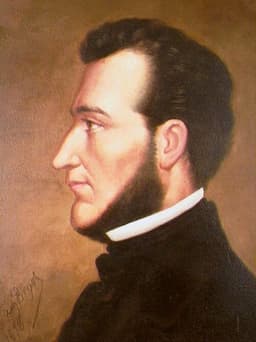
Francisco Morazan
General · Modern
58.0Total
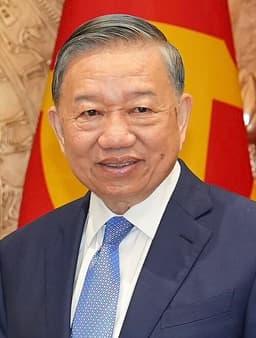
To Lam
General · Modern
50.6Total
Basic Information
Born
1792
1957
Died
1842
—
Era
Modern
Modern
Nationality
Honduras
Vietnam
Occupation
General
General
Civilization
Western
Eastern
Score Comparison
Military (10%)
52.5
25.9
Political (20%)
60.0
68.0
Influence (20%)
62.0
51.8
Legacy (20%)
50.0
41.7
Leadership (15%)
68.0
72.0
Strategy (15%)
55.0
36.8
TOTAL
58.0
50.6
Francisco Morazan — Complete Timeline
1824 AD
Abolition of slavery in Central AmericaReform◆ Major
As a key leader in the liberal movement, Moraz
AbolitionSlaveryLiberal Reform
Impact: regionalprogressive
1827 AD
Battle of La TrinidadWar◆ Major
Morazán led a liberal army to victory against conservative forces at La Trinidad, Honduras. This battle was a key turning point in the Central American civil war, allowing Morazán to consolidate power and eventually become president of the federation.
BattleLiberal VictoryCivil War
Impact: regional
1830 AD
Presidency of the Federal Republic of Central AmericaPolitical Action
Morazán was elected president of the Federal Republic of Central America, a union of Guatemala, El Salvador, Honduras, Nicaragua, and Costa Rica. He pursued liberal reforms including separation of church and state, free trade, and land reform, facing opposition from conservatives.
Federal RepublicLiberal ReformsCentral America
Impact: regionalconstructive
1842 AD
Execution by firing squadPolitical Action
After a failed attempt to restore the Federal Republic, Moraz
ExecutionEnd of FederationLiberal Defeat
Impact: regionaltragic
To Lam — Complete Timeline
2016 AD
Appointed Minister of Public SecurityPolitical Action◆ Major
To Lam was appointed Minister of Public Security of Vietnam, overseeing the country's police and internal security forces. He played a key role in maintaining public order and combating crime.
Ministerial AppointmentSecurity Leadership
Impact: national
2024 AD
Elected President of VietnamPolitical Action◆ Major
To Lam was elected President of Vietnam by the National Assembly, succeeding Vo Van Thuong. He transitioned from security chief to head of state, continuing his influence in national politics.
PresidencyGovernment Leadership
Impact: national
Expert Analysis
Francisco Morazan vs To Lam
# The Reformer and the Guardian
On a humid morning in September 1842, Francisco Morazán stood before a firing squad in San José, Costa Rica, his final words reportedly challenging his executioners to aim for his heart. Nearly two centuries later, in the air-conditioned halls of Hanoi’s National Assembly, General To Lam raised his right hand to take the oath of office as President of Vietnam, the culmination of a career spent not on battlefields but in the shadowed corridors of state security. One died for a dream that had already crumbled; the other rose to lead a nation that had already stabilized. What separates these two generals—both products of turbulent eras, both driven by visions of order and progress—is not merely time and geography, but the fundamental difference between fighting for a union and securing a state.
Origins
Francisco Morazán was born in 1792 in Tegucigalpa, Honduras, into a colonial world on the verge of dissolution. The Spanish Empire was crumbling, and across Latin America, the ideas of the Enlightenment—liberty, equality, republicanism—were igniting revolutions. Morazán grew up in a society dominated by landed elites, the Catholic Church, and a rigid social hierarchy. He absorbed the liberal ideals of his age: free trade, secular education, and the abolition of slavery. His Honduras was a province within the Captaincy General of Guatemala, a backwater of an empire that no longer inspired loyalty.
To Lam was born in 1957 in northern Vietnam, a generation after the Geneva Accords had divided his country. His childhood unfolded during the Vietnam War, a conflict that consumed the entire nation and reshaped its identity. By the time he was a teenager, the war was ending in communist victory, and the Democratic Republic of Vietnam was reunifying the country under a single, iron party. Lam grew up not in an age of revolutionary possibility, but in an age of consolidation. His Vietnam was a nation that had survived decades of foreign war and now needed internal discipline. Where Morazán inherited chaos and dreamed of building something new, Lam inherited a fortress and learned to guard its walls.
Rise to Power
Morazán entered the historical stage through the barrel of a gun. In 1827, after the collapse of the first federal experiment in Central America, conservative forces had seized control of the federal government. Morazán, then a young liberal officer, gathered a ragtag army and met the conservatives at La Trinidad, Honduras. His victory there was a masterstroke of improvisation and courage—he outmaneuvered a larger, better-equipped force through sheer tactical audacity. That battle turned him from a regional commander into a national figure. Within three years, he was elected president of the Federal Republic of Central America, a union of Guatemala, El Salvador, Honduras, Nicaragua, and Costa Rica.
To Lam’s rise was quieter, more deliberate. He joined the Ministry of Public Security in the 1970s, a time when the ministry was the party’s sword against internal dissent. He rose through the ranks not by winning battles, but by managing files, overseeing investigations, and demonstrating unshakable loyalty to the Communist Party. His key turning point came in 2016, when he was appointed Minister of Public Security. In that role, he oversaw the police, the intelligence services, and the vast apparatus of surveillance that keeps the party in power. His promotion to president in 2024 was the logical next step: a security chief elevated to the highest office, entrusted with the nation’s stability.
Leadership & Governance
Morazán governed as a radical liberal. In 1824, even before his presidency, he had helped abolish slavery in Central America—a move that alienated the wealthy landowners who relied on enslaved labor. As president, he pushed for secular education, freedom of the press, and the reduction of church power. He believed that Central America could become a modern republic, modeled on the United States, with a strong federal government and progressive laws. But his reforms were imposed from above, and they provoked fierce resistance from conservatives, the clergy, and regional caudillos who preferred local control. His military genius was real—he won battle after battle—but his political wisdom was brittle. He could defeat armies, but he could not win hearts.
To Lam governs as a pragmatist. His political score of 74.6 reflects a man who understands the mechanics of power better than the philosophy of governance. As president, he has continued Vietnam’s economic opening while tightening political control. He has overseen anti-corruption campaigns that have purged rivals and consolidated party discipline. His leadership style is not about grand reforms but about institutional stability. Where Morazán tried to remake society, Lam tries to manage it. His military score is low—44.6—because he is not a soldier in the traditional sense. He is a policeman, and his wars are fought in interrogation rooms and courtrooms, not on battlefields.
Triumph & Tragedy
Morazán’s greatest moment was his presidency itself—the achievement of uniting five fractious states under a liberal banner. His worst failure was the disintegration of that union. By the late 1830s, conservative revolts had shattered the federation. In 1842, after years of exile, he attempted one last campaign to restore the republic, landing in Costa Rica with a small force. He was captured, tried, and executed. His tragedy was that his dream was too big for his time. Central America was not ready for federal unity; the local elites preferred their own power to a distant president.
To Lam’s triumph is more ambiguous. He has not faced a dramatic defeat, but his legacy remains unwritten. His tragedy may be that he has succeeded too well—that in securing the state, he has stifled the very dynamism that made Vietnam’s economic miracle possible. His presidency is a triumph of control, but control has a cost.
Character & Destiny
Morazán was a man of conviction, almost to a fault. He believed in the Enlightenment with the fervor of a missionary, and he was willing to die for his principles. His personality was magnetic but inflexible; he inspired loyalty but also provoked implacable hatred. His destiny was to be a martyr for a cause that would not be realized for another century.
To Lam is a man of the apparatus. He is not a visionary but a gatekeeper. His personality is opaque, his motivations institutional. His destiny is to be a caretaker of a system that predates him and will outlast him. He will not be remembered as a founder or a martyr, but as a manager of power.
Legacy
Morazán is remembered as the "Simón Bolívar of Central America"—a flawed hero who fought for unity and freedom. His face appears on Honduran currency, and his name adorns streets and schools. His legacy is one of noble failure, a reminder that some dreams die before they can be realized.
To Lam’s legacy is still being written. He will likely be remembered as a transitional figure, a security chief who became president at a time when Vietnam was opening to the world but closing to dissent. His influence score of 73.2 is high, but his legacy score of 58.4 is middling—a reflection of a career that has prioritized power over principle.
Conclusion
In the end, Morazán and To Lam represent two poles of the modern general. One was a reformer who tried to build a new world and died when it collapsed around him. The other is a guardian who protects an existing world and lives to see it endure. Morazán’s story is a tragedy of ambition; To Lam’s is a drama of maintenance. Both remind us that the sword can be used to cut chains or to lock doors—and that history judges not only the hand that wields it, but the world it leaves behind.
Rankings
🥇
Francisco MorazanLeader
Mil: 52.5Pol: 60.0Inf: 62.0
58.0
🥈
To Lam
Mil: 25.9Pol: 68.0Inf: 51.8
50.6
+7.4 behind
How This Comparison Works
Algorithm
Each figure is scored on 6 dimensions (0—100 scale) based on structured historical data: Military (10%), Political (20%), Influence (20%), Legacy (20%), Leadership (15%), Strategy (15%). The weighted total produces the final ranking.
Data Sources
Scores are computed from structured sub-indicators in the database. Scale factors adjust for era (Ancient ×0.85, Modern ×1.0) and civilization size (Eastern ×1.05, Other ×0.80) to account for differences in population and military scale.
Maximum 3 Figures
Comparisons are limited to 2—3 figures to ensure readability and statistical meaningfulness.
Error Margins
±5 points per dimension — Sub-scores are derived from historical records with inherent uncertainty. Two figures within 5 points on a dimension should be considered roughly equivalent in that area.
Total Score Accuracy
±3 points overall — The weighted combination of 6 dimensions produces a total score with approximately ±3 points of uncertainty. Differences of less than 3 points are not statistically significant— the figures are effectively tied.
Known Limitations
- Historical records are incomplete and uneven across civilizations
- Figures from oral-tradition societies may be underrepresented
- Occupation labels can misclassify multi-role figures
- Scores measure capability and impact, not moral character
- Quantitative scoring is a comparison tool, not absolute truth
Capability Radar
Military (10%) — Battles & Warfare
Battles
55
10
Win Rate
60
10
Expansion
40
10
Political (20%) — Governance & Reform
Reform
70
40
Diplomacy
45
40
Economy
50
30
Influence (20%) — Cultural & Global Reach
Cultural
45
20
Global
35
20
Legacy (20%) — Historical Impact
Historical
50
20
Longevity
40
20
Leadership (15%) — Power & Stability
Tenure
55
50
Stability
30
40
Strategy (15%) — Tactics & Innovation
Strategy
55
10
Tactics
50
10
Reform
45
10
Similar Comparisons
Comments & Discussion
Chronicler57626/16/2026
Morazan swung a machete for Central American unity; To Lam wields a security apparatus for Vietnamese stability. Morazan’s idealism got him shot in Costa Rica in 1842, his federation dead before his body hit the ground. Lam survived Vietnam’s post-war purges by mastering the police state, not dreams. One offered a vision that fractured in a decade; the other inherited a system and hardened it. Lam isn’t a reformer—he’s a guardian of silence. Progress? Morazan died for it. Lam just manages it.
史海钩沉6/16/2026
莫拉桑在1842年面对行刑队时大喊“瞄准心脏”,这姿态很浪漫,但中美洲联邦早已因地方军阀割据而名存实亡。相比之下,苏林从公安部长一路升至国家主席,靠的可不是慷慨赴死,而是掌控情报网络和党内清洗。历史不奖励烈士,只奖励活下来的人——莫拉桑死了,联邦碎了;苏林活着,越南稳了。你觉得哪个更“成功”?别骗自己。
鹰眼6/16/2026
有人说莫拉桑是自由的烛光,但别忘了他是靠政变上台的——1830年他推翻危地马拉总统后,自己坐上了头把交椅。苏林呢?同样从安全系统爬上来,镇压异见毫不手软。两人都是强人,只不过一个戴着理想主义面具,一个干脆不伪装。莫拉桑的联邦宪法只活了八年,越南的稳定却是靠纪律维持了几十年。别拿血统论粉饰暴君,他们不过是时代的选择罢了。
SharpWatcher946/16/2026
Let’s talk numbers: Morazan’s federal budget for 1839 couldn’t even cover basic army pay, leading to mutinies. Vietnam under To Lam? GDP growth hovering around 6-7% annually, with foreign investment at $28.5 billion in 2024 alone. Morazan fought to create a unified market that never materialized because the data (and local elites) said no. Lam operates in a system where the state already controls the ledgers. Idealism crumbles without revenue. Always bet on the banker, not the poet.
Historian7386/16/2026
Morazan dreamed a federal republic from Mexico to Panama; Lam inherited a unified Vietnam born in blood. The difference? Morazan’s cause failed because he couldn’t murder the local caudillos fast enough—he tried peace treaties and lost. Lam, from the North Vietnamese security apparatus, studied how Ho Chi Minh crushed dissent. Central America needed a butcher, not a statesman. Vietnam got one. Morazan died quoting Cicero; Lam reads police reports. Which one actually secured order?