Loading...
Francisco Morazan vs Themistocles
Themistocles leads by 10.4 pts · 2 figures compared
…
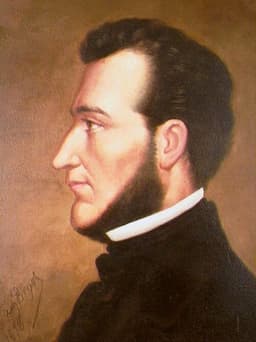
Francisco Morazan
General · Modern
58.0Total
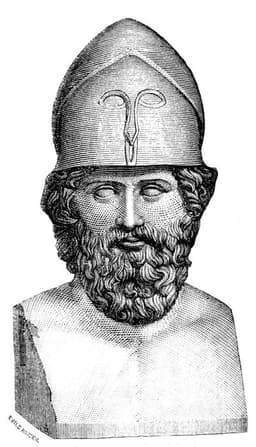
Themistocles
Politician · Ancient
68.4Total
Basic Information
Born
1792
-524
Died
1842
-459
Era
Modern
Ancient
Nationality
Honduras
Greece
Occupation
General
Politician
Civilization
Western
Western
Score Comparison
Military (10%)
52.5
80.0
Political (20%)
60.0
72.0
Influence (20%)
62.0
40.0
Legacy (20%)
50.0
80.0
Leadership (15%)
68.0
79.8
Strategy (15%)
55.0
76.0
TOTAL
58.0
68.4
Francisco Morazan — Complete Timeline
1824 AD
Abolition of slavery in Central AmericaReform◆ Major
As a key leader in the liberal movement, Moraz
AbolitionSlaveryLiberal Reform
Impact: regionalprogressive
1827 AD
Battle of La TrinidadWar◆ Major
Morazán led a liberal army to victory against conservative forces at La Trinidad, Honduras. This battle was a key turning point in the Central American civil war, allowing Morazán to consolidate power and eventually become president of the federation.
BattleLiberal VictoryCivil War
Impact: regional
1830 AD
Presidency of the Federal Republic of Central AmericaPolitical Action
Morazán was elected president of the Federal Republic of Central America, a union of Guatemala, El Salvador, Honduras, Nicaragua, and Costa Rica. He pursued liberal reforms including separation of church and state, free trade, and land reform, facing opposition from conservatives.
Federal RepublicLiberal ReformsCentral America
Impact: regionalconstructive
1842 AD
Execution by firing squadPolitical Action
After a failed attempt to restore the Federal Republic, Moraz
ExecutionEnd of FederationLiberal Defeat
Impact: regionaltragic
Themistocles — Complete Timeline
483 BC
Construction of the Athenian FleetReform◆ Major
Themistocles persuaded the Athenian assembly to use silver from the Laurion mines to build a fleet of 200 triremes. This naval expansion transformed Athens into a major maritime power and was crucial for the victory at Salamis.
AthensNaval PowerReform
Impact: nationalconstructive
480 BC
Battle of SalamisWar
Themistocles commanded the Greek navy against the Persian fleet at Salamis. He lured the Persians into the narrow straits, where the Greek ships destroyed the larger Persian fleet. This victory ended the Persian threat to Greece and preserved Greek independence.
Greco-Persian WarsNaval BattleAthens
Impact: regionalconstructive
472 BC
Ostracism from AthensPolitical Action◆ Major
Themistocles was ostracized by the Athenian assembly, likely due to political rivalries and accusations of arrogance. He went into exile, first to Argos, then to Persia, where he was received by King Artaxerxes I.
AthensExileOstracism
Impact: nationaltragic
465 BC
Service under the Persian KingPolitical Action
After his ostracism, Themistocles fled to Persia and offered his services to King Artaxerxes I. He was granted governorship of Magnesia and other cities in Asia Minor, where he lived until his death. This act was seen as treason by many Athenians.
PersiaExileTreason
Impact: regional
Expert Analysis
Themistocles vs Francisco Morazan
# The Visionary and the Dreamer: Themistocles and Francisco Morazán
On a narrow strait off the coast of Salamis, a single Greek admiral watched the Persian fleet row into a trap, their oars tangling in the confined waters as his triremes struck like wolves among sheep. Two thousand years later, in a dusty Central American plaza, a general in a faded uniform faced a firing squad, his dream of a united republic dying with him. Themistocles and Francisco Morazán lived worlds apart—one in the golden dawn of classical Athens, the other in the turbulent adolescence of the Americas—yet both gambled everything on a vision of unity. Why did one die in exile, serving his former enemy, while the other died before a line of rifles, defiant to the end?
Origins
Themistocles was born into an Athens still finding its footing. His father was a minor noble, his mother possibly a foreigner, which left him on the margins of the aristocratic circles that dominated Athenian politics. The city he grew up in was a cluster of villages, overshadowed by Sparta on land and Persia on the horizon. He learned early that influence came not from birth but from persuasion—and that the sea, not the soil, would be Athens’ future.
Francisco Morazán entered the world in 1792 in Tegucigalpa, a colonial backwater of the Spanish Empire. His family was of Creole stock, educated and ambitious, but living in a society where power belonged to the peninsulares—Spaniards born in Europe. The winds of the Enlightenment had barely reached Central America, but when they did, they carried the ideas of liberty, republicanism, and federation. Morazán absorbed them like dry earth drinks rain. Where Themistocles learned to navigate the treacherous currents of Athenian democracy, Morazán learned to ride the storm of revolution.
Rise to Power
Themistocles’ path was paved with words. In 483 BCE, he stood before the Athenian assembly and argued that the silver from the Laurion mines—newly discovered and rich—should not be divided among citizens but spent on warships. It was a radical proposal, one that required a leap of faith from a land-oriented people. He won. Two hundred triremes were built, and Athens became a naval power. His rise was not through lineage but through the power of a single, brilliant idea.
Morazán’s rise was forged in blood. In 1827, after conservative forces had crushed liberal uprisings across Central America, he gathered a ragged army in Honduras and defeated them at the Battle of La Trinidad. It was a stunning victory, but it was only the beginning. He fought his way into Guatemala City, became the liberal champion, and by 1830 was elected president of the Federal Republic of Central America—a union of five states that had broken from Spain and then from Mexico. His power came from the sword, but his vision was of the ballot box.
Leadership & Governance
Themistocles governed through charisma and cunning. He understood that Athens’ strength lay in its navy, and he built that navy with relentless focus. At the Battle of Salamis in 480 BCE, he did not simply command—he orchestrated. He sent a false message to the Persian king, Xerxes, claiming the Greeks were fleeing, luring the massive fleet into the narrow strait where numbers meant nothing and Athenian skill meant everything. The victory saved Greece and made Athens an empire. But his political wisdom was brittle. He was arrogant, and his rivals whispered that he had taken bribes, that he was too powerful.
Morazán governed through reform and principle. He abolished slavery in 1824, ended church privileges, promoted public education, and tried to build a secular, federal state. He was a liberal firebrand, but his fire burned too hot. The conservative landowners, the clergy, and the provincial caudillos resisted every reform. He won battles—dozens of them—but he could not win the peace. His military strategy was competent but not brilliant; his political strategy was visionary but impractical. He tried to unite a region where geography and history had made unity almost impossible.
Triumph & Tragedy
Themistocles’ greatest moment was Salamis. The Persian fleet shattered, Xerxes fled, and Athens rose as the dominant power in the Greek world. But his triumph was fleeting. In 472 BCE, the assembly voted to ostracize him—a ten-year exile. He had become too powerful, too arrogant, too dangerous. He fled to Persia, of all places, and offered his services to King Artaxerxes I. The man who saved Greece from Persia ended his life as a Persian governor in Magnesia, drinking from a poisoned cup, some say by his own hand.
Morazán’s greatest moment was his presidency, but it was a fragile dream. The Federal Republic collapsed in 1839, torn apart by civil war and regionalism. He fled into exile, but he could not let go. In 1842, he returned to Costa Rica, hoping to restore the federation. He was captured, tried, and sentenced to death. On September 15, he faced the firing squad in San José. His last words were reportedly: “I die with the satisfaction of having served my country. I die with the conviction that the unity of Central America is the only true path to our happiness.”
Character & Destiny
Themistocles was a survivor. He adapted, spun, and reinvented himself. When Athens rejected him, he served Persia. His character was flexible, his loyalty conditional. Destiny for him was a game of probabilities, and he played it well until the odds turned. Morazán was a believer. He could not bend. When the federation failed, he could not accept it. His character was rigid, his loyalty absolute. Destiny for him was a crusade, and he rode it to the end.
Legacy
Themistocles is remembered as the father of Athenian naval power, the architect of Salamis, the man who turned Athens into an empire. But his exile and service to Persia tarnish his story. He is a hero with a shadow. Morazán is remembered as the last great hope of Central American unity, a liberal martyr whose dream of federation still haunts the region. His statue stands in Tegucigalpa, but the republic he died for never rose again. He is a hero with a wound.
Conclusion
One man saved his civilization and then served its enemy. The other died for a dream that could not survive him. Themistocles succeeded in his moment and failed in his life; Morazán failed in his moment but succeeded in his death. Their stories remind us that history is not a ledger of victories and defeats but a tapestry of choices made under impossible pressure. The narrow strait of Salamis and the dusty plaza of San José are not so different. Both are places where a single man’s vision met the unyielding weight of the world.
Rankings
🥇
ThemistoclesLeader
Mil: 80.0Pol: 72.0Inf: 40.0
68.4
🥈
Francisco Morazan
Mil: 52.5Pol: 60.0Inf: 62.0
58.0
+10.4 behind
How This Comparison Works
Algorithm
Each figure is scored on 6 dimensions (0—100 scale) based on structured historical data: Military (10%), Political (20%), Influence (20%), Legacy (20%), Leadership (15%), Strategy (15%). The weighted total produces the final ranking.
Data Sources
Scores are computed from structured sub-indicators in the database. Scale factors adjust for era (Ancient ×0.85, Modern ×1.0) and civilization size (Eastern ×1.05, Other ×0.80) to account for differences in population and military scale.
Maximum 3 Figures
Comparisons are limited to 2—3 figures to ensure readability and statistical meaningfulness.
Error Margins
±5 points per dimension — Sub-scores are derived from historical records with inherent uncertainty. Two figures within 5 points on a dimension should be considered roughly equivalent in that area.
Total Score Accuracy
±3 points overall — The weighted combination of 6 dimensions produces a total score with approximately ±3 points of uncertainty. Differences of less than 3 points are not statistically significant— the figures are effectively tied.
Known Limitations
- Historical records are incomplete and uneven across civilizations
- Figures from oral-tradition societies may be underrepresented
- Occupation labels can misclassify multi-role figures
- Scores measure capability and impact, not moral character
- Quantitative scoring is a comparison tool, not absolute truth
Capability Radar
Military (10%) — Battles & Warfare
Battles
55
75
Win Rate
60
85
Expansion
40
60
Political (20%) — Governance & Reform
Reform
70
75
Diplomacy
45
85
Economy
50
65
Influence (20%) — Cultural & Global Reach
Cultural
45
70
Global
35
75
Legacy (20%) — Historical Impact
Historical
50
85
Longevity
40
80
Leadership (15%) — Power & Stability
Tenure
55
70
Stability
30
60
Strategy (15%) — Tactics & Innovation
Strategy
55
90
Tactics
50
95
Reform
45
80
Similar Comparisons
Comments & Discussion
SeaWolf_of_Salamis6/16/2026
Themistocles didn't just win at Salamis—he *invented* naval warfare as a strategic lever. While Morazán wasted his talents on quixotic federalism, Themistocles understood that Athenian democracy depended on silver mines and triremes, not parchment constitutions. He bribed, outmaneuvered, and ultimately out-thought everyone from Sparta to Persia. Morazán got a firing squad; Themistocles got a statue in Athens AND a pension from Artaxerxes. That's not exile—that's geopolitical genius cashing out.
逍遥骑士6/16/2026
拿莫拉桑跟地米斯托克利比?后者可是在萨拉米斯用三百艘船打垮了上千艘波斯战舰,这哥们儿是实打实的军事天才。莫拉桑呢?统一中美洲的梦确实美,可他连手下将领都管不住,最后被自己的副手出卖。地米斯托克利输了陶片放逐,转头就去波斯当顾问;莫拉桑输了战争,直接脑袋搬家。谁更聪明?膝盖想都知道。
Deskbound_Strategist6/16/2026
Everyone romanticizes Salamis, but let's look at the numbers: Themistocles had 370 triremes against maybe 600 Persian ships—and half of those were Phoenician and Egyptian conscripts who didn't want to be there. He wasn't a prophet, he was a lucky gambler who played the propaganda game better than his rivals. Morazán actually built functioning institutions across five states, drafted civil codes, and established public schools. Who left a more tangible legacy? The guy with the school system, not
烽火戏诸侯6/16/2026
你们都在吹地米斯托克利的远见,我偏要泼盆冷水。这老狐狸最厉害的不是打仗,而是忽悠——先忽悠雅典人建海军,再忽悠波斯人钻海峡,最后忽悠流亡地给自己发养老金。莫拉桑至少是光明正大地战死,至死不屈。一个靠耍嘴皮子活到寿终正寝,一个为理想挨枪子儿。这俩放在一起,我倒要问问:什么是成功?多活几年就叫赢了?扯淡。
Sparta_Skeptic6/16/2026
Let's be real: Themistocles was a brilliant opportunist who saw the Persian threat coming and exploited Athenian paranoia to build a navy that *he* would command. His "unity" was just Athens dominating an alliance. Morazán genuinely tried to unite Central America under a federal system with balanced powers—not Greek-style hegemony. One built an empire of ships; the other built a constitution. Five hundred years from now, Morazán's federalist dreams will look more prophetic than Themistocles' nav