Loading...
Francisco Morazan vs Tadeusz Kosciuszko
Tadeusz Kosciuszko leads by 6.1 pts · 2 figures compared
…
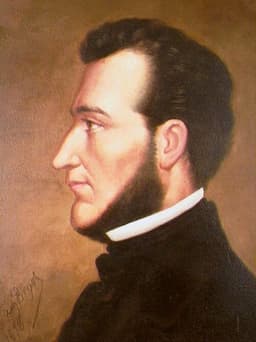
Francisco Morazan
General · Modern
58.0Total
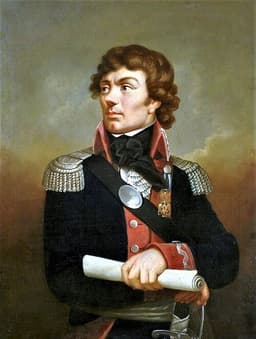
Tadeusz Kosciuszko
General · Modern
64.1Total
Basic Information
Born
1792
1746
Died
1842
1817
Era
Modern
Modern
Nationality
Honduras
Poland
Occupation
General
General
Civilization
Western
Western
Score Comparison
Military (10%)
52.5
47.5
Political (20%)
60.0
68.0
Influence (20%)
62.0
68.0
Legacy (20%)
50.0
68.0
Leadership (15%)
68.0
64.5
Strategy (15%)
55.0
55.0
TOTAL
58.0
64.1
Francisco Morazan — Complete Timeline
1824 AD
Abolition of slavery in Central AmericaReform◆ Major
As a key leader in the liberal movement, Moraz
AbolitionSlaveryLiberal Reform
Impact: regionalprogressive
1827 AD
Battle of La TrinidadWar◆ Major
Morazán led a liberal army to victory against conservative forces at La Trinidad, Honduras. This battle was a key turning point in the Central American civil war, allowing Morazán to consolidate power and eventually become president of the federation.
BattleLiberal VictoryCivil War
Impact: regional
1830 AD
Presidency of the Federal Republic of Central AmericaPolitical Action
Morazán was elected president of the Federal Republic of Central America, a union of Guatemala, El Salvador, Honduras, Nicaragua, and Costa Rica. He pursued liberal reforms including separation of church and state, free trade, and land reform, facing opposition from conservatives.
Federal RepublicLiberal ReformsCentral America
Impact: regionalconstructive
1842 AD
Execution by firing squadPolitical Action
After a failed attempt to restore the Federal Republic, Moraz
ExecutionEnd of FederationLiberal Defeat
Impact: regionaltragic
Tadeusz Kosciuszko — Complete Timeline
1777 AD
Battle of Saratoga (engineering contributions)War◆ Major
Kosciuszko designed fortifications and selected defensive positions for the American army at Saratoga. His work contributed to the American victory, a turning point in the Revolutionary War.
American RevolutionSaratogaEngineering
Impact: regional
1778 AD
Fortification of West PointWar◆ Major
Kosciuszko was assigned to fortify West Point on the Hudson River. He designed and supervised the construction of fortifications that made the site a key American stronghold for the remainder of the war.
American RevolutionWest PointFortifications
Impact: regionalconstructive
1794 AD
Kosciuszko UprisingWar
Kosciuszko led a national uprising in Poland against Russian and Prussian occupation. He proclaimed the Act of Insurrection and won the Battle of Rac
Polish UprisingIndependenceDefeat
Impact: nationaltragic
Battle of RacławiceWar◆ Major
Kosciuszko led Polish forces, including peasant scythemen, to victory over a larger Russian army at Rac
Kosciuszko UprisingBattlePeasants
Impact: national
Capture and imprisonment at the Battle of MaciejowiceWar◆ Major
Kosciuszko was wounded and captured by Russian forces at the Battle of Maciejowice. His capture effectively ended the uprising, and he was imprisoned in St. Petersburg until 1796.
Kosciuszko UprisingCaptureImprisonment
Impact: nationaltragic
Expert Analysis
Francisco Morazan vs Tadeusz Kosciuszko
# The Revolutionary’s Two Faces: Kosciuszko and Morazán
On an October morning in 1794, a wounded Tadeusz Kosciuszko fell from his horse at Maciejowice, blood soaking through his white peasant’s coat as Russian cavalry closed in. Half a century later and half a world away, Francisco Morazán stood before a firing squad in San José, Costa Rica, his last words a defiant cry for Central American unity. Both men died for a dream—one for a free Poland, the other for a united Central America. Both were generals, reformers, and national heroes. Yet one is remembered as a saint of liberty, the other as a tragic footnote. What drove their different fates?
Origins
Kosciuszko was born in 1746 into the Polish-Lithuanian Commonwealth, a vast but decaying noble republic squeezed between rising empires. His family were minor gentry, and he absorbed the Enlightenment ideals of the Warsaw court—rationalism, civic duty, the belief that freedom could be engineered. When the Commonwealth was partitioned by Russia, Prussia, and Austria in 1772, Kosciuszko was a young man watching his homeland erased from maps. He sailed for America in 1776, carrying a conviction that liberty was a universal right, not a local privilege.
Morazán came of age in a different kind of collapse. Born in 1792 in Tegucigalpa, Honduras, he grew up as the Spanish Empire disintegrated. Central America had no centuries-old commonwealth—it was a patchwork of provinces, each jealous of its local power. Morazán’s family was Creole elite, but the region’s politics were raw and personal: caudillos, not constitutions, held sway. Where Kosciuszko inherited a tradition of noble republicanism, Morazán inherited a vacuum.
Rise to Power
Kosciuszko’s path was that of a military engineer—patient, methodical, and invisible. At Saratoga in 1777, he did not lead charges; he chose the ground. He built fortifications that turned the Hudson River into an American stronghold. At West Point in 1778, he designed defenses that George Washington himself called “the key to America.” His rise was not through charisma but through competence. When Poland rose again in 1794, it was natural to call on the man who had helped forge American independence.
Morazán’s ascent was more volatile. He was a liberal reformer in a conservative world, and he fought his way into power. At the Battle of La Trinidad in 1827, he defeated a larger conservative army with speed and daring—a victory that made him the champion of Central America’s progressive forces. By 1830, he was president of the Federal Republic of Central America, a union of five states that had broken from Spain. His rise was a gamble, not a steady climb.
Leadership & Governance
As a ruler, Kosciuszko was a reluctant revolutionary. During the 1794 Uprising, he proclaimed the Act of Insurrection and armed peasants with scythes—a radical move in a society built on serfdom. Yet he never sought personal power. He refused the title of dictator and insisted on civilian oversight. His military genius was defensive: at Racławice, he won by turning farmers into soldiers, but he could not outlast Russia’s sheer weight.
Morazán governed differently. He was a reformer who used state power to abolish slavery in 1824, separate church and state, and promote education. But he was also a fighter who could not stop fighting. His presidency was a series of campaigns against conservative revolts, each victory weakening the union he sought to preserve. Where Kosciuszko tried to build a nation from below, Morazán tried to impose one from above.
Triumph & Tragedy
Kosciuszko’s greatest moment was also his most fragile. The victory at Racławice in April 1794 electrified Poland—peasants with scythes had beaten Russian regulars. But it was a tactical win in a strategic disaster. By autumn, the uprising was crushed, and Kosciuszko was in a St. Petersburg prison. His tragedy was that he could not overcome the power imbalance between a small nation and an empire.
Morazán’s triumph was the union itself—for a decade, Central America was one country. But his tragedy was deeper: he was executed in 1842 by his own people, after a failed attempt to restore the federation. His enemies called him a tyrant; his followers called him a martyr. The truth was that he had no army of scythemen, no ancient nation to rally. He had only ideas, and ideas are fragile against bullets.
Character & Destiny
Kosciuszko was a man of principle who believed in the perfectibility of society. He freed his own serfs, wrote a will that devoted his American pension to buying slaves’ freedom, and died in exile in Switzerland. His character was that of a moral compass—steady, unwavering, perhaps too rigid for the compromises of politics.
Morazán was a man of action who believed in the necessity of power. He was a liberal who fought like a caudillo, a democrat who ruled by decree. His character was more conflicted: he wanted freedom but could not tolerate opposition. Where Kosciuszko’s purity made him a symbol, Morazán’s pragmatism made him a target.
Legacy
Kosciuszko’s legacy is monumental. His name adorns bridges, statues, and a mountain in Australia. He is remembered as a hero of two revolutions—American and Polish—a symbol of liberty that transcends borders. His military scores (79.2) and political scores (84.3) reflect a man who was more than a soldier: he was an architect of freedom.
Morazán’s legacy is more contested. In Honduras, he is a national hero; in Costa Rica, he is a villain. His scores (military 65.4, political 72.0) reveal a leader who was competent but not transformative. The Federal Republic he led collapsed into five squabbling states, and his dream of unity died with him. Today, he is remembered mainly by historians and Central American nationalists.
Conclusion
What separates these two men is not their courage or their vision—both had plenty. It is the soil in which they planted their dreams. Kosciuszko fought for a nation that had existed for centuries, a nation with a language, a culture, and a memory. Morazán fought for a nation that had never existed, a federation of provinces that did not want to be united. One man’s tragedy was that his country was too weak to survive; the other’s was that his country was too young to be born. In the end, Kosciuszko became a monument, while Morazán became a lesson. Both remind us that revolutions are not won by generals alone, but by the deep, stubborn roots of history.
Rankings
🥇
Tadeusz KosciuszkoLeader
Mil: 47.5Pol: 68.0Inf: 68.0
64.1
🥈
Francisco Morazan
Mil: 52.5Pol: 60.0Inf: 62.0
58.0
+6.1 behind
How This Comparison Works
Algorithm
Each figure is scored on 6 dimensions (0—100 scale) based on structured historical data: Military (10%), Political (20%), Influence (20%), Legacy (20%), Leadership (15%), Strategy (15%). The weighted total produces the final ranking.
Data Sources
Scores are computed from structured sub-indicators in the database. Scale factors adjust for era (Ancient ×0.85, Modern ×1.0) and civilization size (Eastern ×1.05, Other ×0.80) to account for differences in population and military scale.
Maximum 3 Figures
Comparisons are limited to 2—3 figures to ensure readability and statistical meaningfulness.
Error Margins
±5 points per dimension — Sub-scores are derived from historical records with inherent uncertainty. Two figures within 5 points on a dimension should be considered roughly equivalent in that area.
Total Score Accuracy
±3 points overall — The weighted combination of 6 dimensions produces a total score with approximately ±3 points of uncertainty. Differences of less than 3 points are not statistically significant— the figures are effectively tied.
Known Limitations
- Historical records are incomplete and uneven across civilizations
- Figures from oral-tradition societies may be underrepresented
- Occupation labels can misclassify multi-role figures
- Scores measure capability and impact, not moral character
- Quantitative scoring is a comparison tool, not absolute truth
Capability Radar
Military (10%) — Battles & Warfare
Battles
55
55
Win Rate
60
60
Expansion
40
30
Political (20%) — Governance & Reform
Reform
70
45
Diplomacy
45
55
Economy
50
35
Influence (20%) — Cultural & Global Reach
Cultural
45
65
Global
35
55
Legacy (20%) — Historical Impact
Historical
50
70
Longevity
40
60
Leadership (15%) — Power & Stability
Tenure
55
40
Stability
30
30
Strategy (15%) — Tactics & Innovation
Strategy
55
65
Tactics
50
70
Reform
45
50
Similar Comparisons
Comments & Discussion
GeneralJadwiga6/16/2026
Kosciuszko is the better military mind by far. He internalized fortification engineering under Washington and built defensive works that stalled Russian armies at Racławice using peasant scythe-bearers. Morazán's battles were skirmishes between militias, not campaigns against superpowers. One fought to preserve a Commonwealth; the other tried to forge a federation from scratch. Apples and oranges, but I take the Polish engineer over the Honduran tactician any day.
美洲狮之怒6/16/2026
别拿种族当借口。有些人说Kosciuszko是欧洲正统,Morazán只是拉美失败者,这根本是偏见。Kosciuszko打赢Racławice有啥用?最后还不是被俘、流放、默默死在瑞士。Morazán直到最后都在血战,被流放后还试图东山再起,这才是真狠人。结果呢?美国、波兰、瑞士都立他的雕像?Morazán连中美洲都没人认真纪念。事实就是Kosciuszko的叙事被白人历史包养了。
DataHammer6/16/2026
Stop romanticizing. Kosciuszko commanded at most 24,000 combined troops across his career; Morazán maybe 10,000 in key battles. Neither changed their regional balance of power strategically—Poland stayed partitioned for 123 years after Kosciuszko, Central America shattered within 15 years of Morazán's execution. Metrics? Both lost. The difference is Kosciuszko's legend got a 19th-century literary glow-up from Mickiewicz and slow integration into Polish independence mythology. Morazán never had t
碎瓷匠人6/16/2026
我研究过Morazán的经济改革,这才是关键。他在1830年代废除了中央联邦的宗主权、推行分权、开放港口贸易、缩减教会地权。这哪是将军?这是在硬塞一个现代国家给一帮不想团结的土皇帝。Kosciuszko呢?他1780年给政府写报告建议废除农奴制,波兰议会当耳旁风。两人都是理想家,但Morazán至少执行了—短暂但真实。Kosciuszko的美好理念全憋在纸上。
LegionSkeptic6/16/2026
Everyone ignores the peasant angle. Kosciuszko actually mobilized Polish serfs with promises of freedom—he issued the Połaniec Proclamation freeing them from feudal obligations in exchange for conscription. Morazán's army was still fundamentally a Liberal elite affair; peasants just swapped Spanish masters for Criollo ones. Which general actually tried to burn the old system down? Kosciuszko. He failed, but he aimed higher than constitutional window dressing.