Loading...
Francisco Morazan vs Samori Toure
Samori Toure leads by 12.5 pts · 2 figures compared
…
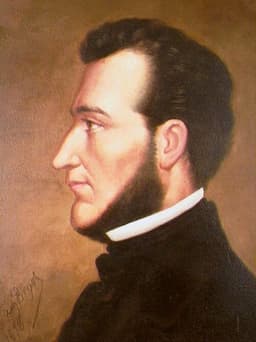
Francisco Morazan
General · Modern
58.0Total
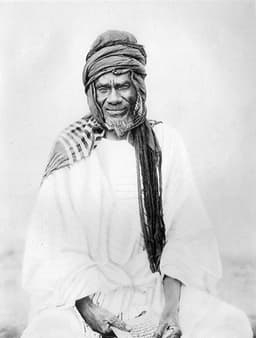
Samori Toure
General · Modern
70.5Total
Basic Information
Born
1792
1830
Died
1842
1900
Era
Modern
Modern
Nationality
Honduras
Wassoulou Empire
Occupation
General
General
Civilization
Western
Other
Score Comparison
Military (10%)
52.5
60.0
Political (20%)
60.0
78.0
Influence (20%)
62.0
68.0
Legacy (20%)
50.0
72.0
Leadership (15%)
68.0
72.0
Strategy (15%)
55.0
70.0
TOTAL
58.0
70.5
Francisco Morazan — Complete Timeline
1824 AD
Abolition of slavery in Central AmericaReform◆ Major
As a key leader in the liberal movement, Moraz
AbolitionSlaveryLiberal Reform
Impact: regionalprogressive
1827 AD
Battle of La TrinidadWar◆ Major
Morazán led a liberal army to victory against conservative forces at La Trinidad, Honduras. This battle was a key turning point in the Central American civil war, allowing Morazán to consolidate power and eventually become president of the federation.
BattleLiberal VictoryCivil War
Impact: regional
1830 AD
Presidency of the Federal Republic of Central AmericaPolitical Action
Morazán was elected president of the Federal Republic of Central America, a union of Guatemala, El Salvador, Honduras, Nicaragua, and Costa Rica. He pursued liberal reforms including separation of church and state, free trade, and land reform, facing opposition from conservatives.
Federal RepublicLiberal ReformsCentral America
Impact: regionalconstructive
1842 AD
Execution by firing squadPolitical Action
After a failed attempt to restore the Federal Republic, Moraz
ExecutionEnd of FederationLiberal Defeat
Impact: regionaltragic
Samori Toure — Complete Timeline
1878 AD
Establishment of the Wassoulou EmpirePolitical Action
Samori Toure founded the Wassoulou Empire in West Africa, uniting various Mandinka states under his rule. He established a centralized administration and a professional army, creating a powerful state that resisted French expansion.
EmpireWassoulouUnification
Impact: regionalconstructive
1880 AD
Military Reforms and ModernizationReform◆ Major
Samori Toure modernized his army by importing firearms from European traders and establishing a standing army of up to 35,000 men. He organized his forces into regular units and introduced new tactics, making them effective against French troops.
Military ReformFirearmsArmy
Impact: regionalconstructive
1882 AD
First Franco-Wassoulou WarWar◆ Major
Samori Toure's forces fought the French army in the first major conflict between the Wassoulou Empire and France. The war ended with a treaty in 1886, recognizing Samori's control over the Niger River region.
WarFranceTreaty
Impact: regional
1891 AD
Second Franco-Wassoulou WarWar◆ Major
The French resumed hostilities, forcing Samori to retreat eastward. He employed a scorched-earth strategy, destroying villages and crops to deny resources to the French, prolonging the conflict for years.
WarScorched EarthRetreat
Impact: regionaltragic
1898 AD
Capture and ExileWar
Samori Toure was captured by French forces after a long campaign. He was exiled to Gabon, where he died in 1900. His capture ended the Wassoulou Empire and marked the completion of French conquest in West Africa.
CaptureExileEnd of Empire
Impact: regionaltragic
Expert Analysis
Francisco Morazan vs Samori Toure
# The Dream That Could Not Hold
On a dusty plain in Costa Rica, September 1842, Francisco Morazán faced a firing squad. The man who had once commanded the hopes of an entire continent stood calmly, reportedly adjusting his own blindfold before the shots rang out. Half a world away and fifty-six years later, another general met a quieter end: Samori Touré, captured after a decade-long guerrilla war, died of pneumonia in exile in Gabon, his Wassoulou Empire reduced to ash and memory. Both men fought empires. Both dreamed of unity. Both were consumed by forces larger than themselves. But their paths—and their defeats—tell vastly different stories about power, timing, and the cruel arithmetic of history.
Origins
Francisco Morazán was born in 1792 in Tegucigalpa, Honduras, into a creole family of modest means but considerable ambition. His world was the twilight of Spanish colonialism, a society rigidly divided between peninsulares, creoles, and indigenous peoples. The Enlightenment was a distant whisper, but it reached him through smuggled books and liberal pamphlets. He grew up in an era when the old order was cracking, and young men with ideas could imagine building something new.
Samori Touré’s origins were humbler and harsher. Born around 1830 in what is now Guinea, he belonged to the Dyula trading class, a people accustomed to movement and commerce across the Sahel. His early life was shaped not by philosophical tracts but by the brutal realities of West Africa’s 19th-century slave trade and the encroaching French military machine. Where Morazán inherited a world of crumbling certainties, Touré inherited a world of fire and iron.
Rise to Power
Morazán’s ascent was swift and political. In 1827, after conservative forces overthrew the liberal government of the Federal Republic of Central America, he raised an army from exile in Nicaragua. At the Battle of La Trinidad in November of that year, he crushed the conservatives with a daring cavalry charge. The victory was not merely military—it was ideological. Within three years, he was elected president of the entire federation, a union of Guatemala, El Salvador, Honduras, Nicaragua, and Costa Rica. He was 38 years old.
Touré’s rise was slower, bloodier, and far more pragmatic. He began as a regional trader and warrior, slowly consolidating power among the Mandinka states. In 1878, he formally established the Wassoulou Empire, a sprawling domain that stretched across modern Guinea, Mali, and Ivory Coast. But unlike Morazán, he never enjoyed a moment of legitimate triumph. His empire was born under the shadow of French expansion, and every step forward was a step toward confrontation.
Leadership & Governance
Morazán governed as a radical liberal. He abolished slavery in 1824, separated church and state, introduced trial by jury, and promoted public education. He believed in reason, progress, and the perfectibility of man. But his reforms were deeply unpopular among the conservative landed elite and the Catholic clergy. He ruled not through consensus but through military force, constantly suppressing revolts in Guatemala and El Salvador. His vision was grand; his political base was narrow.
Touré was no ideologue. He was a pragmatist who understood that survival required adaptation. In 1880, he undertook sweeping military reforms, importing breech-loading rifles from European traders and organizing a standing army of up to 30,000 men. He established a centralized tax system, built roads, and created a professional officer corps. Where Morazán tried to remake society, Touré tried to armor it. His governance was less about enlightenment and more about endurance.
Triumph & Tragedy
Morazán’s greatest moment was also the seed of his destruction. For a brief, shining decade, the Federal Republic of Central America held together—a democratic experiment in a region of caudillos and coffee barons. He was reelected in 1835, and his reforms took root in El Salvador and Honduras. But the union was fragile, and by 1838, Guatemala had seceded. The federation collapsed not from external attack but from internal fracture. Morazán spent his final years chasing a ghost, trying to reunite what could not be united. His execution in 1842 was the final, brutal punctuation to a failed dream.
Touré’s tragedy was different. He never lost his empire to internal rebellion; he lost it to the French, who possessed industrial weaponry, naval blockades, and a willingness to burn villages. In 1891, when the Second Franco-Wassoulou War began, Touré executed a scorched-earth retreat eastward, destroying crops and wells to deny the French supplies. For seven years, he outran and outwitted a modern army. But in 1898, betrayed by a local ally, he was captured. His empire was dismantled, his people scattered. His tragedy was not failure of vision but the impossibility of victory.
Character & Destiny
Morazán was a man of the 18th century trapped in the 19th. He believed in constitutions and enlightenment, but he governed through force. He was charismatic, brave, and intellectually rigid. His downfall came from his inability to compromise with the conservative forces that hated him. He could not build coalitions; he could only command.
Touré was a man of the 19th century who understood the 20th was coming. He saw that the French would not stop, that diplomacy was useless, and that only total resistance could delay the inevitable. He was patient, ruthless, and adaptable. His downfall came from a mismatch of resources that no strategy could overcome. He could not win; he could only resist.
Legacy
Morazán is remembered as a martyr of Central American unity. His face appears on Honduran currency, and schools bear his name. But the union he died for never returned. His legacy is a monument to what might have been—a liberal dream crushed by conservative reality.
Touré is remembered as a symbol of African resistance. In Guinea, he is a national hero, celebrated for his defiance of colonialism. But his empire did not survive him, and the French carved his lands into colonies. His legacy is a monument to what was lost—a sovereign African state erased by European conquest.
Conclusion
Both men died defeated. But their defeats were not the same. Morazán was destroyed by his own people, by the centrifugal forces of regionalism and reaction that no constitution could bind. Touré was destroyed by an external empire, by the industrial might of a France that saw his land as a chess piece. One failure was internal; the other, external. One was a tragedy of politics; the other, a tragedy of power. And yet, reading their stories side by side, one is struck by a shared truth: that the dream of unity—whether in Central America or West Africa—requires not just a great leader, but a world willing to let that dream live. Neither Morazán nor Touré found such a world. They only found a firing squad, a lonely exile, and the long, quiet judgment of history.
Rankings
🥇
Samori ToureLeader
Mil: 60.0Pol: 78.0Inf: 68.0
70.5
🥈
Francisco Morazan
Mil: 52.5Pol: 60.0Inf: 62.0
58.0
+12.5 behind
How This Comparison Works
Algorithm
Each figure is scored on 6 dimensions (0—100 scale) based on structured historical data: Military (10%), Political (20%), Influence (20%), Legacy (20%), Leadership (15%), Strategy (15%). The weighted total produces the final ranking.
Data Sources
Scores are computed from structured sub-indicators in the database. Scale factors adjust for era (Ancient ×0.85, Modern ×1.0) and civilization size (Eastern ×1.05, Other ×0.80) to account for differences in population and military scale.
Maximum 3 Figures
Comparisons are limited to 2—3 figures to ensure readability and statistical meaningfulness.
Error Margins
±5 points per dimension — Sub-scores are derived from historical records with inherent uncertainty. Two figures within 5 points on a dimension should be considered roughly equivalent in that area.
Total Score Accuracy
±3 points overall — The weighted combination of 6 dimensions produces a total score with approximately ±3 points of uncertainty. Differences of less than 3 points are not statistically significant— the figures are effectively tied.
Known Limitations
- Historical records are incomplete and uneven across civilizations
- Figures from oral-tradition societies may be underrepresented
- Occupation labels can misclassify multi-role figures
- Scores measure capability and impact, not moral character
- Quantitative scoring is a comparison tool, not absolute truth
Capability Radar
Military (10%) — Battles & Warfare
Battles
55
75
Win Rate
60
65
Expansion
40
60
Political (20%) — Governance & Reform
Reform
70
75
Diplomacy
45
80
Economy
50
60
Influence (20%) — Cultural & Global Reach
Cultural
45
65
Global
35
55
Legacy (20%) — Historical Impact
Historical
50
70
Longevity
40
60
Leadership (15%) — Power & Stability
Tenure
55
70
Stability
30
55
Strategy (15%) — Tactics & Innovation
Strategy
55
85
Tactics
50
80
Reform
45
70
Similar Comparisons
Comments & Discussion
TheCannoneer6/16/2026
Morazan was a textbook liberal dreamer who believed constitutions could hold together a fractured isthmus. Samori was a military pragmatist who understood that power flows from the gun, not the pen. Morazan tried to impose federal unity from above and got shot for it. Samori built a disciplined army of 35,000, modernized weapons through the British, and held off the French for 18 years. One fought for an idea, the other for survival. I know which one I'd follow into battle.
铁血史官6/16/2026
莫拉桑活该失败。他以为联邦制度能跨越中美洲的崇山峻岭和种族裂痕?看看他禁奴隶制后贵族们的反应——他们直接把他卖了换钱。萨摩里的败因更悲壮:法国人用机关枪和饥饿封锁压垮了他,而不是内奸。一个被叛徒杀死,一个被帝国碾碎。历史从不温柔,它只奖励懂现实的人。
Skeptical_Scribe6/16/2026
Let's not romanticize Samori Touré's "empire." Historical records show he sold war captives into the Atlantic slave trade as late as the 1880s to fund his resistance. Morazan, to his credit, outlawed slavery outright in 1824. Morazan was morally compromised by his era's limits; Samori actively participated in the slave system to fuel his ambition. They both lost, but Morazan at least died for a future without chains.
跨界考古人6/16/2026
两个人都被时空困住了。莫拉桑出生太早——他死时中美洲联邦才存在了不到18年,自治观念还未生根。萨摩里则出生太晚——当他1898年被俘时,非洲已无净土。比较的价值不在于比谁更伟大,而在于看清:政治天才必须卡在历史的齿轮上才能成功。莫拉桑若晚生50年,萨摩里若早生30年,故事会完全不同。
TheMapRoom6/16/2026
Morazan's fatal error was geography. Central America's mountains and jungles made centralized rule a fantasy. He spent more time fighting internal revolts in Guatemala, El Salvador, and Costa Rica than fighting external enemies. Samori, meanwhile, used the same terrain to his advantage: he retreated into the Niger River highlands and waged a masterful guerrilla campaign. Both fought for unity, but Samori adapted to his landscape; Morazan tried to reshape his. Terrain always wins.