Loading...
Francisco Morazan vs Ranoji Scindia
Francisco Morazan leads by 1.0 pts · 2 figures compared
…
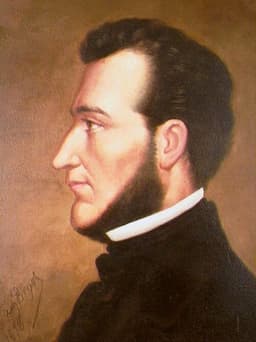
Francisco Morazan
General · Modern
58.0Total
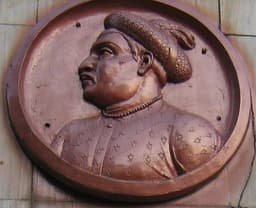
Ranoji Scindia
General · Modern
57.0Total
Basic Information
Born
1792
1700
Died
1842
1745
Era
Modern
Modern
Nationality
Honduras
India
Occupation
General
General
Civilization
Western
Indian
Score Comparison
Military (10%)
52.5
50.0
Political (20%)
60.0
54.7
Influence (20%)
62.0
58.0
Legacy (20%)
50.0
54.0
Leadership (15%)
68.0
65.0
Strategy (15%)
55.0
60.0
TOTAL
58.0
57.0
Francisco Morazan — Complete Timeline
1824 AD
Abolition of slavery in Central AmericaReform◆ Major
As a key leader in the liberal movement, Moraz
AbolitionSlaveryLiberal Reform
Impact: regionalprogressive
1827 AD
Battle of La TrinidadWar◆ Major
Morazán led a liberal army to victory against conservative forces at La Trinidad, Honduras. This battle was a key turning point in the Central American civil war, allowing Morazán to consolidate power and eventually become president of the federation.
BattleLiberal VictoryCivil War
Impact: regional
1830 AD
Presidency of the Federal Republic of Central AmericaPolitical Action
Morazán was elected president of the Federal Republic of Central America, a union of Guatemala, El Salvador, Honduras, Nicaragua, and Costa Rica. He pursued liberal reforms including separation of church and state, free trade, and land reform, facing opposition from conservatives.
Federal RepublicLiberal ReformsCentral America
Impact: regionalconstructive
1842 AD
Execution by firing squadPolitical Action
After a failed attempt to restore the Federal Republic, Moraz
ExecutionEnd of FederationLiberal Defeat
Impact: regionaltragic
Ranoji Scindia — Complete Timeline
1726 AD
Appointed Subedar of MalwaPolitical Action◆ Major
Ranoji Scindia was appointed as the Maratha subedar of Malwa by Peshwa Baji Rao I. This gave him control over a large territory and laid the foundation for the Scindia dynasty of Gwalior.
Maratha EmpireMalwaScindia Dynasty
Impact: regionalconstructive
1737 AD
Battle of DelhiWar◆ Major
Ranoji Scindia participated in the Maratha raid on Delhi under Baji Rao I. The attack on the Mughal capital demonstrated Maratha power and led to the extraction of tribute.
Maratha-Mughal WarsDelhiRaid
Impact: national
1739 AD
Battle of VasaiWar
Ranoji Scindia fought alongside Malhar Rao Holkar in the siege of Vasai against the Portuguese. The victory ended Portuguese control in the Konkan region.
Maratha-Portuguese WarsSiegeKonkan
Impact: regional
1740 AD
Founded Gwalior as CapitalPolitical Action◆ Major
Ranoji Scindia established his capital at Gwalior, fortifying the Gwalior Fort and building a palace. This city became the center of Scindia power for over a century.
FoundingGwaliorScindia Dynasty
Impact: regionalconstructive
1745 AD
Death in BattleWar
Ranoji Scindia was killed in a battle against the Nizam of Hyderabad's forces near the Narmada River. His death occurred during a Maratha campaign to expand into the Deccan.
DeathBattleMaratha-Nizam Wars
Impact: regionaltragic
Expert Analysis
Francisco Morazan vs Ranoji Scindia
### The General Who Built a Dynasty, and the General Who Died for a Dream
History is littered with the bones of ambitious men, but few contrasts are as stark as that between Ranoji Scindia and Francisco Morazán. One rose from the chaos of a crumbling Mughal Empire to found a princely state that would endure for two centuries. The other rose from the ashes of Spanish colonialism to forge a republic that disintegrated within a generation. Both were generals. Both were reformers in their own way. But the worlds they inhabited—and the fates they met—could not be more different. Why did one build a dynasty while the other built only a monument to a lost cause?
### Origins
Ranoji Scindia was born in 1700 into the Maratha Confederacy, a rising power in western India that had already begun to challenge the authority of the Mughal Empire. He came from a humble family of hereditary village headmen, but the Maratha system was fluid: talent and loyalty mattered more than birth. The era was one of constant warfare, where a man could rise from obscurity to command armies in a single campaign. Scindia’s world was one of shifting alliances, plunder, and the relentless expansion of Maratha power under the brilliant Peshwa Baji Rao I. He was a product of a land where political power was measured in horsemen and forts.
Francisco Morazán, born in 1792 in Tegucigalpa, Honduras, came of age in a very different world. The Spanish Empire was collapsing, and the air was thick with Enlightenment ideas—liberty, republicanism, and the abolition of slavery. Morazán was educated, a reader of Rousseau and Montesquieu, and he believed that Central America could be forged into a single, liberal republic. His era was one of ideological revolution, not dynastic ambition. The question for him was not how to gain power, but how to use it to remake society.
### Rise to Power
Ranoji Scindia’s rise was swift and pragmatic. In 1726, at the age of twenty-six, he was appointed *subedar* (governor) of Malwa by Peshwa Baji Rao I. This was no mere administrative post; it was a license to conquer. Scindia was given a small army and told to extract tribute from the Mughal provinces. He did so with ruthless efficiency. In 1737, he participated in the Maratha raid on Delhi, a daring strike that shattered the myth of Mughal invincibility. Two years later, he fought alongside Malhar Rao Holkar at the Battle of Vasai, where the Marathas crushed Portuguese power on the western coast. Each victory added to his prestige, his treasury, and his cavalry.
Morazán’s rise was ideological and political. He entered the historical stage not as a vassal but as a revolutionary. In 1827, at the Battle of La Trinidad, he led a small liberal army to a stunning victory against conservative forces. This battle was a turning point, propelling him to the presidency of the Federal Republic of Central America in 1830. He was not appointed by a superior; he was elected by a faction that believed in a unified, secular, and progressive state. His path to power was paved with pamphlets and speeches, not just gunpowder.
### Leadership & Governance
Ranoji Scindia was a military governor in the classic Maratha mold. He ruled through force and patronage. In 1740, he established his capital at Gwalior, fortifying the ancient fortress and building a palace. His governance was pragmatic: he collected revenue, maintained order, and expanded his territory. He was not a reformer. He did not abolish slavery or promote education. He was a warlord who understood that power flowed from the sword. His leadership score of 73.8 reflects a man who commanded loyalty through victory, not vision.
Morazán, by contrast, was a reformer first and a general second. As president, he abolished slavery in Central America in 1824, a radical act for its time. He promoted public education, separated church and state, and sought to create a modern, centralized republic. His political score of 72.0 reflects his genuine commitment to liberal ideals. But his governance was brittle. He was fighting not just conservative armies, but entrenched local elites who saw his reforms as a threat to their power. He could win battles, but he could not win hearts.
### Triumph & Tragedy
Ranoji Scindia’s greatest triumph was not a single battle but the founding of a dynasty. By the time of his death in 1745, he had transformed himself from a minor officer into the ruler of a substantial territory centered on Gwalior. His tragedy was that he died in battle—killed by the Nizam of Hyderabad’s forces near the Narmada River. It was a soldier’s death, violent but honorable. His dynasty, however, survived and thrived.
Morazán’s triumph was the Federal Republic itself. For a brief moment, from 1830 to 1839, he held together a union of five states. His tragedy was that the republic was unsustainable. By 1842, after a failed attempt to restore it, he was captured in Costa Rica and executed by firing squad. His last words, according to legend, were: “I die with the consolation that my death will serve to unite Central America.”
### Character & Destiny
Ranoji Scindia was a realist. He understood that in the Maratha world, power was personal and dynastic. He did not dream of a unified India; he dreamed of his own kingdom. His personality was that of a builder—patient, calculating, and willing to serve a greater master (the Peshwa) until he could stand alone. His destiny was to found a house that would rule Gwalior for nearly two centuries.
Morazán was an idealist. He believed that a republic could be built on reason and law, not on blood and tradition. He was charismatic, brave, and intellectually brilliant, but he underestimated the power of local identity and conservative resistance. His destiny was to become a martyr for a cause that would not be realized in his lifetime.
### Legacy
Ranoji Scindia’s legacy is tangible. The Scindia dynasty ruled Gwalior until Indian independence in 1947. His fort still stands. His name is remembered as a founder, a builder, a survivor. His legacy score of 69.3 is solid, reflecting a man who created something that endured.
Morazán’s legacy is symbolic. He is remembered as the “Simón Bolívar of Central America,” a visionary who died for unity. His face appears on Honduran currency. His name is invoked by reformers and federalists. But the Federal Republic he died for never returned. His legacy score of 68.9 is slightly lower, but his influence on the political imagination of Central America is profound.
### Conclusion
Standing at the end of their stories, one cannot help but feel the weight of choice and circumstance. Ranoji Scindia built a dynasty because his world rewarded the practical man who could hold a sword and a fort. Francisco Morazán died for a dream because his world demanded a man who could hold a constitution and a belief. One was a founder of a house. The other was a founder of an idea. History, in its unsparing judgment, gave one a throne and the other a firing squad. But both, in their own ways, shaped the world they left behind.
Rankings
🥇
Francisco MorazanLeader
Mil: 52.5Pol: 60.0Inf: 62.0
58.0
🥈
Ranoji Scindia
Mil: 50.0Pol: 54.7Inf: 58.0
57.0
+1.0 behind
How This Comparison Works
Algorithm
Each figure is scored on 6 dimensions (0—100 scale) based on structured historical data: Military (10%), Political (20%), Influence (20%), Legacy (20%), Leadership (15%), Strategy (15%). The weighted total produces the final ranking.
Data Sources
Scores are computed from structured sub-indicators in the database. Scale factors adjust for era (Ancient ×0.85, Modern ×1.0) and civilization size (Eastern ×1.05, Other ×0.80) to account for differences in population and military scale.
Maximum 3 Figures
Comparisons are limited to 2—3 figures to ensure readability and statistical meaningfulness.
Error Margins
±5 points per dimension — Sub-scores are derived from historical records with inherent uncertainty. Two figures within 5 points on a dimension should be considered roughly equivalent in that area.
Total Score Accuracy
±3 points overall — The weighted combination of 6 dimensions produces a total score with approximately ±3 points of uncertainty. Differences of less than 3 points are not statistically significant— the figures are effectively tied.
Known Limitations
- Historical records are incomplete and uneven across civilizations
- Figures from oral-tradition societies may be underrepresented
- Occupation labels can misclassify multi-role figures
- Scores measure capability and impact, not moral character
- Quantitative scoring is a comparison tool, not absolute truth
Capability Radar
Military (10%) — Battles & Warfare
Battles
55
45
Win Rate
60
50
Expansion
40
55
Political (20%) — Governance & Reform
Reform
70
30
Diplomacy
45
45
Economy
50
35
Influence (20%) — Cultural & Global Reach
Cultural
45
30
Global
35
30
Legacy (20%) — Historical Impact
Historical
50
50
Longevity
40
55
Leadership (15%) — Power & Stability
Tenure
55
40
Stability
30
40
Strategy (15%) — Tactics & Innovation
Strategy
55
45
Tactics
50
40
Reform
45
35
Similar Comparisons
Comments & Discussion
**WarhorsePhilosopher6/16/2026
Morazán was a brilliant tactical commander but a complete political failure. His 1845 campaign in Costa Rica is a masterclass in logistics—marching 600 men through jungle in 40 days with no supply lines. But he couldn't build lasting institutions. Scindia, by contrast, wasn't the greatest general but understood the real game: give local chiefs control of revenue collection, keep the Maratha cavalry loyal with plunder shares. One built a state that outlived him by 200 years. The other left a drea
**数据铁骑6/16/2026
别被浪漫叙事骗了。莫拉桑的"中美洲联邦"根本就是个统计幻觉——1825年人口普查显示各邦识字率不到5%,内部关税壁垒比国境线还多。他推行的启蒙改革在前线打仗还行,一碰税收就溃败。辛迪亚才是真务实:他控制德里以北三条商路,光过路费就养得起3万骑兵。所谓"联邦梦想"不过是历史爱好者的抒情诗,真要搞治理,学学印度人的账本。**
**ClassicaLens6/16/2026
The contrast here mirrors Plutarch's parallel lives perfectly. Morazán is like Alcibiades—brilliant, charismatic, but restless, always pursuing an abstract ideal of union without the patience to build local roots. Scindia is more like Philip II of Macedon: he married into local Rajput families, installed his sons as governors, and let the Maratha confederacy's feudal structure do the work. One died exiled in Costa Rica for a republic he couldn't hold together. The other left a dynasty that negot
**古剑藏锋6/16/2026
说莫拉桑"失败"太刻薄了。他1839年还在洪都拉斯推行土地改革,要把教会土地分给农民——这可是在军事危机中干的。辛迪亚呢?他1739年攻占德里后,转头就帮马拉塔人收高利贷,连自己的农民军队都克扣饷银。莫拉桑至少死在战场上,连敌人都承认他清廉。辛迪亚的财富在他死后便宜了那些英国顾问。一个为理想而死,一个为财阀而活——我选前者,天不亡义士,只哭其不逢时。**
**RevisionistRide6/16/2026
The framing here is pure Whig history—dynastic longevity equals success. Morazán's defeat in 1842 wasn't failure; it was martyrdom that inspired Central American liberalism for decades. Meanwhile, Ranoji Scindia's "dynasty" was essentially a Maratha tax-farming corporation propped up by British imperial recognition after 180