Loading...
Francisco Morazan vs Ramon Castilla
Ramon Castilla leads by 1.7 pts · 2 figures compared
…
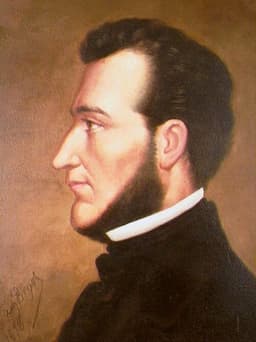
Francisco Morazan
General · Modern
58.0Total
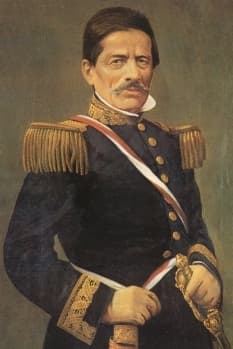
Ramon Castilla
General · Modern
59.7Total
Basic Information
Born
1792
1797
Died
1842
1867
Era
Modern
Modern
Nationality
Honduras
Peru
Occupation
General
General
Civilization
Western
Western
Score Comparison
Military (10%)
52.5
40.0
Political (20%)
60.0
72.0
Influence (20%)
62.0
56.7
Legacy (20%)
50.0
52.0
Leadership (15%)
68.0
78.0
Strategy (15%)
55.0
60.0
TOTAL
58.0
59.7
Francisco Morazan — Complete Timeline
1824 AD
Abolition of slavery in Central AmericaReform◆ Major
As a key leader in the liberal movement, Moraz
AbolitionSlaveryLiberal Reform
Impact: regionalprogressive
1827 AD
Battle of La TrinidadWar◆ Major
Morazán led a liberal army to victory against conservative forces at La Trinidad, Honduras. This battle was a key turning point in the Central American civil war, allowing Morazán to consolidate power and eventually become president of the federation.
BattleLiberal VictoryCivil War
Impact: regional
1830 AD
Presidency of the Federal Republic of Central AmericaPolitical Action
Morazán was elected president of the Federal Republic of Central America, a union of Guatemala, El Salvador, Honduras, Nicaragua, and Costa Rica. He pursued liberal reforms including separation of church and state, free trade, and land reform, facing opposition from conservatives.
Federal RepublicLiberal ReformsCentral America
Impact: regionalconstructive
1842 AD
Execution by firing squadPolitical Action
After a failed attempt to restore the Federal Republic, Moraz
ExecutionEnd of FederationLiberal Defeat
Impact: regionaltragic
Ramon Castilla — Complete Timeline
1824 AD
Battle of AyacuchoWar
Castilla fought as a junior officer in the decisive Battle of Ayacucho, which ended Spanish rule in Peru. This victory secured Peruvian independence and marked the end of the Spanish Empire in South America, shaping Castilla's nationalist views.
Peruvian War of IndependenceBattleLiberation
Impact: regional
1845 AD
First Presidency of PeruPolitical Action◆ Major
Castilla was elected President of Peru in 1845, serving until 1851. His first term focused on economic development, including the guano boom, and infrastructure projects such as railroads and ports, modernizing the Peruvian state.
PresidencyEconomic DevelopmentGuano
Impact: nationalconstructive
1854 AD
Abolition of Slavery in PeruReform◆ Major
During his second presidency, Castilla issued a decree abolishing slavery in Peru on December 3, 1854. This reform freed approximately 25,000 slaves and was part of a broader liberal agenda, though it faced opposition from slave-owning elites.
AbolitionSlaveryHuman Rights
Impact: nationalprogressive
Abolition of Indigenous TributeReform◆ Major
Castilla also abolished the indigenous tribute tax in 1854, which had been a burden on native communities since colonial times. This measure aimed to integrate indigenous peoples into the Peruvian state as equal citizens, though its implementation was uneven.
Indigenous RightsTax ReformCitizenship
Impact: nationalprogressive
1855 AD
Second Presidency and Guano BoomPolitical Action◆ Major
Castilla served a second term from 1855 to 1862, during the peak of the guano export boom. He used guano revenues to fund public works, pay off foreign debt, and modernize the military, but also faced criticism for corruption and over-reliance on a single resource.
PresidencyGuanoModernization
Impact: nationalconstructive
1860 AD
Constitutional Reform of 1860Reform◆ Major
Castilla oversaw the adoption of a new constitution in 1860, which established a centralized republic with a strong executive. The constitution remained in effect until 1920 and shaped Peru's political structure, though it limited regional autonomy.
ConstitutionPolitical ReformCentralization
Impact: nationalconstructive
Expert Analysis
Francisco Morazan vs Ramon Castilla
# The Fragile Dream of Union: Ramon Castilla and Francisco Morazan
On a sweltering December morning in 1854, Ramon Castilla stood before a crowd in Lima and signed the decree that would change Peru forever. Half a world away in time but only a decade earlier, Francisco Morazan faced a firing squad in San José, Costa Rica, his dream of a united Central America dying with him. Two generals, two reformers, two men who sought to build nations from the wreckage of empire—yet one left a lasting legacy while the other became a martyr to a lost cause. What separated triumph from tragedy?
Origins
Ramon Castilla was born in 1797 in Tarapacá, then a remote province of the Viceroyalty of Peru. His father was a Basque immigrant who had carved out a modest living in mining, and his mother came from a local Creole family. Castilla grew up in a world where Spanish authority still seemed eternal, but the winds of revolution were already stirring. He joined the royalist army as a young man, fighting for Spain against the independence movements that swept South America—a choice that might have doomed him had he not switched sides at a critical moment.
Francisco Morazan, born five years earlier in 1792 in Tegucigalpa, Honduras, came from a similar Creole background but a very different political environment. His family owned a small farm and trading business, and young Francisco absorbed the liberal ideas filtering from Europe and the United States. Central America had been a backwater of the Spanish Empire, and when independence came in 1821, it did so almost by accident. Morazan grew up in a world of fragile new states, not a crumbling empire.
The key difference lay in their formative experiences. Castilla learned war as a soldier in the great campaigns that broke Spanish power—he fought at Ayacucho in 1824, the battle that ended three centuries of colonial rule. Morazan learned war as a rebel against the conservative forces that wanted to preserve the old social order. For Castilla, independence was a victory won; for Morazan, it was a revolution that had only just begun.
Rise to Power
Castilla's path to power was gradual and pragmatic. After Ayacucho, he served in various military and administrative posts, building a reputation for competence rather than charisma. When Peru descended into civil war in the 1830s, Castilla chose his alliances carefully, switching sides when necessary but always positioning himself as a moderate who could unite factions. His moment came in 1845, when he was elected president—not through heroic deeds, but through patient political maneuvering.
Morazan's rise was far more dramatic. In 1827, he was a little-known colonel when conservative forces invaded his native Honduras. He gathered a small army and defeated them at the Battle of La Trinidad, a victory that electrified the liberal movement across Central America. Within three years, he had become president of the Federal Republic of Central America—a union of five states that had been drifting apart since independence. Morazan seized power through military brilliance and ideological conviction.
The contrast is telling. Castilla rose through the system; Morazan rose against it. Castilla worked within Peru's existing political structures, however flawed; Morazan tried to create new structures from scratch.
Leadership and Governance
Castilla's first presidency from 1845 to 1851 was a masterclass in practical governance. Peru was poor and divided, but the guano deposits off its coast were about to transform its fortunes. Castilla used this new wealth wisely: he paid off foreign debts, built railways and ports, and modernized the bureaucracy. His second term from 1855 to 1862 coincided with the full guano boom, and he channeled the revenues into schools, hospitals, and infrastructure.
But Castilla's most enduring achievements were social. On December 3, 1854, he abolished slavery in Peru, freeing some 25,000 enslaved people. That same year, he abolished the indigenous tribute tax, a colonial-era burden that had kept native communities in poverty. These reforms were not merely moral gestures—they were political necessities, designed to build a broader base of support for the state. Castilla understood that a modern nation needed free citizens, not subjects.
Morazan's reforms were more ambitious but less sustainable. As president of the Federal Republic from 1830 to 1839, he abolished slavery, ended church privileges, promoted education, and sought to create a unified Central American identity. He was a true liberal visionary, believing that reason and progress could overcome centuries of tradition.
Yet Morazan governed a federation that was always on the verge of collapse. The conservative landowners and clergy saw him as a revolutionary threat; the provinces resented central authority; and the economic resources simply did not exist to fund his ambitious programs. Where Castilla had guano, Morazan had only debt and division.
Triumph and Tragedy
Castilla's greatest triumph was the Constitution of 1860, which established a stable political framework for Peru that lasted decades. He left office in 1862 as a revered elder statesman, having transformed his country from a chaotic collection of factions into a functioning republic. When he died in 1867, Peru mourned a founder.
Morazan's tragedy unfolded with Greek inevitability. The Federal Republic collapsed in 1839 after years of civil war. He went into exile, but could not abandon his dream. In 1842, he invaded Costa Rica in a desperate attempt to restore the union. He was captured and, on September 15, 1842, executed by firing squad. His last words reportedly were: "I die with the consolation that my death will serve to unite Central America and to complete the work of my life."
Character and Destiny
Castilla was a pragmatist who understood the art of the possible. He was not a great military strategist—his score of 58.7 in strategy reflects this—but he was an exceptional political leader, with a leadership rating of 84.0. He knew when to compromise and when to act decisively. His reforms were bold, but he implemented them gradually, building consensus.
Morazan was a visionary who could not accept the limits of reality. His military score of 65.4 shows a capable commander, but his political score of 72.0, while high, was not enough to overcome the forces arrayed against him. He believed that the right ideas would triumph if only he fought hard enough. Central America was not ready for his vision, and he died because he refused to accept that.
Legacy
Castilla is remembered as one of Peru's greatest presidents. His abolition of slavery and indigenous tribute remain foundational acts of the modern nation. The guano boom he managed so wisely made Peru a player on the world stage. His legacy score of 75.0 reflects a solid, enduring reputation.
Morazan is a more complicated figure. He is revered by liberals across Central America as a martyr for unity and progress, but his failure haunts the region. The Federal Republic never revived, and the five nations went their separate ways, often warring with each other. His legacy score of 68.9 acknowledges his importance but also the incompleteness of his work.
Conclusion
Standing at the edge of Lima's Plaza Mayor, one can still feel the presence of Castilla—the practical builder who used wealth wisely. In the dusty plazas of Tegucigalpa and San Salvador, Morazan's ghost lingers differently: a reminder that noble dreams can be destroyed by the very forces they seek to overcome. Both men tried to build nations from the ruins of empire. One had the resources, the timing, and the temperament to succeed. The other had the vision, the courage, and the tragic flaw of believing that a dream alone could hold a fragmented world together. Their stories remind us that history rewards not just the bold, but the fortunate—and that the line between triumph and tragedy is often drawn by forces beyond any single leader's control.
Rankings
🥇
Ramon CastillaLeader
Mil: 40.0Pol: 72.0Inf: 56.7
59.7
🥈
Francisco Morazan
Mil: 52.5Pol: 60.0Inf: 62.0
58.0
+1.7 behind
How This Comparison Works
Algorithm
Each figure is scored on 6 dimensions (0—100 scale) based on structured historical data: Military (10%), Political (20%), Influence (20%), Legacy (20%), Leadership (15%), Strategy (15%). The weighted total produces the final ranking.
Data Sources
Scores are computed from structured sub-indicators in the database. Scale factors adjust for era (Ancient ×0.85, Modern ×1.0) and civilization size (Eastern ×1.05, Other ×0.80) to account for differences in population and military scale.
Maximum 3 Figures
Comparisons are limited to 2—3 figures to ensure readability and statistical meaningfulness.
Error Margins
±5 points per dimension — Sub-scores are derived from historical records with inherent uncertainty. Two figures within 5 points on a dimension should be considered roughly equivalent in that area.
Total Score Accuracy
±3 points overall — The weighted combination of 6 dimensions produces a total score with approximately ±3 points of uncertainty. Differences of less than 3 points are not statistically significant— the figures are effectively tied.
Known Limitations
- Historical records are incomplete and uneven across civilizations
- Figures from oral-tradition societies may be underrepresented
- Occupation labels can misclassify multi-role figures
- Scores measure capability and impact, not moral character
- Quantitative scoring is a comparison tool, not absolute truth
Capability Radar
Military (10%) — Battles & Warfare
Battles
55
45
Win Rate
60
50
Expansion
40
30
Political (20%) — Governance & Reform
Reform
70
85
Diplomacy
45
70
Economy
50
75
Influence (20%) — Cultural & Global Reach
Cultural
45
55
Global
35
50
Legacy (20%) — Historical Impact
Historical
50
65
Longevity
40
60
Leadership (15%) — Power & Stability
Tenure
55
65
Stability
30
60
Strategy (15%) — Tactics & Innovation
Strategy
55
45
Tactics
50
40
Reform
45
55
Similar Comparisons
Comments & Discussion
EL CAUDILLO CRITIC6/16/2026
Castilla’s military pragmatism outshines Morazán’s ideological rigidity because he understood that state-building requires compromise, not martyrdom. Castilla flipped from royalist to republican, then used his timing to abolish slavery—securing a loyal base. Morazán, by contrast, never shed his caudillo tactics after victory, alienating local elites and inviting federal collapse. His execution was noble but avoidable; Castilla died in office at 74. One died for a union, the other built a nation.
数据拆解侠6/16/2026
说Castilla废除奴隶制就赢了?他1849年才真的动手,而且之前秘鲁奴隶人口不到两万,根本是顺手人情。Morazán在1830年代就尝试土地改革和政教分离,步子更大,代价也更凶。Castilla的“成功”很大程度上靠的是鸟粪经济泡沫——1860年代占了政府收入80%。换Morazán踩到那笔横财,未必不能稳住中美洲联合体。胜利是运气,不是策略。
CONSTITUTIONAL GHOST6/16/2026
What gets lost in the Morazán martyr narrative is that he died fighting a liberal constitution, not a conservative monarchy. The 1842 coup against him was led by federalists who accused him of centralizing power exactly like the old colonial audiencia. Compare that to Castilla, who personally drafted the 1860 Peruvian constitution and made it stick for 60 years. Morazán wrote beautiful decrees but couldn’t build civil institutions; Castilla wrote a constitution and actually enforced it. That’s t
南美骑墙解剖师6/16/2026
别把Castilla想得太高尚——他“废除”奴隶制时搞了十年才落实,还顺手塞了个“补偿金”条款,实际上让庄园主平账而非解放穷人。Morazán至少在1834年就强力推行了中美洲的废奴,还触动了教会土地,这才真触了众怒。Castilla精在只会动富人皮毛,Morazán蠢在非要动富人筋骨。历史夸Castilla是改革家,因为他聪明到从不改革到痛处。