Loading...
Francisco Morazan vs Plutarco Elias Calles
Plutarco Elias Calles leads by 0.5 pts · 2 figures compared
…
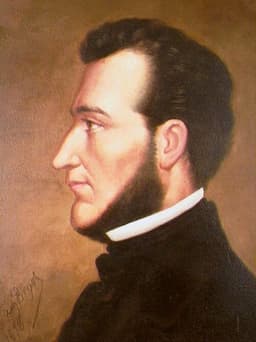
Francisco Morazan
General · Modern
58.0Total
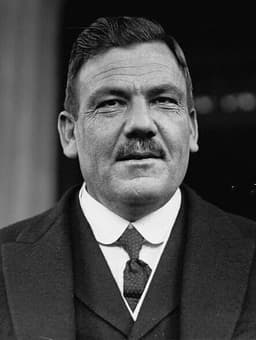
Plutarco Elias Calles
General · Modern
58.5Total
Basic Information
Born
1792
1877
Died
1842
1945
Era
Modern
Modern
Nationality
Honduras
Mexico
Occupation
General
General
Civilization
Western
Western
Score Comparison
Military (10%)
52.5
40.0
Political (20%)
60.0
70.3
Influence (20%)
62.0
68.0
Legacy (20%)
50.0
40.0
Leadership (15%)
68.0
78.0
Strategy (15%)
55.0
52.5
TOTAL
58.0
58.5
Francisco Morazan — Complete Timeline
1824 AD
Abolition of slavery in Central AmericaReform◆ Major
As a key leader in the liberal movement, Moraz
AbolitionSlaveryLiberal Reform
Impact: regionalprogressive
1827 AD
Battle of La TrinidadWar◆ Major
Morazán led a liberal army to victory against conservative forces at La Trinidad, Honduras. This battle was a key turning point in the Central American civil war, allowing Morazán to consolidate power and eventually become president of the federation.
BattleLiberal VictoryCivil War
Impact: regional
1830 AD
Presidency of the Federal Republic of Central AmericaPolitical Action
Morazán was elected president of the Federal Republic of Central America, a union of Guatemala, El Salvador, Honduras, Nicaragua, and Costa Rica. He pursued liberal reforms including separation of church and state, free trade, and land reform, facing opposition from conservatives.
Federal RepublicLiberal ReformsCentral America
Impact: regionalconstructive
1842 AD
Execution by firing squadPolitical Action
After a failed attempt to restore the Federal Republic, Moraz
ExecutionEnd of FederationLiberal Defeat
Impact: regionaltragic
Plutarco Elias Calles — Complete Timeline
1915 AD
Governorship of SonoraPolitical Action
Calles served as Governor of Sonora from 1915 to 1919, implementing radical reforms including land redistribution, anti-clerical laws, and labor rights. His governorship established him as a key figure in the Sonoran dynasty and a proponent of revolutionary change.
GovernorshipSonoraReforms
Impact: regionalconstructive
1924 AD
Presidency of MexicoPolitical Action◆ Major
Calles was elected President of Mexico in 1924, serving until 1928. His administration continued revolutionary reforms, including land reform, labor rights, and secularization, but also faced opposition from the Catholic Church and conservative groups.
PresidencyMexican RevolutionReforms
Impact: nationalconstructive
1926 AD
Cristero WarWar◆ Major
Calles enforced anti-clerical laws, including the Calles Law, which restricted the Catholic Church's role in society. This sparked the Cristero War (1926-1929), a violent rebellion by Catholic peasants against the state, resulting in tens of thousands of deaths.
Cristero WarAnti-clericalismReligious Conflict
Impact: nationaldestructive
1928 AD
MaximatoPolitical Action◆ Major
After his presidency, Calles remained the de facto ruler of Mexico during the Maximato (1928-1934), controlling puppet presidents. He continued to influence policy, but his power waned as President L
MaximatoPolitical ControlCárdenas
Impact: national
1929 AD
Founding of the National Revolutionary Party (PNR)Political Action
Calles founded the National Revolutionary Party (PNR) in 1929, which later became the Institutional Revolutionary Party (PRI). This party dominated Mexican politics for over 70 years, institutionalizing the revolution's legacy and centralizing power.
Political PartyPRIInstitutionalization
Impact: nationalconstructive
Expert Analysis
Francisco Morazan vs Plutarco Elias Calles
# The Strongman and the Dreamer
On a sweltering July morning in 1842, Francisco Morazán stood before a firing squad in San José, Costa Rica, his last words a defiant plea for Central American unity. Less than a century later, in 1929, Plutarco Elías Calles stood before a crowd in Mexico City, announcing the creation of a political party that would dominate his nation for seven decades. One died a martyr to a failed dream; the other built a machine that outlasted him. What drove these two generals—both reformers, both secularists, both products of turbulent revolutions—to such different ends?
Origins
Morazán was born in 1792 in Tegucigalpa, Honduras, into a creole family of modest means. The son of a French-Italian merchant and a local mother, he grew up in the twilight of Spanish colonial rule. The Enlightenment ideals of liberty and reason reached him through smuggled books, and the chaos of the Napoleonic Wars shattered the old order. He was a child of the Age of Revolution, when men believed they could remake the world with constitutions and bayonets.
Calles, born in 1877 in Sonora, Mexico, came of age in a different world. The son of a failed schoolteacher and a devout mother, he grew up in the harsh northern frontier under the long dictatorship of Porfirio Díaz. Where Morazán inherited the optimism of 1776 and 1789, Calles inherited the cynicism of a century of failed experiments. He worked as a bartender, a teacher, and a miller before the Mexican Revolution of 1910 gave him his chance. He was a child of the twentieth century—pragmatic, ruthless, and convinced that power, not ideas, was the only thing that lasted.
Rise to Power
Morazán’s path was that of a classical liberal caudillo. In 1827, at the Battle of La Trinidad, he led a ragged army of exiles to defeat the conservative forces that had overthrown the federal government. His military score of 65.4 reflects solid competence, but it was his political vision that drove him. By 1830, at age thirty-eight, he was president of the Federal Republic of Central America—a union of five states that had broken from Mexico. He used his power to abolish slavery, establish trial by jury, separate church and state, and promote public education. He was a man in a hurry, believing that reform could be imposed from above.
Calles rose differently. His governorship of Sonora from 1915 to 1919 was a laboratory for state-building: he redistributed land, crushed the Catholic Church’s influence, and created a network of loyalists. When he was elected president in 1924, he inherited a revolution that had already consumed a million lives. He understood that the chaos of the 1910s had made Mexicans desperate for order, not liberty. His political score of 79.8 reflects a master of the possible.
Leadership & Governance
Their ruling styles could not have been more different. Morazán governed through speeches, decrees, and military campaigns. He believed in the power of ideas—liberalism, federalism, progress—to unite a fractured region. But Central America was a patchwork of local strongmen, indigenous communities, and conservative landowners who saw his reforms as an attack on tradition. He spent his presidency fighting one rebellion after another, his army always on the move, his treasury always empty.
Calles governed through institutions. The Cristero War of 1926–1929, triggered by his enforcement of anti-clerical laws, was a brutal conflict that killed tens of thousands. But Calles did not try to win it through battlefield heroics. He negotiated a settlement with the Church, then turned to building the National Revolutionary Party (PNR) in 1929. This was his true genius: he created a political machine that could absorb rivals, manage factions, and perpetuate itself. Even after his presidency ended in 1928, he ruled through puppet presidents during the Maximato, proving that power could exist without a title.
Triumph & Tragedy
Morazán’s triumph was the abolition of slavery in 1824 and the establishment of liberal constitutions across Central America. His tragedy was that he could not make them stick. In 1838, the federation dissolved as each state seceded. He spent his final years in exile, then returned for a desperate attempt to restore the union. Captured in Costa Rica, he was executed at age fifty. His last letter read: “I die with the conviction that I have served my country.”
Calles’s triumph was the PRI, which would govern Mexico until 2000—one of the longest-ruling parties in history. His tragedy was that his own creation outgrew him. In 1936, his successor Lázaro Cárdenas exiled him, proving that the machine had become stronger than its founder. Calles died in 1945, a ghost in the system he had built.
Character & Destiny
Morazán was a romantic. He believed that men could be persuaded to sacrifice local loyalties for a grand ideal. He was brave, eloquent, and utterly impractical. His military score of 65.4 and strategy of 55.6 suggest a general who was competent but not brilliant—he won battles but never consolidated peace. His character drove him to take risks that ultimately destroyed him.
Calles was a realist. He believed that men were driven by interest, not ideals. He was cold, calculating, and patient. His leadership score of 75.5 reflects a man who knew when to fight and when to compromise. He built a system that did not depend on any one leader, including himself. His character drove him to create something that could survive his own mistakes.
Legacy
Morazán is remembered as the father of Central American unity—a tragic hero whose dream still haunts the region. Statues of him stand in every capital, but the federation he died for remains broken. His legacy score of 68.9 reflects a man honored in memory but failed in practice.
Calles is remembered as the architect of modern Mexico—the Jefe Máximo who brought order out of chaos. But his legacy is ambiguous. The PRI he founded became synonymous with corruption and authoritarianism. His secularization policies left deep scars. His legacy score of 72.0 reflects a builder whose creation was both a triumph and a prison.
Conclusion
Two generals, two dreams. Morazán wanted to unite a region; Calles wanted to control a nation. Morazán died with his dream intact but unrealized; Calles died with his dream realized but corrupted. The difference was not in their ideals—both were liberals, both were secularists, both believed in progress. The difference was in their understanding of power. Morazán believed that good ideas would triumph; Calles believed that good institutions would. History, as always, gave its verdict to the pragmatist. But it remembered the idealist.
Rankings
🥇
Plutarco Elias CallesLeader
Mil: 40.0Pol: 70.3Inf: 68.0
58.5
🥈
Francisco Morazan
Mil: 52.5Pol: 60.0Inf: 62.0
58.0
+0.5 behind
How This Comparison Works
Algorithm
Each figure is scored on 6 dimensions (0—100 scale) based on structured historical data: Military (10%), Political (20%), Influence (20%), Legacy (20%), Leadership (15%), Strategy (15%). The weighted total produces the final ranking.
Data Sources
Scores are computed from structured sub-indicators in the database. Scale factors adjust for era (Ancient ×0.85, Modern ×1.0) and civilization size (Eastern ×1.05, Other ×0.80) to account for differences in population and military scale.
Maximum 3 Figures
Comparisons are limited to 2—3 figures to ensure readability and statistical meaningfulness.
Error Margins
±5 points per dimension — Sub-scores are derived from historical records with inherent uncertainty. Two figures within 5 points on a dimension should be considered roughly equivalent in that area.
Total Score Accuracy
±3 points overall — The weighted combination of 6 dimensions produces a total score with approximately ±3 points of uncertainty. Differences of less than 3 points are not statistically significant— the figures are effectively tied.
Known Limitations
- Historical records are incomplete and uneven across civilizations
- Figures from oral-tradition societies may be underrepresented
- Occupation labels can misclassify multi-role figures
- Scores measure capability and impact, not moral character
- Quantitative scoring is a comparison tool, not absolute truth
Capability Radar
Military (10%) — Battles & Warfare
Battles
55
45
Win Rate
60
50
Expansion
40
30
Political (20%) — Governance & Reform
Reform
70
85
Diplomacy
45
65
Economy
50
60
Influence (20%) — Cultural & Global Reach
Cultural
45
70
Global
35
60
Legacy (20%) — Historical Impact
Historical
50
75
Longevity
40
70
Leadership (15%) — Power & Stability
Tenure
55
70
Stability
30
55
Strategy (15%) — Tactics & Innovation
Strategy
55
55
Tactics
50
40
Reform
45
60
Similar Comparisons
Comments & Discussion
理想国观测者6/16/2026
莫拉桑不是失败者,他是被时代牺牲的预言家。他1829年夺取危地马拉城、1830年当选联邦总统时,试图用一部宪法把五个仇视彼此的省份捏在一起。这不是天真,这是对启蒙精神疯狂的忠诚。卡列斯更聪明:他看穿了宪政的把戏,直接创建制度化的权力机器。一个死在行刑队前大喊“还我联邦”,一个死在病床上看着自己的党统治墨西哥。两个强人,两种答案——问题是,哪个更让人绝望?
多棱镜史评人6/16/2026
说卡列斯是“务实者”本身就是历史的讽刺。他1926年引发克里斯泰罗战争,屠杀数万农民,就为了推行自己激进的反教权政策——这叫务实?这叫用另一种意识形态狂热取代莫拉桑的联邦梦。莫拉桑至少给地方保留了相当程度的自治权,卡列斯从1929年创建国民革命党起就把所有权力收归中央。从联邦到集权,从地方精英协商到单一党派专制,这不是“成熟”,这是另一种形态的独裁。两人的区别不在于梦想与现实,而在于哪种幻觉更持久。
Historian8486/16/2026
Morazán's execution reads like a Greek tragedy of ideals colliding with reality. He genuinely believed Central American federation could work if he just tried harder, but he ignored the centrifugal forces of regional caudillos and local interests. Calles learned the lesson Morazán died teaching: institutions outlast individuals. The PNR wasn't just a power grab—it was a sophisticated adaptation to the reality that personalist leadership inevitably collapses at the death of the leader. Compare Mo
Chronicler38396/16/2026
Let's talk numbers. Morazán's federal dream covered roughly 500,000 square kilometers with maybe 2 million people scattered across five states, zero railroads, and communications that took weeks. Calles operated in a Mexico with 15 million people, 20,000 km of rail by 1910, and a centralized economy. Morazán's unification was logistically impossible—you can't govern what you can't reach. Calles had telegraphs, trains, and a national army. The "dreamer vs. pragmatist" narrative conveniently ignor