Loading...
Francisco Morazan vs Olusegun Obasanjo
Olusegun Obasanjo leads by 2.2 pts · 2 figures compared
…
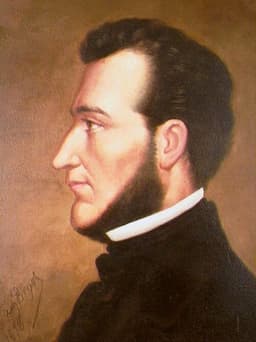
Francisco Morazan
General · Modern
58.0Total
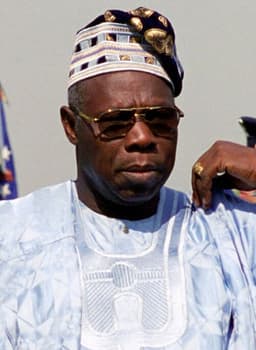
Olusegun Obasanjo
General · Modern
60.2Total
Basic Information
Born
1792
1937
Died
1842
—
Era
Modern
Modern
Nationality
Honduras
Nigeria
Occupation
General
General
Civilization
Western
Other
Score Comparison
Military (10%)
52.5
45.0
Political (20%)
60.0
72.0
Influence (20%)
62.0
55.0
Legacy (20%)
50.0
54.0
Leadership (15%)
68.0
78.0
Strategy (15%)
55.0
60.0
TOTAL
58.0
60.2
Francisco Morazan — Complete Timeline
1824 AD
Abolition of slavery in Central AmericaReform◆ Major
As a key leader in the liberal movement, Moraz
AbolitionSlaveryLiberal Reform
Impact: regionalprogressive
1827 AD
Battle of La TrinidadWar◆ Major
Morazán led a liberal army to victory against conservative forces at La Trinidad, Honduras. This battle was a key turning point in the Central American civil war, allowing Morazán to consolidate power and eventually become president of the federation.
BattleLiberal VictoryCivil War
Impact: regional
1830 AD
Presidency of the Federal Republic of Central AmericaPolitical Action
Morazán was elected president of the Federal Republic of Central America, a union of Guatemala, El Salvador, Honduras, Nicaragua, and Costa Rica. He pursued liberal reforms including separation of church and state, free trade, and land reform, facing opposition from conservatives.
Federal RepublicLiberal ReformsCentral America
Impact: regionalconstructive
1842 AD
Execution by firing squadPolitical Action
After a failed attempt to restore the Federal Republic, Moraz
ExecutionEnd of FederationLiberal Defeat
Impact: regionaltragic
Olusegun Obasanjo — Complete Timeline
1976 AD
Military coup that brought Obasanjo to powerPolitical Action
Following the assassination of General Murtala Mohammed in a failed coup, Obasanjo, as Chief of Staff, Supreme Headquarters, succeeded him as head of state. He oversaw the continuation of the transition to civilian rule.
CoupSuccessionMilitary Rule
Impact: national
1979 AD
Handover of power to civilian governmentPolitical Action
Obasanjo voluntarily handed over power to the elected civilian government of Shehu Shagari, marking the first peaceful transfer of power from military to civilian rule in Nigeria. This act established a precedent for democratic transition.
DemocracyTransitionCivilian Rule
Impact: nationalconstructive
1999 AD
Election as President of NigeriaPolitical Action
Obasanjo won the 1999 Nigerian presidential election as the candidate of the People's Democratic Party (PDP). His victory ended 16 years of military rule and began the Fourth Nigerian Republic.
ElectionDemocracyFourth Republic
Impact: nationalprogressive
2005 AD
Debt relief from Paris ClubPolitical Action◆ Major
Obasanjo's government negotiated a debt relief agreement with the Paris Club, resulting in the cancellation of $18 billion of Nigeria's external debt. This freed up resources for domestic spending and was a major economic achievement.
Debt ReliefEconomyNegotiation
Impact: nationalconstructive
2006 AD
Third term bid failurePolitical Action◆ Major
Obasanjo attempted to amend the Nigerian constitution to allow him to run for a third term. The bid was rejected by the National Assembly, marking a significant political defeat and reinforcing term limits.
Third TermConstitutionDefeat
Impact: national
Expert Analysis
Francisco Morazan vs Olusegun Obasanjo
# The General and the Dreamer: Two Paths to Power in Two Centuries
On a February morning in 1976, Olusegun Obasanjo received news that would change his life forever. His mentor, General Murtala Mohammed, had been assassinated in a failed coup. Within hours, Obasanjo found himself at the helm of Africa’s most populous nation. Across the Atlantic, 149 years earlier, another general, Francisco Morazán, watched his own world shift. At the Battle of La Trinidad in 1827, he led a ragged liberal army against conservative forces and won, propelling himself onto the stage of Central American history. Both men were soldiers who became statesmen. Both dreamed of unity, reform, and a better future for their fractured lands. But one died before a firing squad at forty-nine, his union shattered; the other died in his bed at eighty-seven, having handed over power not once but twice. What explains the difference?
Origins
Obasanjo was born in 1937 in the village of Ibogun-Olaogun, in southwestern Nigeria, into the Egba branch of the Yoruba people. His father was a farmer; his mother traded cassava. Colonial Nigeria was still a British possession, and young Olusegun joined the army at nineteen, rising through the ranks as Nigeria gained independence in 1960. He fought in the brutal Biafran civil war (1967–1970), emerging as a decorated officer. His world was one of ethnic tension, military coups, and the fragility of a nation stitched together by colonial cartographers.
Morazán was born in 1792 in Tegucigalpa, Honduras, into a creole family of some means. His father was a merchant, and Francisco received a classical education in Latin, law, and philosophy. The Spanish Empire was crumbling, and the air was thick with Enlightenment ideas—liberalism, republicanism, and the rights of man. By the time Morazán reached adulthood, Central America had declared independence from Spain (1821) and then from Mexico (1823). His world was one of ideological warfare: liberals who wanted federalism, secularism, and free trade versus conservatives who clung to the Church, the landed aristocracy, and centralized rule.
The difference in their origins was subtle but profound. Obasanjo emerged from a nation that existed but was not yet unified; Morazán emerged from a region that was unified on paper but not in spirit.
Rise to Power
Obasanjo’s path was paved by tragedy. On February 13, 1976, Lieutenant Colonel Buka Suka Dimka led a coup that killed General Murtala Mohammed—Obasanjo’s close friend and superior. As Chief of Staff, Supreme Headquarters, Obasanjo was next in line. He did not seize power; it fell into his lap. He immediately crushed the coup, executing Dimka and restoring order. His rise was reactive, a product of military hierarchy and the chaotic logic of postcolonial Africa.
Morazán’s rise was actively fought for. In 1827, conservative forces invaded his native Honduras. Morazán, then a young officer in the liberal army, rallied troops and defeated them at La Trinidad. He then marched into Guatemala, the conservative stronghold, and captured the capital. By 1830, he was elected President of the Federal Republic of Central America—a union of Guatemala, El Salvador, Honduras, Nicaragua, and Costa Rica. His rise was a triumph of will, battlefield courage, and ideological conviction.
Both men entered power through violence, but Obasanjo inherited a functioning state; Morazán had to build one from the wreckage of empire.
Leadership and Governance
Obasanjo’s military score is low (33.9), and rightly so: he was not a great battlefield commander. His genius was political (76.6). During his first tenure (1976–1979), he oversaw a transition to civilian rule, handing power to Shehu Shagari in 1979—the first peaceful transfer of power in Nigerian history. As elected president from 1999 to 2007, he stabilized an economy in ruins, negotiated $18 billion in debt relief from the Paris Club in 2005, and fought corruption—though his methods were often autocratic. His attempt to amend the constitution for a third term in 2006 failed, a rare check on his ambition. He ruled through pragmatism, not ideology.
Morazán’s military score (65.4) reflects his skill as a commander. He led campaigns across five countries, always on horseback, always in the field. Politically (72.0), he was a radical reformer: he abolished slavery in 1824, separated church and state, established trial by jury, and promoted public education. He tried to create a single Central American nation, a United States of the South. But his reforms alienated the Church, the landed elite, and the peasantry who feared change. He had no patience for compromise, and his governance was brittle.
The contrast is stark: Obasanjo bent with the winds; Morazán tried to command the storm.
Triumph and Tragedy
Obasanjo’s greatest triumph was the 1979 handover. It was unprecedented in Africa—a military ruler voluntarily ceding power. His second triumph was the 2005 debt relief, which freed Nigeria from decades of crushing payments. His greatest failure was the 2006 third-term bid, which revealed a hunger for power that tarnished his legacy. Yet he lived to see Nigeria survive, grow, and hold multiple elections.
Morazán’s triumph was the Federal Republic itself—a bold experiment in unity. For a decade, he held together a region riven by geography, ethnicity, and ideology. His tragedy came in 1842. After the Republic collapsed into civil war, he fled to Costa Rica, where he was captured. On September 15, 1842, he was executed by firing squad. His last words were reportedly: "I die with the conviction that I have done everything for the good of Central America."
One man’s tragedy was defeat and death; the other’s was a failed ambition that he survived to outlive.
Character and Destiny
Obasanjo was a survivor. He was pragmatic, patient, and willing to compromise. He understood that power in Nigeria meant balancing ethnic groups, regions, and elites. He was not a visionary; he was a manager. His leadership score (83.4) reflects his ability to hold a fractious nation together.
Morazán was a martyr in waiting. He was idealistic, uncompromising, and convinced of the rightness of his cause. He saw himself as a liberator, not a politician. His leadership score (76.7) is high, but his strategy (55.6) was flawed: he tried to impose unity from above without building the institutions or consensus to sustain it.
Their characters shaped their destinies. Obasanjo’s flexibility let him adapt; Morazán’s rigidity ensured he would break.
Legacy
Today, Obasanjo is remembered as a statesman who stabilized Nigeria and nurtured its democracy. His legacy score (69.0) is solid but contested: critics point to his authoritarian tendencies, his enrichment of allies, and the persistence of corruption. Yet he remains a towering figure, alive and still advising presidents.
Morazán is a myth. In Honduras, El Salvador, and Costa Rica, his face adorns currency, stamps, and statues. He is the symbol of Central American unity, of liberal reform, of the dream that failed. His legacy score (68.9) is similar to Obasanjo’s, but it is more romantic, more tragic. He died for his dream; Obasanjo outlived his.
Conclusion
What separates these two generals is not ability or courage. Both were remarkable men. What separates them is timing and temperament. Obasanjo inherited a nation that, however flawed, already existed. He could afford to be pragmatic because the framework was there. Morazán had to invent a nation—and he tried to do it too fast, with too little support, in a region that was not ready. One man bent history to his will and was broken; the other let history carry him and survived. In the end, the dreamer dies young, and the survivor lives to tell the story. But the dreamer’s dream often outlasts the survivor’s compromises.
Rankings
🥇
Olusegun ObasanjoLeader
Mil: 45.0Pol: 72.0Inf: 55.0
60.2
🥈
Francisco Morazan
Mil: 52.5Pol: 60.0Inf: 62.0
58.0
+2.2 behind
How This Comparison Works
Algorithm
Each figure is scored on 6 dimensions (0—100 scale) based on structured historical data: Military (10%), Political (20%), Influence (20%), Legacy (20%), Leadership (15%), Strategy (15%). The weighted total produces the final ranking.
Data Sources
Scores are computed from structured sub-indicators in the database. Scale factors adjust for era (Ancient ×0.85, Modern ×1.0) and civilization size (Eastern ×1.05, Other ×0.80) to account for differences in population and military scale.
Maximum 3 Figures
Comparisons are limited to 2—3 figures to ensure readability and statistical meaningfulness.
Error Margins
±5 points per dimension — Sub-scores are derived from historical records with inherent uncertainty. Two figures within 5 points on a dimension should be considered roughly equivalent in that area.
Total Score Accuracy
±3 points overall — The weighted combination of 6 dimensions produces a total score with approximately ±3 points of uncertainty. Differences of less than 3 points are not statistically significant— the figures are effectively tied.
Known Limitations
- Historical records are incomplete and uneven across civilizations
- Figures from oral-tradition societies may be underrepresented
- Occupation labels can misclassify multi-role figures
- Scores measure capability and impact, not moral character
- Quantitative scoring is a comparison tool, not absolute truth
Capability Radar
Military (10%) — Battles & Warfare
Battles
55
25
Win Rate
60
30
Expansion
40
20
Political (20%) — Governance & Reform
Reform
70
65
Diplomacy
45
75
Economy
50
55
Influence (20%) — Cultural & Global Reach
Cultural
45
45
Global
35
60
Legacy (20%) — Historical Impact
Historical
50
55
Longevity
40
50
Leadership (15%) — Power & Stability
Tenure
55
70
Stability
30
60
Strategy (15%) — Tactics & Innovation
Strategy
55
40
Tactics
50
35
Reform
45
50
Similar Comparisons
Comments & Discussion
MILITIA_MYSTIC6/16/2026
Obasanjo was a strategic pragmatist who understood that power means nothing without longevity. Morazán was a romantic idealist who charged headlong into death. The difference isn't 'fate'—it's that Obasanjo learned compromise from Biafra's ashes, while Morazan never understood that unity requires co-opting enemies, not just defeating them. One survived to rule twice; the other fertilized a firing squad's wall. That's not bad luck—that's strategic intelligence versus suicidal heroism.
北伐铁骑6/16/2026
拿莫拉桑跟奥巴桑乔比本身就是笑话。一个是19世纪的堂吉诃德,拿着马刀跟咖啡庄园主的私军打仗;一个是操纵冷战棋局的现实主义者,石油危机里把英国和美国都玩弄在股掌之间。奥巴桑乔1979年主动交权时就明白——真正的统一不是靠骑马冲锋,而是要让军阀们在董事会里握手。莫拉桑至死没学会这个。这才是两个世纪的差距。