Loading...
Francisco Morazan vs Nicolas Soult
Nicolas Soult leads by 4.7 pts · 2 figures compared
…
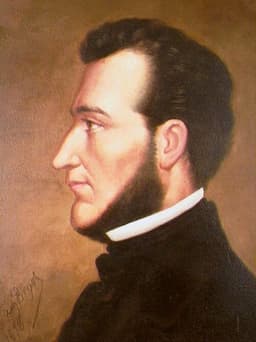
Francisco Morazan
General · Modern
58.0Total
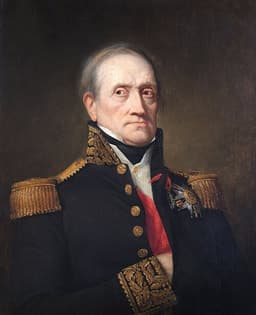
Nicolas Soult
General · Modern
62.7Total
Basic Information
Born
1792
1769
Died
1842
1851
Era
Modern
Modern
Nationality
Honduras
France
Occupation
General
General
Civilization
Western
Western
Score Comparison
Military (10%)
52.5
74.7
Political (20%)
60.0
55.0
Influence (20%)
62.0
61.0
Legacy (20%)
50.0
54.0
Leadership (15%)
68.0
78.0
Strategy (15%)
55.0
65.4
TOTAL
58.0
62.7
Francisco Morazan — Complete Timeline
1824 AD
Abolition of slavery in Central AmericaReform◆ Major
As a key leader in the liberal movement, Moraz
AbolitionSlaveryLiberal Reform
Impact: regionalprogressive
1827 AD
Battle of La TrinidadWar◆ Major
Morazán led a liberal army to victory against conservative forces at La Trinidad, Honduras. This battle was a key turning point in the Central American civil war, allowing Morazán to consolidate power and eventually become president of the federation.
BattleLiberal VictoryCivil War
Impact: regional
1830 AD
Presidency of the Federal Republic of Central AmericaPolitical Action
Morazán was elected president of the Federal Republic of Central America, a union of Guatemala, El Salvador, Honduras, Nicaragua, and Costa Rica. He pursued liberal reforms including separation of church and state, free trade, and land reform, facing opposition from conservatives.
Federal RepublicLiberal ReformsCentral America
Impact: regionalconstructive
1842 AD
Execution by firing squadPolitical Action
After a failed attempt to restore the Federal Republic, Moraz
ExecutionEnd of FederationLiberal Defeat
Impact: regionaltragic
Nicolas Soult — Complete Timeline
1805 AD
Battle of AusterlitzWar◆ Major
Soult commanded the IV Corps at Austerlitz. He led the assault on the Pratzen Heights, breaking the Allied center and securing the decisive French victory.
Napoleonic WarsBattleCorps Command
Impact: global
1806 AD
Battle of Jena-AuerstedtWar◆ Major
Soult commanded the IV Corps at Jena. His forces pursued the retreating Prussian army, capturing thousands of prisoners and contributing to the collapse of the Prussian state.
Napoleonic WarsBattlePursuit
Impact: regional
1811 AD
Battle of AlbueraWar◆ Major
Soult commanded the French army at Albuera in Spain. His forces fought a bloody battle against the Anglo-Spanish army, resulting in a tactical stalemate but strategic French withdrawal.
Peninsular WarBattleStalemate
Impact: regional
1814 AD
Battle of ToulouseWar◆ Major
Soult commanded the French army at Toulouse against Wellington. The battle occurred after Napoleon's abdication, and Soult surrendered the city, ending the Peninsular War.
Peninsular WarBattleDefeat
Impact: regional
1830 AD
Minister of WarPolitical Action◆ Major
Soult served as Minister of War under King Louis-Philippe. He reorganized the French army, introduced conscription reforms, and prepared for colonial campaigns in Algeria.
MinistryReformsJuly Monarchy
Impact: nationalconstructive
1832 AD
Prime Minister of FrancePolitical Action◆ Major
Soult served as Prime Minister of France under Louis-Philippe. His government focused on maintaining order, suppressing republican uprisings, and consolidating the July Monarchy.
Prime MinisterJuly MonarchyGovernment
Impact: national
Expert Analysis
Francisco Morazan vs Nicolas Soult
# The Marshal and the Reformer: Two Visions of Power in an Age of Upheaval
On a cold December morning in 1805, Nicolas Soult watched his IV Corps surge up the mist-shrouded slopes of the Pratzen Heights, the sun breaking through to blind the enemy below. Twenty-seven years later, on a sweltering Central American afternoon, Francisco Morazán rode into San Salvador at the head of a ragged liberal army, his victory at La Trinidad having shattered the conservative stronghold. One man would die in his bed at eighty-one, a marshal of France and thrice prime minister. The other would face a firing squad at forty-nine, his dream of a united Central America crumbling with him. What drove these two soldiers so far apart, and why did their paths diverge so dramatically?
Origins
Nicolas Soult was born in 1769 in Saint-Amans-la-Bastide, a small town in southern France, the son of a notary. The French Revolution erupted when he was twenty, a young man shaped by the rigid hierarchies of the Old Regime but hungry for the opportunities the new order promised. He joined the army as a private in 1785, and the Revolution’s chaos became his ladder: by 1794 he was a brigadier general. France in the 1790s was a forge that melted old titles and recast men as officers based on talent alone. Soult learned early that war was a business of calculation, not passion—a lesson that would serve him well.
Francisco Morazán was born in 1792 in Tegucigalpa, Honduras, then part of the Spanish Empire’s Captaincy General of Guatemala. His father was a Creole merchant of French descent, his mother a local woman. The world of his youth was one of colonial stagnation, where power rested in the hands of Spanish-born officials and the Catholic Church. The Napoleonic Wars that made Soult’s career had a different effect on Morazán’s world: they triggered a crisis of legitimacy in Spain, opening the door for independence movements across Latin America. Morazán was a child of the Enlightenment, reading Rousseau and the French philosophers in secret, dreaming not of empire but of republics.
Rise to Power
Soult’s rise was a masterpiece of opportunism. He served under every major French general of the Revolutionary Wars—Jourdan, Moreau, Masséna—always surviving, always advancing. At the Battle of Austerlitz in 1805, Napoleon gave him the key assignment: break the Allied center on the Pratzen Heights. Soult’s corps did so with brutal efficiency, and the emperor made him a Marshal of France on the spot. He was forty-one. The key events of his career—Jena-Auerstedt in 1806, where he pursued the fleeing Prussians relentlessly; Albuera in 1811, where his tactical skill in Spain nearly destroyed Wellington’s army—were all products of a man who understood that war was about logistics, timing, and the careful application of force.
Morazán’s rise was different. He was not a professional soldier but a liberal politician who took up arms. In 1824, as a young secretary general of the Honduran government, he helped push through the abolition of slavery in the Federal Republic of Central America—a radical act that made him a hero to reformers and a target for conservatives. When the conservatives seized power in 1826, Morazán fled to Nicaragua, raised an army of exiles and volunteers, and returned to win the Battle of La Trinidad in 1827. He was thirty-five. His victory was not a matter of superior strategy—his military scores are modest—but of sheer will and ideological conviction. He believed in a united Central America, in secular government, in freedom from the old Spanish yoke.
Leadership & Governance
Soult governed as he fought: with cold competence. As Minister of War under King Louis-Philippe in 1830, he reorganized the French army, introducing conscription reforms that would shape French military policy for decades. As Prime Minister in 1832 and again later, he focused on suppressing revolts—the Lyon silk workers’ uprising, the republican agitation in Paris—with the same efficiency he had shown on the battlefield. He was not an innovator; he was a manager. His political score of 69.3 reflects a man who governed within existing systems, not one who sought to remake them.
Morazán governed as a revolutionary. As President of the Federal Republic from 1830 to 1839, he pushed through a sweeping liberal agenda: separation of church and state, public education, land reform, and the abolition of clerical privileges. He was a visionary but a poor politician. His reforms alienated the conservative landowners, the clergy, and the indigenous communities who saw his secularism as an attack on their traditions. He tried to hold the federation together by force, but the centrifugal forces of regionalism and class conflict were stronger than his army. When he was captured in Costa Rica in 1842 after a failed attempt to restore the federation, his execution was almost inevitable.
Triumph & Tragedy
Soult’s greatest moment was Austerlitz, where his assault on the Pratzen Heights decided the fate of Europe. His greatest failure was the Battle of Toulouse in 1814, where he fought Wellington after Napoleon had already abdicated—a pointless battle that killed thousands for nothing. Yet Soult survived the Bourbon Restoration, served the new regime, and died a wealthy old man in 1851, a monument to adaptability.
Morazán’s triumph was La Trinidad, where he proved that a liberal lawyer could defeat conservative generals. His tragedy was the collapse of the Federal Republic in 1839, a union he had poured his life into preserving. His execution in 1842, standing before a firing squad in San José, Costa Rica, was the final act of a man who had bet everything on a dream that the region’s reality could not support.
Character & Destiny
Soult was a survivor. He served Napoleon, then the Bourbons, then Louis-Philippe, always bending to the prevailing wind. His leadership score of 84.0 reflects a man who inspired loyalty through competence, not charisma. He once said, “I have never been able to understand why a man should sacrifice his life for a principle.” That pragmatism made him powerful but limited his greatness.
Morazán was a martyr in waiting. His leadership score of 76.7 is lower, but his influence score of 76.2 is higher than Soult’s 74.4—because ideas outlast armies. He wrote shortly before his death: “I die with the satisfaction of having served my country, of having fought for liberty, and of having been faithful to my principles.” That fidelity doomed him but immortalized him.
Legacy
Soult is remembered today as a footnote: a capable marshal in Napoleon’s shadow, a competent minister in a forgettable monarchy. His legacy score of 67.6 reflects a man who managed power but never transformed it. He left behind no movement, no ideology, no nation.
Morazán is a name that still stirs passions in Central America. Statues of him stand in Tegucigalpa and San Salvador. His legacy score of 68.9 is slightly higher, but his real weight is in how he is invoked: as the father of Central American unity, as a martyr to liberal ideals, as a warning against the tyranny of local oligarchs. He failed, but his failure became a beacon.
Conclusion
Soult and Morazán were both generals, both leaders, both products of the revolutionary age that swept the Atlantic world after 1789. But one rode the tide of empire, the other the wave of liberation. Soult’s world was one of old powers reasserting themselves through new men; Morazán’s was one of new nations struggling to be born. The marshal died in his bed because he knew when to bend; the reformer died before a firing squad because he could not. In the end, the question is not which man was better, but which world we choose to remember—and which one we are still trying to build.
Rankings
🥇
Nicolas SoultLeader
Mil: 74.7Pol: 55.0Inf: 61.0
62.7
🥈
Francisco Morazan
Mil: 52.5Pol: 60.0Inf: 62.0
58.0
+4.7 behind
How This Comparison Works
Algorithm
Each figure is scored on 6 dimensions (0—100 scale) based on structured historical data: Military (10%), Political (20%), Influence (20%), Legacy (20%), Leadership (15%), Strategy (15%). The weighted total produces the final ranking.
Data Sources
Scores are computed from structured sub-indicators in the database. Scale factors adjust for era (Ancient ×0.85, Modern ×1.0) and civilization size (Eastern ×1.05, Other ×0.80) to account for differences in population and military scale.
Maximum 3 Figures
Comparisons are limited to 2—3 figures to ensure readability and statistical meaningfulness.
Error Margins
±5 points per dimension — Sub-scores are derived from historical records with inherent uncertainty. Two figures within 5 points on a dimension should be considered roughly equivalent in that area.
Total Score Accuracy
±3 points overall — The weighted combination of 6 dimensions produces a total score with approximately ±3 points of uncertainty. Differences of less than 3 points are not statistically significant— the figures are effectively tied.
Known Limitations
- Historical records are incomplete and uneven across civilizations
- Figures from oral-tradition societies may be underrepresented
- Occupation labels can misclassify multi-role figures
- Scores measure capability and impact, not moral character
- Quantitative scoring is a comparison tool, not absolute truth
Capability Radar
Military (10%) — Battles & Warfare
Battles
55
75
Win Rate
60
70
Expansion
40
65
Political (20%) — Governance & Reform
Reform
70
55
Diplomacy
45
65
Economy
50
50
Influence (20%) — Cultural & Global Reach
Cultural
45
45
Global
35
50
Legacy (20%) — Historical Impact
Historical
50
55
Longevity
40
50
Leadership (15%) — Power & Stability
Tenure
55
70
Stability
30
55
Strategy (15%) — Tactics & Innovation
Strategy
55
72
Tactics
50
78
Reform
45
60
Similar Comparisons
Comments & Discussion
CaptainIronSoul6/16/2026
Soult was the better soldier by far. Morazán fought skirmishes against militias; Soult commanded corps against the best armies in Europe and never lost a major battle. At Austerlitz, his IV Corps broke the allied center and decided the day. Morazán’s “Battle of La Trinidad” was a glorified riot with 600 casualties total. Stop romanticizing amateurs because they died young. Soult’s longevity proves his adaptability—he served Napoleon, then the Bourbons, then Louis-Philippe. That’s real statecraft
MarshalMetrics6/16/2026
Let’s talk data. Soult commanded armies of 30,000+ across a continent; Morazán never led more than 2,000 men in a single engagement. Soult outmaneuvered Wellington at Albuera (1811) despite tactical stalemate—his deployment of the 4th Division saved the French flank. Morazán’s greatest “campaign” was a 300-kilometer march through jungle. Scale matters. Calling Morazán a peer of Soult is like comparing a provincial mayor to a prime minister. One shaped Europe; the other shaped a graveyard.
OneBattler6/16/2026
Revisionist take: Morazán is overrated because Central America romanticizes failure. His "liberal reforms" expelled the Church and crushed indigenous communal land rights, then he fled to Peru and got executed trying to