Loading...
Francisco Morazan vs Mohan Singh
Francisco Morazan leads by 11.4 pts · 2 figures compared
…
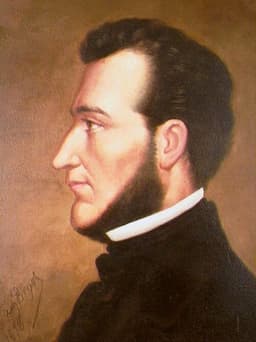
Francisco Morazan
General · Modern
58.0Total
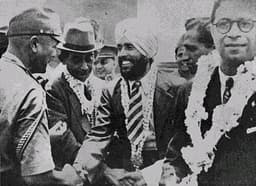
Mohan Singh
General · Modern
46.6Total
Basic Information
Born
1792
1909
Died
1842
1989
Era
Modern
Modern
Nationality
Honduras
India
Occupation
General
General
Civilization
Western
Indian
Score Comparison
Military (10%)
52.5
50.0
Political (20%)
60.0
36.5
Influence (20%)
62.0
57.2
Legacy (20%)
50.0
48.3
Leadership (15%)
68.0
36.9
Strategy (15%)
55.0
41.7
TOTAL
58.0
46.6
Francisco Morazan — Complete Timeline
1824 AD
Abolition of slavery in Central AmericaReform◆ Major
As a key leader in the liberal movement, Moraz
AbolitionSlaveryLiberal Reform
Impact: regionalprogressive
1827 AD
Battle of La TrinidadWar◆ Major
Morazán led a liberal army to victory against conservative forces at La Trinidad, Honduras. This battle was a key turning point in the Central American civil war, allowing Morazán to consolidate power and eventually become president of the federation.
BattleLiberal VictoryCivil War
Impact: regional
1830 AD
Presidency of the Federal Republic of Central AmericaPolitical Action
Morazán was elected president of the Federal Republic of Central America, a union of Guatemala, El Salvador, Honduras, Nicaragua, and Costa Rica. He pursued liberal reforms including separation of church and state, free trade, and land reform, facing opposition from conservatives.
Federal RepublicLiberal ReformsCentral America
Impact: regionalconstructive
1842 AD
Execution by firing squadPolitical Action
After a failed attempt to restore the Federal Republic, Moraz
ExecutionEnd of FederationLiberal Defeat
Impact: regionaltragic
Mohan Singh — Complete Timeline
1942 AD
Founding of the Indian National ArmyPolitical Action◆ Major
Mohan Singh founded the Indian National Army (INA) in Singapore with captured Indian soldiers from the British Indian Army. He aimed to fight alongside Japan for Indian independence, but later fell out with Japanese leadership.
Indian National ArmyWorld War IIIndependence
Impact: nationalconstructive
Dissolution of the First INAPolitical Action◆ Major
Mohan Singh dissolved the first Indian National Army after disagreements with the Japanese over its command and objectives. He was arrested by the Japanese, and the INA was later revived by Subhas Chandra Bose.
Indian National ArmyJapanese ConflictDissolution
Impact: nationaldestructive
1945 AD
Imprisonment by BritishPolitical Action
Mohan Singh was imprisoned by the British after World War II for his role in the INA. He was tried and sentenced, but later released after Indian independence, becoming a symbol of resistance.
ImprisonmentBritish EmpireINA
Impact: nationaltragic
Expert Analysis
Francisco Morazan vs Mohan Singh
### The General and the Dreamer: Two Paths to a Broken Union
On a humid September morning in 1842, Francisco Morazán stood before a firing squad in San José, Costa Rica. He had spent his life trying to weld the fractured states of Central America into a single republic. Now, he faced death with the calm of a man who had seen his life’s work crumble. Half a world away and a century later, another general, Mohan Singh, would dissolve his own army in Singapore, watching his dream of a free India slip through his fingers as Japanese handlers pulled the strings. Both men were founders of lost causes, but their stories reveal how geography, timing, and the nature of empire shaped two very different kinds of tragedy.
### Origins
Mohan Singh was born in 1909 in the Punjab, a province that had long supplied the British Indian Army with its most loyal soldiers. He was a product of the Raj—educated in its schools, trained in its military academies, and commissioned into its regiments. He believed in the empire’s promises of honor and advancement, even as nationalist stirrings began to shake India. When war came in 1939, he was a captain in the British Indian Army, sent to defend Malaya against the Japanese. He was a man of the system, not yet its enemy.
Francisco Morazán, born in 1792 in Tegucigalpa, Honduras, came of age in a world that had just shattered. The Spanish Empire was collapsing, and Central America was a blank slate. His family were Creole landowners, educated in Enlightenment ideas. He read Rousseau and Voltaire, dreamed of republics and constitutions, and watched as the old order crumbled. For Morazán, the question was not how to serve an empire, but how to build a nation.
### Rise to Power
Mohan Singh’s rise was a product of war’s chaos. In February 1942, Singapore fell to the Japanese. Tens of thousands of Indian soldiers were taken prisoner, abandoned by their British officers and left to face a brutal new master. The Japanese, eager to undermine British rule in Asia, saw an opportunity. They approached Mohan Singh, now a prisoner, and offered him a deal: lead a liberation army of Indian POWs, fight alongside Japan, and drive the British out of India. It was a desperate gambit, but Mohan Singh seized it. In September 1942, he founded the Indian National Army (INA) in Singapore, its ranks filled by men who had once sworn loyalty to the King-Emperor.
Morazán’s path was more deliberate. He rose through the ranks of the liberal movement in Central America, a loose coalition of reformers who wanted to break the power of the church and the old landed aristocracy. In 1827, he won a decisive victory at the Battle of La Trinidad in Honduras, a battle that turned a regional rebellion into a full-scale civil war. By 1830, he was president of the Federal Republic of Central America, a union of Guatemala, El Salvador, Honduras, Nicaragua, and Costa Rica. He was thirty-eight years old, a general who had earned his command on the battlefield, not in a prisoner-of-war camp.
### Leadership & Governance
Mohan Singh was a political general in the truest sense—his military skill was secondary to his ability to inspire and organize. His leadership score of 74.8 reflects a man who could rally men to a cause, but his military score of 38.7 reveals a commander who never fought a major battle. His genius was in the founding: he gave the INA its structure, its oath, its first flag. But he was also a pragmatist, and when the Japanese began treating his army as a puppet force, he balked. In December 1942, just three months after founding the INA, he dissolved it, unable to reconcile his dream of Indian independence with the reality of Japanese domination.
Morazán was a different kind of leader. His military score of 65.4 and strategy score of 55.6 mark him as a competent but not brilliant commander. His real strength was political: he abolished slavery in 1824, curtailed church privileges, and tried to build a modern, secular state. He believed that Central America could be a single nation, united by law and commerce. But his reforms alienated conservatives, who saw him as a tyrant. His leadership score of 76.7 is high, but it was a leadership that could not hold a country together. He was a builder who could not stop the cracks from spreading.
### Triumph & Tragedy
Mohan Singh’s greatest moment was also his most painful. In founding the INA, he gave Indian nationalism a military arm, a symbol of armed resistance that would later inspire Subhas Chandra Bose to take command of the revived INA in 1943. But his triumph was cut short by his own integrity. He refused to be a Japanese puppet, and for that, he was imprisoned by his Japanese allies, then by the British after the war. His trial in 1945 became a rallying cry for Indian independence, but Mohan Singh himself was a footnote by then, a forgotten founder.
Morazán’s tragedy was grander. He served as president of the Federal Republic from 1830 to 1839, but the union was always fragile. Conservative revolts, regional rivalries, and his own heavy-handed reforms tore it apart. By 1840, the republic had collapsed into warring states. Morazán fled into exile, but he could not let go. In 1842, he invaded Costa Rica, hoping to restart the federation. He failed, was captured, and was executed. His last words, according to legend, were: “I die with the conviction that the union of Central America is the only good that can make it happy.”
### Character & Destiny
Mohan Singh was a man of principle, but his principles were his undoing. He was not a charismatic leader like Bose, nor a ruthless one like the Japanese generals he dealt with. He was a soldier who believed in honor, and when honor conflicted with survival, he chose honor. That choice saved his moral integrity but cost him his place in history. He lived until 1989, long enough to see India free, but never again a central figure.
Morazán was a man of vision, but his vision was too large for his time. He believed in a united Central America, but the region’s geography—its mountains, its isolation, its local loyalties—made unity almost impossible. He was a liberal reformer in a conservative world, and his reforms created enemies faster than they created institutions. He died a traitor in Costa Rica, but he died believing in the dream.
### Legacy
Mohan Singh’s legacy is overshadowed by Subhas Bose, who took the INA to greater heights and became a martyr for Indian independence. But Mohan Singh was the first, the one who dared to imagine an Indian army free of British command. His score of 65.0 in legacy reflects a man remembered by historians but not by the public. He is a footnote in the grand narrative of India’s freedom struggle, a cautionary tale about the dangers of trusting empires.
Morazán’s legacy is more complex. He is revered in Honduras as a national hero, but in other Central American countries, he is seen as a failed unionist. His score of 68.9 in legacy reflects a man who is still debated, still claimed by different sides. He is a symbol of Central American unity, a dream that has never died but never been realized. His face appears on Honduran banknotes, but the union he died for remains broken.
### Conclusion
Two generals, two dreams, two failures. Mohan Singh tried to liberate India by fighting alongside one empire against another, and found that empires do not make good allies. Morazán tried to unite a region that did not want to be united, and found that dreams cannot be imposed by force. Their stories remind us that history is not kind to founders of lost causes. But they also remind us that some causes, however lost, are worth founding. In the end, both men chose principle over power, and that is perhaps the only victory that matters.
Rankings
🥇
Francisco MorazanLeader
Mil: 52.5Pol: 60.0Inf: 62.0
58.0
🥈
Mohan Singh
Mil: 50.0Pol: 36.5Inf: 57.2
46.6
+11.4 behind
How This Comparison Works
Algorithm
Each figure is scored on 6 dimensions (0—100 scale) based on structured historical data: Military (10%), Political (20%), Influence (20%), Legacy (20%), Leadership (15%), Strategy (15%). The weighted total produces the final ranking.
Data Sources
Scores are computed from structured sub-indicators in the database. Scale factors adjust for era (Ancient ×0.85, Modern ×1.0) and civilization size (Eastern ×1.05, Other ×0.80) to account for differences in population and military scale.
Maximum 3 Figures
Comparisons are limited to 2—3 figures to ensure readability and statistical meaningfulness.
Error Margins
±5 points per dimension — Sub-scores are derived from historical records with inherent uncertainty. Two figures within 5 points on a dimension should be considered roughly equivalent in that area.
Total Score Accuracy
±3 points overall — The weighted combination of 6 dimensions produces a total score with approximately ±3 points of uncertainty. Differences of less than 3 points are not statistically significant— the figures are effectively tied.
Known Limitations
- Historical records are incomplete and uneven across civilizations
- Figures from oral-tradition societies may be underrepresented
- Occupation labels can misclassify multi-role figures
- Scores measure capability and impact, not moral character
- Quantitative scoring is a comparison tool, not absolute truth
Capability Radar
Military (10%) — Battles & Warfare
Battles
55
15
Win Rate
60
10
Expansion
40
10
Political (20%) — Governance & Reform
Reform
70
25
Diplomacy
45
30
Economy
50
10
Influence (20%) — Cultural & Global Reach
Cultural
45
30
Global
35
25
Legacy (20%) — Historical Impact
Historical
50
40
Longevity
40
30
Leadership (15%) — Power & Stability
Tenure
55
20
Stability
30
10
Strategy (15%) — Tactics & Innovation
Strategy
55
25
Tactics
50
20
Reform
45
30
Similar Comparisons
Comments & Discussion
TyrantOrUnifier6/16/2026
Morazán was a classic liberal visionary who tried to force federalism on a region that barely had roads, let alone shared identity. By 1840, he'd alienated conservatives, the Church, and Indian communities who saw his reforms as elite meddling. His execution wasn't noble failure—it was the logical end of a man who thought decrees could erase centuries of local loyalty. Central America remains broken because men like him wrote constitutions instead of building consensus.|
数字拆解侠6/16/2026
对比这俩简直是历史版本的“画饼战术”:Morazán统治了十年,Mohan Singh的印度国民军实际战斗时间不到一年。前者至少打过几次像样的战役,后者更多是日本人的幌子。我不管你们说理想主义多浪漫,输家就是输家,历史只记得胜利者的叙事。别拿“未竟之梦”来包装军事无能——Singh的军队被英国人轻松反推就是铁证。|
SubalternScrutinizer6/16/2026
Everyone romanticizes Morazán and Singh, but who actually benefited? Morazán abolished Indigenous communal lands in the name of progress, paving the way for ladino elites to grab territory. Singh's INA was bankrolled by Imperial Japan—a regime that saw Asians as cannon fodder for the Greater East Asia Co-Prosperity Sphere. These weren't anti-colonial heroes; they were pawns who switched masters. Central America's peasants and India's masses stayed poor and exploited either way.|
火药与玫瑰6/16/2026
作为一个读过莫拉桑修订的《中美洲宪法》的人,我坚持认为他输在时机而非能力。他废除奴隶制、建立陪审团制度、推广公共教育,这些在1830年代中美洲简直是外星构想。对面Mohan Singh被英国人收养后还忠心耿耿到1940年才开始转向,相比之下Morazán从20岁就举枪起义。要论理想的纯度,拉美骑士完胜英印工具人。|
PunjabMemoryKeeper6/16/2026
You can't compare a creole general who died in his homeland to a Sikh officer who watched his comrades starve in Japanese POW camps. Singh's tragedy wasn't just military defeat—it was the betrayal by Rash Behari Bose and the INA's dissolution without a fight. Morazán at least took bullets for his cause. Singh had to watch his army vanish through politics and Japanese impatience. History honors Morazán's corpse; it forgets Singh's living humiliation.