Loading...
Francisco Morazan vs Lucius Junius Brutus
Lucius Junius Brutus leads by 14.7 pts · 2 figures compared
…
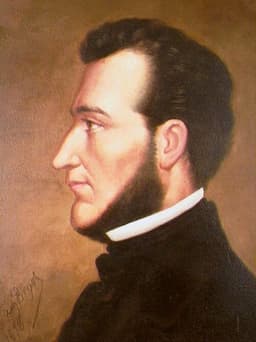
Francisco Morazan
General · Modern
58.0Total
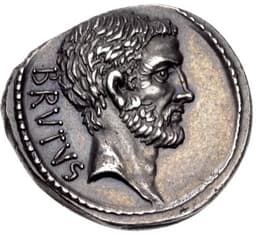
Lucius Junius Brutus
Politician · Ancient
72.7Total
Basic Information
Born
1792
-540
Died
1842
-509
Era
Modern
Ancient
Nationality
Honduras
Roman Republic
Occupation
General
Politician
Civilization
Western
Western
Score Comparison
Military (10%)
52.5
45.0
Political (20%)
60.0
72.0
Influence (20%)
62.0
75.0
Legacy (20%)
50.0
90.0
Leadership (15%)
68.0
71.0
Strategy (15%)
55.0
54.8
TOTAL
58.0
72.7
Francisco Morazan — Complete Timeline
1824 AD
Abolition of slavery in Central AmericaReform◆ Major
As a key leader in the liberal movement, Moraz
AbolitionSlaveryLiberal Reform
Impact: regionalprogressive
1827 AD
Battle of La TrinidadWar◆ Major
Morazán led a liberal army to victory against conservative forces at La Trinidad, Honduras. This battle was a key turning point in the Central American civil war, allowing Morazán to consolidate power and eventually become president of the federation.
BattleLiberal VictoryCivil War
Impact: regional
1830 AD
Presidency of the Federal Republic of Central AmericaPolitical Action
Morazán was elected president of the Federal Republic of Central America, a union of Guatemala, El Salvador, Honduras, Nicaragua, and Costa Rica. He pursued liberal reforms including separation of church and state, free trade, and land reform, facing opposition from conservatives.
Federal RepublicLiberal ReformsCentral America
Impact: regionalconstructive
1842 AD
Execution by firing squadPolitical Action
After a failed attempt to restore the Federal Republic, Moraz
ExecutionEnd of FederationLiberal Defeat
Impact: regionaltragic
Lucius Junius Brutus — Complete Timeline
509 BC
Battle of Silva ArsiaWar◆ Major
Brutus led the Roman army against the forces of Tarquinius Superbus and his Etruscan allies at Silva Arsia. During the battle, Brutus and Arruns Tarquinius, the king's son, killed each other in single combat, but the Romans ultimately won the battle, securing the Republic's survival.
BattleSingle CombatFounding Myth
Impact: nationaltragic
Expulsion of the TarquinsPolitical Action
Lucius Junius Brutus led a revolt against the Tarquin monarchy after the rape of Lucretia by Sextus Tarquinius. He organized the Senate and the people to expel the royal family, ending the Roman Kingdom and establishing the Roman Republic with himself as one of the first consuls.
RevolutionFounding of RepublicOverthrow of Monarchy
Impact: globalprogressive
Execution of His SonsPolitical Action◆ Major
Brutus discovered that his own sons, Titus and Tiberius, had conspired to restore the Tarquins. As consul, he ordered their arrest, trial, and execution by beheading in the Forum, demonstrating his unwavering commitment to the Republic over family loyalty.
ExecutionConspiracyRepublican Virtue
Impact: nationaltragic
Oath of BrutusPolitical Action◆ Major
After the expulsion of the Tarquins, Brutus made the Roman people swear an oath never to allow a king to rule Rome again. This oath became a foundational principle of the Republic, reinforcing the commitment to liberty and opposition to tyranny.
OathRepublican IdeologyAnti-Monarchy
Impact: nationalprogressive
Expert Analysis
Lucius Junius Brutus vs Francisco Morazan
# The Republic Builder and the Republic Breaker
On a March morning in 1842, Francisco Morazán stood before a firing squad in San José, Costa Rica, his last words reportedly calling for a united Central America. Nearly twenty-three centuries earlier, another man had watched his own sons die for the same principle: that the republic must come before blood. Lucius Junius Brutus ordered the execution of Titus and Tiberius for plotting to restore a monarchy they had helped overthrow. Both men died for their political convictions. Both left behind republics that would fracture and fall. But their paths to that final sacrifice could not have been more different—and the republics they built tell us as much about the limits of ideology as about the power of conviction.
Origins
Lucius Junius Brutus was born into the chaos of late Roman monarchy, around 540 BCE, when the Etruscan Tarquin dynasty ruled Rome with increasing cruelty. His own family had reason to fear the king: Tarquinius Superbus had executed Brutus’s brother and seized his property. Brutus survived by playing the fool—hence his cognomen, meaning “stupid”—a mask of idiocy that concealed a revolutionary’s patience. He learned that survival in tyranny required cunning, not courage.
Francisco Morazán entered the world in 1792 in Tegucigalpa, Honduras, a colonial backwater of the Spanish Empire. Unlike Brutus, he was no dissembler. Born into a creole family of modest means, he grew up reading the French Enlightenment philosophers—Rousseau, Voltaire, Montesquieu—whose ideas promised human progress through reason and reform. The American and French Revolutions had already shown that old empires could fall. For Morazán, the question was not whether to build something new, but what.
Rise to Power
Brutus’s rise was sudden and violent. When the rape of Lucretia by the king’s son Sextus Tarquinius ignited Roman fury in 509 BCE, Brutus shed his mask. He pulled the dagger from Lucretia’s body, swore the famous oath to expel the Tarquins forever, and led the revolt that toppled a monarchy that had ruled for generations. He became one of Rome’s first two consuls—not through electioneering or gradual ascent, but through revolution.
Morazán’s path was slower and more military. The Federal Republic of Central America had been established in 1823, but conservative forces resisted its liberal reforms. In 1827, at the Battle of La Trinidad in Honduras, Morazán—then a young general—led a liberal army to victory against conservative forces. That battle made him a hero. In 1830, he was elected president of the Federal Republic, a union of Guatemala, El Salvador, Honduras, Nicaragua, and Costa Rica. He was thirty-seven years old.
Leadership & Governance
As consul, Brutus governed with an iron commitment to the republic’s survival. His most famous act—ordering the execution of his own sons for conspiracy—was not cruelty for its own sake. It was a calculated demonstration that no man, not even the founder’s blood, stood above the law. The Roman historian Livy records that Brutus watched the execution “with a face that betrayed no emotion,” a performance of absolute impartiality that became the republic’s founding myth. His strategy was simple: if the republic could punish its own founder’s sons, it could punish anyone.
Morazán governed by ideology rather than intimidation. As president, he abolished slavery in 1824, established freedom of the press, promoted public education, and sought to reduce the power of the Catholic Church. These were Enlightenment reforms transplanted to a region where conservative landowners and clergy held enormous influence. Morazán believed that good laws could remake society—that reason could overcome tradition. His political score of 72.0 reflects genuine reform, but his military score of 65.4 and strategy of 55.6 suggest a leader better at governing than at consolidating power.
Triumph & Tragedy
Brutus’s triumph and tragedy were the same event. At the Battle of Silva Arsia in 509 BCE, he led the Roman army against the deposed king Tarquinius Superbus and his Etruscan allies. During the battle, Brutus and the Etruscan commander Arruns—both on horseback—charged and killed each other in single combat. The Romans won the battle, but lost their founder. Brutus died a martyr to the republic he had created, never seeing it grow from a city-state into an empire.
Morazán’s tragedy unfolded over years. The Federal Republic of Central America fractured under regional rivalries and conservative revolts. By 1839, the union had collapsed into separate states. Morazán fought on, trying to restore the federation by force. In 1842, after a failed campaign in Costa Rica, he was captured. His execution by firing squad ended not just his life but the dream of a united Central America. His triumph—the abolition of slavery and liberal reforms—survived in fragments, but the republic he envisioned never returned.
Character & Destiny
Brutus’s personality explains his destiny. He was a man of absolute principles, willing to sacrifice his own sons for the abstract idea of a republic without kings. He understood that founding moments require symbolic acts that define a nation’s character forever. His execution of his sons was not just punishment—it was a ritual of purification, a warning to every future generation. Brutus died with his republic intact, his reputation untarnished.
Morazán was equally principled but less ruthless. He believed in persuasion and reform, not terror and symbolism. He could not bring himself to purge his enemies or crush regionalism with iron force. His liberalism was a strength in times of peace but a weakness in times of civil war. He died trying to restore a union that had already rejected him, a tragic figure of noble intentions and fatal idealism.
Legacy
Brutus’s legacy is monumental: he is remembered as the founder of the Roman Republic, the man who made the oath against kingship eternal. His total score of 70.3 and legacy score of 90.0 reflect how deeply his act of sacrifice shaped Western political thought. For two thousand years, “Brutus” meant the republican who put the state above family—until Shakespeare’s version of a later Brutus complicated the name.
Morazán’s legacy is more ambiguous. His total score of 69.8 and legacy of 68.9 place him as a respected but failed reformer. In Central America, he is honored as a visionary who dreamed of unity, but also blamed for the civil wars that followed. His name adorns streets and schools, but the union he died for remains as distant as ever.
Conclusion
Two republic builders, two republics, two fates. Brutus founded a republic that lasted five centuries and became an empire; Morazán founded a republic that lasted sixteen years and became five separate nations. The difference was not in their ideals—both believed in liberty and law—but in their willingness to enforce those ideals through terror and sacrifice. Brutus killed his own sons; Morazán could not kill his enemies. One created a republic that survived because it was feared; the other created a republic that failed because it was loved but not obeyed. The lesson is uncomfortable: perhaps the most successful republics are founded not by idealists alone, but by idealists who understand that the republic must sometimes devour its own children to survive.
Rankings
🥇
Lucius Junius BrutusLeader
Mil: 45.0Pol: 72.0Inf: 75.0
72.7
🥈
Francisco Morazan
Mil: 52.5Pol: 60.0Inf: 62.0
58.0
+14.7 behind
How This Comparison Works
Algorithm
Each figure is scored on 6 dimensions (0—100 scale) based on structured historical data: Military (10%), Political (20%), Influence (20%), Legacy (20%), Leadership (15%), Strategy (15%). The weighted total produces the final ranking.
Data Sources
Scores are computed from structured sub-indicators in the database. Scale factors adjust for era (Ancient ×0.85, Modern ×1.0) and civilization size (Eastern ×1.05, Other ×0.80) to account for differences in population and military scale.
Maximum 3 Figures
Comparisons are limited to 2—3 figures to ensure readability and statistical meaningfulness.
Error Margins
±5 points per dimension — Sub-scores are derived from historical records with inherent uncertainty. Two figures within 5 points on a dimension should be considered roughly equivalent in that area.
Total Score Accuracy
±3 points overall — The weighted combination of 6 dimensions produces a total score with approximately ±3 points of uncertainty. Differences of less than 3 points are not statistically significant— the figures are effectively tied.
Known Limitations
- Historical records are incomplete and uneven across civilizations
- Figures from oral-tradition societies may be underrepresented
- Occupation labels can misclassify multi-role figures
- Scores measure capability and impact, not moral character
- Quantitative scoring is a comparison tool, not absolute truth
Capability Radar
Military (10%) — Battles & Warfare
Battles
55
10
Win Rate
60
10
Expansion
40
10
Political (20%) — Governance & Reform
Reform
70
90
Diplomacy
45
40
Economy
50
30
Influence (20%) — Cultural & Global Reach
Cultural
45
70
Global
35
70
Legacy (20%) — Historical Impact
Historical
50
80
Longevity
40
80
Leadership (15%) — Power & Stability
Tenure
55
30
Stability
30
40
Strategy (15%) — Tactics & Innovation
Strategy
55
10
Tactics
50
10
Reform
45
20
Similar Comparisons
Comments & Discussion
No comments yet. Be the first to share your thoughts!