Loading...
Francisco Morazan vs Louis XI of France
Louis XI of France leads by 8.2 pts · 2 figures compared
…
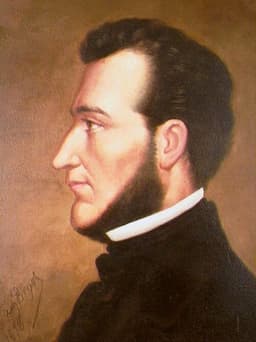
Francisco Morazan
General · Modern
58.0Total
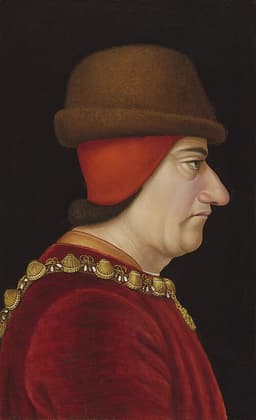
Louis XI of France
Emperor · Medieval
66.2Total
Basic Information
Born
1792
1423
Died
1842
1483
Era
Modern
Medieval
Nationality
Honduras
France
Occupation
General
Emperor
Civilization
Western
Western
Score Comparison
Military (10%)
52.5
47.5
Political (20%)
60.0
78.0
Influence (20%)
62.0
65.0
Legacy (20%)
50.0
65.0
Leadership (15%)
68.0
78.0
Strategy (15%)
55.0
55.0
TOTAL
58.0
66.2
Francisco Morazan — Complete Timeline
1824 AD
Abolition of slavery in Central AmericaReform◆ Major
As a key leader in the liberal movement, Moraz
AbolitionSlaveryLiberal Reform
Impact: regionalprogressive
1827 AD
Battle of La TrinidadWar◆ Major
Morazán led a liberal army to victory against conservative forces at La Trinidad, Honduras. This battle was a key turning point in the Central American civil war, allowing Morazán to consolidate power and eventually become president of the federation.
BattleLiberal VictoryCivil War
Impact: regional
1830 AD
Presidency of the Federal Republic of Central AmericaPolitical Action
Morazán was elected president of the Federal Republic of Central America, a union of Guatemala, El Salvador, Honduras, Nicaragua, and Costa Rica. He pursued liberal reforms including separation of church and state, free trade, and land reform, facing opposition from conservatives.
Federal RepublicLiberal ReformsCentral America
Impact: regionalconstructive
1842 AD
Execution by firing squadPolitical Action
After a failed attempt to restore the Federal Republic, Moraz
ExecutionEnd of FederationLiberal Defeat
Impact: regionaltragic
Louis XI of France — Complete Timeline
1464 AD
Established the Postal ServiceReform
Louis XI established a royal postal service, creating a network of relay stations for rapid communication across France. This system improved administrative efficiency and royal control over the realm.
Postal ServiceAdministrationCommunication
Impact: nationalconstructive
1465 AD
Defeated the League of the Public WealWar◆ Major
Louis XI defeated the League of the Public Weal, a coalition of rebellious nobles led by the Duke of Burgundy and the Duke of Berry. The victory at the Battle of Montlh
Civil WarNobilityRoyal Authority
Impact: national
1469 AD
Imprisoned Cardinal BaluePolitical Action
Louis XI imprisoned his own minister, Cardinal Jean Balue, for treason after discovering his secret correspondence with Charles the Bold. Balue was held in an iron cage for over a decade, demonstrating Louis's ruthless treatment of disloyal officials.
ImprisonmentTreasonIron Cage
Impact: nationaldestructive
1474 AD
Supported the Swiss Confederacy against BurgundyWar
Louis XI provided financial and diplomatic support to the Swiss Confederacy in their war against Charles the Bold of Burgundy. This alliance contributed to Burgundy's defeat and the eventual collapse of the Burgundian state.
AllianceSwissBurgundian Wars
Impact: regionalconstructive
1475 AD
Signed the Treaty of PicquignyPolitical Action◆ Major
Louis XI signed the Treaty of Picquigny with King Edward IV of England, ending the Hundred Years' War. The treaty included a payment to Edward IV to withdraw his invading army, securing peace and saving France from invasion.
TreatyHundred Years' WarDiplomacy
Impact: regionalconstructive
1477 AD
Acquired the Duchy of BurgundyWar◆ Major
After the death of Charles the Bold at the Battle of Nancy, Louis XI seized the Duchy of Burgundy and other Burgundian territories. This acquisition significantly expanded the French crown's lands and reduced Burgundian power.
Territorial ExpansionBurgundyRoyal Domain
Impact: regionalconstructive
Expert Analysis
Louis XI of France vs Francisco Morazan
### The Spider and the Reformer: Two Visions of Unity, One Fractured Dream
On a cold February morning in 1842, Francisco Morazán stood before a firing squad in San José, Costa Rica. The man who had once commanded the armies of a unified Central America, who had abolished slavery and dreamed of a liberal republic stretching from Guatemala to Panama, faced his end with a quiet dignity. Just three and a half centuries earlier, another man had died in his bed at the Château de Plessis-lez-Tours, surrounded by paid guards and the quiet hum of a kingdom he had stitched together from feudal chaos. Louis XI of France and Francisco Morazán of Honduras both sought unity—one through the patient, ruthless weaving of a spider, the other through the bold, brittle strokes of a reformer. Why did one succeed in building a nation that endures, while the other saw his creation shatter in a hail of bullets?
### Origins
Louis XI was born into the heart of medieval power, in 1423, the son of Charles VII, the king who had been crowned at Reims thanks to Joan of Arc. Yet his childhood was one of tension and rebellion. The Hundred Years’ War was not yet over, and the great nobles of France—the dukes of Burgundy, Brittany, and Anjou—ruled their territories like independent kings. Young Louis chafed under his father’s authority, even leading a revolt against him. This early experience taught him a hard lesson: trust no one, and never show your full hand. He became a master of shadowy diplomacy, earning the nickname “the Universal Spider” for the web of spies, bribes, and alliances he spun.
Francisco Morazán, born in 1792 in Tegucigalpa, then part of the Spanish Empire, came from a very different world. The Enlightenment was reshaping Europe, and its ideas—liberty, equality, republicanism—echoed across the Atlantic. Morazán was a child of the Age of Revolutions. He grew up in a colonial society where power rested with a small elite of landowners and church officials, and where the old Spanish monarchy had collapsed under Napoleon’s invasion. Where Louis learned to manipulate the existing order, Morazán learned to dream of a new one.
### Rise to Power
Louis XI’s path to power was slow, calculated, and often treacherous. When he finally became king in 1461, he inherited a France still fractured by war and feudal loyalties. He did not charge into battle with a sword; he preferred to let his enemies destroy each other. His greatest early test came in 1465, when a coalition of nobles—the League of the Public Weal—rose against him, led by the Duke of Burgundy, Charles the Bold. Louis did not crush them in a single, glorious battle. Instead, he negotiated, bribed, and divided them. He defeated the League not by force of arms alone, but by a strategy of patience and deceit.
Morazán’s rise was far more dramatic and direct. In 1827, a young general leading a ragtag liberal army against conservative forces, he won the Battle of La Trinidad in Honduras—a decisive victory that turned him into a national hero. By 1830, he had been elected president of the Federal Republic of Central America. His ascent was swift, almost romantic: a military genius who rode into power on the wave of a popular cause. But where Louis built his authority on a foundation of shifting sands and secret deals, Morazán built his on the fragile hope of ideological unity.
### Leadership & Governance
As king, Louis XI governed like a spider in its web. He centralized administration, creating a royal postal service in 1464 that allowed him to communicate across France faster than any noble could. He promoted trade, fostered industry, and filled his treasury with taxes collected by loyal bureaucrats rather than feudal lords. His political wisdom was extraordinary: he knew when to be generous and when to be merciless. In 1469, he imprisoned his own minister, Cardinal Balue, for secret correspondence with the enemy—a chilling reminder that even the closest advisors were not safe. Louis did not seek glory; he sought control.
Morazán governed as a liberal reformer, driven by principles. In 1824, he helped abolish slavery in Central America, a radical move in a society built on plantation labor. He promoted free trade, secular education, and the separation of church and state. His vision was noble, but his methods were rigid. He believed that the right ideas could overcome deep-rooted traditions, that a federation of diverse provinces could hold together through sheer constitutional will. Louis XI would have smiled at such naivete.
### Triumph & Tragedy
Louis XI’s greatest triumph came in 1477, after the death of Charles the Bold at the Battle of Nancy. He swiftly seized the Duchy of Burgundy, the richest and most independent territory in France, and absorbed it into the crown. In 1475, he had already outmaneuvered the English king, Edward IV, with the Treaty of Picquigny, buying peace and ending the Hundred Years’ War for good. His tragedy was a quiet one: he died alone, feared by his family, haunted by the suspicion that everyone around him was a traitor.
Morazán’s triumph was the very creation of the Federal Republic itself—a bold experiment in unity. His tragedy was its collapse. The conservative forces he had defeated in battle never accepted his vision. By 1842, the federation had shattered into warring states. In a desperate final campaign, Morazán tried to restore it, but was captured in Costa Rica and executed by firing squad. His dream died with him.
### Character & Destiny
Louis XI was patient, cynical, and utterly pragmatic. He believed that power was a game of shadows, and he played it better than anyone. His personality shaped a kingdom that would become the most powerful in Europe. Morazán was idealistic, courageous, and impatient. He believed that the truth of liberty would win hearts—but he underestimated the weight of tradition, the power of local loyalties, and the sheer difficulty of holding a federation together without a web of spies and gold.
### Legacy
Louis XI left behind a unified France, a strong monarchy, and a model of centralized statecraft that would influence European politics for centuries. His legacy score of 80.0 reflects a king who built something permanent. Morazán left behind a memory—a symbol of Central American unity that still inspires dreamers today, but a political failure nonetheless. His legacy score of 68.9 is a testament to a noble cause that could not survive the reality of power.
### Conclusion
In the end, the spider outlasted the reformer. Louis XI understood that unity requires not just a vision, but a mechanism—a web of control, patience, and the willingness to use both bribery and betrayal. Morazán understood that unity requires a vision worth dying for, but he could not build the web to sustain it. Their stories remind us that history is not always kind to the brave, nor always cruel to the cunning. It simply rewards those who can hold the threads together, one careful move at a time.
Rankings
🥇
Louis XI of FranceLeader
Mil: 47.5Pol: 78.0Inf: 65.0
66.2
🥈
Francisco Morazan
Mil: 52.5Pol: 60.0Inf: 62.0
58.0
+8.2 behind
How This Comparison Works
Algorithm
Each figure is scored on 6 dimensions (0—100 scale) based on structured historical data: Military (10%), Political (20%), Influence (20%), Legacy (20%), Leadership (15%), Strategy (15%). The weighted total produces the final ranking.
Data Sources
Scores are computed from structured sub-indicators in the database. Scale factors adjust for era (Ancient ×0.85, Modern ×1.0) and civilization size (Eastern ×1.05, Other ×0.80) to account for differences in population and military scale.
Maximum 3 Figures
Comparisons are limited to 2—3 figures to ensure readability and statistical meaningfulness.
Error Margins
±5 points per dimension — Sub-scores are derived from historical records with inherent uncertainty. Two figures within 5 points on a dimension should be considered roughly equivalent in that area.
Total Score Accuracy
±3 points overall — The weighted combination of 6 dimensions produces a total score with approximately ±3 points of uncertainty. Differences of less than 3 points are not statistically significant— the figures are effectively tied.
Known Limitations
- Historical records are incomplete and uneven across civilizations
- Figures from oral-tradition societies may be underrepresented
- Occupation labels can misclassify multi-role figures
- Scores measure capability and impact, not moral character
- Quantitative scoring is a comparison tool, not absolute truth
Capability Radar
Military (10%) — Battles & Warfare
Battles
55
45
Win Rate
60
50
Expansion
40
60
Political (20%) — Governance & Reform
Reform
70
80
Diplomacy
45
90
Economy
50
75
Influence (20%) — Cultural & Global Reach
Cultural
45
60
Global
35
65
Legacy (20%) — Historical Impact
Historical
50
80
Longevity
40
75
Leadership (15%) — Power & Stability
Tenure
55
85
Stability
30
70
Strategy (15%) — Tactics & Innovation
Strategy
55
70
Tactics
50
55
Reform
45
65
Similar Comparisons
Comments & Discussion
No comments yet. Be the first to share your thoughts!