Loading...
Francisco Morazan vs Louis XI
Louis XI leads by 9.7 pts · 2 figures compared
…
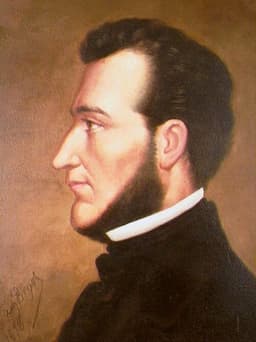
Francisco Morazan
General · Modern
58.0Total
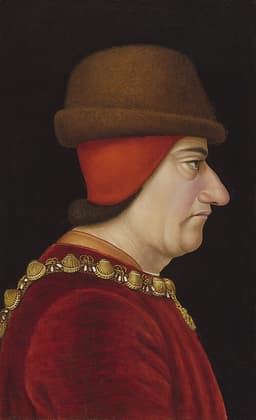
Louis XI
Emperor · Medieval
67.7Total
Basic Information
Born
1792
1423
Died
1842
1483
Era
Modern
Medieval
Nationality
Honduras
France
Occupation
General
Emperor
Civilization
Western
Western
Score Comparison
Military (10%)
52.5
45.0
Political (20%)
60.0
78.0
Influence (20%)
62.0
68.0
Legacy (20%)
50.0
65.0
Leadership (15%)
68.0
85.0
Strategy (15%)
55.0
55.0
TOTAL
58.0
67.7
Francisco Morazan — Complete Timeline
1824 AD
Abolition of slavery in Central AmericaReform◆ Major
As a key leader in the liberal movement, Moraz
AbolitionSlaveryLiberal Reform
Impact: regionalprogressive
1827 AD
Battle of La TrinidadWar◆ Major
Morazán led a liberal army to victory against conservative forces at La Trinidad, Honduras. This battle was a key turning point in the Central American civil war, allowing Morazán to consolidate power and eventually become president of the federation.
BattleLiberal VictoryCivil War
Impact: regional
1830 AD
Presidency of the Federal Republic of Central AmericaPolitical Action
Morazán was elected president of the Federal Republic of Central America, a union of Guatemala, El Salvador, Honduras, Nicaragua, and Costa Rica. He pursued liberal reforms including separation of church and state, free trade, and land reform, facing opposition from conservatives.
Federal RepublicLiberal ReformsCentral America
Impact: regionalconstructive
1842 AD
Execution by firing squadPolitical Action
After a failed attempt to restore the Federal Republic, Moraz
ExecutionEnd of FederationLiberal Defeat
Impact: regionaltragic
Louis XI — Complete Timeline
1464 AD
Established the Postal SystemReform
Louis XI created a royal postal system with relay stations across France, enabling faster communication between the crown and provincial officials. This administrative reform improved governance and intelligence gathering.
AdministrationCommunicationReform
Impact: nationalconstructive
1465 AD
Defeated the League of the Public WealWar◆ Major
Louis XI faced a coalition of powerful nobles, the League of the Public Weal, led by Charles the Bold of Burgundy. Although the Battle of Montlh
Civil WarNoble RebellionBurgundy
Impact: national
1475 AD
Treaty of PicquignyPolitical Action◆ Major
Louis XI negotiated the Treaty of Picquigny with Edward IV of England, ending English military intervention in France. Louis paid a large pension to Edward in exchange for English withdrawal, avoiding a costly war and securing his northern border.
TreatyDiplomacyEngland
Impact: regionalconstructive
1477 AD
Acquired BurgundyPolitical Action
After Charles the Bold's death at the Battle of Nancy, Louis XI seized the Duchy of Burgundy and other Burgundian territories, including Picardy and the Somme towns. This expansion significantly increased royal domain and weakened the Burgundian state.
Territorial ExpansionBurgundyRoyal Domain
Impact: regionalconstructive
1481 AD
Annexed Anjou and MainePolitical Action
Louis XI annexed the counties of Anjou and Maine after the death of Charles of Anjou, incorporating them into the royal domain. This further consolidated French territory and reduced the power of the Angevin nobility.
Territorial ExpansionAnjouMaine
Impact: nationalconstructive
Expert Analysis
Louis XI vs Francisco Morazan
### The Spider and the Reformer: Two Visions of Unity, One Weaving a Kingdom, the Other a Dream
In the dying light of the 15th century, a king sat in his fortress at Plessis-lez-Tours, surrounded by the webs of his own making. He was a man of frayed nerves and piercing eyes, a ruler who preferred the quill to the sword. Four centuries later, on a dusty Costa Rican plaza, a general faced a firing squad. His hands were bound, but his gaze was unwavering. One man died in his bed, having united a kingdom. The other died in a hail of bullets, having failed to hold a republic together. Louis XI of France and Francisco Morazán of Central America were both architects of unity, but their materials were radically different: one worked with the granite of a medieval kingdom, the other with the shifting sands of a nascent federation.
### Origins
Louis XI was born into a world of gilded cages and brutal power struggles. The son of Charles VII, he spent his youth in rebellion against his own father, a pattern of filial defiance that would define his early career. His France was a patchwork of semi-independent duchies—Burgundy, Brittany, Anjou—where the king was often merely the first among equals. The air he breathed was thick with feudal oaths and the constant threat of English invasion. Cunning was not a choice; it was a survival instinct.
Francisco Morazán, by contrast, was born in 1792 in Tegucigalpa, a provincial town in the Captaincy General of Guatemala. His world was one of revolutionary ferment. The American and French Revolutions were recent memories, and the Spanish Empire was crumbling. He was a child of the Enlightenment, a self-taught reader of Voltaire and Rousseau, who saw not a feudal patchwork but a blank slate. His Central America was a collection of provinces that had never truly been a nation, united only by colonial bureaucracy. Where Louis saw a kingdom to be stitched together, Morazán saw a republic to be built from scratch.
### Rise to Power
Louis XI entered the historical stage not through battlefield glory but through a labyrinth of intrigue. His key turning point came in 1465, when he faced the League of the Public Weal, a coalition of nobles led by his greatest rival, Charles the Bold of Burgundy. Though he suffered a military setback at the Battle of Montlhéry, Louis did not seek revenge. Instead, he negotiated, bribed, and divided his enemies. He understood that in medieval politics, a lost battle could be won at the treaty table. His rise was the slow, patient work of a spider spinning silk.
Morazán’s ascent was swifter and more dramatic. In 1827, at the Battle of La Trinidad, he led a ragged liberal army to a stunning victory against conservative forces. He was not a man of the court but of the camp, a general who rode at the head of his troops. His victory propelled him into the presidency of the Federal Republic of Central America in 1830. Where Louis used gold to buy loyalty, Morazán used ideals to inspire it. His power was built on the promise of a new order: abolition of slavery, freedom of the press, and separation of church and state.
### Leadership & Governance
Louis XI was a master of the long game. His political score of 69.6 reflects a ruler who transformed the French monarchy into a centralized machine. He established a royal postal system in 1464, with relay stations that allowed communication to outpace rebellion. He preferred to starve his enemies into submission rather than fight them. When Charles the Bold died at Nancy in 1477, Louis did not celebrate with a grand victory march; he quietly seized Burgundy, Anjou, and Maine, absorbing them into the royal domain through legal claims and careful pressure. He was a spider, not a lion.
Morazán, with a political score of 72.0, was a reformer of grand ambition but fragile execution. He abolished slavery in 1824 and promoted public education, but his liberal reforms alienated the powerful Catholic Church and the landed elite. His governance was a race against time—he needed to build a national identity before the centrifugal forces of regionalism tore the federation apart. He was a visionary who believed that laws could reshape society, but he lacked Louis’s patience for the slow erosion of opposition.
### Triumph & Tragedy
Louis’s greatest triumph was the Treaty of Picquigny in 1475. Facing an English invasion led by Edward IV, he did not raise an army; he raised a pension. He paid Edward to leave, securing peace without a single arrow loosed. It was the pinnacle of his political art: victory through negotiation. His tragedy was personal—he died a paranoid man, walled up in his fortress, terrified of assassination, his own family estranged.
Morazán’s triumph was the Federal Republic itself, a bold experiment in unity that for a brief decade held together Guatemala, El Salvador, Honduras, Nicaragua, and Costa Rica. His tragedy was its collapse. By 1839, the federation had dissolved into civil war. In 1842, after a desperate attempt to restore the union, he was captured in Costa Rica and executed by firing squad. His last words were said to be: “I die with the satisfaction of having served my country.”
### Character & Destiny
Louis XI was a man of shadows. He was suspicious, frugal, and utterly pragmatic. He wore shabby clothes, surrounded himself with commoners as advisors, and trusted no one. His personality shaped a destiny of conquest through caution. He never overreached; he simply outlasted his enemies.
Morazán was a man of light. He was charismatic, idealistic, and brave. He believed in the power of reason to remake the world. His personality shaped a destiny of tragic heroism. He overreached because he believed too much in the goodness of his cause. He died not because he was defeated, but because his dream was too big for his time.
### Legacy
Louis XI’s legacy is the modern French state. He is remembered as the “Universal Spider,” a title that is both an insult and an honor. He laid the foundations for the absolute monarchy that would reach its peak under Louis XIV. His legacy score of 80.0 reflects a man who changed the map of Europe.
Morazán’s legacy is more ambiguous. He is revered as a hero in Honduras and a symbol of Central American unity, but the union he died for never returned. His legacy score of 68.9 reflects a dream that remains unfulfilled. Statues of him stand in capital cities, but the borders he fought to erase still stand.
### Conclusion
One king built a kingdom; one general tried to build a republic. Louis XI succeeded because he worked with the grain of history, using the tools of his time—feudal law, royal marriage, and cold cash. Morazán failed because he worked against the grain, trying to impose a modern vision on a pre-modern world. But failure is not always the final word. Louis’s France would eventually fall to revolution; Morazán’s dream of unity would echo in later generations. The spider weaves a web that lasts; the reformer plants a seed that may one day bloom. Both, in their own way, were architects of a future they would never see.
Rankings
🥇
Louis XILeader
Mil: 45.0Pol: 78.0Inf: 68.0
67.7
🥈
Francisco Morazan
Mil: 52.5Pol: 60.0Inf: 62.0
58.0
+9.7 behind
How This Comparison Works
Algorithm
Each figure is scored on 6 dimensions (0—100 scale) based on structured historical data: Military (10%), Political (20%), Influence (20%), Legacy (20%), Leadership (15%), Strategy (15%). The weighted total produces the final ranking.
Data Sources
Scores are computed from structured sub-indicators in the database. Scale factors adjust for era (Ancient ×0.85, Modern ×1.0) and civilization size (Eastern ×1.05, Other ×0.80) to account for differences in population and military scale.
Maximum 3 Figures
Comparisons are limited to 2—3 figures to ensure readability and statistical meaningfulness.
Error Margins
±5 points per dimension — Sub-scores are derived from historical records with inherent uncertainty. Two figures within 5 points on a dimension should be considered roughly equivalent in that area.
Total Score Accuracy
±3 points overall — The weighted combination of 6 dimensions produces a total score with approximately ±3 points of uncertainty. Differences of less than 3 points are not statistically significant— the figures are effectively tied.
Known Limitations
- Historical records are incomplete and uneven across civilizations
- Figures from oral-tradition societies may be underrepresented
- Occupation labels can misclassify multi-role figures
- Scores measure capability and impact, not moral character
- Quantitative scoring is a comparison tool, not absolute truth
Capability Radar
Military (10%) — Battles & Warfare
Battles
55
45
Win Rate
60
40
Expansion
40
65
Political (20%) — Governance & Reform
Reform
70
80
Diplomacy
45
95
Economy
50
70
Influence (20%) — Cultural & Global Reach
Cultural
45
55
Global
35
60
Legacy (20%) — Historical Impact
Historical
50
75
Longevity
40
70
Leadership (15%) — Power & Stability
Tenure
55
75
Stability
30
65
Strategy (15%) — Tactics & Innovation
Strategy
55
70
Tactics
50
55
Reform
45
60
Similar Comparisons
Comments & Discussion
The Web Weaver6/16/2026
Louis XI wasn't just crafty—he was a proto-Machiavellian genius who understood that medieval kingship ran on cash, not chivalry. While nobles pranced around in armor chasing glory, Louis was methodically buying up their loyalty, crushing the Burgundian threat by funding Edward IV's invasion of France to keep him distracted. Modern historians call him paranoid; I call him the only sane man in a room full of dagger-happy dukes. His real achievement? Turning feudal chaos into a tax-collecting machi
数据屠夫6/16/2026
我不管什么理想主义,看数字说话。路易十一把法国王室领地收入从约15万利弗尔翻了五倍,还建立了统一邮政系统,税收实打实地进了国库。莫拉桑呢?中美洲联邦1824年成立时就背负了500万比索的西班牙殖民债务,到1838年解散时联邦政府连军队工资都发不出。光喊"自由""统一"没用,账本不会撒谎。一个搞出实体经济的实干家,一个只会印空头支票的演说家。历史判谁赢?看看法国地图和中美洲地图就行。