Loading...
Francisco Morazan vs Li Zongren
Li Zongren leads by 0.5 pts · 2 figures compared
…
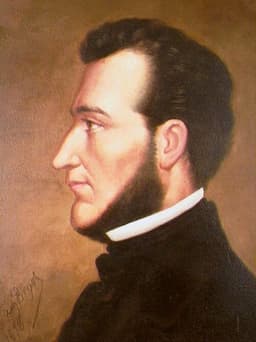
Francisco Morazan
General · Modern
58.0Total
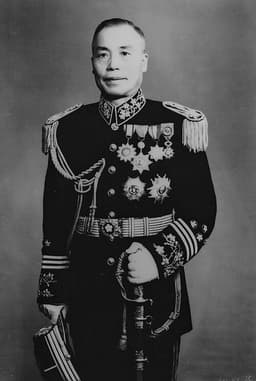
Li Zongren
General · Modern
58.5Total
Basic Information
Born
1792
1890
Died
1842
1969
Era
Modern
Modern
Nationality
Honduras
China
Occupation
General
General
Civilization
Western
Eastern
Score Comparison
Military (10%)
52.5
65.0
Political (20%)
60.0
53.8
Influence (20%)
62.0
58.0
Legacy (20%)
50.0
52.0
Leadership (15%)
68.0
72.0
Strategy (15%)
55.0
56.8
TOTAL
58.0
58.5
Francisco Morazan — Complete Timeline
1824 AD
Abolition of slavery in Central AmericaReform◆ Major
As a key leader in the liberal movement, Moraz
AbolitionSlaveryLiberal Reform
Impact: regionalprogressive
1827 AD
Battle of La TrinidadWar◆ Major
Morazán led a liberal army to victory against conservative forces at La Trinidad, Honduras. This battle was a key turning point in the Central American civil war, allowing Morazán to consolidate power and eventually become president of the federation.
BattleLiberal VictoryCivil War
Impact: regional
1830 AD
Presidency of the Federal Republic of Central AmericaPolitical Action
Morazán was elected president of the Federal Republic of Central America, a union of Guatemala, El Salvador, Honduras, Nicaragua, and Costa Rica. He pursued liberal reforms including separation of church and state, free trade, and land reform, facing opposition from conservatives.
Federal RepublicLiberal ReformsCentral America
Impact: regionalconstructive
1842 AD
Execution by firing squadPolitical Action
After a failed attempt to restore the Federal Republic, Moraz
ExecutionEnd of FederationLiberal Defeat
Impact: regionaltragic
Li Zongren — Complete Timeline
1921 AD
Command of the Guangxi ArmyPolitical Action◆ Major
Li Zongren became a commander in the Guangxi Army and helped unify Guangxi province under the New Guangxi Clique. He established a powerful regional base that rivaled other warlords.
Guangxi CliqueMilitary CommandWarlord Era
Impact: regional
1926 AD
Alliance with the Nationalist GovernmentPolitical Action◆ Major
Li Zongren allied the Guangxi Clique with Chiang Kai-shek's Nationalist government during the Northern Expedition. His forces played a key role in defeating warlords and unifying China under KMT rule.
Northern ExpeditionAllianceKMT
Impact: nationalconstructive
1938 AD
Battle of TaierzhuangWar
Li Zongren commanded Chinese forces to a major victory over the Japanese at the Battle of Taierzhuang during the Second Sino-Japanese War. This was the first significant Chinese victory of the war and boosted national morale.
Second Sino-Japanese WarBattleVictory
Impact: nationalconstructive
1949 AD
Acting Presidency of the Republic of ChinaPolitical Action◆ Major
Li Zongren served as Acting President of the Republic of China after Chiang Kai-shek's resignation during the Chinese Civil War. He attempted to negotiate peace with the Communists but failed, leading to the KMT's retreat to Taiwan.
Chinese Civil WarPresidencyKMT
Impact: nationaltragic
Exile to the United StatesPolitical Action
After the Communist victory, Li Zongren fled to the United States, where he lived in exile. He criticized Chiang Kai-shek's leadership and advocated for a reformed KMT, but remained politically marginalized.
ExileChinese Civil WarPolitics
Impact: nationaltragic
Expert Analysis
Francisco Morazan vs Li Zongren
# The General Who Couldn't Finish
On a spring morning in 1938, a Chinese general stood on a railway embankment in Shandong province, watching Japanese tanks burn in a wheat field. Li Zongren had just done what no Chinese commander had managed in the entire war—he had won a major battle. At Taierzhuang, his motley army of provincial troops and former warlord rivals had bloodied the Imperial Japanese Army, killing over 16,000 men. For a few weeks, he was the most celebrated man in China.
One hundred and ten years earlier, on a November afternoon in 1827, another general—younger, poorer, more desperate—rode into a valley outside Tegucigalpa, Honduras. Francisco Morazán had scraped together an army of 300 men, many of them armed only with machetes. They faced a conservative force three times their size. By sunset, Morazán had won the Battle of La Trinidad, and Central America had found its revolutionary champion.
Two generals. Two continents. Two dreams of unification—one Chinese, one Central American. Both men rose from the provinces to lead nations. Both tried to hold together something that was falling apart. One died before a firing squad at 49. The other died in bed at 78, having outlived his country. The question is not who was braver or smarter, but why their stories ended so differently.
Origins
Li Zongren was born in 1890 in a village in Guangxi, a poor, mountainous province in southern China. His family were farmers—not peasants, but not gentry either. He grew up speaking a dialect that sounded strange to northern ears, and he never quite lost the provincial edge that made educated Chinese look down on him. He entered military school at 18, joined the army, and survived the chaos of the early Republic by being tougher and more patient than his rivals.
Francisco Morazán was born in 1792 in Tegucigalpa, then a mining town in the Spanish colony of Honduras. His father was a Creole merchant of Corsican descent—a small-time trader, not a hacendado. Morazán taught himself law and political philosophy from smuggled books. He read Rousseau, Montesquieu, the French revolutionaries. By his twenties, he was a liberal firebrand in a world ruled by conservative landowners and clerics.
Their eras shaped them differently. Li came of age in the warlord period—a time when China had collapsed into a dozen petty kingdoms, when loyalty meant nothing and survival meant everything. Morazán came of age in the aftermath of independence from Spain—a time when everything seemed possible, when men believed they could write constitutions and remake society from scratch.
Rise to Power
Li Zongren rose by building a machine. In 1921, at 31, he took command of the Guangxi Army and spent the next four years unifying his home province under the New Guangxi Clique. He was not a visionary—he was a fixer. He made deals, broke deals, bribed rivals, and shot those who wouldn't be bribed. In 1926, he made the crucial calculation: he allied with Chiang Kai-shek's Nationalist government, joining the Northern Expedition that would—briefly—unify China. Li was never Chiang's man. He was an ally, and alliances can be broken.
Morazán rose by being a cause. In 1827, after La Trinidad, he became the military arm of the Central American liberal movement. He didn't build a machine—he built a reputation. He was young, handsome, brave, and he believed in something. That belief attracted intellectuals, mestizo farmers, and ambitious officers who wanted a different world. In 1830, at 38, he was elected president of the Federal Republic of Central America—a union of Guatemala, El Salvador, Honduras, Nicaragua, and Costa Rica. He was the embodiment of a dream that had never quite been real.
Leadership & Governance
Li Zongren was a strategist, not a statesman. His military score of 65.3 and strategy score of 83.4 tell a story: he could plan a campaign, but he could not command a nation. At Taierzhuang, he showed tactical brilliance—he used the terrain, he coordinated rival forces, he let the Japanese overextend themselves and then struck. But as a ruler, he was reactive. When he became acting president of the Republic of China in 1949, with Chiang Kai-shek fleeing to Taiwan, Li tried to negotiate with the Communists. He failed. He had no base, no party, no ideology—only his old Guangxi network, and it was not enough.
Morazán was the opposite. His political score of 72.0 is higher than his military score of 65.4, and for good reason. He governed as a reformer—he abolished slavery in 1824, ended church privileges, promoted public education, and tried to create a secular, unified Central American state. But his reforms made enemies. The conservatives hated him. The church hated him. The landowners hated him. And his military strategy score of 55.6 suggests he was not a great general—he was a great fighter, but he could not win the war.
Triumph & Tragedy
Li's triumph was Taierzhuang. For a few months in 1938, he was the hero of China. His tragedy was everything that followed. He watched the Nationalists lose the mainland. He served as acting president for a government that was already dead. In 1949, he fled to the United States, where he lived in exile for sixteen years, criticizing Chiang Kai-shek from a distance, unable to return, unable to let go. He died in 1969, in Beijing—he had returned to China in 1965, accepted by Mao Zedong, a relic of a lost world.
Morazán's triumph was the Federal Republic itself. For a decade, he held together a union that had no business surviving. His tragedy was that he believed too much. In 1842, after the Republic had collapsed, he invaded Costa Rica with a small force, trying to restart the revolution. He was captured, tried, and executed by firing squad. His last words were reportedly: "I die with the satisfaction of having served my country."
Character & Destiny
Li Zongren was a survivor. He adapted, waited, and made peace with his enemies when he had to. That saved his life—he died old, in his own bed. But it also limited him. He could never be the leader of a nation because he could never be the symbol of a cause.
Morazán was a believer. He could not adapt, could not compromise, could not live with half-measures. That made him a martyr—he died young, in front of a firing squad, and his name became a rallying cry for liberals across Central America. But it also destroyed him. He could never build something that would outlast his own charisma.
Legacy
Li Zongren is remembered in China as a capable general who fought the Japanese and lost to the Communists. His legacy score of 67.1 reflects a man who was important but not transformative. He is a footnote in the story of China's 20th century—a warlord who did his duty, won a battle, and faded away.
Morazán is remembered as the father of Central American liberalism. His legacy score of 68.9 is slightly higher, and his influence score of 76.2 is notably higher. His name is on streets, schools, and currency across Honduras, El Salvador, and Costa Rica. He is a symbol, not a footnote.
Conclusion
Li Zongren and Francisco Morazán were both generals who tried to hold together a fractured world. One succeeded in winning a battle but failed to win a country. One succeeded in inspiring a movement but failed to win a war. Their different fates were not a matter of courage or intelligence—they were a matter of what their times demanded. Li's China needed a fixer who could survive the chaos. Morazán's Central America needed a believer who could die for the dream. Both men gave their worlds what they needed, and both worlds broke them in return. That is the tragedy of the provincial general—he can win the battle, but he cannot change the tide.
Rankings
🥇
Li ZongrenLeader
Mil: 65.0Pol: 53.8Inf: 58.0
58.5
🥈
Francisco Morazan
Mil: 52.5Pol: 60.0Inf: 62.0
58.0
+0.5 behind
How This Comparison Works
Algorithm
Each figure is scored on 6 dimensions (0—100 scale) based on structured historical data: Military (10%), Political (20%), Influence (20%), Legacy (20%), Leadership (15%), Strategy (15%). The weighted total produces the final ranking.
Data Sources
Scores are computed from structured sub-indicators in the database. Scale factors adjust for era (Ancient ×0.85, Modern ×1.0) and civilization size (Eastern ×1.05, Other ×0.80) to account for differences in population and military scale.
Maximum 3 Figures
Comparisons are limited to 2—3 figures to ensure readability and statistical meaningfulness.
Error Margins
±5 points per dimension — Sub-scores are derived from historical records with inherent uncertainty. Two figures within 5 points on a dimension should be considered roughly equivalent in that area.
Total Score Accuracy
±3 points overall — The weighted combination of 6 dimensions produces a total score with approximately ±3 points of uncertainty. Differences of less than 3 points are not statistically significant— the figures are effectively tied.
Known Limitations
- Historical records are incomplete and uneven across civilizations
- Figures from oral-tradition societies may be underrepresented
- Occupation labels can misclassify multi-role figures
- Scores measure capability and impact, not moral character
- Quantitative scoring is a comparison tool, not absolute truth
Capability Radar
Military (10%) — Battles & Warfare
Battles
55
65
Win Rate
60
60
Expansion
40
60
Political (20%) — Governance & Reform
Reform
70
45
Diplomacy
45
60
Economy
50
40
Influence (20%) — Cultural & Global Reach
Cultural
45
40
Global
35
40
Legacy (20%) — Historical Impact
Historical
50
55
Longevity
40
45
Leadership (15%) — Power & Stability
Tenure
55
55
Stability
30
35
Strategy (15%) — Tactics & Innovation
Strategy
55
68
Tactics
50
70
Reform
45
55
Similar Comparisons
Comments & Discussion
The Iron Lute6/16/2026
Morazán was a man fighting for a shattered dream, while Li Zongren fought for a wounded nation that actually had a spine. Li's win at Taierzhuang was a tactical miracle against a modern empire, but his Guangxi clique crumbled because China's central government outlasted him. Morazán's federalism died because Central America was too fragmented to ever love a union. One was a realist among ruins, the other a romantic among volcanoes—Li knew when to bend, Morazán burned for his soul.
草鞋军阀6/16/2026
拿莫拉桑跟李宗仁比?李宗仁是泥腿子出身,靠广西子弟兵硬扛日军精锐,台儿庄一仗砍了16000鬼子,这战绩在民国军阀里独一份。莫拉桑就拉三百个拿砍刀的,打的是西班牙裔土财主的民兵,含金量差远了。李宗仁败就败在跟蒋介石玩心眼,最后窝囊退守台湾,可人家起码见识过现代战争的总参谋部。莫拉桑呢?枪毙前还在念叨中美洲联邦,纯粹一厢情愿的堂吉诃德。
Mandarin Strategist6/16/2026
Li Zongren was a supreme pragmatist—he unified Guangxi, crushed the warlord Lu Rongting, then pivoted to fight Japan. At Taierzhuang, he manipulated the Sichuan and Shandong warlords like chess pieces. Morazán never had that luxury; he was always fighting his own supposed allies. Li contributed to drafting China's wartime constitution; Morazán got his federation law repealed the minute he lost a battle. One commanded armies, the other merely commanded courage. Different leagues, different verdic
岭南刀客6/16/2026
说破天,李宗仁是民国最后的“完人”——没完全跪过日本人,没彻底卖过国,还能在台儿庄硬刚板垣师团。你莫拉桑再威风,1837年尼加拉瓜一败不就滚去秘鲁了吗?李宗仁败走大陆是天下大势,不是他个人能扛的。中央军都不行了,桂系顶什么用?莫拉桑是个人英雄主义撑炸了——一场败仗就丢了命又丢国。玩政治,李宗仁是老狐狸;玩命,莫拉桑是真疯子。但我选老狐狸。
The Comparative Historian6/16/2026
Here's the real distinction: Morazán's unified Central America lasted only a few years before fracturing into five bickering states, a dissolution he died fighting to reverse. Li Zongren's "country" was a continuous China, unified for millennia as a concept. Taierzhuang was a battle within an existing war for survival, not a rebellion to create a new nation. Morazán created a dream from scratch