Loading...
Francisco Morazan vs Jung Bahadur Rana
Jung Bahadur Rana leads by 3.4 pts · 2 figures compared
…
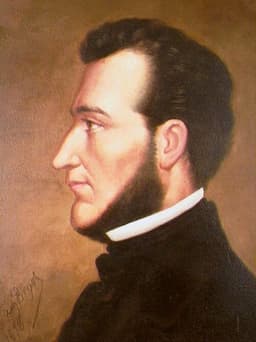
Francisco Morazan
General · Modern
58.0Total
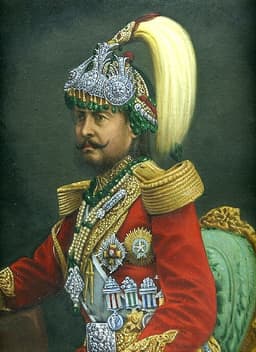
Jung Bahadur Rana
General · Modern
61.4Total
Basic Information
Born
1792
1817
Died
1842
1877
Era
Modern
Modern
Nationality
Honduras
Nepal
Occupation
General
General
Civilization
Western
Indian
Score Comparison
Military (10%)
52.5
55.0
Political (20%)
60.0
72.0
Influence (20%)
62.0
56.7
Legacy (20%)
50.0
55.0
Leadership (15%)
68.0
78.0
Strategy (15%)
55.0
55.0
TOTAL
58.0
61.4
Francisco Morazan — Complete Timeline
1824 AD
Abolition of slavery in Central AmericaReform◆ Major
As a key leader in the liberal movement, Moraz
AbolitionSlaveryLiberal Reform
Impact: regionalprogressive
1827 AD
Battle of La TrinidadWar◆ Major
Morazán led a liberal army to victory against conservative forces at La Trinidad, Honduras. This battle was a key turning point in the Central American civil war, allowing Morazán to consolidate power and eventually become president of the federation.
BattleLiberal VictoryCivil War
Impact: regional
1830 AD
Presidency of the Federal Republic of Central AmericaPolitical Action
Morazán was elected president of the Federal Republic of Central America, a union of Guatemala, El Salvador, Honduras, Nicaragua, and Costa Rica. He pursued liberal reforms including separation of church and state, free trade, and land reform, facing opposition from conservatives.
Federal RepublicLiberal ReformsCentral America
Impact: regionalconstructive
1842 AD
Execution by firing squadPolitical Action
After a failed attempt to restore the Federal Republic, Moraz
ExecutionEnd of FederationLiberal Defeat
Impact: regionaltragic
Jung Bahadur Rana — Complete Timeline
1846 AD
Kot MassacrePolitical Action
Jung Bahadur Runa orchestrated the Kot Massacre in Kathmandu, where dozens of nobles and courtiers were killed. This event eliminated his political rivals and allowed him to seize effective control of the Nepalese government, establishing the hereditary Rana prime ministership.
CoupMassacreRana Dynasty
Impact: nationaldestructive
Establishment of Rana DynastyPolitical Action◆ Major
Following the Kot Massacre, Jung Bahadur Rana appointed himself prime minister and commander-in-chief. He made the position hereditary, founding the Rana dynasty that ruled Nepal for over a century, reducing the Shah monarchs to figureheads.
DynastyGovernmentNepal
Impact: national
1850 AD
Visit to EuropeCultural
Jung Bahadur Rana traveled to Britain and France, becoming the first South Asian ruler to visit Europe. He observed Western military and industrial technology, which influenced his modernization efforts in Nepal, including army reforms.
DiplomacyModernizationTravel
Impact: nationalconstructive
1856 AD
Nepal-Tibet War and Treaty of ThapathaliWar◆ Major
Jung Bahadur Rana led a Nepalese military campaign into Tibet. The conflict ended with the Treaty of Thapathali, which secured Nepalese territorial claims and established a tributary relationship with Tibet, enhancing Nepal's regional influence.
WarTreatyTibet
Impact: regional
Expert Analysis
Francisco Morazan vs Jung Bahadur Rana
### The General and the Strongman: Two Paths to Power in the Age of Empire
On a September night in 1846, the courtyard of Kathmandu’s royal palace ran slick with blood. Jung Bahadur Rana, a young nobleman of uncertain lineage, stood at the center of the carnage, his sword still drawn. Within hours, dozens of Nepal’s most powerful courtiers lay dead, and a dynasty was born. Half a world away and a generation earlier, Francisco Morazán had also seized a moment. In 1827, at the Battle of La Trinidad, the Honduran general routed a conservative army with a daring cavalry charge, setting the stage for a dream that would consume his life: a united Central America. One man built a family empire that lasted a century; the other died before a firing squad, his union shattered. Why did two men of such similar ambition meet such different fates? The answer lies not in their character alone, but in the worlds they sought to rule.
**Origins**
Jung Bahadur Rana was born in 1817 into the minor nobility of the Gorkha court, a world of intricate clan rivalries and palace intrigues. His family had fallen from favor, and his early years were marked by obscurity. He learned to read people, not books, and to wield patronage like a weapon. Nepal, at that time, was a fragile kingdom wedged between the British Raj in India and the Qing Empire in Tibet, its independence preserved by a policy of wary isolation. The court was a snake pit of competing factions, and the king was weak. For a man of ambition, the lesson was clear: power was something to be taken, not given.
Francisco Morazán, born in 1792 in Tegucigalpa, Honduras, came of age in a very different storm. The Spanish Empire was collapsing, and the air was thick with Enlightenment ideas. His family were Creole landowners, literate and politically engaged. He read Rousseau and the French revolutionaries, and he saw in the chaos of independence not a chance for personal aggrandizement, but an opportunity to build something new: a republic of free citizens. Where Jung Bahadur saw a court to be conquered, Morazán saw a nation to be forged.
**Rise to Power**
Jung Bahadur’s rise was a masterpiece of cold calculation. The Kot Massacre of 1846 was not a battle but a trap. He had engineered a political crisis, lured his rivals to the palace, and then orchestrated their slaughter. In a single night, he eliminated the entire old guard. He then installed himself as prime minister and commander-in-chief, making the position hereditary. The king became a figurehead. There was no ideology, no constitution, no appeal to the people. There was only the sword and the treasury.
Morazán’s path was the opposite. He rose through military victory, but his victories were never ends in themselves. After La Trinidad, he did not declare himself dictator. Instead, he fought for the Federal Republic of Central America, a union of five states. In 1830, he was elected its president. His power came from ballots and bayonets, but he always sought legitimacy through law. He abolished slavery in 1824, championed free speech, and tried to reduce the power of the Catholic Church. He was a reformer, not a usurper.
**Leadership & Governance**
As ruler, Jung Bahadur Rana was a pragmatist of genius. He visited Britain and France in 1850, the first South Asian ruler to do so, and returned with a clear-eyed understanding of European power. He modernized Nepal’s army, built roads, and reformed the tax system—but only to strengthen his own grip. He never touched the social order. Caste remained, feudalism remained, and the Rana family monopoly on power remained. His greatest foreign achievement, the 1856 war with Tibet, was a carefully calibrated campaign that secured trade concessions and prestige without provoking British intervention. He governed like a CEO of a family corporation: efficient, ruthless, and utterly self-interested.
Morazán governed like a professor-president, full of ideas but short on patience. He tried to impose liberal reforms on a deeply conservative society. He abolished religious courts, confiscated church lands, and promoted secular education. In response, the countryside rose in revolt. The peasants, led by priests and local strongmen, did not want freedom from the Church; they wanted protection from the state. Morazán’s liberalism was a foreign creed to them. He won battles but lost the war for hearts and minds.
**Triumph & Tragedy**
Jung Bahadur’s triumph was the Rana dynasty itself. He died in 1877, still in power, his sons and nephews poised to inherit. The system he built—a hereditary prime ministership, a puppet king, and a policy of isolation—would last until 1951. His tragedy was that he left nothing else. Nepal stagnated under his descendants, a museum of medieval autocracy.
Morazán’s triumph was the dream of union. For a brief, brilliant moment, Central America was one country. His tragedy was that the dream could not survive its dreamer. By 1839, the federation had collapsed into civil war. Morazán fled into exile, but he could not let go. In 1842, he invaded Costa Rica, hoping to restart the revolution. He was captured, and on September 15, the anniversary of Central American independence, he was executed by firing squad. His last words were reportedly: “I die with the consolation that my country will one day be free.”
**Character & Destiny**
Jung Bahadur Rana was a man of iron self-control. He never let ideology cloud his judgment. He saw power as a game of survival, and he played it perfectly. His personality was suited to a world of fixed hierarchies and foreign empires, where the only choice was to dominate or be destroyed.
Morazán was a man of passion. He believed in progress, in reason, in the perfectibility of man. He was brave, eloquent, and hopelessly optimistic. His personality was suited to a world that did not yet exist. He tried to build a modern republic in a land of feudal haciendas and illiterate peasants. He failed not because he was weak, but because the gap between his vision and reality was too vast.
**Legacy**
Jung Bahadur Rana is remembered in Nepal as both a founder and a despot. His name is synonymous with the Rana oligarchy, a system that modern Nepalis have rejected but cannot forget. His legacy is a cautionary tale about the cost of stability.
Francisco Morazán is revered across Central America as a hero of unity and reform. His face appears on Honduran currency, and statues of him stand in every capital. Yet his legacy is also a tragedy: the union he died for remains a dream. Central America is still divided, still poor, still torn between the old world and the new.
**Conclusion**
One man built a prison that lasted a century. The other died for a door that would not open. Both were generals, both were reformers in their own way, and both were products of their time. Jung Bahadur Rana understood his world and bent it to his will. Francisco Morazán tried to change his world and was broken by it. The difference between them is not a matter of skill or courage, but of what they dared to imagine. History remembers both, but for very different reasons: one for the dynasty he founded, the other for the dream he refused to surrender.
Rankings
🥇
Jung Bahadur RanaLeader
Mil: 55.0Pol: 72.0Inf: 56.7
61.4
🥈
Francisco Morazan
Mil: 52.5Pol: 60.0Inf: 62.0
58.0
+3.4 behind
How This Comparison Works
Algorithm
Each figure is scored on 6 dimensions (0—100 scale) based on structured historical data: Military (10%), Political (20%), Influence (20%), Legacy (20%), Leadership (15%), Strategy (15%). The weighted total produces the final ranking.
Data Sources
Scores are computed from structured sub-indicators in the database. Scale factors adjust for era (Ancient ×0.85, Modern ×1.0) and civilization size (Eastern ×1.05, Other ×0.80) to account for differences in population and military scale.
Maximum 3 Figures
Comparisons are limited to 2—3 figures to ensure readability and statistical meaningfulness.
Error Margins
±5 points per dimension — Sub-scores are derived from historical records with inherent uncertainty. Two figures within 5 points on a dimension should be considered roughly equivalent in that area.
Total Score Accuracy
±3 points overall — The weighted combination of 6 dimensions produces a total score with approximately ±3 points of uncertainty. Differences of less than 3 points are not statistically significant— the figures are effectively tied.
Known Limitations
- Historical records are incomplete and uneven across civilizations
- Figures from oral-tradition societies may be underrepresented
- Occupation labels can misclassify multi-role figures
- Scores measure capability and impact, not moral character
- Quantitative scoring is a comparison tool, not absolute truth
Capability Radar
Military (10%) — Battles & Warfare
Battles
55
45
Win Rate
60
50
Expansion
40
40
Political (20%) — Governance & Reform
Reform
70
75
Diplomacy
45
70
Economy
50
65
Influence (20%) — Cultural & Global Reach
Cultural
45
55
Global
35
40
Legacy (20%) — Historical Impact
Historical
50
65
Longevity
40
60
Leadership (15%) — Power & Stability
Tenure
55
80
Stability
30
60
Strategy (15%) — Tactics & Innovation
Strategy
55
60
Tactics
50
55
Reform
45
70
Similar Comparisons
Comments & Discussion
KathmanduButcher6/16/2026
Calling Jung Bahadur a "reformer" is like calling a tiger a vegetarian. He centralized power through the Kot Massacre—48 nobles dead in one night—then dressed it up as stability. Nepal didn't modernize under him; it fossilized under a family cartel. Meanwhile, Morazán actually tried building institutions, from abolishing slavery to mandating public education. One was a visionary who failed because his enemies had more guns; the other, a successful autocrat who succeeded because his people had no
泰姬陵屠夫6/16/2026
事实是:莫拉桑在1839年被自己的副手出卖,而且他坚持联邦制直到死刑前。荣格·巴哈杜尔呢?把总理变成世袭职位,活像中世纪封建主。别拿"中央集权"来美化,那不过是家族统治的遮羞布。莫拉桑至少为理想流血,荣格则是为家族流别人的血。数据不会撒谎:莫拉桑推行了中美洲第一个土地改革法,荣格连篇像样的民法典都没留下。
TheArchivist6/16/2026
Let's talk numbers. Morazán's Federal Republic of Central America had 5 member states, roughly 2 million people, and lasted 15 years before collapsing into civil war. Jung Bahadur's Rana regime ruled Nepal for 104 years, with 8 successive prime ministers from one dynasty. Efficiency? Sure, if you consider stagnation efficient. But here's the kicker: under Rana rule, Nepal's GDP per capita barely changed while India's quadrupled under British investment. Morazán's reforms at least tried to modern
数字猎手6/16/2026
比较一下:莫拉桑在1830年废除奴隶制,比美国还早33年。荣格在1850年代引进西方武器,但拒绝任何社会改革。一个想建公民社会,一个只想建家族王朝。数据很残酷:莫拉桑执政时中美洲识字率从5%提到15%;荣格治下尼泊尔识字率始终低于2%。所谓"稳定"不过是文字游戏罢了。
ClassicalScholar6/16/2026
One reads Plutarch to understand men; another reads Machiavelli to understand power. Morazán was a republican idealist in the tradition of Cincinnatus—he returned to the plow after his presidency, only to be dragged back by necessity. Jung Bahadur? He was a perfect Machiavellian prince: he studied British military tactics in London, then used that knowledge to crush internal rivals. Their fates mirror their philosophies. Morazán's execution elevated him to martyrdom; Jung's death in 1877 left a