Loading...
Francisco Morazan vs Hyder Ali
Hyder Ali leads by 11.4 pts · 2 figures compared
…
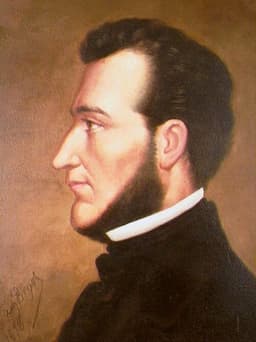
Francisco Morazan
General · Modern
58.0Total
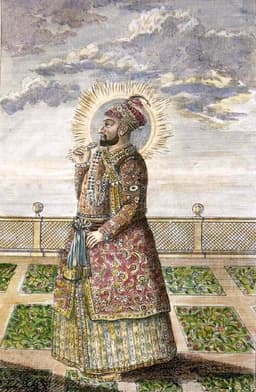
Hyder Ali
General · Modern
69.4Total
Basic Information
Born
1792
1720
Died
1842
1782
Era
Modern
Modern
Nationality
Honduras
India
Occupation
General
General
Civilization
Western
Indian
Score Comparison
Military (10%)
52.5
80.0
Political (20%)
60.0
65.7
Influence (20%)
62.0
82.0
Legacy (20%)
50.0
56.0
Leadership (15%)
68.0
68.0
Strategy (15%)
55.0
68.0
TOTAL
58.0
69.4
Francisco Morazan — Complete Timeline
1824 AD
Abolition of slavery in Central AmericaReform◆ Major
As a key leader in the liberal movement, Moraz
AbolitionSlaveryLiberal Reform
Impact: regionalprogressive
1827 AD
Battle of La TrinidadWar◆ Major
Morazán led a liberal army to victory against conservative forces at La Trinidad, Honduras. This battle was a key turning point in the Central American civil war, allowing Morazán to consolidate power and eventually become president of the federation.
BattleLiberal VictoryCivil War
Impact: regional
1830 AD
Presidency of the Federal Republic of Central AmericaPolitical Action
Morazán was elected president of the Federal Republic of Central America, a union of Guatemala, El Salvador, Honduras, Nicaragua, and Costa Rica. He pursued liberal reforms including separation of church and state, free trade, and land reform, facing opposition from conservatives.
Federal RepublicLiberal ReformsCentral America
Impact: regionalconstructive
1842 AD
Execution by firing squadPolitical Action
After a failed attempt to restore the Federal Republic, Moraz
ExecutionEnd of FederationLiberal Defeat
Impact: regionaltragic
Hyder Ali — Complete Timeline
1757 AD
Battle of PlasseyWar◆ Major
Hyder Ali, as a commander under the Wodeyar dynasty, participated in the Battle of Plassey indirectly by supporting the French against the British. However, his major role came later. This battle marked the beginning of British dominance in Bengal, which Hyder Ali would later challenge in the Carnatic Wars.
Carnatic WarsBritish East India CompanyMysore
Impact: regional
1761 AD
Capture of the throne of MysorePolitical Action◆ Major
Hyder Ali, a military commander, overthrew the Wodeyar ruler Krishnaraja Wodeyar II and established himself as the de facto ruler of Mysore. He imprisoned the maharaja and assumed full control, transforming Mysore into a powerful state through military reforms and expansion.
CoupMysore KingdomWodeyar Dynasty
Impact: regionaldestructive
1767 AD
First Anglo-Mysore WarWar◆ Major
Hyder Ali led Mysore against the British East India Company in the First Anglo-Mysore War. He formed alliances with the Nizam of Hyderabad and the Marathas. The war ended with the Treaty of Madras in 1769, which restored conquered territories and established a defensive alliance between Mysore and the British.
Anglo-Mysore WarsTreaty of MadrasBritish India
Impact: regional
1780 AD
Second Anglo-Mysore WarWar◆ Major
Hyder Ali launched the Second Anglo-Mysore War, attacking British territories in the Carnatic. He captured Arcot and defeated British forces at Pollilur. The war continued after his death in 1782, with his son Tipu Sultan taking command. The conflict ended with the Treaty of Mangalore in 1784.
Anglo-Mysore WarsBattle of PollilurTipu Sultan
Impact: regional
Expert Analysis
Francisco Morazan vs Hyder Ali
# Two Swords, Two Worlds: Hyder Ali and Francisco Morazán
In the sweltering heat of southern India, a Muslim general of humble origins watched his rocket brigades rain fire upon British infantry columns. Three decades later and half a world away, a Honduran liberator stood before a firing squad in Costa Rica, his dream of a united Central America dying with him. Hyder Ali of Mysore and Francisco Morazán of the Federal Republic of Central America never met, never knew each other’s names. Yet their lives trace a haunting parallel: both were military men who seized history by the throat, both fought empires they could not defeat, and both died with their grandest ambitions unfulfilled. What drove them, and why did their paths diverge so sharply?
Origins
Hyder Ali was born in 1720 into a world of fractured kingdoms and creeping European influence. His father was a military commander in the service of the Wodeyar dynasty of Mysore, a Hindu kingdom in southwestern India. Hyder grew up in the saddle, learning the art of war from the frontier skirmishes that defined the Deccan. He rose through sheer competence, not birthright—a man who commanded loyalty because he earned it. The Mughal Empire was crumbling, the Marathas were ascendant, and the British East India Company was tightening its grip on Bengal after Robert Clive’s victory at Plassey in 1757. Hyder watched, learned, and waited.
Francisco Morazán was born in 1792 in Tegucigalpa, Honduras, into a world convulsed by revolution. The American and French Revolutions had shattered old certainties; the Spanish Empire was hemorrhaging colonies. Morazán’s father was a Creole merchant of Corsican descent—part of the educated elite who read Rousseau and Voltaire by candlelight. Young Morazán absorbed the liberal ideas sweeping the Atlantic: liberty, equality, constitutional government, the abolition of slavery. Where Hyder saw a chessboard of rival princes and foreign merchants, Morazán saw a continent to remake.
Rise to Power
Hyder Ali’s ascent was the slow burn of a professional soldier. By the 1750s, he had become the de facto military commander of Mysore, trusted by the Wodeyar king to defend the realm. But in 1761, he made his move: he overthrew the young ruler Krishnaraja Wodeyar II and declared himself the de facto ruler of Mysore. It was a palace coup, not a revolution. Hyder kept the Wodeyar as figureheads, ruling through them with an iron fist. He understood that legitimacy in India wore a traditional face.
Morazán’s rise was a lightning strike. In 1827, at the Battle of La Trinidad in Honduras, he led a ragged liberal army to a stunning victory over conservative forces. He was thirty-five years old, and the victory made him the champion of the liberal cause across Central America. By 1830, he was elected president of the Federal Republic of Central America—a union of Guatemala, El Salvador, Honduras, Nicaragua, and Costa Rica. Where Hyder seized power in a dark room, Morazán rode into it on a wave of popular acclaim.
Leadership & Governance
Hyder Ali ruled Mysore as a military autocrat. He modernized his army, importing French officers to train his troops and pioneering the use of rocket artillery—a weapon that would later terrify the British at the Siege of Seringapatam. He was a master of guerrilla warfare, using the rugged terrain of the Western Ghats to ambush British columns. Politically, he was pragmatic: he allied with the Marathas and the Nizam of Hyderabad when it suited him, then betrayed them when it did not. His governance was efficient but ruthless—taxes were high, dissent was crushed, and the treasury was always full for the next war.
Morazán governed as a reformer. He abolished slavery in 1824, ended church privileges, promoted public education, and sought to create a secular, centralized state. He believed that liberal institutions could forge a unified Central American nation out of fractious provinces. But his reforms alienated the conservative clergy, the landed elite, and the indigenous communities who saw his modernizing zeal as an attack on their traditions. Where Hyder ruled by fear and reward, Morazán ruled by ideology and hope.
Triumph & Tragedy
Hyder Ali’s greatest moment came during the First Anglo-Mysore War (1767–1769). He outmaneuvered the British, besieged Madras, and forced the East India Company to sign a humiliating treaty on the walls of the city. It was the first time a native Indian ruler had forced the British to sue for peace. His tragedy came in the Second Anglo-Mysore War (1780–1782). He captured Arcot and ravaged the Carnatic, but the British regrouped under Sir Eyre Coote. Hyder died in 1782 of a carbuncle—a simple infection—with the war still raging. His son Tipu Sultan inherited a conflict he could not win.
Morazán’s greatest moment was his presidency itself—a decade-long attempt to hold the Federal Republic together. He traveled constantly, suppressed rebellions, and tried to balance regional rivalries. His tragedy came in the late 1830s, when the federation collapsed into civil war. Conservative forces, led by Rafael Carrera in Guatemala, tore the union apart. Morazán fled into exile, but he could not let go. In 1842, he invaded Costa Rica in a desperate bid to restore the federation. He was captured, and on September 15, 1842—the anniversary of Central American independence—he was executed by firing squad.
Character & Destiny
Hyder Ali was a realist. He saw the British as a predator to be managed, not a disease to be cured. He fought them because they threatened his power, not because he dreamed of a unified India. His ambition was personal, his vision limited to Mysore. He was brave, cunning, and ruthless—a survivor in a world of predators.
Morazán was a romantic. He believed that liberal democracy could transform Central America, that men could be reasoned into unity. He fought for an idea, not a throne. His courage was moral as well as physical—he abolished slavery, he championed education, he died for a federation that had already failed. He was noble, stubborn, and blind to the forces of tradition and local loyalty that his reforms had unleashed.
Legacy
Hyder Ali is remembered today as a pioneer of anti-colonial resistance, the father of Tipu Sultan, and the man who showed that the British could be beaten. His rocket technology influenced British military thinking and, indirectly, the development of modern artillery. But his legacy is tangled: he was a usurper, a tyrant, and a warrior who built nothing that outlasted his son’s defeat in 1799.
Morazán is remembered as the “Simón Bolívar of Central America”—a unifier who failed, a liberal who died for his beliefs. His name adorns streets, schools, and provinces from Honduras to El Salvador. But his legacy is also ambiguous: the federation he died for never returned, and Central America remains divided into five nations, each nursing its own grievances against the others.
Conclusion
Two swords, two worlds. Hyder Ali fought to preserve a kingdom; Morazán fought to create a nation. One was a realist who saw power as the only currency; the other was an idealist who believed ideas could conquer armies. Both were defeated by forces larger than themselves—the British Empire for Hyder, the weight of history and geography for Morazán. Yet in their defeat, they left something precious: the knowledge that resistance is possible, that dreams can be worth dying for, and that the arc of history bends not just toward justice, but toward the courage of those who try.
Rankings
🥇
Hyder AliLeader
Mil: 80.0Pol: 65.7Inf: 82.0
69.4
🥈
Francisco Morazan
Mil: 52.5Pol: 60.0Inf: 62.0
58.0
+11.4 behind
How This Comparison Works
Algorithm
Each figure is scored on 6 dimensions (0—100 scale) based on structured historical data: Military (10%), Political (20%), Influence (20%), Legacy (20%), Leadership (15%), Strategy (15%). The weighted total produces the final ranking.
Data Sources
Scores are computed from structured sub-indicators in the database. Scale factors adjust for era (Ancient ×0.85, Modern ×1.0) and civilization size (Eastern ×1.05, Other ×0.80) to account for differences in population and military scale.
Maximum 3 Figures
Comparisons are limited to 2—3 figures to ensure readability and statistical meaningfulness.
Error Margins
±5 points per dimension — Sub-scores are derived from historical records with inherent uncertainty. Two figures within 5 points on a dimension should be considered roughly equivalent in that area.
Total Score Accuracy
±3 points overall — The weighted combination of 6 dimensions produces a total score with approximately ±3 points of uncertainty. Differences of less than 3 points are not statistically significant— the figures are effectively tied.
Known Limitations
- Historical records are incomplete and uneven across civilizations
- Figures from oral-tradition societies may be underrepresented
- Occupation labels can misclassify multi-role figures
- Scores measure capability and impact, not moral character
- Quantitative scoring is a comparison tool, not absolute truth
Capability Radar
Military (10%) — Battles & Warfare
Battles
55
78
Win Rate
60
72
Expansion
40
70
Political (20%) — Governance & Reform
Reform
70
70
Diplomacy
45
68
Economy
50
60
Influence (20%) — Cultural & Global Reach
Cultural
45
50
Global
35
50
Legacy (20%) — Historical Impact
Historical
50
55
Longevity
40
45
Leadership (15%) — Power & Stability
Tenure
55
65
Stability
30
55
Strategy (15%) — Tactics & Innovation
Strategy
55
80
Tactics
50
85
Reform
45
75
Similar Comparisons
Comments & Discussion
No comments yet. Be the first to share your thoughts!