Loading...
Francisco I. Madero vs Theobald Wolfe Tone
Francisco I. Madero leads by 2.5 pts · 2 figures compared
…
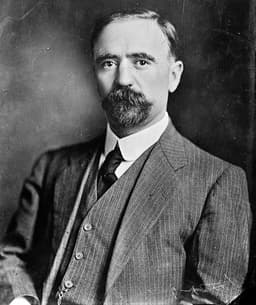
Francisco I. Madero
Revolutionary · Modern
50.3Total
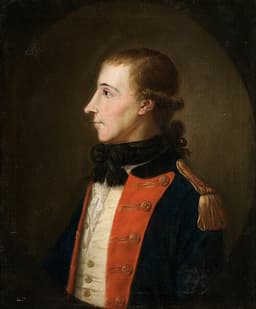
Theobald Wolfe Tone
Revolutionary · Modern
47.8Total
Basic Information
Born
1873
1763
Died
1913
1798
Era
Modern
Modern
Nationality
Mexico
Ireland
Occupation
Revolutionary
Revolutionary
Civilization
Western
Western
Score Comparison
Military (10%)
50.0
39.9
Political (20%)
54.7
27.9
Influence (20%)
52.5
57.2
Legacy (20%)
47.5
49.2
Leadership (15%)
54.2
57.1
Strategy (15%)
39.6
45.0
TOTAL
50.3
47.8
Francisco I. Madero — Complete Timeline
1908 AD
Madero publishes 'The Presidential Succession in 1910'Cultural◆ Major
Francisco I. Madero published a book criticizing the long dictatorship of Porfirio D
Mexican RevolutionPolitical WritingDemocracy
Impact: nationalprogressive
1910 AD
Madero launches the Mexican RevolutionPolitical Action
After being fraudulently defeated in the 1910 presidential election, Madero issued the Plan of San Luis Potos
Mexican RevolutionArmed RebellionPlan of San Luis
Impact: national
1911 AD
Madero becomes President of MexicoPolitical Action◆ Major
Following the resignation of Porfirio D
PresidencyDemocracyReform
Impact: nationalconstructive
1913 AD
Madero's assassination during the Decena TrágicaPolitical Action
During a coup known as the Decena Tr
AssassinationCoupDecena Trágica
Impact: nationaltragic
Theobald Wolfe Tone — Complete Timeline
1791 AD
Founding of the United IrishmenPolitical Action◆ Major
Tone co-founded the Society of United Irishmen in Belfast, a revolutionary organization seeking parliamentary reform and Catholic emancipation. The society later became a secret republican movement aiming for Irish independence.
Irish RepublicanismFoundingReform
Impact: nationalprogressive
Publication of 'An Argument on Behalf of the Catholics of Ireland'Cultural
Tone published a pamphlet arguing for the inclusion of Catholics in Irish political life. It helped bridge the gap between Protestant radicals and the Catholic majority, broadening the base of the United Irishmen.
PamphletCatholic EmancipationPolitical Thought
Impact: nationalprogressive
1796 AD
Expédition d'IrlandeWar◆ Major
Tone accompanied a French fleet of 43 ships carrying 15,000 troops to invade Ireland. The expedition was scattered by storms off Bantry Bay and failed to land, a major setback for the republican cause.
French InvasionNavalFailure
Impact: nationaltragic
Mission to FrancePolitical Action◆ Major
Tone traveled to France to secure French military support for an Irish rebellion. He persuaded the French Directory to launch an invasion of Ireland, leading to the dispatch of a large expeditionary force.
DiplomacyFrench RevolutionInvasion
Impact: national
1798 AD
Battle of Tory IslandWar◆ Major
Tone was captured aboard a French ship at the Battle of Tory Island, part of a second French invasion attempt. The French squadron was defeated by the Royal Navy, ending French hopes of aiding the Irish Rebellion.
1798 RebellionNaval BattleCapture
Impact: nationaltragic
Trial and SuicidePolitical Action◆ Major
Tone was tried for treason in Dublin and sentenced to death by hanging. Before execution, he cut his own throat to deny the British the spectacle of his hanging, dying from the wound a week later.
TrialSuicideMartyrdom
Impact: nationaltragic
Expert Analysis
Theobald Wolfe Tone vs Francisco I. Madero
The Revolutionary’s Dilemma: Madero and Tone
On a November morning in 1913, a small, frail man with a high-pitched voice and a spiritualist’s faith in democracy stood before a firing squad in Mexico City. Francisco I. Madero had been president for barely fifteen months. Across the Atlantic, one hundred and fifteen years earlier, another revolutionary lay in a Dublin prison cell, his throat slashed by his own hand. Theobald Wolfe Tone, captured after a failed French invasion, had chosen a grisly suicide rather than let the British hang him like a common criminal. Both men died for a vision of liberty. But why did one spark a continent-shaking revolution, while the other left a dream that would take generations to bloom? The answer lies not in their shared idealism, but in the brutal realities of timing, power, and the limits of principle.
Origins
Madero was born into wealth in 1873, the son of a prosperous landowning family in northern Mexico. Educated in France and the United States, he was a man of books and séances, a vegetarian who believed in spirits and democracy with equal fervor. His Mexico was a prison of one man: Porfirio Díaz, who had ruled for thirty-five years, modernizing the country while crushing dissent. Madero’s revolution was born not from poverty, but from outrage at a stolen election.
Tone came from a different world. Born in 1763 to a Protestant Dublin coachmaker, he was a brilliant, restless lawyer who saw Ireland as a nation enslaved by England. The Irish Parliament was a Protestant monopoly; Catholics were barred from voting, owning land, or practicing law. Tone’s genius was to see that religion was a weapon of division. In his 1791 pamphlet *An Argument on Behalf of the Catholics of Ireland*, he called for unity between Protestants and Catholics against their common British masters. Where Madero saw a corrupted election, Tone saw a corrupted nation.
Rise to Power
Madero’s path was literary before it was violent. His 1908 book, *The Presidential Succession in 1910*, was a polite call for democracy that sold out across Mexico. Díaz, in a rare moment of weakness, gave an interview hinting he might retire. The nation erupted with hope. When Díaz rigged the 1910 election, Madero did not accept defeat. From exile in Texas, he issued the Plan of San Luis Potosí, calling for armed revolt. It was a gamble by a man who had never fired a gun.
Tone’s rise was more desperate. In 1791, he co-founded the Society of United Irishmen, a secret organization that grew into a shadow government. When Britain declared war on revolutionary France, Tone saw his chance. He fled to America, then to Paris, where he spent two years convincing the French Directory that Ireland was the soft underbelly of the British Empire. His weapon was not a book but a promise: fifteen thousand French troops could free a nation.
Leadership & Governance
As president, Madero was a disaster. He was honest, idealistic, and utterly incapable. He left Díaz’s army and bureaucracy intact, believing democracy would heal all wounds. When his former ally Emiliano Zapata demanded land reform, Madero offered platitudes. When rebel generals like Pascual Orozco turned against him, he tried to negotiate. His military score of 34 reflects this: he was a man who gave orders but could not enforce them. His political score of 53.1 is generous—he understood elections but not power.
Tone never governed. He was a revolutionary strategist, not an administrator. His military score of 36 is similarly low, but for different reasons: he was a diplomat in uniform, not a general. His genius was in persuasion. He convinced the French to launch the *Expédition d’Irlande* in 1796, a fleet of 43 ships carrying 15,000 troops. Only a storm stopped the invasion from landing. In 1798, when a second attempt reached Ireland, Tone was captured on a French warship at the Battle of Tory Island. His leadership score of 30 reflects a man who inspired loyalty but could not command an army.
Triumph & Tragedy
Madero’s greatest moment was his triumph. In May 1911, Díaz fled Mexico. Madero entered Mexico City as the “Apostle of Democracy.” For a few months, Mexico tasted freedom. His tragedy was that he did not understand that democracy requires force to defend itself. In February 1913, a coup known as the *Decena Trágica*—the Ten Tragic Days—erupted. Madero’s own general, Victoriano Huerta, betrayed him. He was arrested, forced to resign, and shot on the way to prison. His legacy score of 65.3 reflects a martyr who died for a cause he could not manage.
Tone’s tragedy was more poetic. Captured in 1798, he was tried for treason in Dublin. In his final speech, he declared: “I have attempted to establish the independence of my country—I have failed.” He then cut his own throat with a razor smuggled into his cell. It took him a week to die. His influence score of 73.2 is higher than Madero’s 72.6 because his failure was a seed, not a dead end. He became the father of Irish republicanism, a ghost that haunted British rule for two centuries.
Character & Destiny
Madero was a spiritualist who believed in the goodness of men. He once said, “The people are the source of all legitimate authority.” He meant it—and it killed him. He could not imagine that Huerta, his own general, would murder him in cold blood. His total score of 54.5 is a measure of a man who was ahead of his time but behind its reality.
Tone was a realist wrapped in an idealist’s clothes. He wrote, “To subvert the tyranny of our execrable government, to break the connection with England, the never-failing source of all our political evils.” He knew that revolution required foreign bayonets and a willingness to die. His total score of 48.7 is lower, but his impact was deeper. He understood that some causes are won by ghosts.
Legacy
Madero’s legacy is the Mexican Revolution he started but could not control. His death unleashed a decade of bloodshed that gave Mexico land reform, labor rights, and a new constitution. He is remembered as a martyr of democracy, a man whose purity was his flaw. In Mexico City, his statue stands in the *Plaza de la Constitución*—a reminder that good intentions are not enough.
Tone’s legacy is the Republic of Ireland. His grave in Bodenstown is a pilgrimage site for Irish nationalists. Every year, they gather to honor the man who failed but never surrendered. His influence score of 73.2 is a testament to the power of a good death. He did not live to see independence, but he made it inevitable.
Conclusion
Standing at the crossroads of their fates, one sees a haunting symmetry. Madero and Tone both believed that liberty was worth dying for. Both were betrayed by the very forces they tried to harness. But their differences reveal a deeper truth about revolution. Madero tried to change a system from within, armed only with ballots. Tone tried to break a system from without, armed with French steel. One died because he trusted his enemies; the other because he trusted his allies. In the end, the revolutionary’s dilemma is the same in every age: principle without power is suicide, and power without principle is tyranny. Madero and Tone chose principle, and they paid the price. The question they leave behind is not whether they were right, but whether we have learned their lesson.
Rankings
🥇
Francisco I. MaderoLeader
Mil: 50.0Pol: 54.7Inf: 52.5
50.3
🥈
Theobald Wolfe Tone
Mil: 39.9Pol: 27.9Inf: 57.2
47.8
+2.5 behind
How This Comparison Works
Algorithm
Each figure is scored on 6 dimensions (0—100 scale) based on structured historical data: Military (10%), Political (20%), Influence (20%), Legacy (20%), Leadership (15%), Strategy (15%). The weighted total produces the final ranking.
Data Sources
Scores are computed from structured sub-indicators in the database. Scale factors adjust for era (Ancient ×0.85, Modern ×1.0) and civilization size (Eastern ×1.05, Other ×0.80) to account for differences in population and military scale.
Maximum 3 Figures
Comparisons are limited to 2—3 figures to ensure readability and statistical meaningfulness.
Error Margins
±5 points per dimension — Sub-scores are derived from historical records with inherent uncertainty. Two figures within 5 points on a dimension should be considered roughly equivalent in that area.
Total Score Accuracy
±3 points overall — The weighted combination of 6 dimensions produces a total score with approximately ±3 points of uncertainty. Differences of less than 3 points are not statistically significant— the figures are effectively tied.
Known Limitations
- Historical records are incomplete and uneven across civilizations
- Figures from oral-tradition societies may be underrepresented
- Occupation labels can misclassify multi-role figures
- Scores measure capability and impact, not moral character
- Quantitative scoring is a comparison tool, not absolute truth
Capability Radar
Military (10%) — Battles & Warfare
Battles
25
5
Win Rate
30
5
Expansion
10
5
Political (20%) — Governance & Reform
Reform
60
30
Diplomacy
35
25
Economy
30
5
Influence (20%) — Cultural & Global Reach
Cultural
45
45
Global
40
40
Legacy (20%) — Historical Impact
Historical
55
50
Longevity
50
55
Leadership (15%) — Power & Stability
Tenure
40
10
Stability
15
5
Strategy (15%) — Tactics & Innovation
Strategy
25
15
Tactics
20
10
Reform
10
20
Similar Comparisons
Comments & Discussion
数据铁骑6/16/2026
老马(Madero)就是个被数据打脸的空想家。他1911年当选总统时拿了近90%选票,看似民意滔天,结果呢?两年后就被推翻,因为他根本没算清权力账——国内85%的土地还在地主手里,军队高层全是旧党羽。他搞政治改革却不碰经济根基,这不找死吗?对比之下,托恩(Tone)至少懂得革命需要外援和武装,哪像老马,光靠念咒和选举就想改变墨西哥,数据不会说谎:他治下的叛乱次数从15次飙升到40次,失败得明明白白。
拉丁残卷6/16/2026
说实话,把托恩和马德罗并列是对古典革命论的侮辱。马德罗就像个用招魂术搞民主的蠢货——他写《1910年总统继任》时居然幻想迪亚斯会自愿下台,这跟托恩在1798年联合法国武装起义完全是两个境界。古典革命史告诉我们,变革靠的是精密策划和牺牲勇气,马德罗连基本的地主阶级都没处理好,让萨帕塔起义叛变,白白浪费了墨西哥的革命窗口。托恩至少死得有骨气,用剃刀自尽而不是等着被绞死。
Historian3086/16/2026
Revisionist take: both were overrated elitists playing revolutionary dress-up. Tone was a Protestant lawyer who wanted a secular Irish republic, but he never addressed Catholic peasant land grievances—sound familiar? Madero was a wealthy
Historian9566/16/2026
Here’s the twist: both men lost, but Madero’s failure lit a bigger fire. Tone’s United Irishmen were crushed, and Irish nationalism took a century to resurge. Madero’s death in 1913 sparked the whole Mexican Revolution—Zapata, Villa, the works. Sure, he was a clumsy leader who trusted Huerta, a traitor, but his martyrdom radicalized the masses. Tone’s suicide was heroic, but it didn’t create a peasant army. Madero’s assassination did. So who’s more effective? The one whose death becomes a war cr
Chronicler48716/16/2026
As a military historian, I’d stack Tone over Madero any day. Tone actually understood that revolutions need steel, not séances. He secured French naval support and got boots on the ground at Bantry Bay in 1796. That failed, but he grasped the strategic chessboard: weakening Britain meant allying with its enemies. Madero? He toppled Díaz with a vague plan and then let reactionaries like Victoriano Huerta walk free. Tone’s suicide before execution was a soldier’s exit; Madero’s naivety got him sho