Loading...
Abd el-Krim vs Francisco I. Madero
Abd el-Krim leads by 11.5 pts · 2 figures compared
…
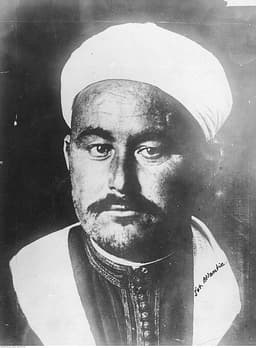
Abd el-Krim
Revolutionary · Modern
61.8Total
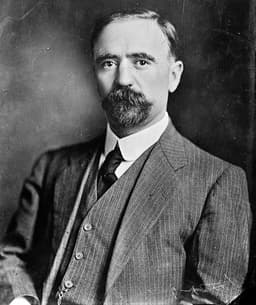
Francisco I. Madero
Revolutionary · Modern
50.3Total
Basic Information
Born
1882
1873
Died
1963
1913
Era
Modern
Modern
Nationality
Morocco
Mexico
Occupation
Revolutionary
Revolutionary
Civilization
Middle Eastern
Western
Score Comparison
Military (10%)
75.0
50.0
Political (20%)
72.0
54.7
Influence (20%)
59.0
52.5
Legacy (20%)
50.0
47.5
Leadership (15%)
72.0
54.2
Strategy (15%)
55.0
39.6
TOTAL
61.8
50.3
Abd el-Krim — Complete Timeline
1921 AD
Battle of AnnualWar
Abd el-Krim's Riffian forces decisively defeated a Spanish army at Annual in Spanish Morocco. The Spanish suffered thousands of casualties and lost vast amounts of equipment. This victory established Abd el-Krim as a major military leader and led to the proclamation of the Rif Republic.
Rif WarSpanish ColonialismBattle
Impact: regional
1923 AD
Proclamation of the Rif RepublicPolitical Action◆ Major
Abd el-Krim formally proclaimed the independent Rif Republic in northern Morocco. He established a government and administrative system, challenging Spanish and French colonial rule. The republic was not internationally recognized but functioned as a de facto state.
Rif RepublicIndependenceAnti-Colonialism
Impact: regionalconstructive
1925 AD
Rif War against FranceWar◆ Major
Abd el-Krim's forces attacked French positions in Morocco, expanding the conflict beyond Spanish territory. The French responded with a massive military campaign, using superior firepower and chemical weapons. This led to the eventual defeat of the Rif Republic.
Rif WarFrench ColonialismChemical Weapons
Impact: regional
1926 AD
Surrender and Exile to RéunionWar◆ Major
After a prolonged campaign, Abd el-Krim surrendered to French forces. He was exiled to the island of R
Rif WarExileDefeat
Impact: regionaltragic
1947 AD
Release and Move to EgyptPolitical Action
Abd el-Krim was released by the French and allowed to move to Egypt. He settled in Cairo, where he continued to advocate for North African independence and became a symbolic figure for anti-colonial movements.
ExileAnti-ColonialismSymbol
Impact: regionalconstructive
Francisco I. Madero — Complete Timeline
1908 AD
Madero publishes 'The Presidential Succession in 1910'Cultural◆ Major
Francisco I. Madero published a book criticizing the long dictatorship of Porfirio D
Mexican RevolutionPolitical WritingDemocracy
Impact: nationalprogressive
1910 AD
Madero launches the Mexican RevolutionPolitical Action
After being fraudulently defeated in the 1910 presidential election, Madero issued the Plan of San Luis Potos
Mexican RevolutionArmed RebellionPlan of San Luis
Impact: national
1911 AD
Madero becomes President of MexicoPolitical Action◆ Major
Following the resignation of Porfirio D
PresidencyDemocracyReform
Impact: nationalconstructive
1913 AD
Madero's assassination during the Decena TrágicaPolitical Action
During a coup known as the Decena Tr
AssassinationCoupDecena Trágica
Impact: nationaltragic
Expert Analysis
Abd el-Krim vs Francisco I. Madero
### The Prophet and the Prince: Madero and Abd el-Krim in the Age of Revolt
In the spring of 1911, two men stood at the edge of very different worlds. Francisco Madero, a slight, mustachioed Mexican with a spiritualist’s gaze, crossed the Rio Grande on horseback, clutching a proclamation that would ignite a continent. Thousands of miles east, across the Atlantic, Muhammad Abd el-Krim, a Berber judge with a warrior’s frame, watched from the Rif Mountains as his tribesmen ambushed a Spanish column. Both were revolutionaries. Both would fight empires. But their paths—one ending in a hail of bullets, the other in a quiet Cairo exile—tell a story of how character, timing, and the ruthless logic of power shape a rebel’s fate.
Origins
Madero was born into privilege. The scion of one of Mexico’s wealthiest landowning families, he studied in France and the United States, absorbing the liberal ideals of the nineteenth century. His world was one of haciendas, trains, and the suffocating order of Porfirio Díaz’s thirty-five-year dictatorship. Yet Madero was no firebrand; he was a mystic, a vegetarian, a man who believed in séances and the ballot box. His revolution was conceived in a library.
Abd el-Krim, by contrast, was born in 1882 into a world of clan feuds and Spanish gunboats. His father was a qadi, a Muslim judge, and young Muhammad studied at the University of al-Qarawiyyin in Fez, where law and theology mingled with anti-colonial resentment. He began his career as a journalist and a colonial administrator for the Spanish, even negotiating with them. But when Spain’s arrogance turned to brutality, the bureaucrat became a guerrilla. His revolution was born from humiliation.
Rise to Power
Madero’s rise seemed almost accidental. In 1908, Díaz gave an interview hinting that Mexico was ready for democracy. Madero took him at his word, publishing *The Presidential Succession in 1910*, a dry, earnest book that became a rallying cry. When Díaz rigged the election, Madero didn’t call for blood—he called for a rising. The Plan of San Luis Potosí was a lawyer’s document, but it unleashed a wildfire. Peasants like Emiliano Zapata rose in the south, bandits like Pancho Villa in the north. Madero, the aristocrat, became the reluctant leader of a social earthquake.
Abd el-Krim’s ascent was more deliberate. After the Spanish executed his brother, he retreated to the mountains and united the fractious Riffian tribes. His moment came on July 21, 1921, at the Battle of Annual. There, his 3,000 men shattered a Spanish army of 20,000, capturing artillery, rifles, and the pride of an empire. It was one of the most stunning defeats of a colonial power in history. Abd el-Krim didn’t just win a battle; he founded a state. In 1923, he proclaimed the Rif Republic, with a flag, a treasury, and a postal service. He was not a prophet of democracy; he was a prince of resistance.
Leadership & Governance
Madero’s governance was a study in tragic idealism. Elected president in a landslide in 1911, he tried to reconcile the old regime with the new. He kept the federal army intact, alienated the radicals who had put him in power, and refused to seize the great estates. “I believe in the liberty of the people,” he said, “but I also believe in the rights of property.” He was a democrat in a land of caudillos, and his moderation pleased no one. His military score of 34.0 reflects a man who never took command of his own revolution.
Abd el-Krim was the opposite. His political score of 75.6 and leadership score of 86.5 reveal a commander who governed as he fought: with iron discipline. He established a modern administration in the Rif, with taxes, courts, and a school system. He forbade tribal feuds and enforced a single law. When the French, led by Marshal Philippe Pétain, attacked in 1925, he used scorched-earth tactics and mountain fortresses to hold off three hundred thousand troops. His strategy score of 72.0 shows a man who thought like a general, not a pamphleteer.
Triumph & Tragedy
Madero’s triumph was brief. He toppled a dictator without a civil war, but his tragedy was that he could not manage peace. In February 1913, during the *Decena Trágica*, a general named Victoriano Huerta staged a coup. Madero, betrayed by his own army, was arrested, forced to resign, and then shot in the back on his way to prison. He was forty years old. His legacy score of 65.3 is a measure of a martyr who died for a democracy that would not arrive for decades.
Abd el-Krim’s tragedy was grander. After defeating the Spanish, he provoked the French by attacking their protectorate. In 1926, a combined Franco-Spanish force of over 100,000 men, using chemical weapons, crushed the Rif. Abd el-Krim surrendered to save his people from annihilation. He was exiled to the Indian Ocean island of Réunion, where he spent twenty-one years under house arrest. But unlike Madero, he survived. Released in 1947, he moved to Cairo, where he became a symbol of anti-colonial struggle until his death in 1963 at age eighty-one.
Character & Destiny
Their personalities sealed their fates. Madero was a man of faith, not force. He believed that words could move armies, that the goodwill of the people would protect him. He was betrayed because he trusted. Abd el-Krim was a man of calculation, not sentiment. He knew that power requires a fortress of the soul. He was defeated because he overreached, but he lived because he knew when to yield. “I prefer to live in honor than to die in glory,” he said in surrender—a sentence Madero could never have uttered.
Legacy
Madero is remembered as the “Apostle of Democracy.” His name is on streets and squares across Mexico, but his revolution was stolen by others. He is a saint of lost causes. Abd el-Krim is remembered as the father of Moroccan independence. His republic was crushed, but his tactics inspired Ho Chi Minh and Che Guevara. He is a ghost of victory in defeat.
Conclusion
Standing at the edge of their worlds, both men asked the same question: Can the weak defeat the strong? Madero answered with ballots and books; Abd el-Krim with rifles and a state. One wrote a book; the other built a nation. One died in a back alley; the other died in a capital. Their revolutions failed, but their questions remain. In the end, the prophet and the prince remind us that history does not reward purity or pragmatism. It rewards the right weapon, at the right moment, in the right hands. And those hands, for better or worse, are always human.
Rankings
🥇
Abd el-KrimLeader
Mil: 75.0Pol: 72.0Inf: 59.0
61.8
🥈
Francisco I. Madero
Mil: 50.0Pol: 54.7Inf: 52.5
50.3
+11.5 behind
How This Comparison Works
Algorithm
Each figure is scored on 6 dimensions (0—100 scale) based on structured historical data: Military (10%), Political (20%), Influence (20%), Legacy (20%), Leadership (15%), Strategy (15%). The weighted total produces the final ranking.
Data Sources
Scores are computed from structured sub-indicators in the database. Scale factors adjust for era (Ancient ×0.85, Modern ×1.0) and civilization size (Eastern ×1.05, Other ×0.80) to account for differences in population and military scale.
Maximum 3 Figures
Comparisons are limited to 2—3 figures to ensure readability and statistical meaningfulness.
Error Margins
±5 points per dimension — Sub-scores are derived from historical records with inherent uncertainty. Two figures within 5 points on a dimension should be considered roughly equivalent in that area.
Total Score Accuracy
±3 points overall — The weighted combination of 6 dimensions produces a total score with approximately ±3 points of uncertainty. Differences of less than 3 points are not statistically significant— the figures are effectively tied.
Known Limitations
- Historical records are incomplete and uneven across civilizations
- Figures from oral-tradition societies may be underrepresented
- Occupation labels can misclassify multi-role figures
- Scores measure capability and impact, not moral character
- Quantitative scoring is a comparison tool, not absolute truth
Capability Radar
Military (10%) — Battles & Warfare
Battles
75
25
Win Rate
70
30
Expansion
60
10
Political (20%) — Governance & Reform
Reform
70
60
Diplomacy
65
35
Economy
50
30
Influence (20%) — Cultural & Global Reach
Cultural
60
45
Global
55
40
Legacy (20%) — Historical Impact
Historical
70
55
Longevity
55
50
Leadership (15%) — Power & Stability
Tenure
55
40
Stability
45
15
Strategy (15%) — Tactics & Innovation
Strategy
80
25
Tactics
85
20
Reform
65
10
Similar Comparisons
Comments & Discussion
SkepticalSamurai6/16/2026
This comparison is intellectually lazy. Madero was a spiritualist reformer trying to use ballots, not bullets—he literally told rebels to disarm after Díaz fell. Abd el-Krim was a guerrilla commander who ran a functioning state for years, minting coins and fighting two colonial armies at once. One died by firing squad from his own allies; the other died in bed in Cairo. They share a label, not a legacy. Stop forcing round pegs into square holes.
火炮老农6/16/2026
说穿了就是秀才碰上了刀客。马德罗一辈子都以为革命能靠选票和降神会解决,结果连自己的城都守不住,被韦尔塔一枪撂倒。阿卜杜勒·克里姆不一样,他是靠着山沟里拼出来的硬仗和部族的铁血同盟才建立里夫共和国的。马德罗的书本理想遇上墨西哥的土匪军阀,只剩下满嘴的白粉。这俩放在一起比,简直是拿玉玺砸炮台。
DeadReckoner6/16/2026
The real metric is control of violence. Madero never commanded an army—he relied on Pancho Villa and Pascual Orozco, who acted as independent warlords. By contrast, Abd el-Krim built a centralized military that held off the Spanish for years, even forcing the Battle of Annual in 1921 where Spain lost 13,000 men. Madero was a cheerleader with a mandate; Abd el-Krim was a commander with a strategy. Apples and oranges, but only one actually fought.
边城刀客6/16/2026
阿卜杜勒·克里姆是真正用命搏出来的领袖,他靠着里夫山的地形和部落的血仇,硬生生拖垮了西班牙的殖民机器。马里亚诺·戈麦斯那次围堵根本没用。而马德罗呢?他搞革命全靠别人流血流汗,自己却只会喊口号和搞通灵。结果被自己提拔的将军反咬一口,死在宪法广场的阴影里。英雄不是靠出身和文凭做的,是靠刀口和骨血练出来的。
PolylithTactician6/16/2026
What’s missing here is that Madero believed change could come through elections—even under a dictator. That naivety got him killed. Abd el-Krim knew that power is proven in the mountains, not in parliament. One man’s tragedy is his faith in liberal institutions; the other’s success is his refusal to compromise with them. This isn’t a comparison of equals—it’s a clash of two revolution genres: ballot reform versus armed insurgency.