Loading...
Francisco I. Madero vs Miguel Hidalgo
Francisco I. Madero leads by 3.3 pts · 2 figures compared
…
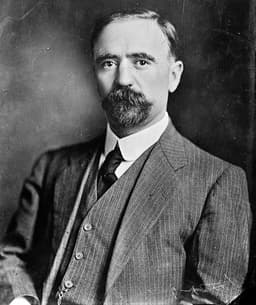
Francisco I. Madero
Revolutionary · Modern
50.3Total
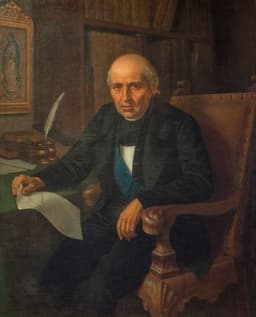
Miguel Hidalgo
Revolutionary · Modern
47.0Total
Basic Information
Born
1873
1753
Died
1913
1811
Era
Modern
Modern
Nationality
Mexico
Mexico
Occupation
Revolutionary
Revolutionary
Civilization
Western
Western
Score Comparison
Military (10%)
50.0
50.0
Political (20%)
54.7
36.5
Influence (20%)
52.5
55.0
Legacy (20%)
47.5
52.0
Leadership (15%)
54.2
39.0
Strategy (15%)
39.6
39.6
TOTAL
50.3
47.0
Francisco I. Madero — Complete Timeline
1908 AD
Madero publishes 'The Presidential Succession in 1910'Cultural◆ Major
Francisco I. Madero published a book criticizing the long dictatorship of Porfirio D
Mexican RevolutionPolitical WritingDemocracy
Impact: nationalprogressive
1910 AD
Madero launches the Mexican RevolutionPolitical Action
After being fraudulently defeated in the 1910 presidential election, Madero issued the Plan of San Luis Potos
Mexican RevolutionArmed RebellionPlan of San Luis
Impact: national
1911 AD
Madero becomes President of MexicoPolitical Action◆ Major
Following the resignation of Porfirio D
PresidencyDemocracyReform
Impact: nationalconstructive
1913 AD
Madero's assassination during the Decena TrágicaPolitical Action
During a coup known as the Decena Tr
AssassinationCoupDecena Trágica
Impact: nationaltragic
Miguel Hidalgo — Complete Timeline
1810 AD
Captured Guanajuato and massacred SpaniardsWar◆ Major
Hidalgo's army of 80,000 captured the city of Guanajuato on September 28, 1810. After taking the Alh
BattleMassacreViolence
Impact: regionaldestructive
Issued the Grito de DoloresPolitical Action
On September 16, 1810, Father Miguel Hidalgo rang the church bell in Dolores and called for rebellion against Spanish colonial rule. His speech, known as the Grito de Dolores, urged Mexicans to rise up against the Spanish and marked the beginning of the Mexican War of Independence.
IndependenceRebellionGrito de Dolores
Impact: nationalconstructive
1811 AD
Defeated at the Battle of Calderón BridgeWar◆ Major
Hidalgo's poorly trained army was decisively defeated by a smaller Spanish royalist force at the Battle of Calder
DefeatSpanish RoyalistsTurning Point
Impact: regionaltragic
Executed by Spanish authoritiesPolitical Action◆ Major
Hidalgo was captured in Acatita de Baj
ExecutionMartyrdomIndependence Movement
Impact: nationaltragic
Expert Analysis
Miguel Hidalgo vs Francisco I. Madero
# The Priest and the Prophet: Two Visions That Shaped Mexico's Destiny
On a September morning in 1810, an aging priest stepped onto the steps of a small church in Dolores, his voice trembling not with age but with the weight of history. "Long live independence! Long live America! Death to bad government!" he cried. Less than a century later, in 1910, a slight, spiritualist intellectual with a high-pitched voice published a book that would shatter a dictatorship. Miguel Hidalgo and Francisco I. Madero never met, yet their fates are bound together like iron chains across a century—each man ignited a revolution, each was consumed by the fire he lit, and each left a Mexico forever transformed and forever unfinished. Why did one become a national saint and the other a tragic footnote? The answer lies not in their victories but in their very souls.
Origins
Hidalgo was born in 1753 into a world of certainty. New Spain was a rigid hierarchy of castes and crowns, where the Catholic Church and the Spanish monarchy stood as twin pillars of an order that seemed eternal. Trained as a priest, Hidalgo was no ordinary man of God. He read forbidden French Enlightenment texts, planted olive trees on his parish lands, and taught indigenous villagers crafts that challenged Spanish monopolies. His world was the dusty, sun-baked Bajío region, a land of silver mines and simmering resentment. When Napoleon invaded Spain in 1808, cracking the colonial edifice, Hidalgo was already a rebel in priest's robes.
Madero, born in 1873, entered a Mexico that had been pacified by Porfirio Díaz's iron fist. The Díaz regime had brought railways, foreign investment, and order—but at the cost of democracy and justice. Madero came from one of Mexico's wealthiest landowning families, educated in Europe and the United States. He was a believer in séances and spiritualism, a man who claimed to communicate with the spirit of Benito Juárez. Where Hidalgo was a man of the people, rough and passionate, Madero was an aristocrat of ideas, gentle and naive. Hidalgo's era was one of colonial revolt; Madero's was one of liberal awakening. The difference in their origins explains everything: Hidalgo had nothing to lose but his parish; Madero had everything to lose but his conscience.
Rise to Power
Hidalgo's entry onto history's stage was less a calculated ascent than an explosion. When the conspiracy for independence in Querétaro was betrayed, he had no time for planning. On September 16, 1810, he rang the bell of Dolores and called for rebellion. Within days, he commanded an army of 80,000—indigenous peasants, mestizo miners, and the dispossessed. They marched on Guanajuato, and on September 28, they captured the city's granary fortress, the Alhóndiga de Granaditas, in a bloodbath that saw Spaniards massacred. Hidalgo had become a general overnight, but his army was a mob, armed with farm tools and fueled by fury.
Madero's rise was slower, more deliberate, and more literary. In 1908, he published "The Presidential Succession in 1910," a book that dared to criticize Díaz and call for free elections. It was a sensation. When Díaz rigged the 1910 election, Madero fled to Texas and issued the Plan of San Luis Potosí, calling for armed revolution. Unlike Hidalgo, Madero did not lead armies himself. He was a symbol, not a soldier. The revolution he sparked was waged by others—Pancho Villa in the north, Emiliano Zapata in the south—while Madero remained in exile, waiting for the dictator to fall. In 1911, Díaz resigned, and Madero entered Mexico City in triumph. He was elected president in a landslide, the "Apostle of Democracy" at last.
Leadership & Governance
Hidalgo was a disaster as a military leader. His strategy score of 45.0 and military rating of 42.0 reflect the truth: he could inspire multitudes but could not command them. At the Battle of Calderón Bridge in January 1811, a disciplined Spanish force of 6,000 routed his 100,000-strong army. A royalist cannonball struck a rebel ammunition wagon, and the explosion sent Hidalgo's men fleeing. He was captured in March at Acatita de Baján, betrayed by a former ally. His political score of 63.2 suggests a man who understood the need for change but had no plan for governance. He abolished slavery, ended tribute payments, and returned lands to indigenous communities—but his decrees were drowned in blood.
Madero's political score of 53.1 reflects a different kind of failure. He was a democrat in a country that did not understand democracy. He tried to reconcile with the old Porfirian elite, leaving the army and bureaucracy largely intact. He promised land reform to Zapata but delivered nothing. His leadership score of 41.2 reveals a man who could win elections but could not govern a revolution. The press attacked him, the Church distrusted him, and his own generals plotted against him. In February 1913, during the Decena Trágica, a coup led by General Victoriano Huerta seized power. Madero was arrested, forced to resign, and then murdered on Huerta's orders.
Triumph & Tragedy
Hidalgo's greatest moment was also his most terrible: the capture of Guanajuato. The massacre of Spaniards in the Alhóndiga de Granaditas made him a hero to the masses but a monster to the elites. His tragedy was that he could not control the forces he unleashed. Defeated, captured, and defrocked by the Inquisition, he was executed by firing squad on July 30, 1811. His head was displayed in Guanajuato for ten years, a warning to rebels.
Madero's triumph was the peaceful transfer of power after Díaz's fall—a miracle in Mexican history. His tragedy was that he believed goodwill could overcome violence. When Huerta betrayed him, Madero refused to flee, insisting that a president must not abandon his post. He was shot on February 22, 1913, alongside his vice president. His death unleashed a decade of civil war that would claim a million lives.
Character & Destiny
Hidalgo was a man of fire and impulse. He was not a strategist but a prophet, not a politician but a priest who had lost his faith in Spain. His legacy score of 75.0 reflects how Mexico remembers him: as the Father of the Nation, the man who cried "Viva México!" from the bell tower. Every September 16, the president re-enacts the Grito de Dolores, and the nation cheers. Hidalgo's face is on banknotes, his name on streets. He is a saint because he died for the idea of Mexico, not for the messy reality of governing it.
Madero, with a legacy score of 65.3, is remembered more ambivalently. He is the "Apostle of Democracy," but his naivete is blamed for the chaos that followed. His influence score of 72.6 is high because his ideas outlived him—the demand for free elections, the rejection of dictatorship. But his character was too gentle for his time. He believed in spirits and séances, in the power of words over bullets. He was a democrat in an age of caudillos, and the caudillos ate him alive.
Legacy
Hidalgo gave Mexico its founding myth: the people rising against tyranny. Madero gave Mexico its democratic dream: the hope that ballots could replace bullets. Both were failures in their own lifetimes, yet both shaped the nation's soul. Hidalgo's revolution failed, but it never died; it simmered for a decade until Agustín de Iturbide completed independence in 1821. Madero's revolution failed, but it birthed the Constitution of 1917, which still governs Mexico today.
Conclusion
Standing in the Zócalo of Mexico City today, one can feel the presence of both men. Hidalgo's ghost is in the crowds that gather every Independence Day, shouting with joy. Madero's ghost is in the polling stations, where Mexicans still struggle to make democracy real. The priest and the prophet each lit a flame that could not be extinguished. Hidalgo taught Mexico to dream of freedom; Madero taught it to dream of justice. Their differences—one a man of the soil, the other a man of the study—reflect the eternal tension in every revolution: between the fire that destroys and the light that guides. Neither lived to see his dream fulfilled, but that is the fate of those who plant trees under whose shade they know they will never sit.
Rankings
🥇
Francisco I. MaderoLeader
Mil: 50.0Pol: 54.7Inf: 52.5
50.3
🥈
Miguel Hidalgo
Mil: 50.0Pol: 36.5Inf: 55.0
47.0
+3.3 behind
How This Comparison Works
Algorithm
Each figure is scored on 6 dimensions (0—100 scale) based on structured historical data: Military (10%), Political (20%), Influence (20%), Legacy (20%), Leadership (15%), Strategy (15%). The weighted total produces the final ranking.
Data Sources
Scores are computed from structured sub-indicators in the database. Scale factors adjust for era (Ancient ×0.85, Modern ×1.0) and civilization size (Eastern ×1.05, Other ×0.80) to account for differences in population and military scale.
Maximum 3 Figures
Comparisons are limited to 2—3 figures to ensure readability and statistical meaningfulness.
Error Margins
±5 points per dimension — Sub-scores are derived from historical records with inherent uncertainty. Two figures within 5 points on a dimension should be considered roughly equivalent in that area.
Total Score Accuracy
±3 points overall — The weighted combination of 6 dimensions produces a total score with approximately ±3 points of uncertainty. Differences of less than 3 points are not statistically significant— the figures are effectively tied.
Known Limitations
- Historical records are incomplete and uneven across civilizations
- Figures from oral-tradition societies may be underrepresented
- Occupation labels can misclassify multi-role figures
- Scores measure capability and impact, not moral character
- Quantitative scoring is a comparison tool, not absolute truth
Capability Radar
Military (10%) — Battles & Warfare
Battles
25
30
Win Rate
30
25
Expansion
10
20
Political (20%) — Governance & Reform
Reform
60
60
Diplomacy
35
30
Economy
30
20
Influence (20%) — Cultural & Global Reach
Cultural
45
70
Global
40
60
Legacy (20%) — Historical Impact
Historical
55
75
Longevity
50
70
Leadership (15%) — Power & Stability
Tenure
40
15
Stability
15
10
Strategy (15%) — Tactics & Innovation
Strategy
25
25
Tactics
20
20
Reform
10
10
Similar Comparisons
Comments & Discussion
草鞋英雄6/16/2026
都说伊达尔戈是国父,但我觉得他更像一个失控的民粹暴君。多洛雷斯呼声那天,他煽动的是仇恨,不是解放。瓜纳华托大屠杀中,暴民屠杀了躲在粮仓里的西班牙平民和富人,连妇孺都不放过。伊达尔戈没有阻止,甚至默许。狂热的愤怒不是革命,是灾难。他的失败不意外,因为他的“解放”从一开始就建立在暴力和无序之上。
North of the Border6/16/2026
Madero is the real revolutionary, not Hidalgo. Hidalgo raised a mob with a cry of "death to bad government" and got crushed because he had no plan for governance. Madero wrote a book, *The Presidential Succession of 1910*, organized a political party, and forced Díaz from power through elections. Yes, he was naive trusting the old regime, but he believed in democracy, not a lynch mob. He gave Mexico its first shot at legitimate revolution, and for that, he's remembered as "The Apostle of Democra
印地安人后裔6/16/2026
你们都说伊达尔戈是英雄,可他根本没把真正的自由带给原住民。他废除了贡税,却没废除人头税。他解放了奴隶,但条件是奴隶必须参军打西班牙人。这不是解放,这是战场上的囚徒换队。他的“祖国”概念很模糊,更多是克里奥尔精英的反抗。而我们这些原住民的祖先,在独立后依然种玉米、交赋税、被剥削。伊达尔戈的呐喊,从没真正为我们吼过。
Hidalgo's Halberd6/16/2026
The key difference is violence. Hidalgo's "revolution" was a racial war that degenerated into mass murder—look at the sacking of Guanajuato. Madero's "revolution" was a political reform movement that accidentally sparked a civil war. Madero tried to avoid bloodshed, even ordering the release of political prisoners after taking power. Hidalgo didn't have that impulse. He was a man of 1810—you had to burn down the old world to see anything new. Madero was a man of 1910—you could change the system
龙舌兰与书卷6/16/2026
两个人都死于自己点燃的革命之火,但死法完全不同。伊达尔戈在奇瓦瓦被行刑队枪决,头颅被挂在瓜纳华托粮仓示众十年。他的死是恐怖的,但恐怖的背后是英雄的献祭。马德罗呢?是被他自己的“革命兄弟”乌埃尔塔出卖,在墨西哥城夜里被杀死,连审判都没有,连尸体都不完整。伊达尔戈死了,成为神;马德罗死了,却成了笑