Loading...
Francisco I. Madero vs Li Zicheng
Francisco I. Madero leads by 6.8 pts · 2 figures compared
…
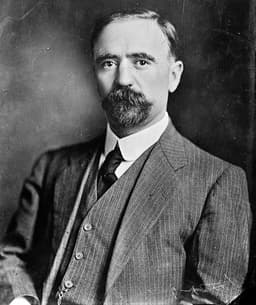
Francisco I. Madero
Revolutionary · Modern
50.3Total
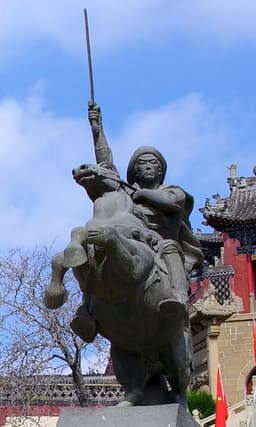
Li Zicheng
Revolutionary · Modern
43.5Total
Basic Information
Born
1873
1606
Died
1913
1645
Era
Modern
Modern
Nationality
Mexico
China
Occupation
Revolutionary
Revolutionary
Civilization
Western
Eastern
Score Comparison
Military (10%)
50.0
50.0
Political (20%)
54.7
27.9
Influence (20%)
52.5
52.5
Legacy (20%)
47.5
44.2
Leadership (15%)
54.2
39.0
Strategy (15%)
39.6
43.3
TOTAL
50.3
43.5
Francisco I. Madero — Complete Timeline
1908 AD
Madero publishes 'The Presidential Succession in 1910'Cultural◆ Major
Francisco I. Madero published a book criticizing the long dictatorship of Porfirio D
Mexican RevolutionPolitical WritingDemocracy
Impact: nationalprogressive
1910 AD
Madero launches the Mexican RevolutionPolitical Action
After being fraudulently defeated in the 1910 presidential election, Madero issued the Plan of San Luis Potos
Mexican RevolutionArmed RebellionPlan of San Luis
Impact: national
1911 AD
Madero becomes President of MexicoPolitical Action◆ Major
Following the resignation of Porfirio D
PresidencyDemocracyReform
Impact: nationalconstructive
1913 AD
Madero's assassination during the Decena TrágicaPolitical Action
During a coup known as the Decena Tr
AssassinationCoupDecena Trágica
Impact: nationaltragic
Li Zicheng — Complete Timeline
1644 AD
Captured Beijing and Ended the Ming DynastyWar
Li Zicheng led his rebel army to capture Beijing. The Chongzhen Emperor committed suicide, ending the Ming dynasty. Li Zicheng proclaimed the Shun dynasty and briefly ruled from the Forbidden City before being defeated by Qing forces.
Ming-Qing TransitionRebellionBeijing
Impact: globaldestructive
Defeated at the Battle of Shanhai PassWar◆ Major
Li Zicheng's army was defeated by the combined forces of Wu Sangui and the Manchus at the Battle of Shanhai Pass. The defeat forced him to abandon Beijing and retreat westward, effectively ending his control over northern China.
Ming-Qing TransitionBattleDefeat
Impact: globaltragic
Proclaimed the Shun DynastyPolitical Action◆ Major
After capturing Beijing, Li Zicheng formally proclaimed the establishment of the Shun dynasty in Xi'an. He adopted the title of emperor and began implementing his own administrative policies, though his rule was short-lived.
Shun DynastyProclamationRebellion
Impact: nationalconstructive
1645 AD
Killed in Jiugong MountainWar◆ Major
Li Zicheng was killed by a local militia while fleeing through Jiugong Mountain in Hubei province. His death marked the end of the Shun dynasty and the collapse of his rebellion, though some accounts claim he survived and became a monk.
Shun DynastyDeathRebellion
Impact: nationaltragic
Expert Analysis
Li Zicheng vs Francisco I. Madero
### The Rebel and the Reformer
In the spring of 1644, a peasant-turned-warlord named Li Zicheng rode through the gates of Beijing, the Forbidden City sprawling before him like a prize too easily won. The Chongzhen Emperor had hanged himself on a hill behind the palace, leaving a note blaming his ministers. Li Zicheng had ended a dynasty. Yet within weeks, his triumph would evaporate in a catastrophic defeat at Shanhai Pass. Half a world away and two and a half centuries later, another revolutionary, Francisco I. Madero, faced a different kind of fall. In February 1913, after less than two years as Mexico’s president, he was dragged from the National Palace and shot in the back during a coup. Both men had risen from obscurity to topple entrenched regimes. Both died violently, their revolutions unfinished. But their paths, their choices, and their legacies could not have been more different. Why did one fail as a ruler before he could rule, while the other failed precisely because he tried to rule too gently?
### Origins
Li Zicheng was born in 1606 into a world of grinding poverty. The Ming dynasty was collapsing under corruption, famine, and relentless Mongol raids. As a young man, Li worked as a postal courier—a lowly job that gave him a glimpse of the empire’s crumbling infrastructure. When the government abolished the postal system to save money, he lost his livelihood. He joined a band of bandits, then a rebel army. The land was so broken that millions of peasants had nothing left to lose. Li’s rise was not a story of ideology; it was a story of survival. He became a leader because he was ruthless, charismatic, and lucky.
Francisco I. Madero was born in 1873 into a wealthy Mexican landowning family. He studied in France and the United States, absorbing liberal ideas about democracy and human rights. He was a spiritualist, a vegetarian, and a man of deep moral conviction. While Li Zicheng fought for bread, Madero fought for ballots. His enemy was not starvation but stagnation—the thirty-five-year dictatorship of Porfirio Díaz, which had modernized Mexico’s economy but crushed its political freedoms. Madero’s revolution was born not in a peasant camp but in a study, where he wrote a book titled *The Presidential Succession in 1910*.
### Rise to Power
Li Zicheng’s ascent was a brutal climb over corpses. By 1643, he had consolidated control over much of northern China, proclaiming himself the “Dashing King.” His army swelled with desperate farmers and disaffected soldiers. His strategy was simple: move fast, loot freely, promise land to the poor. In April 1644, he marched on Beijing. The Ming defenses collapsed not from military genius but from internal rot. The emperor had no loyal generals left. Li entered the capital almost unopposed.
Madero’s rise was more formal—and more fragile. In 1910, after Díaz rigged an election against him, Madero fled to Texas and issued the Plan of San Luis Potosí, calling for armed revolt. The call was answered not by a unified army but by a patchwork of regional leaders: Pancho Villa in the north, Emiliano Zapata in the south. Madero was a figurehead, not a field commander. His military score of 34.0 reflects this; he never led troops in battle. Yet his political courage—scoring 53.1—was real. When Díaz resigned in May 1911, Madero was elected president in a landslide. He had toppled a dictatorship with words and will.
### Leadership & Governance
Here the two men diverge most sharply. Li Zicheng, once in power, proved catastrophically inept. His leadership score of 33.8 is the lowest among the comparisons—and for good reason. He failed to secure the loyalty of Ming officials, failed to control his own soldiers, and failed to negotiate with the powerful general Wu Sangui, who guarded the Great Wall. Instead of building a government, Li let his army loot Beijing. He tortured Ming officials for their gold. He alienated the very elites he needed to rule. When Wu Sangui allied with the Manchus, Li’s hastily assembled army was crushed at the Battle of Shanhai Pass in May 1644. He fled westward, a king without a kingdom.
Madero’s governance was the opposite: idealistic to a fault. He tried to implement democratic reforms, press freedom, and land rights—but he moved too slowly for the radicals and too quickly for the conservatives. He refused to purge the old Porfirista military and bureaucracy, trusting that democracy would win them over. Zapata broke with him when Madero failed to deliver land reform. The U.S. ambassador openly plotted against him. Madero’s political score of 53.1 reflects his genuine commitment to democracy, but his strategy score of 45.0 reveals his blindness to the realities of power. He was a reformer who thought goodwill could disarm bullets.
### Triumph & Tragedy
Li Zicheng’s greatest moment was also the seed of his destruction. Capturing Beijing—the event that ended the Ming dynasty—was a triumph of timing and momentum, not statecraft. His tragedy was that he had no plan for what came next. He assumed that conquest alone would secure his rule. Within a year, he was dead, killed by a peasant militia in the mountains of Hubei in 1645. His body was never found. The Shun dynasty he proclaimed lasted barely a season.
Madero’s tragedy was more poignant. He achieved what no Mexican had done since 1876: a peaceful transfer of power through an election. But his triumph was hollow. He was assassinated in February 1913 during the *Decena Trágica*—ten days of street fighting in Mexico City orchestrated by General Victoriano Huerta, a man Madero had trusted. Madero’s last words, according to legend, were a plea for justice. He died at forty, a martyr to the very democracy he had championed.
### Character & Destiny
Li Zicheng was a product of desperation. He had no education, no vision beyond conquest, and no capacity for compromise. His personality was forged in violence; he trusted only his sword. That sword won him a dynasty, but it could not hold it. His destiny was to be a destroyer, not a builder.
Madero was a product of privilege and principle. He was short, soft-spoken, and prone to spiritualism. He believed in the power of ideas to change the world. But his character was his undoing: he was too trusting, too naive, too slow to act. He refused to see that revolutions eat their children. His destiny was to be a symbol, not a survivor.
### Legacy
Li Zicheng’s legacy is ambiguous. In Chinese history, he is often remembered as a peasant hero who briefly toppled a corrupt dynasty, but also as a failed ruler whose weakness opened the door to the Manchu Qing dynasty—which would rule China for nearly 270 years. His influence score of 74.3 reflects his role as a folk antihero, but his legacy score of 62.0 is tempered by the disaster that followed him. He is a warning: revolutions that cannot govern will be crushed.
Madero’s legacy is more luminous. He is called the “Apostle of Democracy” in Mexico. His influence score of 72.6 and legacy score of 65.3 show that his death galvanized the revolution he had started. The Mexican Revolution continued for another decade, ultimately producing the Constitution of 1917 and a more just society. Madero failed as a president, but he succeeded as a martyr. His name is carved into Mexico’s national memory.
### Conclusion
Two revolutions. Two failures. One ended in chaos, the other in hope. Li Zicheng’s story is a reminder that power without purpose is a fire that consumes its owner. Madero’s story is a reminder that purpose without power is a candle in a storm. Both men were swept up in forces they could not control—one by hunger, the other by ideals. Their lives ask us a question that has no easy answer: What does it take to change the world, and what does it cost to fail? The answer, perhaps, is written in the dust of Shanhai Pass and the blood of the *Decena Trágica*: revolutions are not won by the righteous or the ruthless alone. They are won by those who survive to build.
Rankings
🥇
Francisco I. MaderoLeader
Mil: 50.0Pol: 54.7Inf: 52.5
50.3
🥈
Li Zicheng
Mil: 50.0Pol: 27.9Inf: 52.5
43.5
+6.8 behind
How This Comparison Works
Algorithm
Each figure is scored on 6 dimensions (0—100 scale) based on structured historical data: Military (10%), Political (20%), Influence (20%), Legacy (20%), Leadership (15%), Strategy (15%). The weighted total produces the final ranking.
Data Sources
Scores are computed from structured sub-indicators in the database. Scale factors adjust for era (Ancient ×0.85, Modern ×1.0) and civilization size (Eastern ×1.05, Other ×0.80) to account for differences in population and military scale.
Maximum 3 Figures
Comparisons are limited to 2—3 figures to ensure readability and statistical meaningfulness.
Error Margins
±5 points per dimension — Sub-scores are derived from historical records with inherent uncertainty. Two figures within 5 points on a dimension should be considered roughly equivalent in that area.
Total Score Accuracy
±3 points overall — The weighted combination of 6 dimensions produces a total score with approximately ±3 points of uncertainty. Differences of less than 3 points are not statistically significant— the figures are effectively tied.
Known Limitations
- Historical records are incomplete and uneven across civilizations
- Figures from oral-tradition societies may be underrepresented
- Occupation labels can misclassify multi-role figures
- Scores measure capability and impact, not moral character
- Quantitative scoring is a comparison tool, not absolute truth
Capability Radar
Military (10%) — Battles & Warfare
Battles
25
55
Win Rate
30
60
Expansion
10
65
Political (20%) — Governance & Reform
Reform
60
15
Diplomacy
35
20
Economy
30
10
Influence (20%) — Cultural & Global Reach
Cultural
45
40
Global
40
35
Legacy (20%) — Historical Impact
Historical
55
55
Longevity
50
30
Leadership (15%) — Power & Stability
Tenure
40
20
Stability
15
5
Strategy (15%) — Tactics & Innovation
Strategy
25
55
Tactics
20
50
Reform
10
30
Similar Comparisons
Comments & Discussion
No comments yet. Be the first to share your thoughts!