Loading...
Francisco I. Madero vs Gulbuddin Hekmatyar
Francisco I. Madero leads by 12.0 pts · 2 figures compared
…
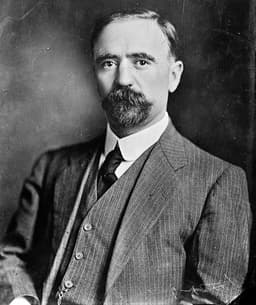
Francisco I. Madero
Revolutionary · Modern
50.3Total
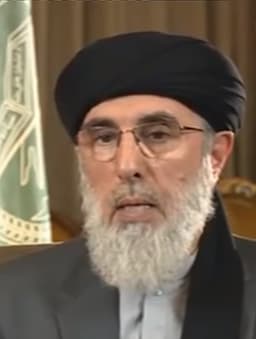
Gulbuddin Hekmatyar
Revolutionary · Modern
38.3Total
Basic Information
Born
1873
1947
Died
1913
—
Era
Modern
Modern
Nationality
Mexico
Afghanistan
Occupation
Revolutionary
Revolutionary
Civilization
Western
Middle Eastern
Score Comparison
Military (10%)
50.0
35.0
Political (20%)
54.7
26.4
Influence (20%)
52.5
47.1
Legacy (20%)
47.5
36.7
Leadership (15%)
54.2
40.4
Strategy (15%)
39.6
38.3
TOTAL
50.3
38.3
Francisco I. Madero — Complete Timeline
1908 AD
Madero publishes 'The Presidential Succession in 1910'Cultural◆ Major
Francisco I. Madero published a book criticizing the long dictatorship of Porfirio D
Mexican RevolutionPolitical WritingDemocracy
Impact: nationalprogressive
1910 AD
Madero launches the Mexican RevolutionPolitical Action
After being fraudulently defeated in the 1910 presidential election, Madero issued the Plan of San Luis Potos
Mexican RevolutionArmed RebellionPlan of San Luis
Impact: national
1911 AD
Madero becomes President of MexicoPolitical Action◆ Major
Following the resignation of Porfirio D
PresidencyDemocracyReform
Impact: nationalconstructive
1913 AD
Madero's assassination during the Decena TrágicaPolitical Action
During a coup known as the Decena Tr
AssassinationCoupDecena Trágica
Impact: nationaltragic
Gulbuddin Hekmatyar — Complete Timeline
1975 AD
Founding of Hezb-e Islami (1975)Political Action◆ Major
Gulbuddin Hekmatyar founded the Hezb-e Islami political party, an Islamist faction that became one of the most powerful mujahideen groups during the Soviet-Afghan War. The party received significant support from Pakistan's ISI and foreign Islamist donors.
MujahideenIslamist PartyCold War
Impact: national
1993 AD
Prime Minister during Civil War (1993-1994)Political Action◆ Major
Hekmatyar served as Prime Minister of Afghanistan from 1993 to 1994 under President Burhanuddin Rabbani. His tenure was marked by intense factional fighting, including rocket attacks on Kabul that caused thousands of civilian casualties, contributing to the devastation of the city.
Civil WarKabulRocket Attacks
Impact: nationaldestructive
1996 AD
Alliance with Taliban (1996-2001)Political Action
After the Taliban captured Kabul in 1996, Hekmatyar initially fled to Iran. He later aligned with the Taliban regime, though his influence waned. He remained in Afghanistan until the US-led invasion in 2001, after which he fled to Pakistan.
TalibanExileAlliance
Impact: national
2016 AD
Peace Agreement with Afghan Government (2016)Political Action◆ Major
Hekmatyar signed a peace agreement with the Afghan government of President Ashraf Ghani in 2016. The deal allowed him to return to Afghanistan from exile, with his party recognized as a political entity and his fighters integrated into state security forces.
Peace DealReconciliationGhani
Impact: nationalconstructive
Expert Analysis
Gulbuddin Hekmatyar vs Francisco I. Madero
# The Revolutionary's Dilemma: Francisco Madero and Gulbuddin Hekmatyar
In the spring of 1911, Francisco Madero rode triumphantly into Ciudad Juárez, hailed by thousands as the liberator of Mexico. Just two years later, he would be dragged from the National Palace in Mexico City and shot dead in the night. In September 1996, Gulbuddin Hekmatyar watched from the hills outside Kabul as Taliban fighters rolled into the capital he had once governed—and he would spend the next two decades as a fugitive, his revolution devoured by its own children. Both men sought to remake their worlds through revolution. Both failed. But their failures could not have been more different, and in those differences lie profound truths about the nature of political change.
Origins
Francisco Madero was born into privilege in 1873, the scion of one of Mexico's wealthiest landowning families. Educated in Europe and the United States, he was a spiritualist who believed in democracy with almost religious fervor. His Mexico groaned under the thirty-four-year dictatorship of Porfirio Díaz—a regime of order and progress built on the backs of peasants and workers. Madero was an unlikely revolutionary: short, soft-spoken, and prone to nervous gestures, he seemed more suited to a university lecture hall than a battlefield.
Gulbuddin Hekmatyar emerged from an entirely different world. Born in 1947 in the northern Afghan province of Kunduz, he was the son of a landowner but grew up amid the fierce ethnic politics of a country caught between empires. He studied engineering at Kabul University, where he became radicalized by the Islamist movements that were sweeping the Muslim world. Where Madero was a democrat, Hekmatyar was a zealot. Where Madero believed in ballots, Hekmatyar believed in bullets. Their eras shaped them: Madero lived in the sunset of nineteenth-century liberalism, Hekmatyar in the dawn of twentieth-century jihad.
Rise to Power
Madero's path began with words. In 1908, he published "The Presidential Succession in 1910," a book that dared to criticize Díaz and demand free elections. It was a modest act of courage that exploded into a national movement. When Díaz rigged the 1910 election, Madero issued the Plan of San Luis Potosí, calling for armed rebellion. The revolution erupted not because Madero was a great general—he was not—but because Mexico's pent-up grievances needed only a spark.
Hekmatyar's rise was bloodier. In 1975, he founded Hezb-e Islami, an Islamist party that became one of the most powerful factions in Afghanistan's resistance to Soviet occupation. While Madero had published books, Hekmatyar distributed weapons. While Madero had preached nonviolence, Hekmatyar trained mujahideen. The CIA and Pakistan's intelligence services poured millions into his coffers. By the time the Soviets withdrew in 1989, Hekmatyar commanded tens of thousands of fighters—and had earned a reputation for ruthlessness that would define his career.
Leadership & Governance
As president, Madero proved disastrous. He was a brilliant revolutionary but a terrible ruler. He tried to reconcile with the old Porfirian elite while simultaneously satisfying the land-hungry peasants who had made his revolution possible. He failed at both. His political score of 53.1 reflects a man who understood democracy in theory but not in practice. He refused to seize the haciendas of his own class, alienating his supporters. He refused to crush his enemies, emboldening them. "Madero," wrote one historian, "wanted to be everyone's friend and ended up with none."
Hekmatyar's governance was worse. When he became Prime Minister in 1993, Afghanistan was already in flames from the civil war that followed the Soviet withdrawal. His tenure from 1993 to 1994 was marked by indiscriminate rocket attacks on Kabul that killed thousands of civilians. His military score of 46.8 and strategy score of 63.7 indicate a man who could fight but could not build. Where Madero was naive, Hekmatyar was cruel. Where Madero tried to please everyone, Hekmatyar tried to destroy everyone who opposed him.
Triumph & Tragedy
Madero's greatest moment was his election in 1911. "The people have spoken," he declared, and for a brief, shining moment, Mexico seemed to have achieved democracy without bloodshed. His greatest tragedy came in February 1913, during the Decena Trágica—the Ten Tragic Days. A military coup, orchestrated by General Victoriano Huerta with the backing of the American ambassador, seized the capital. Madero was forced to resign, promised safe passage, and then murdered in cold blood. He died at forty, still believing in the goodness of men who had already betrayed him.
Hekmatyar's triumph was surviving the Soviet war and becoming Prime Minister. His tragedy was that he could not stop fighting. When the Taliban captured Kabul in 1996, Hekmatyar fled to Iran, then later allied with his former enemies. He spent years as a pariah, his name synonymous with the chaos that had destroyed Afghanistan. In 2016, he signed a peace agreement with the Afghan government, returning to a country that had largely forgotten him. He lives today, an old man in a country that has moved on.
Character & Destiny
Madero's character was his destiny. He was a democrat in an age of caudillos, a pacifist in a revolution, a reformer who refused to destroy the system he was trying to replace. His leadership score of 41.2 reflects a man who could inspire but could not command. He was, in the end, too gentle for the world he had unleashed.
Hekmatyar's character was also his doom. His leadership score of 41.3 is almost identical to Madero's, but for opposite reasons. Where Madero could not be ruthless enough, Hekmatyar could not be anything else. He was a warlord in an age that needed statesmen. His influence score of 61.9 shows that he mattered, but his legacy score of 47.8 shows how little he built.
Legacy
Madero is remembered as the "Apostle of Democracy," the man who started the Mexican Revolution even if he could not control it. His ideas outlived him: the revolution he ignited would eventually produce the 1917 Constitution and the modern Mexican state. He failed, but his failure was noble.
Hekmatyar is remembered as a destroyer. His legacy is the rubble of Kabul, the thousands of rockets, the years of civil war. The peace agreement of 2016 was less a reconciliation than a burial. He failed, and his failure was squalid.
Conclusion
Both men were revolutionaries who could not govern. But Madero's failure came from believing too much in the goodness of others, while Hekmatyar's came from believing too little. One died for his ideals; the other outlived his. In the end, the difference between them is not just the difference between democracy and Islamism, or between Mexico and Afghanistan. It is the difference between a man who wanted to build a new world and a man who only knew how to tear the old one down. History remembers both, but it judges them very differently.
Rankings
🥇
Francisco I. MaderoLeader
Mil: 50.0Pol: 54.7Inf: 52.5
50.3
🥈
Gulbuddin Hekmatyar
Mil: 35.0Pol: 26.4Inf: 47.1
38.3
+12.0 behind
How This Comparison Works
Algorithm
Each figure is scored on 6 dimensions (0—100 scale) based on structured historical data: Military (10%), Political (20%), Influence (20%), Legacy (20%), Leadership (15%), Strategy (15%). The weighted total produces the final ranking.
Data Sources
Scores are computed from structured sub-indicators in the database. Scale factors adjust for era (Ancient ×0.85, Modern ×1.0) and civilization size (Eastern ×1.05, Other ×0.80) to account for differences in population and military scale.
Maximum 3 Figures
Comparisons are limited to 2—3 figures to ensure readability and statistical meaningfulness.
Error Margins
±5 points per dimension — Sub-scores are derived from historical records with inherent uncertainty. Two figures within 5 points on a dimension should be considered roughly equivalent in that area.
Total Score Accuracy
±3 points overall — The weighted combination of 6 dimensions produces a total score with approximately ±3 points of uncertainty. Differences of less than 3 points are not statistically significant— the figures are effectively tied.
Known Limitations
- Historical records are incomplete and uneven across civilizations
- Figures from oral-tradition societies may be underrepresented
- Occupation labels can misclassify multi-role figures
- Scores measure capability and impact, not moral character
- Quantitative scoring is a comparison tool, not absolute truth
Capability Radar
Military (10%) — Battles & Warfare
Battles
25
45
Win Rate
30
30
Expansion
10
25
Political (20%) — Governance & Reform
Reform
60
15
Diplomacy
35
20
Economy
30
10
Influence (20%) — Cultural & Global Reach
Cultural
45
25
Global
40
25
Legacy (20%) — Historical Impact
Historical
55
30
Longevity
50
20
Leadership (15%) — Power & Stability
Tenure
40
30
Stability
15
5
Strategy (15%) — Tactics & Innovation
Strategy
25
35
Tactics
20
40
Reform
10
20
Similar Comparisons
Comments & Discussion
No comments yet. Be the first to share your thoughts!