Loading...
Francisco de Miranda vs Miguel Hidalgo
Francisco de Miranda leads by 0.9 pts · 2 figures compared
…

Francisco de Miranda
Revolutionary · Modern
47.9Total
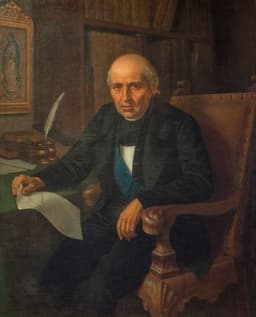
Miguel Hidalgo
Revolutionary · Modern
47.0Total
Basic Information
Born
1750
1753
Died
1816
1811
Era
Modern
Modern
Nationality
Venezuela
Mexico
Occupation
Revolutionary
Revolutionary
Civilization
Western
Western
Score Comparison
Military (10%)
45.0
50.0
Political (20%)
45.1
36.5
Influence (20%)
58.0
55.0
Legacy (20%)
50.0
52.0
Leadership (15%)
35.4
39.0
Strategy (15%)
43.3
39.6
TOTAL
47.9
47.0
Francisco de Miranda — Complete Timeline
1792 AD
Participation in the French RevolutionWar◆ Major
Miranda served as a general in the French Revolutionary Army, commanding troops in the Battle of Valmy and the Siege of Maastricht. His service gave him military experience and connections with European revolutionaries, which he later used for Latin American independence.
French RevolutionMilitary ServiceRevolutionary
Impact: global
1806 AD
Failed invasion of VenezuelaWar◆ Major
Miranda led a small expedition from Haiti to invade Venezuela, landing at La Vela de Coro. The invasion failed to spark a general uprising, and Miranda retreated. This was the first attempt to liberate Venezuela from Spanish rule.
InvasionFailureIndependence
Impact: regional
1811 AD
Venezuelan Declaration of IndependencePolitical Action
Miranda was a leading figure in the Venezuelan Congress that declared independence from Spain on July 5, 1811. He helped draft the first constitution and was appointed commander-in-chief of the patriot army, marking the start of the First Republic.
IndependenceDeclarationFirst Republic
Impact: regionalconstructive
1812 AD
Capture and death in Spanish prisonOther◆ Major
After the fall of the First Republic, Miranda attempted to negotiate a truce with the Spanish but was captured by his own officers, including Sim
CaptureImprisonmentBetrayal
Impact: regionaltragic
Miguel Hidalgo — Complete Timeline
1810 AD
Captured Guanajuato and massacred SpaniardsWar◆ Major
Hidalgo's army of 80,000 captured the city of Guanajuato on September 28, 1810. After taking the Alh
BattleMassacreViolence
Impact: regionaldestructive
Issued the Grito de DoloresPolitical Action
On September 16, 1810, Father Miguel Hidalgo rang the church bell in Dolores and called for rebellion against Spanish colonial rule. His speech, known as the Grito de Dolores, urged Mexicans to rise up against the Spanish and marked the beginning of the Mexican War of Independence.
IndependenceRebellionGrito de Dolores
Impact: nationalconstructive
1811 AD
Defeated at the Battle of Calderón BridgeWar◆ Major
Hidalgo's poorly trained army was decisively defeated by a smaller Spanish royalist force at the Battle of Calder
DefeatSpanish RoyalistsTurning Point
Impact: regionaltragic
Executed by Spanish authoritiesPolitical Action◆ Major
Hidalgo was captured in Acatita de Baj
ExecutionMartyrdomIndependence Movement
Impact: nationaltragic
Expert Analysis
Origins
Francisco de Miranda was born in Caracas, Venezuela, on March 28, 1750, into a wealthy Creole family. His father was a Spanish merchant, and Miranda received a privileged education, studying at the University of Caracas and later in Spain. He traveled extensively across Europe and the Americas, absorbing Enlightenment ideas and witnessing the American Revolution firsthand. His cosmopolitan background shaped his vision of a unified Latin America.
Miguel Hidalgo y Costilla was born on May 8, 1753, in Pénjamo, Mexico, into a Creole family of modest means. He studied at the Colegio de San Nicolás in Valladolid (now Morelia), eventually becoming a priest. Hidalgo was deeply influenced by Enlightenment thinkers and was known for his progressive views, including promoting local industries among his parishioners in Dolores. His grounding in rural Mexico contrasted sharply with Miranda's global exposure.
Rise to Power
Miranda rose through military and diplomatic channels. He served in the Spanish army, fighting in the American Revolutionary War at the Battle of Pensacola (1781). Later, he became a general in the French Revolutionary Army, commanding at Valmy (1792) and Maastricht (1793). His travels allowed him to cultivate relationships with influential figures like Thomas Paine and Catherine the Great, but he never achieved the broad popular following needed for revolution.
Hidalgo's rise was more sudden and local. In 1810, as a priest in Dolores, he joined a conspiracy for independence. When the plot was discovered, he acted decisively: on September 16, 1810, he issued the Grito de Dolores, calling for rebellion. His appeal resonated with the masses, and within weeks he amassed an army of 80,000, capturing Guanajuato. Hidalgo's authority came from his religious position and his ability to mobilize the poor, not from military or political experience.
Leadership & Governance
Miranda advocated for a constitutional republic and envisioned a federation of former Spanish colonies. He designed a flag and drafted constitutions but lacked the organizational skills to implement his ideas. As dictator of Venezuela in 1812, he proved indecisive, failing to enforce discipline or secure resources. His leadership score of 35.4 reflects his poor execution.
Hidalgo, despite his initial success, showed limited governance capabilities. He issued decrees abolishing slavery and returning land to indigenous communities, but his administration was chaotic. He failed to establish a stable government or control his army, which looted and massacred. His political score of 36.5 indicates his weakness in statecraft. Both men were better at sparking rebellion than governing.
Triumph & Tragedy
Miranda's greatest triumph was his role in the Venezuelan Declaration of Independence on July 5, 1811, and drafting the first constitution. His tragedy came in 1812 when, after the fall of the First Republic, he attempted to negotiate with the Spanish. He was captured by his own officers, including Simón Bolívar, and died in a Spanish prison in 1816. His legacy score of 50.0 reflects his mixed impact.
Hidalgo's triumph was the Grito de Dolores, which ignited the Mexican War of Independence. His tragedy was his defeat at the Battle of Calderón Bridge on January 17, 1811, where his untrained army was routed by a smaller royalist force. Captured and executed by firing squad on July 30, 1811, he became a martyr. His influence score of 55.0 underscores his symbolic power.
Character & Destiny
Miranda was a visionary but arrogant and indecisive. His constant scheming and failure to commit to a single cause alienated allies. He scored 45.1 in politics, reflecting his inability to build lasting coalitions. His destiny was to be a precursor, not a leader, of independence.
Hidalgo was charismatic and bold but impulsive and tactically naive. His leadership score of 39.0 shows his limitations in command. He trusted his instincts over strategy, leading to catastrophic defeats. His destiny was to be a martyr who inspired others to continue the fight.
Legacy
Miranda is remembered as the "Precursor" of Latin American independence. His ideas influenced Bolívar, and his flag became the basis for Colombia, Ecuador, and Venezuela. However, his direct impact was limited: his military score of 45.0 and strategy of 43.3 indicate he was a poor commander. His total score of 47.9 places him slightly above Hidalgo.
Hidalgo is honored as the "Father of Mexican Independence." The Grito de Dolores is celebrated annually, and his face appears on the 1000-peso note. His military score of 50.0 and influence of 55.0 reflect his greater immediate impact. However, his political score of 36.5 and strategy of 39.6 show his weaknesses. His total score of 47.0 is slightly lower than Miranda's.
Conclusion
While Miranda scores higher overall (47.9 vs 47.0), Hidalgo had a greater direct impact on independence. Miranda's vision was broader but less effective; Hidalgo's rebellion, though flawed, was the catalyst for Mexico's freedom. Hidalgo's legacy is more tangible: his call to arms is still commemorated, and his movement directly led to independence. Miranda, by contrast, is a footnote in Bolívar's story. Therefore, Miguel Hidalgo had a greater impact on history, despite the score gap favoring Miranda.
Rankings
🥇
Francisco de MirandaLeader
Mil: 45.0Pol: 45.1Inf: 58.0
47.9
🥈
Miguel Hidalgo
Mil: 50.0Pol: 36.5Inf: 55.0
47.0
+0.9 behind
How This Comparison Works
Algorithm
Each figure is scored on 6 dimensions (0—100 scale) based on structured historical data: Military (10%), Political (20%), Influence (20%), Legacy (20%), Leadership (15%), Strategy (15%). The weighted total produces the final ranking.
Data Sources
Scores are computed from structured sub-indicators in the database. Scale factors adjust for era (Ancient ×0.85, Modern ×1.0) and civilization size (Eastern ×1.05, Other ×0.80) to account for differences in population and military scale.
Maximum 3 Figures
Comparisons are limited to 2—3 figures to ensure readability and statistical meaningfulness.
Error Margins
±5 points per dimension — Sub-scores are derived from historical records with inherent uncertainty. Two figures within 5 points on a dimension should be considered roughly equivalent in that area.
Total Score Accuracy
±3 points overall — The weighted combination of 6 dimensions produces a total score with approximately ±3 points of uncertainty. Differences of less than 3 points are not statistically significant— the figures are effectively tied.
Known Limitations
- Historical records are incomplete and uneven across civilizations
- Figures from oral-tradition societies may be underrepresented
- Occupation labels can misclassify multi-role figures
- Scores measure capability and impact, not moral character
- Quantitative scoring is a comparison tool, not absolute truth
Capability Radar
Military (10%) — Battles & Warfare
Battles
35
30
Win Rate
30
25
Expansion
40
20
Political (20%) — Governance & Reform
Reform
55
60
Diplomacy
60
30
Economy
25
20
Influence (20%) — Cultural & Global Reach
Cultural
55
70
Global
55
60
Legacy (20%) — Historical Impact
Historical
65
75
Longevity
60
70
Leadership (15%) — Power & Stability
Tenure
20
15
Stability
15
10
Strategy (15%) — Tactics & Innovation
Strategy
45
25
Tactics
40
20
Reform
50
10
Similar Comparisons
Comments & Discussion
No comments yet. Be the first to share your thoughts!