Loading...
Ferdinand I of Leon vs Zhao Kuangyin
Zhao Kuangyin leads by 12.3 pts · 2 figures compared
…
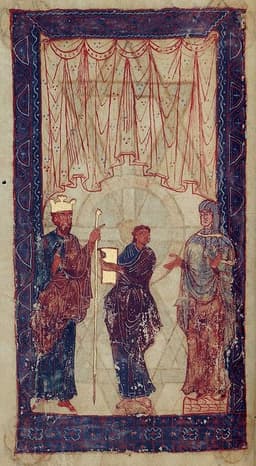
Ferdinand I of Leon
Emperor · Medieval
59.2Total
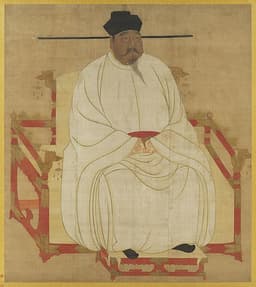
Zhao Kuangyin
Emperor · Medieval
71.5Total
Basic Information
Born
1015
927
Died
1065
976
Era
Medieval
Medieval
Nationality
Leon
China
Occupation
Emperor
Emperor
Civilization
Western
Eastern
Score Comparison
Military (10%)
70.0
78.0
Political (20%)
68.0
84.0
Influence (20%)
56.4
68.0
Legacy (20%)
49.2
65.0
Leadership (15%)
66.0
74.0
Strategy (15%)
57.5
68.0
TOTAL
59.2
71.5
Ferdinand I of Leon — Complete Timeline
1029 AD
Inheritance of the County of CastilePolitical Action◆ Major
Ferdinand I inherited the County of Castile from his father Sancho III of Navarre. He later expanded his territory through conquest and marriage, laying the foundation for the Kingdom of Castile.
Impact: regionalconstructive
1037 AD
Conquest of LeónWar◆ Major
Ferdinand I defeated and killed King Bermudo III of Le
Impact: regional
1056 AD
First Emperor of SpainPolitical Action◆ Major
Ferdinand I was crowned 'Imperator totius Hispaniae' (Emperor of all Spain) in 1056, claiming suzerainty over all Christian and Muslim rulers in Iberia. This title reflected his military dominance and political ambition.
Impact: regional
1065 AD
Division of the kingdomPolitical Action◆ Major
Upon his death, Ferdinand I divided his kingdom among his sons: Sancho II received Castile, Alfonso VI received Le
Impact: regionaldestructive
Zhao Kuangyin — Complete Timeline
960 AD
Founded Song dynastyPolitical Action
Zhao Kuangyin, a general of Later Zhou, was proclaimed emperor by his troops at Chenqiao. He established the Song dynasty, ending the Five Dynasties period and beginning a new era of Chinese history.
Song dynastyFoundingChenqiao
Impact: globalconstructive
961 AD
Removed military power from generalsPolitical Action◆ Major
Zhao Kuangyin invited senior generals to a banquet and persuaded them to retire peacefully. This 'removal of military power over wine' prevented military coups and centralized control.
Song dynastyMilitary reformCentralization
Impact: nationalconstructive
963 AD
Unified southern ChinaWar◆ Major
Zhao Kuangyin launched campaigns to conquer the southern kingdoms, including Jingnan, Later Shu, and Southern Tang. By his death, most of China was reunified under Song rule.
Song unificationConquestSouthern kingdoms
Impact: national
Expert Analysis
Zhao Kuangyin vs Ferdinand I of Leon
# The Art of Power: Zhao Kuangyin’s Peaceful Unification and Ferdinand I’s Divided Legacy
In the year 961, in the city of Kaifeng, a Chinese emperor hosted a banquet that would become legend. As the wine flowed, Zhao Kuangyin, the founder of the Song dynasty, turned to the generals who had helped him seize the throne and spoke with a mixture of warmth and warning. “The joy of wealth and honor,” he told them, “is that no one wants to give it up.” Within hours, those same commanders had surrendered their military commands, accepted generous estates, and retired to lives of leisure. Half a world away, in 1065, another emperor, Ferdinand I of León, lay dying in the city of León, his last act being to carve his kingdom into three pieces for his sons—a decision that would plunge Spain into decades of fratricidal war. These two rulers, born within a century of each other, faced the same fundamental challenge: how to hold power after winning it. Their answers could not have been more different.
Origins
Zhao Kuangyin was born in 927, in the twilight of China’s Tang dynasty, an era of chaos known as the Five Dynasties and Ten Kingdoms. He grew up in a world where generals overthrew emperors with predictable regularity—fifty-three years had seen eight dynasties rise and fall. His father was a military officer, and Zhao himself joined the army of the Later Zhou dynasty, where he distinguished himself not only as a warrior but as a man who read books and studied statecraft. He understood, from bitter experience, that military power without political legitimacy was a curse.
Ferdinand I, born in 1015, inherited a different kind of chaos. The Christian kingdoms of northern Spain were locked in a centuries-long struggle against the Muslim taifa kingdoms of al-Andalus, but they were also constantly fighting each other. Ferdinand’s father, Sancho III of Navarre, had been the most powerful Christian ruler in Spain, but upon his death in 1035, he divided his domains among his sons—a practice Ferdinand himself would later repeat. Ferdinand was not a self-made man like Zhao; he was born into a royal family where inheritance, not merit, determined power.
Rise to Power
Zhao Kuangyin’s path to the throne was accidental and reluctant. In 960, while marching against a northern enemy, his troops mutinied and draped a yellow robe over his shoulders, proclaiming him emperor. This was a standard ritual of usurpation in the Five Dynasties period, but Zhao handled it with extraordinary care. He extracted a promise from his men that they would not harm the child emperor of the Later Zhou or loot the capital. Then he returned to Kaifeng and took power with minimal bloodshed. He had seen too many short-lived dynasties to believe that force alone could sustain a throne.
Ferdinand’s rise was far more violent. In 1029, he inherited the County of Castile from his father, but he wanted León. In 1037, at the Battle of Tamarón, he defeated and killed King Bermudo III of León, then married Bermudo’s sister to legitimize his claim. This was conquest by sword and marriage—the standard pattern of medieval European politics. Where Zhao had been chosen by his troops, Ferdinand had taken his kingdom by force.
Leadership & Governance
Zhao Kuangyin’s genius lay in his restraint. Having unified most of China through a series of carefully planned campaigns—conquering Jingnan in 963, Later Shu in 965, and Southern Tang in 975—he turned to the problem that had destroyed every dynasty before him: military coups. At the famous “Removal of Military Power” banquet in 961, he did not execute his generals; he bought them out. He gave them land, titles, and wealth in exchange for their commands. Then he restructured the Song military so that no single general could ever again threaten the throne. Power was centralized, civilian officials were elevated, and the army was divided into units that answered directly to the emperor. This system brought China 167 years of relative peace—but it also made the Song military weak against northern invaders.
Ferdinand I governed in the opposite spirit. He expanded his territories through constant warfare against the Moors, extracting tribute from the taifa kingdoms of Toledo, Seville, and Zaragoza. In 1056, he crowned himself “Imperator totius Hispaniae”—Emperor of all Spain—claiming authority over all Christian rulers on the peninsula. But this was a title without substance. Ferdinand had no bureaucracy to enforce his will, no standing army beyond feudal levies, and no system to prevent his sons from tearing the kingdom apart. His power was personal, not institutional.
Triumph & Tragedy
Zhao Kuangyin’s greatest triumph was the unification of China under a single dynasty that lasted three centuries. His greatest tragedy was that he could not reclaim the Sixteen Prefectures from the Liao dynasty—a failure that left the Song vulnerable to invasion from the north. He died in 976, possibly assassinated by his own brother, but the system he built endured.
Ferdinand’s triumph was the expansion of Christian power in Spain at the expense of the Moors. His tragedy was his own deathbed decision in 1065 to divide his kingdom among his sons: Sancho II received Castile, Alfonso VI received León, and García received Galicia. Within years, the brothers were at war. Sancho was assassinated, Alfonso seized the other kingdoms, and García was imprisoned for life. Ferdinand’s dream of a unified Spain died with his will.
Character & Destiny
Zhao Kuangyin was cautious, pragmatic, and deeply aware of history. He once said, “The empire is not a place for one man to rule alone.” He trusted institutions over individuals and preferred persuasion to violence. His character shaped a dynasty that valued culture, commerce, and civil administration over military glory.
Ferdinand was ambitious, proud, and traditional. He saw kingship as a personal inheritance, not a public trust. His decision to divide his kingdom was not unusual for his time—it was the standard practice of the Salic law that governed Frankish and Spanish succession. But it was disastrous, because it ignored the political reality that Spain needed unity to survive.
Legacy
Zhao Kuangyin is remembered as one of China’s greatest emperors, a man who ended centuries of chaos and built a civilization that produced printing, gunpowder, and the world’s first paper money. His philosophy of “civil over military” gave China stability but also vulnerability—a trade-off that historians still debate.
Ferdinand I is remembered as a footnote in Spanish history, overshadowed by his son Alfonso VI, who conquered Toledo, and by the later unification of Spain under Ferdinand and Isabella. His empire of Spain was a dream that would not be realized for another four centuries.
Conclusion
Two emperors, two paths, two outcomes. Zhao Kuangyin understood that power must be shared to be secure; Ferdinand I believed that power must be inherited to be legitimate. One built a system that outlasted him; the other built a family that destroyed itself. In the end, the question is not who was braver or more ambitious, but who understood the nature of power itself. Zhao Kuangyin’s banquet table, where generals traded their swords for wine cups, was a more enduring monument than Ferdinand’s crown. Because in politics, as in life, the hardest thing is not to seize power—it is to let it go.
Rankings
🥇
Zhao KuangyinLeader
Mil: 78.0Pol: 84.0Inf: 68.0
71.5
🥈
Ferdinand I of Leon
Mil: 70.0Pol: 68.0Inf: 56.4
59.2
+12.3 behind
How This Comparison Works
Algorithm
Each figure is scored on 6 dimensions (0—100 scale) based on structured historical data: Military (10%), Political (20%), Influence (20%), Legacy (20%), Leadership (15%), Strategy (15%). The weighted total produces the final ranking.
Data Sources
Scores are computed from structured sub-indicators in the database. Scale factors adjust for era (Ancient ×0.85, Modern ×1.0) and civilization size (Eastern ×1.05, Other ×0.80) to account for differences in population and military scale.
Maximum 3 Figures
Comparisons are limited to 2—3 figures to ensure readability and statistical meaningfulness.
Error Margins
±5 points per dimension — Sub-scores are derived from historical records with inherent uncertainty. Two figures within 5 points on a dimension should be considered roughly equivalent in that area.
Total Score Accuracy
±3 points overall — The weighted combination of 6 dimensions produces a total score with approximately ±3 points of uncertainty. Differences of less than 3 points are not statistically significant— the figures are effectively tied.
Known Limitations
- Historical records are incomplete and uneven across civilizations
- Figures from oral-tradition societies may be underrepresented
- Occupation labels can misclassify multi-role figures
- Scores measure capability and impact, not moral character
- Quantitative scoring is a comparison tool, not absolute truth
Capability Radar
Military (10%) — Battles & Warfare
Battles
55
75
Win Rate
60
85
Expansion
60
75
Political (20%) — Governance & Reform
Reform
50
90
Diplomacy
55
85
Economy
45
80
Influence (20%) — Cultural & Global Reach
Cultural
40
70
Global
30
60
Legacy (20%) — Historical Impact
Historical
45
80
Longevity
40
75
Leadership (15%) — Power & Stability
Tenure
65
65
Stability
50
85
Strategy (15%) — Tactics & Innovation
Strategy
55
80
Tactics
50
70
Reform
40
90
Similar Comparisons
Comments & Discussion
SwordDrinker6/16/2026
Zhao Kuangyin’s “cup of dissolution” makes him the patron saint of soft coups—no honor, no bloodshed, just strategic kowtowing. Contrast that with Ferdinand I, who drowned in feudal vanity by splitting his kingdom into a three-way deathmatch. Zhao understood that real power means sidelining warlords with silk, not swords. Ferdinand? He let bloodlines dictate borders, guaranteeing a century of chaos.