Loading...
Ferdinand I of Leon vs Pedro I of Brazil
Ferdinand I of Leon leads by 4.6 pts · 2 figures compared
…
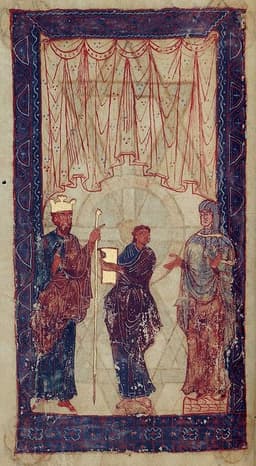
Ferdinand I of Leon
Emperor · Medieval
59.2Total
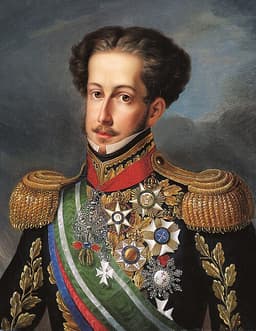
Pedro I of Brazil
Emperor · Modern
54.6Total
Basic Information
Born
1015
1798
Died
1065
1834
Era
Medieval
Modern
Nationality
Leon
Brazil
Occupation
Emperor
Emperor
Civilization
Western
Western
Score Comparison
Military (10%)
70.0
55.0
Political (20%)
68.0
62.7
Influence (20%)
56.4
59.0
Legacy (20%)
49.2
50.0
Leadership (15%)
66.0
53.2
Strategy (15%)
57.5
45.0
TOTAL
59.2
54.6
Ferdinand I of Leon — Complete Timeline
1029 AD
Inheritance of the County of CastilePolitical Action◆ Major
Ferdinand I inherited the County of Castile from his father Sancho III of Navarre. He later expanded his territory through conquest and marriage, laying the foundation for the Kingdom of Castile.
Impact: regionalconstructive
1037 AD
Conquest of LeónWar◆ Major
Ferdinand I defeated and killed King Bermudo III of Le
Impact: regional
1056 AD
First Emperor of SpainPolitical Action◆ Major
Ferdinand I was crowned 'Imperator totius Hispaniae' (Emperor of all Spain) in 1056, claiming suzerainty over all Christian and Muslim rulers in Iberia. This title reflected his military dominance and political ambition.
Impact: regional
1065 AD
Division of the kingdomPolitical Action◆ Major
Upon his death, Ferdinand I divided his kingdom among his sons: Sancho II received Castile, Alfonso VI received Le
Impact: regionaldestructive
Pedro I of Brazil — Complete Timeline
1822 AD
Declaration of Independence of BrazilPolitical Action
Pedro I declared Brazil's independence from Portugal on September 7, 1822, at the Ipiranga River in S
Impact: globalprogressive
Coronation as Emperor of BrazilPolitical Action◆ Major
Pedro I was crowned Emperor of Brazil on December 1, 1822, in Rio de Janeiro. The coronation formalized the new imperial government, with Pedro I as constitutional monarch, though he retained significant executive powers.
Impact: nationalconstructive
1823 AD
War of Independence of BrazilWar◆ Major
Pedro I led Brazilian forces against Portuguese loyalists in the War of Independence. Key battles occurred in Bahia, Maranh
Impact: national
Dissolution of the Constituent AssemblyPolitical Action◆ Major
Pedro I dissolved the Constituent Assembly after conflicts over the constitution's limits on imperial power. He then imposed the 1824 Constitution, which granted the emperor extensive powers, including the Moderating Power, centralizing authority.
Impact: nationaldestructive
1831 AD
Abdication of the Brazilian ThronePolitical Action
Pedro I abdicated the Brazilian throne in favor of his five-year-old son Pedro II on April 7, 1831. He returned to Portugal to claim the Portuguese throne, leaving Brazil under a regency until his son came of age.
Impact: national
Expert Analysis
Ferdinand I of Leon vs Pedro I of Brazil
The Emperor and the King: Two Paths to Glory, Two Destinies of Ruin
In the late spring of 1822, a young prince stood beside the Ipiranga River in São Paulo, tore the Portuguese blue-and-white insignia from his uniform, and shouted a cry that would echo across a continent: “Independence or Death!” Eight centuries earlier, on the dusty plains of León, a king named Ferdinand raised his sword over a fallen rival, claimed a crown, and soon declared himself “Imperator totius Hispaniae”—Emperor of all Spain. Both men seized supreme power in moments of national birth. Both would see their empires shattered by their own hands. But what drove Pedro I of Brazil to flee his throne in disgrace, while Ferdinand I of León died with his kingdom intact? The answer lies not in the violence of their conquests, but in the quiet architecture of their souls.
Origins
Pedro I was born into a world of gunpowder and Enlightenment. The year was 1798; Napoleon’s armies were remaking Europe, and the Portuguese royal family had fled to Rio de Janeiro under British protection. Pedro grew up in a tropical court, surrounded by whispers of revolution and the raw power of a colony that had become the seat of empire. He was mercurial, passionate, and utterly unprepared for the patient craft of statecraft. Ferdinand I, by contrast, was born in 1015, when Europe was a patchwork of feudal loyalties and the Reconquista was a holy calling. He inherited the County of Castile from his father, Sancho III of Navarre, in 1029—a small, hard territory forged in constant war. His world was one of oaths, swords, and the slow accumulation of land through marriage and blood. Pedro’s era demanded he invent a nation; Ferdinand’s demanded he consolidate one.
Rise to Power
Pedro’s path to power was a sudden, dramatic rupture. In 1822, facing Portuguese demands to return to Europe and reduce Brazil to a colony again, he chose defiance. The Declaration of Independence on September 7, 1822, was a theatrical gamble—a young prince betting that his charisma and the support of Brazilian elites could hold off a Portuguese army. He won that bet, and on December 1, 1822, he was crowned Emperor of Brazil in Rio de Janeiro. But the crown sat uneasily. Ferdinand’s rise was slower, more deliberate. In 1037, at the Battle of Tamarón, he killed King Bermudo III of León and claimed that kingdom by right of conquest and marriage. He did not declare independence from anything; he absorbed an existing realm. By 1056, when he crowned himself Emperor of Spain, he had spent nearly two decades proving his strength through steady warfare, not a single dramatic gesture.
Leadership & Governance
As a ruler, Pedro I was a study in contradictions. He was a military commander of moderate skill—his War of Independence of Brazil in 1823 saw key victories in Bahia, Maranhão, and Pará, but his strategic score of 50.0 reflects a man who relied on bravery more than planning. Politically, he was disastrous. In 1823, he dissolved the Constituent Assembly after clashing with delegates over limits on imperial power, then imposed a constitution that concentrated authority in his hands. He was a reformer who could not tolerate dissent, a liberal who could not share power. Ferdinand I was the opposite. With a political score of 72.0 and leadership of 78.0, he ruled by building consensus among Castilian and Leonese nobles. He expanded his territories through campaigns against the Moors, but he never broke the fragile unity of his realms. Where Pedro bullied, Ferdinand bargained. Where Pedro alienated, Ferdinand absorbed.
Triumph & Tragedy
Pedro’s greatest triumph was also the seed of his tragedy. The cry of “Independence or Death” made him a hero, but it also made him indispensable—and isolated. By 1831, his autocratic style had alienated the army, the church, and the landowners. Facing revolt and unable to compromise, he abdicated on April 7, 1831, in favor of his five-year-old son, Pedro II, and sailed back to Portugal. He was 36 years old. Ferdinand’s triumph was more enduring. He died in 1065, having conquered vast Moorish territories and unified Christian Spain under his imperial title. But his tragedy came posthumously: he divided his kingdom among his sons—Sancho II receiving Castile, Alfonso VI receiving León—ensuring decades of fratricidal war. Both men left their children a poisoned inheritance.
Character & Destiny
Pedro I was a romantic, Ferdinand I a realist. Pedro’s personality—impulsive, generous, and proud—drove him to take risks that won Brazil its freedom but lost him his crown. He could not bear the slow, grinding work of politics. Ferdinand, by contrast, was calculating. He knew that a kingdom divided among sons would weaken his legacy, but he also knew that his sons would fight regardless; the division was a gamble that he hoped would keep the peace. It did not. In both cases, character shaped destiny: Pedro’s passion made him a liberator but a poor ruler; Ferdinand’s prudence made him a conqueror but a shortsighted father.
Legacy
Today, Pedro I is remembered as the Father of Brazilian Independence, his image on coins and in schoolbooks, a symbol of national birth. But his legacy is mixed: he gave Brazil freedom but nearly destroyed its stability. Ferdinand I is remembered as a great medieval king, the first to claim the title Emperor of Spain, a warrior who pushed the Moors south. Yet his division of the kingdom is seen as a medieval folly. Their total scores are nearly identical—Pedro’s 65.7, Ferdinand’s 67.0—but the quality of their fame differs. Pedro is a tragic hero; Ferdinand is a historical footnote.
Conclusion
Standing beside the Ipiranga River, Pedro I shouted for independence. Standing on the battlefield of Tamarón, Ferdinand I claimed a kingdom. Both were emperors whose crowns were forged in war and lost to pride. But the deepest difference is this: Pedro built a nation he could not rule, while Ferdinand ruled a nation he could not keep whole. Their stories remind us that the greatest victories often leave the deepest wounds—and that the most glorious beginnings can lead to the loneliest endings.
Rankings
🥇
Ferdinand I of LeonLeader
Mil: 70.0Pol: 68.0Inf: 56.4
59.2
🥈
Pedro I of Brazil
Mil: 55.0Pol: 62.7Inf: 59.0
54.6
+4.6 behind
How This Comparison Works
Algorithm
Each figure is scored on 6 dimensions (0—100 scale) based on structured historical data: Military (10%), Political (20%), Influence (20%), Legacy (20%), Leadership (15%), Strategy (15%). The weighted total produces the final ranking.
Data Sources
Scores are computed from structured sub-indicators in the database. Scale factors adjust for era (Ancient ×0.85, Modern ×1.0) and civilization size (Eastern ×1.05, Other ×0.80) to account for differences in population and military scale.
Maximum 3 Figures
Comparisons are limited to 2—3 figures to ensure readability and statistical meaningfulness.
Error Margins
±5 points per dimension — Sub-scores are derived from historical records with inherent uncertainty. Two figures within 5 points on a dimension should be considered roughly equivalent in that area.
Total Score Accuracy
±3 points overall — The weighted combination of 6 dimensions produces a total score with approximately ±3 points of uncertainty. Differences of less than 3 points are not statistically significant— the figures are effectively tied.
Known Limitations
- Historical records are incomplete and uneven across civilizations
- Figures from oral-tradition societies may be underrepresented
- Occupation labels can misclassify multi-role figures
- Scores measure capability and impact, not moral character
- Quantitative scoring is a comparison tool, not absolute truth
Capability Radar
Military (10%) — Battles & Warfare
Battles
55
35
Win Rate
60
40
Expansion
60
30
Political (20%) — Governance & Reform
Reform
50
45
Diplomacy
55
50
Economy
45
30
Influence (20%) — Cultural & Global Reach
Cultural
40
40
Global
30
45
Legacy (20%) — Historical Impact
Historical
45
55
Longevity
40
50
Leadership (15%) — Power & Stability
Tenure
65
55
Stability
50
25
Strategy (15%) — Tactics & Innovation
Strategy
55
35
Tactics
50
30
Reform
40
20
Similar Comparisons
Comments & Discussion
CROWN-AND-TEAR6/16/2026
Pedro I was a romantic fool confusing passion for patriotism. His "Independence or Death" moment was dramatic theater, not statecraft. He burned through popular goodwill faster than Brazil's coffee exports, alienating elites with authoritarian tantrums while bankrupting the treasury on Portuguese military adventures. Ferdinand I built León into a genuine empire through twenty years of meticulous campaigns, not a single cry. Pedro had the spotlight; Ferdinand had the strategy. I know which legacy
军史掷铁饼者6/16/2026
帝国不是靠吼出来的,而是靠铁与血慢慢熬出来的。斐迪南一世花了二十年,从莱昂一路推到葡萄牙边境,连科英布拉都吞了,实打实把"皇帝"头衔坐稳了。佩德罗一世呢?他1822年喊完"独立或死",1826年就丢了巴西皇位滚回葡萄牙抢王位去了。四年就崩盘,这种速成帝国能怪谁?斐迪南活到五十岁还握着剑柄,佩德罗三十四岁就病死在里斯本,真是对比惨烈。|
FACT-SQUAD6/16/2026
Here's what the romance leaves out: Pedro ruled a nation of four million people while Ferdinand's León barely held 500,000 souls. Controlling a tiny, homogeneous kingdom is easier than managing a sprawling, multiracial colony with slavery at its economic core. Pedro faced real fiscal crises and separatist revolts in provinces like Pernambuco. Ferdinand's "empire" was basically northern Spain with border adjustments. Comparing their failures without adjusting for scale is like comparing a sinking
帝国纹章官6/16/2026
佩德罗一世输在狂妄,斐迪南一世赢在了信仰。斐迪南自称"全西班牙皇帝",背后是教宗亚历山大二世的祝福和克吕尼修道院的十字旗,整个基督教世界都认他的圣战。佩德罗一世呢?他1824年搞出的《宪法》被他自己亲手废除,把自由派和保守派都得罪光了。斐迪南死前把王国分给三个儿子,佩德罗走时留下六岁女儿和一个烂摊子。一个死后王国裂了,但生前稳如磐石;一个活着就什么都丢了。|
HELL-BENT HERALD6/16/2026
Pedro I was the original caudillo disaster: flashy, impulsive, and addicted to drama. He abandoned Brazil to fight for a Portuguese throne nobody asked him to claim, leading to the disastrous War of the Two Brothers (1828-1834). Ferdinand I, whatever his feudal limits, understood his kingdom was his life's work, not his stepping stone. Pedro was a tourist in his own empire. Ferdinand was its architect. There's a reason Brazil's regency period had to purge Pedro's legacy just