Loading...
Feng Guozhang vs Suchinda Kraprayoon
Feng Guozhang leads by 12.0 pts · 2 figures compared
…
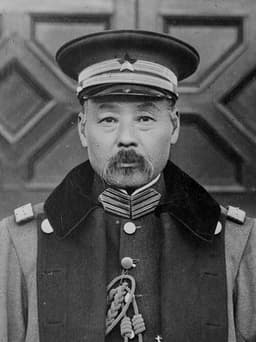
Feng Guozhang
General · Modern
49.1Total
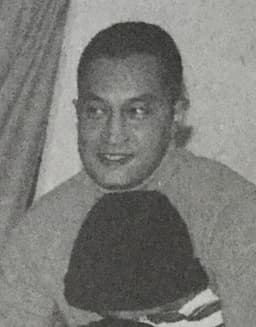
Suchinda Kraprayoon
General · Modern
37.1Total
Basic Information
Born
1859
1933
Died
1919
—
Era
Modern
Modern
Nationality
China
Thailand
Occupation
General
General
Civilization
Eastern
Eastern
Score Comparison
Military (10%)
30.0
10.2
Political (20%)
61.3
27.9
Influence (20%)
54.9
47.1
Legacy (20%)
45.8
37.5
Leadership (15%)
40.0
45.0
Strategy (15%)
57.5
39.6
TOTAL
49.1
37.1
Feng Guozhang — Complete Timeline
1912 AD
Command of the Beiyang ArmyPolitical Action◆ Major
Feng Guozhang became a key commander of the Beiyang Army under Yuan Shikai. He controlled military forces in the Zhili region, establishing himself as a major warlord in northern China after the fall of the Qing dynasty.
Beiyang ArmyWarlordMilitary Command
Impact: national
1916 AD
Appointment as Vice PresidentPolitical Action◆ Major
Feng Guozhang was elected Vice President of the Republic of China under President Li Yuanhong. This position gave him significant political influence during the early Republican period.
Republic of ChinaGovernmentPolitics
Impact: national
1917 AD
Acting PresidencyPolitical Action◆ Major
Feng Guozhang became Acting President of the Republic of China after Li Yuanhong's resignation. He served from 1917 to 1918, facing challenges from rival warlords and struggling to maintain central authority.
Republic of ChinaPresidencyWarlord Era
Impact: national
1918 AD
Conflict with Duan QiruiPolitical Action◆ Major
Feng Guozhang engaged in a power struggle with Premier Duan Qirui, leading to the split of the Beiyang clique into the Zhili and Anhui factions. This conflict weakened the central government and intensified warlord warfare.
Beiyang CliquePower StruggleWarlord Era
Impact: nationaldestructive
Suchinda Kraprayoon — Complete Timeline
1991 AD
Leadership of the 1991 Thai Coup d'ÉtatPolitical Action◆ Major
General Suchinda Kraprayoon led the National Peace Keeping Council in a bloodless coup that overthrew Prime Minister Chatichai Choonhavan. The coup was justified by claims of corruption and political instability, establishing a military junta.
CoupMilitary JuntaPower Seizure
Impact: nationaldestructive
1992 AD
Appointment as Prime MinisterPolitical Action◆ Major
After a general election, Suchinda was appointed Prime Minister despite not being an elected MP. His appointment sparked widespread protests, as it was seen as a continuation of military rule and a violation of democratic principles.
Prime MinisterControversyMilitary Rule
Impact: nationaldestructive
Black May 1992 Uprising and ResignationPolitical Action
Massive pro-democracy protests in Bangkok, led by Chamlong Srimuang, demanded Suchinda's resignation. The military crackdown resulted in dozens of deaths. King Bhumibol intervened, leading to Suchinda's resignation and the restoration of civilian government.
UprisingBlack MayResignation
Impact: nationaltragic
Expert Analysis
Feng Guozhang vs Suchinda Kraprayoon
# The General Who Would Be President: Two Paths to Power in Asia’s Turbulent Century
In the summer of 1917, Feng Guozhang sat in the presidential palace in Beijing, a man who had climbed the ladder of the Beiyang Army to the highest office in China—only to find himself trapped between warring factions and a nation dissolving into chaos. Seventy-five years later, in May 1992, General Suchinda Kraprayoon watched from his own seat of power in Bangkok as hundreds of thousands of protesters flooded the streets, their fury aimed directly at him. Both men were generals who became presidents; both ruled briefly and left in disgrace. Yet the forces that lifted them, and the worlds they tried to govern, could not have been more different.
Origins
Feng Guozhang was born in 1859, a child of the late Qing Dynasty, when China was reeling from the Opium Wars and the Taiping Rebellion. He grew up in Hebei province, in the shadow of a decaying imperial order. The old civil service examination system still existed, but for a young man with ambition, the military offered a faster path. Feng enrolled in the Beiyang Military Academy, founded by Li Hongzhang, where he learned not only modern warfare but also the art of bureaucratic maneuvering. His generation was the first to be trained by Western instructors, to handle rifles and artillery, and to understand that China’s survival depended on breaking with its Confucian past—even as they remained steeped in its hierarchies.
Suchinda Kraprayoon was born in 1933, in a very different Asia. Thailand had never been colonized, and its monarchy, though diminished, still commanded deep loyalty. Suchinda came of age during World War II and the Cold War, when the Thai military became the primary guarantor of stability against communist insurgency. He attended the Chulachomklao Royal Military Academy, an institution modeled on Sandhurst and West Point, and rose through a system where loyalty to the king and the chain of command were paramount. For Suchinda, the military was not a ladder to power in a disintegrating empire, but the backbone of a nation that had known stable, if authoritarian, rule for decades.
Rise to Power
Feng Guozhang’s ascent was inseparable from the rise of Yuan Shikai, the strongman who dominated China after the 1911 Revolution. When Yuan became president, he needed loyal commanders to control the Beiyang Army, and Feng—known for his caution and political instincts—was a natural choice. In 1912, he took command of key forces in Zhili province, the heartland of northern China. But Yuan’s death in 1916 shattered the fragile unity of the Beiyang clique. Feng was elected Vice President under Li Yuanhong, a figurehead president with no military base. When Li fled the capital in 1917, Feng became Acting President—not through popular acclaim, but because no other general could hold the center.
Suchinda’s rise was swifter and more direct. In 1991, as commander of the Thai army, he led the National Peace Keeping Council in a bloodless coup against Prime Minister Chatichai Choonhavan, accusing the civilian government of corruption. The coup was popular at first; many Thais were weary of political infighting. Suchinda promised elections, and when they came in 1992, his party won—but the constitution was rewritten to allow him to become prime minister despite not being an elected MP. He took office in April 1992, believing he had the mandate of both the military and the ballot box.
Leadership & Governance
Feng Guozhang governed in the wreckage of empire. His China was a patchwork of regional warlords, foreign concessions, and competing ideologies. As president, he had no real army of his own; he was a broker, not a ruler. His greatest achievement was simply surviving—for a time. He tried to mediate between the militarist Duan Qirui and the southern separatists, but his power was purely titular. He lacked the ruthlessness of Yuan Shikai and the vision of Sun Yat-sen. Feng’s governance was a series of compromises, each one buying him another month in office.
Suchinda, by contrast, governed a modernizing nation with a functioning bureaucracy and a booming economy. But his rule was fatally flawed from the start. He had no political base beyond the military, and his appointment was seen as a betrayal of the democratic promise of the 1991 elections. When the opposition leader Chamlong Srimuang began a hunger strike in May 1992, Bangkok erupted. Suchinda ordered a crackdown. Soldiers fired into crowds; dozens were killed. The violence was broadcast worldwide.
Triumph & Tragedy
Feng’s greatest moment came in 1917, when he assumed the presidency and held together the Beiyang government against all odds. But his tragedy was that he could not hold it for long. By 1918, his rivalry with Duan Qirui had split the Beiyang clique into the Zhili and Anhui factions, a schism that would fuel civil war for a decade. Feng resigned later that year, a broken man, and died in 1919 at the age of sixty.
Suchinda’s tragedy was immediate and public. The Black May uprising of 1992 was a watershed in Thai history. The king himself intervened, summoning Suchinda and Chamlong to the palace and demanding an end to the violence. Suchinda resigned within days. His brief rule—barely a month—had shattered the military’s image as a benevolent guardian of the nation.
Character & Destiny
Feng Guozhang was a survivor, not a visionary. He rose through patronage, not charisma. His caution served him well in the Beiyang Army, where intrigue was constant, but it made him a passive president. He once remarked, “In politics, the one who waits longest often wins.” But in China’s warlord era, waiting was a luxury no one could afford.
Suchinda was a product of the Cold War military mindset: order above all, dissent as betrayal. He believed that Thailand needed a strong hand to resist communism and corruption. But he misread the times. By 1992, Thailand’s middle class had grown large enough to demand a voice. Suchinda’s tragedy was not that he was cruel, but that he was anachronistic.
Legacy
Feng Guozhang is remembered, if at all, as a footnote in China’s warlord era—a man who held the presidency but never the country. His legacy is the fragmentation of the Beiyang Army, which he helped set in motion. In Chinese historiography, he is neither villain nor hero; he is a symptom of an age when generals became presidents because no one else could.
Suchinda’s legacy is more ambiguous. Black May led to constitutional reforms that strengthened civilian rule, and no military coup succeeded in Thailand for another fourteen years. But the pattern of military intervention did not end; it merely paused. Suchinda’s name is now synonymous with the failure of military authoritarianism in a modernizing democracy.
Conclusion
Feng Guozhang and Suchinda Kraprayoon were both generals who reached the summit of political power, only to find that the summit was a trap. Feng ruled in a China that had no stable institutions, no national consensus, no rule of law—only men and their armies. Suchinda ruled in a Thailand that had all of those things, but he tried to govern as if they did not matter. Their stories remind us that military power, however formidable, cannot substitute for political legitimacy. In the end, both men were undone not by their enemies, but by the very systems they thought they commanded.
Rankings
🥇
Feng GuozhangLeader
Mil: 30.0Pol: 61.3Inf: 54.9
49.1
🥈
Suchinda Kraprayoon
Mil: 10.2Pol: 27.9Inf: 47.1
37.1
+12.0 behind
How This Comparison Works
Algorithm
Each figure is scored on 6 dimensions (0—100 scale) based on structured historical data: Military (10%), Political (20%), Influence (20%), Legacy (20%), Leadership (15%), Strategy (15%). The weighted total produces the final ranking.
Data Sources
Scores are computed from structured sub-indicators in the database. Scale factors adjust for era (Ancient ×0.85, Modern ×1.0) and civilization size (Eastern ×1.05, Other ×0.80) to account for differences in population and military scale.
Maximum 3 Figures
Comparisons are limited to 2—3 figures to ensure readability and statistical meaningfulness.
Error Margins
±5 points per dimension — Sub-scores are derived from historical records with inherent uncertainty. Two figures within 5 points on a dimension should be considered roughly equivalent in that area.
Total Score Accuracy
±3 points overall — The weighted combination of 6 dimensions produces a total score with approximately ±3 points of uncertainty. Differences of less than 3 points are not statistically significant— the figures are effectively tied.
Known Limitations
- Historical records are incomplete and uneven across civilizations
- Figures from oral-tradition societies may be underrepresented
- Occupation labels can misclassify multi-role figures
- Scores measure capability and impact, not moral character
- Quantitative scoring is a comparison tool, not absolute truth
Capability Radar
Military (10%) — Battles & Warfare
Battles
45
5
Win Rate
40
5
Expansion
35
5
Political (20%) — Governance & Reform
Reform
30
5
Diplomacy
45
10
Economy
25
5
Influence (20%) — Cultural & Global Reach
Cultural
30
5
Global
20
5
Legacy (20%) — Historical Impact
Historical
40
10
Longevity
25
5
Leadership (15%) — Power & Stability
Tenure
55
10
Stability
20
5
Strategy (15%) — Tactics & Innovation
Strategy
55
10
Tactics
50
10
Reform
40
5
Similar Comparisons
Comments & Discussion
BeiyangAnarchist6/16/2026
Feng was a tragic figure who actually tried civilian rule but got crushed by warlord machinery. Suchinda was just a glorified coup plotter who thought tanks equal legitimacy. Feng at least presided over a fractured republic; Suchinda staged a 1991 coup, installed himself, then gassed protesters in '92. Feng lost power to Duan Qirui's machinations. Suchinda lost to a king's glare. Different leagues of failure.|
军事考古学家6/16/2026
冯国璋至少是从北洋新军一步步爬上来,打过甲午战争的实战派,武备学堂出身不是花瓶。苏钦达不过是泰国1970年代军校流水线产品,靠1991年政变夺权。冯在1918年被迫下野后还拒绝与日本合作,保住了最后底线;苏钦达在1992年五月流血事件后灰溜溜流亡,连军方都嫌弃他碍事。一个是被时代碾碎的老派军阀,一个是自己作死的现代政变专家。|
BookwormSkeptic6/16/2026
Stop romanticizing Feng. He was a Beiyang warlord who served under Yuan Shikai's dictatorship and benefited from the same militarized clientelism that eventually destroyed China. Suchinda at least oversaw economic growth in Thailand during the late 80s boom. Feng's 1917 presidency was a puppet show for the Zhili clique. Suchinda's downfall was violent, but his regime didn't trigger a civil war. Let's not pretend one "warlord" is nobler than another.|
帝国遗老6/16/2026
比较这两人的权力基础就是鸡同鸭讲。冯国璋头顶还有个摇摇欲坠的民国招牌,1917年就任总统时还得应付张勋复辟闹剧,他本质上是个试图维系中央权威却无兵无饷的文人将军。苏钦达1991年政变后直接废了宪法当总理,背后是泰国王室和军方的铁三角。冯的悲剧在于清朝官僚体系的崩塌,苏钦达的闹剧在于冷战后期君主制回潮的傲慢。一个是旧时代的落水者,一个是新时代的独裁典范。|
RevolutionaryEcho6/16/2026
Both fell because they confused military discipline with political legitimacy. Feng thought loyalty from Beiyang subordinates meant a stable republic. Suchinda thought coup supporters equal national mandate. Feng lasted 1 year, 2 months. Suchinda lasted 3 months, 11 days. History teaches: generals who wear presidential sashes without popular consent rotted faster than their own supply chains. The streets of Beijing 1918 and Bangkok 1992 didn't care about their medals.|
现代观察家6/16/2026
冯国璋至少留下了《冯氏兵书》和北洋系的制度遗产,民国总统再虚也撑起了框架。苏钦达除了让泰国