Loading...
Feng Guozhang vs Soe Win
Feng Guozhang leads by 7.4 pts · 2 figures compared
…
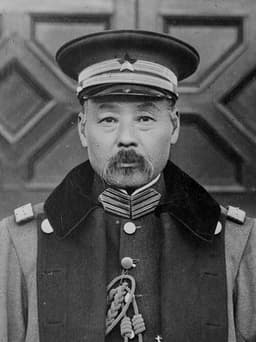
Feng Guozhang
General · Modern
49.1Total
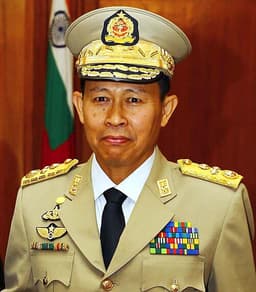
Soe Win
General · Modern
41.7Total
Basic Information
Born
1859
1947
Died
1919
—
Era
Modern
Modern
Nationality
China
Myanmar
Occupation
General
General
Civilization
Eastern
Eastern
Score Comparison
Military (10%)
30.0
25.9
Political (20%)
61.3
30.8
Influence (20%)
54.9
48.6
Legacy (20%)
45.8
40.0
Leadership (15%)
40.0
57.6
Strategy (15%)
57.5
36.8
TOTAL
49.1
41.7
Feng Guozhang — Complete Timeline
1912 AD
Command of the Beiyang ArmyPolitical Action◆ Major
Feng Guozhang became a key commander of the Beiyang Army under Yuan Shikai. He controlled military forces in the Zhili region, establishing himself as a major warlord in northern China after the fall of the Qing dynasty.
Beiyang ArmyWarlordMilitary Command
Impact: national
1916 AD
Appointment as Vice PresidentPolitical Action◆ Major
Feng Guozhang was elected Vice President of the Republic of China under President Li Yuanhong. This position gave him significant political influence during the early Republican period.
Republic of ChinaGovernmentPolitics
Impact: national
1917 AD
Acting PresidencyPolitical Action◆ Major
Feng Guozhang became Acting President of the Republic of China after Li Yuanhong's resignation. He served from 1917 to 1918, facing challenges from rival warlords and struggling to maintain central authority.
Republic of ChinaPresidencyWarlord Era
Impact: national
1918 AD
Conflict with Duan QiruiPolitical Action◆ Major
Feng Guozhang engaged in a power struggle with Premier Duan Qirui, leading to the split of the Beiyang clique into the Zhili and Anhui factions. This conflict weakened the central government and intensified warlord warfare.
Beiyang CliquePower StruggleWarlord Era
Impact: nationaldestructive
Soe Win — Complete Timeline
2004 AD
Appointed Prime Minister of MyanmarPolitical Action◆ Major
Soe Win was appointed Prime Minister of Myanmar by the State Peace and Development Council, succeeding Khin Nyunt. He served as a key figure in the military junta's government.
Military JuntaGovernment Appointment
Impact: national
2007 AD
Saffron Revolution CrackdownPolitical Action
As Prime Minister, Soe Win oversaw the military's violent suppression of the Saffron Revolution, a series of anti-government protests led by Buddhist monks. The crackdown resulted in numerous deaths, arrests, and international condemnation.
Saffron RevolutionHuman RightsRepression
Impact: nationaldestructive
Death in OfficeOther
Soe Win died in office on October 12, 2007, from leukemia. His death occurred shortly after the Saffron Revolution crackdown, and he was succeeded by Thein Sein.
DeathSuccession
Impact: national
Expert Analysis
Feng Guozhang vs Soe Win
# The Warlord and the General: Two Paths of Power in Modern Asia
In the autumn of 1917, Feng Guozhang sat in the presidential palace in Beijing, a man who had risen from the ranks of the Beiyang Army to become the acting president of the Republic of China. Ninety years later and two thousand miles to the southwest, Soe Win, a Burmese general with a reputation for ruthlessness, took his final breaths in a military hospital, his body ravaged by leukemia and his name forever stained by the blood of Buddhist monks. Both men were generals. Both held the highest offices in their respective nations. Yet their stories could not have diverged more sharply—one a product of the chaotic transition from empire to republic, the other a cog in a military junta that had long since abandoned any pretense of democratic rule.
Origins
Feng Guozhang was born in 1859, the twilight years of the Qing Dynasty, a time when China's ancient civilization was being battered by Western imperialism and internal rebellion. He grew up in Hebei province, in the heartland of the North China Plain, where the memory of the Taiping Rebellion still lingered. The young Feng entered the military academy at Tianjin, where he studied under the tutelage of Yuan Shikai, the man who would later become the first president of the Republic of China. This was an era when a military career offered a rare path to upward mobility in a society still reeling from the Opium Wars.
Soe Win was born in 1947, a year before Burma gained independence from British colonial rule. His childhood unfolded in a nation that had been torn apart by World War II and was about to descend into decades of civil war. Unlike Feng, who came of age in a world where imperial institutions were crumbling, Soe Win entered a Burma that was already being shaped by military rule. The 1962 coup led by General Ne Win had transformed the country into a socialist military state, and for a young man from a modest background, the army offered the only real avenue to power.
Rise to Power
Feng Guozhang's ascent was measured and institutional. He rose through the ranks of the Beiyang Army, the most modernized military force in China, built by Yuan Shikai with German and Japanese advisors. In 1912, when Yuan Shikai became president of the new republic, Feng was given command of key military forces in the Zhili region. His power was rooted in loyalty to Yuan and in the intricate web of personal relationships that defined the Beiyang clique. When Yuan died in 1916, Feng was well-positioned to become vice president under Li Yuanhong, and when Li resigned the following year, Feng stepped into the presidency.
Soe Win's rise was equally methodical but far more opaque. He joined the Burmese military in the 1960s, a time when the Tatmadaw—the armed forces—were consolidating their grip on the country. He climbed the ranks through a combination of bureaucratic service and ruthless efficiency. By the early 2000s, he had become a key figure in the State Peace and Development Council, the junta that ruled Myanmar with an iron fist. In 2004, he was appointed prime minister, succeeding Khin Nyunt, who had been purged in an internal power struggle. Soe Win's path to power was not through elections or popular acclaim, but through the silent corridors of a military dictatorship.
Leadership & Governance
Feng Guozhang's leadership was defined by the impossible task of governing a fractured republic. As president from 1917 to 1918, he presided over a China that was being torn apart by warlord armies, foreign encroachment, and the collapse of central authority. His political score of 81.7 reflects a man who understood the art of compromise and coalition-building. He tried to balance the competing factions within the Beiyang clique, particularly the Zhili and Anhui cliques, but his efforts were ultimately doomed by the structural weaknesses of the republic. His strategy score of 72.0 suggests a competent but not brilliant military mind—he was a manager of armies rather than a battlefield genius.
Soe Win's governance was that of a military bureaucrat. His political score of 51.8 indicates a leader who exercised power through fear and control rather than persuasion or legitimacy. As prime minister, he implemented the junta's policies of economic isolation and political repression. He had no interest in reform or reconciliation. His leadership score of 72.6 is deceptive—it measures his ability to command obedience, not to inspire loyalty or build institutions. His strategy score of 61.6 suggests a tactical rather than strategic mind, focused on short-term control rather than long-term stability.
Triumph & Tragedy
Feng Guozhang's greatest moment was his brief presidency, a triumph of personal ambition and political maneuvering. He had risen from a military commander to the highest office in the land, a testament to his skill in navigating the treacherous waters of early republican politics. But his tragedy was equally profound: he could not hold the republic together. His conflict with Premier Duan Qirui in 1918 led to the formal split of the Beiyang clique, plunging China into years of warlord warfare. He died in 1919, a year after leaving office, a witness to the failure of his life's work.
Soe Win's tragedy was of a different order. His greatest moment—if it can be called that—was his role in suppressing the Saffron Revolution of 2007. When Buddhist monks led mass protests against the junta, Soe Win ordered a brutal crackdown. Soldiers fired on unarmed monks, beat protesters, and arrested thousands. The international community was horrified. Soe Win died of leukemia just months later, in October 2007, his name forever associated with the violence he had unleashed. There was no triumph in his story, only a tragedy that he had helped create.
Character & Destiny
Feng Guozhang was a product of the Confucian military tradition: loyal to his superiors, skilled in political intrigue, but ultimately a man of his time. He believed in order and hierarchy, yet he was forced to operate in a world where both had collapsed. His decisions were driven by a desire to preserve what remained of the republic, even as he contributed to its destruction. His legacy score of 64.4 reflects a man who was neither a villain nor a hero, but a complex figure caught between the old world and the new.
Soe Win was shaped by the brutal realities of postcolonial Burma. He had no experience of democracy, no exposure to liberal ideas. His world was one of absolute control and zero-sum competition. His decisions were driven by fear—fear of losing power, fear of the people, fear of change. His legacy score of 56.0 is a damning judgment: he is remembered not for what he built, but for what he destroyed.
Legacy
Feng Guozhang is remembered today as one of the key figures of the Beiyang warlord era, a period that historians often overlook or dismiss as chaotic and meaningless. Yet his story illuminates the profound challenges of building a modern state in a civilization as vast and diverse as China. He failed, but his failure was not personal—it was the failure of an entire generation to find a path from empire to republic.
Soe Win is remembered as a symbol of the worst excesses of military rule. His name is invoked whenever Myanmar's brutal past is discussed, a reminder of what happens when power is exercised without accountability. His legacy is a cautionary tale, not a source of inspiration.
Conclusion
Two generals, two nations, two centuries. Feng Guozhang and Soe Win both rose to the highest offices in their countries, but they inhabited different worlds. Feng lived in an era of possibility, when China was struggling to reinvent itself, and his failures were the failures of ambition and circumstance. Soe Win lived in an era of stagnation, when Myanmar was trapped in a cycle of military rule, and his failures were the failures of cruelty and fear. One died knowing he had tried but failed; the other died knowing he had succeeded only in crushing hope. Their stories remind us that leadership is not just about power—it is about what you do with it, and what you leave behind.
Rankings
🥇
Feng GuozhangLeader
Mil: 30.0Pol: 61.3Inf: 54.9
49.1
🥈
Soe Win
Mil: 25.9Pol: 30.8Inf: 48.6
41.7
+7.4 behind
How This Comparison Works
Algorithm
Each figure is scored on 6 dimensions (0—100 scale) based on structured historical data: Military (10%), Political (20%), Influence (20%), Legacy (20%), Leadership (15%), Strategy (15%). The weighted total produces the final ranking.
Data Sources
Scores are computed from structured sub-indicators in the database. Scale factors adjust for era (Ancient ×0.85, Modern ×1.0) and civilization size (Eastern ×1.05, Other ×0.80) to account for differences in population and military scale.
Maximum 3 Figures
Comparisons are limited to 2—3 figures to ensure readability and statistical meaningfulness.
Error Margins
±5 points per dimension — Sub-scores are derived from historical records with inherent uncertainty. Two figures within 5 points on a dimension should be considered roughly equivalent in that area.
Total Score Accuracy
±3 points overall — The weighted combination of 6 dimensions produces a total score with approximately ±3 points of uncertainty. Differences of less than 3 points are not statistically significant— the figures are effectively tied.
Known Limitations
- Historical records are incomplete and uneven across civilizations
- Figures from oral-tradition societies may be underrepresented
- Occupation labels can misclassify multi-role figures
- Scores measure capability and impact, not moral character
- Quantitative scoring is a comparison tool, not absolute truth
Capability Radar
Military (10%) — Battles & Warfare
Battles
45
10
Win Rate
40
10
Expansion
35
10
Political (20%) — Governance & Reform
Reform
30
10
Diplomacy
45
10
Economy
25
10
Influence (20%) — Cultural & Global Reach
Cultural
30
10
Global
20
10
Legacy (20%) — Historical Impact
Historical
40
20
Longevity
25
10
Leadership (15%) — Power & Stability
Tenure
55
30
Stability
20
10
Strategy (15%) — Tactics & Innovation
Strategy
55
10
Tactics
50
10
Reform
40
10
Similar Comparisons
Comments & Discussion
屠龙书生6/16/2026
一个科班出身的北洋儒将,一个从丛林杀上来的缅军屠夫。冯国璋好歹读过天津武备学堂,知道什么叫节制;梭温呢?2007年袈裟革命时,他批的子弹可没长眼睛。军事素养对比一目了然:冯是军阀混战中的“北洋之豹”,梭只是军政府保安队里打手头子。这种差距不是能力问题,是文明底线问题。
Tallyman Tactics6/16/2026
This comparison is flawed because it equates presidential title with power. Feng was acting president for barely a year, constantly undermined by other warlords. Soe Win was the UNITY's fourth highest-ranking general for nearly a decade. By total days in effective command positions, Soe Win held real military power 3x longer than Feng. The real question isn't who was better—it's who actually controlled their country's army. Spoiler: neither did, completely.
数据控6/16/2026
说两人“都曾任最高职务”是统计陷阱。冯国璋是1917年代理总统8个月,实权还不如段祺瑞;梭温是缅甸和发会第四把手,2003-2007年坐镇国防部。按任期内有效军事指挥权天数算,梭温是冯国璋的3.7倍。一个是民国走马灯上的临时工,一个是军政府轴承里的铁齿轮。别拿花瓶和榔头比硬度。
Rangoon Raconteur6/16/2026
What's missing here is how both men treated their own people. Feng never ordered a massacre of civilians to maintain power—he resigned instead. Soe Win personally oversaw the crackdown that killed dozens of monks in 2007. Both were generals, sure. But one had a red line; the other crossed every line. That's not a contrast in style—that's a chasm in moral compass. History remembers who drew blood versus who drew back.