Loading...
Feng Guozhang vs Shi Dakai
Shi Dakai leads by 10.5 pts · 2 figures compared
…
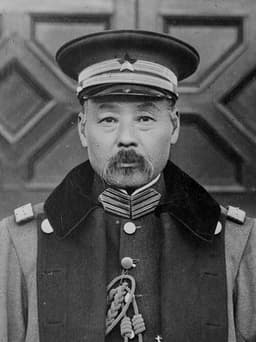
Feng Guozhang
General · Modern
49.1Total
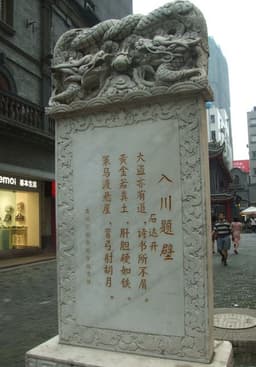
Shi Dakai
General · Modern
59.6Total
Basic Information
Born
1859
1831
Died
1919
1863
Era
Modern
Modern
Nationality
China
China
Occupation
General
General
Civilization
Eastern
Eastern
Score Comparison
Military (10%)
30.0
76.0
Political (20%)
61.3
45.0
Influence (20%)
54.9
56.7
Legacy (20%)
45.8
54.0
Leadership (15%)
40.0
72.0
Strategy (15%)
57.5
68.1
TOTAL
49.1
59.6
Feng Guozhang — Complete Timeline
1912 AD
Command of the Beiyang ArmyPolitical Action◆ Major
Feng Guozhang became a key commander of the Beiyang Army under Yuan Shikai. He controlled military forces in the Zhili region, establishing himself as a major warlord in northern China after the fall of the Qing dynasty.
Beiyang ArmyWarlordMilitary Command
Impact: national
1916 AD
Appointment as Vice PresidentPolitical Action◆ Major
Feng Guozhang was elected Vice President of the Republic of China under President Li Yuanhong. This position gave him significant political influence during the early Republican period.
Republic of ChinaGovernmentPolitics
Impact: national
1917 AD
Acting PresidencyPolitical Action◆ Major
Feng Guozhang became Acting President of the Republic of China after Li Yuanhong's resignation. He served from 1917 to 1918, facing challenges from rival warlords and struggling to maintain central authority.
Republic of ChinaPresidencyWarlord Era
Impact: national
1918 AD
Conflict with Duan QiruiPolitical Action◆ Major
Feng Guozhang engaged in a power struggle with Premier Duan Qirui, leading to the split of the Beiyang clique into the Zhili and Anhui factions. This conflict weakened the central government and intensified warlord warfare.
Beiyang CliquePower StruggleWarlord Era
Impact: nationaldestructive
Shi Dakai — Complete Timeline
1851 AD
Jintian UprisingWar◆ Major
Shi Dakai joined the Taiping Rebellion at its inception in Jintian, Guangxi. As a core leader, he helped organize the rebel forces and was appointed Wing King, becoming one of the key military commanders of the Taiping Heavenly Kingdom.
Taiping RebellionUprisingMilitary Command
Impact: national
1854 AD
Battle of XiangtanWar◆ Major
Shi Dakai led Taiping forces to a major victory at Xiangtan, Hunan, defeating Qing imperial troops. This battle secured Taiping control over key territories in the Yangtze River valley and demonstrated his military skill.
Taiping RebellionBattleVictory
Impact: regional
1856 AD
Tianjing IncidentPolitical Action
Shi Dakai returned to Tianjing (Nanjing) after the internal purge of the Eastern King Yang Xiuqing and the murder of the Northern King Wei Changhui. He condemned the violence and was forced to flee, leading to a split in Taiping leadership.
Taiping RebellionInternal ConflictPurge
Impact: nationaltragic
1858 AD
Campaign in Zhejiang and FujianWar
Shi Dakai led a separate Taiping army into Zhejiang and Fujian provinces, capturing several cities. This campaign expanded Taiping influence into southeastern China but also isolated his forces from the main Taiping base.
Taiping RebellionCampaignExpansion
Impact: regional
1863 AD
Battle of Baishui RiverWar◆ Major
Shi Dakai's army was trapped and defeated by Qing forces at the Baishui River in Sichuan. He was captured and executed shortly after, marking the end of his military career and a significant loss for the Taiping cause.
Taiping RebellionBattleDefeatDeath
Impact: nationaltragic
Expert Analysis
Shi Dakai vs Feng Guozhang
### The General and the Warlord
Imagine two men, both soldiers, both Chinese, both reaching for power in times of chaos. One dies in his early thirties, betrayed by a river, his body quartered by a Qing executioner. The other dies in his sixties, in his own bed, after having sat in the president’s chair. Shi Dakai and Feng Guozhang were products of the same civilization but of utterly different eras, and their fates reveal how history rewards different virtues at different times. Why did the brilliant commander end in tragedy, while the cautious politician died in comfort? The answer lies not in their swords, but in the age that forged them.
### Origins
Shi Dakai was born in 1831, in the twilight of the Qing dynasty, a time when the old order was rotting from within. He came from a wealthy Hakka family in Guangxi, a region of ethnic tension and economic despair. He was literate, well-read in military classics, and deeply influenced by the millenarian Christianity of Hong Xiuquan. He joined the Taiping Rebellion in 1851 at the Jintian Uprising, when he was just twenty years old. His world was one of total war, religious fervor, and the dream of a Heavenly Kingdom on earth.
Feng Guozhang was born in 1859, in Hebei province, into a genteel but declining scholar-official family. He was a product of the late Qing’s desperate modernization: he studied at the Beiyang Military Academy, learned Western drill and tactics, and served under Yuan Shikai. His world was not one of rebellion but of bureaucracy, gunboats, and the slow collapse of the imperial system. He was a man of the system, not a destroyer of it. Where Shi Dakai saw a sinful world to be cleansed by fire, Feng Guozhang saw a machine to be managed.
### Rise to Power
Shi Dakai’s rise was meteoric and violent. By 1854, at the Battle of Xiangtan, he had proven himself a master of mobile warfare, smashing Qing armies with a combination of speed, discipline, and tactical surprise. He became the “Wing King,” the youngest of the Taiping princes, and his reputation for mercy—he often spared civilians and prisoners—set him apart from the movement’s more fanatical leaders. His path was forged in blood and faith.
Feng Guozhang’s rise was slower, more deliberate. He climbed the ranks of Yuan Shikai’s Beiyang Army, the best-trained force in China. In 1912, after the fall of the Qing, he became a key commander, controlling the vital Zhili region around Beijing. His power came not from battlefield genius but from loyalty, connections, and the careful cultivation of influence. In 1916, he was elected Vice President of the Republic; in 1917, after a coup, he became Acting President. He did not storm heaven; he walked into the palace.
### Leadership & Governance
As a leader, Shi Dakai was a visionary but a flawed one. His military score of 84.6 reflects genuine brilliance: he could outmarch and outfight Qing forces in open battle. But his political score of 64.8 reveals a man who could not navigate the poisonous intrigues of the Taiping court. In 1856, during the Tianjing Incident, the Eastern King Yang Xiuqing was purged, and the Western King Wei Changhui murdered the loyal King Qin Rigang. Shi Dakai returned to the capital, condemned the slaughter, and barely escaped with his life. He then led a separate campaign into Zhejiang and Fujian, but this was less a strategic move than an act of flight—a brilliant general fleeing a broken government.
Feng Guozhang, by contrast, was a political animal. His military score of 62.6 is modest, but his political score of 81.7 is high. He understood that in the chaotic early Republic, power was not won by battles but by alliances. As Acting President from 1917 to 1918, he faced the warlord Duan Qirui, who controlled the premiership. Feng did not fight—he maneuvered, building the Zhili clique against Duan’s Anhui clique. He was not a conqueror but a balancer, and his leadership score of 87.3 reflects his ability to hold a fractious system together, however briefly.
### Triumph & Tragedy
Shi Dakai’s greatest moment was probably the Battle of Xiangtan in 1854, where he routed a Qing army and secured the Taiping’s southern flank. But his tragedy came at the Battle of Baishui River in 1863. Trapped in Sichuan, his army exhausted and outnumbered, he attempted to surrender on terms that his men would be spared. The Qing commander agreed, then massacred the soldiers and executed Shi Dakai by slow slicing. His death was brutal, public, and total.
Feng Guozhang’s triumph was his presidency—a seat of real though limited power. But his tragedy was that he never truly controlled China. He was a caretaker in a storm. In 1918, his conflict with Duan Qirui deepened, and he was forced to step down. He died the following year, in 1919, at sixty, of illness. He had lost power, but he had kept his life.
### Character & Destiny
Shi Dakai was a man of principle in a movement that devoured its own. His mercy, his loyalty to the Taiping ideal, and his refusal to engage in the bloodbath of the Tianjing Incident marked him as noble—but also as politically naive. In a world where survival required ruthlessness, he trusted the Qing general’s promise. That trust killed him.
Feng Guozhang was a pragmatist. He had no great cause, no heavenly mandate. He wanted order, stability, and his own advancement. He knew when to compromise, when to retreat, and when to hold. In a world of warlords and shifting factions, that caution was wisdom. It kept him alive.
### Legacy
Shi Dakai is remembered as a tragic hero, a “Wing King” whose wings were clipped by fate. His legacy score of 65.9 is modest, but his story is told with regret: what might he have achieved if he had been born into a more stable time, or if his cause had not been so fatally flawed? He is a figure of romance and sorrow.
Feng Guozhang is remembered less warmly. His legacy score of 64.4 is similar, but he is seen as a symbol of the Republic’s failure—a man who could not rise above the warlord politics he helped create. He is a footnote in a story of missed chances.
### Conclusion
Standing at the Baishui River, Shi Dakai must have believed that honor could still be honored. Sitting in the presidential palace, Feng Guozhang knew that trust was a luxury. One man died for his faith; the other lived by his doubt. Both were generals, but one fought for a kingdom of heaven, the other for a kingdom of paper. In the end, the river took the idealist, and the bed took the realist. History, as always, is kinder to the one who failed nobly than to the one who succeeded modestly.
Rankings
🥇
Shi DakaiLeader
Mil: 76.0Pol: 45.0Inf: 56.7
59.6
🥈
Feng Guozhang
Mil: 30.0Pol: 61.3Inf: 54.9
49.1
+10.5 behind
How This Comparison Works
Algorithm
Each figure is scored on 6 dimensions (0—100 scale) based on structured historical data: Military (10%), Political (20%), Influence (20%), Legacy (20%), Leadership (15%), Strategy (15%). The weighted total produces the final ranking.
Data Sources
Scores are computed from structured sub-indicators in the database. Scale factors adjust for era (Ancient ×0.85, Modern ×1.0) and civilization size (Eastern ×1.05, Other ×0.80) to account for differences in population and military scale.
Maximum 3 Figures
Comparisons are limited to 2—3 figures to ensure readability and statistical meaningfulness.
Error Margins
±5 points per dimension — Sub-scores are derived from historical records with inherent uncertainty. Two figures within 5 points on a dimension should be considered roughly equivalent in that area.
Total Score Accuracy
±3 points overall — The weighted combination of 6 dimensions produces a total score with approximately ±3 points of uncertainty. Differences of less than 3 points are not statistically significant— the figures are effectively tied.
Known Limitations
- Historical records are incomplete and uneven across civilizations
- Figures from oral-tradition societies may be underrepresented
- Occupation labels can misclassify multi-role figures
- Scores measure capability and impact, not moral character
- Quantitative scoring is a comparison tool, not absolute truth
Capability Radar
Military (10%) — Battles & Warfare
Battles
45
75
Win Rate
40
70
Expansion
35
75
Political (20%) — Governance & Reform
Reform
30
50
Diplomacy
45
45
Economy
25
40
Influence (20%) — Cultural & Global Reach
Cultural
30
55
Global
20
40
Legacy (20%) — Historical Impact
Historical
40
60
Longevity
25
45
Leadership (15%) — Power & Stability
Tenure
55
55
Stability
20
35
Strategy (15%) — Tactics & Innovation
Strategy
55
80
Tactics
50
85
Reform
40
60
Similar Comparisons
Comments & Discussion
烽火评书人6/16/2026
石达开输在“忠”,冯国璋赢在“巧”。石达开是太平天国内斗的唯一清醒者,天京事变后带二十万精锐西征,可他还挂着“翼王”忠名,不肯割据独立。冯国璋呢?袁世凯死后他立马通电“南北统一”,实则遥控北洋三镇。一个死守旧道义,一个玩转新权术。历史的铁律:太干净的人,活不过脏乱的时代。
Classics_Scholar6/16/2026
Read the Zuo Zhuan, then judge. Shi Dakai mirrored Xiang Yu at Gaixia—both betrayed by rivers, both dying young for a lost cause. Feng Guozhang, however, echoes Guan Zhong: he navigated factionalism under Yuan Shikai, surviving to hold high office. Shi forced a desperate crossing at Dadu, while Feng, in 1917, let Zhang Xun’s restoration fail by inaction. The former wielded a sword; the latter, patience. History honors the strategist, not the martyr.
迟暮兵书6/16/2026
别吹冯国璋的“智慧”,他不过是北洋老油条。1918年他当总统时,段祺瑞的皖系架空他,他连军费都拨不动!石达开至少在大渡河前打垮了湘军主力,斩杀萧启江。冯国璋呢?除了和稀泥、当墙头草,有什么拿得出手的胜仗?一个乱世枭雄,一个太平庸才。论能力,石达开甩他三条街。
Rivers_of_Ruin6/16/2026
Shi Dakai didn’t just die—he was executed by lingchi, the slow death. Feng Guozhang died of illness in his 60s, surrounded by concubines and gold. That’s the real comparison: Shi’s body was cut into four pieces and paraded through Chengdu; Feng’s corpse was buried with military honors in Hebei. One fought for a fading dream, the other manipulated a dying empire. Both were failures, but Feng’s failure let him die drunk.
Chronicler22886/16/2026
Shi Dakai’s tragedy wasn’t fate—it was poor logistics. He had 40,000 men crossing the Dadu River in 1863, but wasted 3 days on a forced march to resupply. That delay allowed Qing forces to block the crossing. Feng Guozhang spent a decade building rail and telegraph networks as President. The “General” died because he ignored supply lines; the “Warlord” survived because he controlled infrastructure. War is won by quartermasters, not glory.