Loading...
Feng Guozhang vs Ranoji Scindia
Ranoji Scindia leads by 7.9 pts · 2 figures compared
…
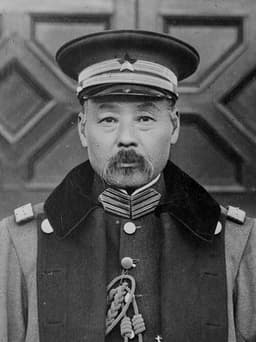
Feng Guozhang
General · Modern
49.1Total
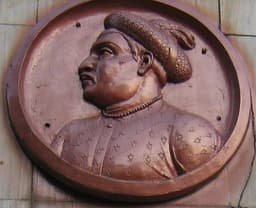
Ranoji Scindia
General · Modern
57.0Total
Basic Information
Born
1859
1700
Died
1919
1745
Era
Modern
Modern
Nationality
China
India
Occupation
General
General
Civilization
Eastern
Indian
Score Comparison
Military (10%)
30.0
50.0
Political (20%)
61.3
54.7
Influence (20%)
54.9
58.0
Legacy (20%)
45.8
54.0
Leadership (15%)
40.0
65.0
Strategy (15%)
57.5
60.0
TOTAL
49.1
57.0
Feng Guozhang — Complete Timeline
1912 AD
Command of the Beiyang ArmyPolitical Action◆ Major
Feng Guozhang became a key commander of the Beiyang Army under Yuan Shikai. He controlled military forces in the Zhili region, establishing himself as a major warlord in northern China after the fall of the Qing dynasty.
Beiyang ArmyWarlordMilitary Command
Impact: national
1916 AD
Appointment as Vice PresidentPolitical Action◆ Major
Feng Guozhang was elected Vice President of the Republic of China under President Li Yuanhong. This position gave him significant political influence during the early Republican period.
Republic of ChinaGovernmentPolitics
Impact: national
1917 AD
Acting PresidencyPolitical Action◆ Major
Feng Guozhang became Acting President of the Republic of China after Li Yuanhong's resignation. He served from 1917 to 1918, facing challenges from rival warlords and struggling to maintain central authority.
Republic of ChinaPresidencyWarlord Era
Impact: national
1918 AD
Conflict with Duan QiruiPolitical Action◆ Major
Feng Guozhang engaged in a power struggle with Premier Duan Qirui, leading to the split of the Beiyang clique into the Zhili and Anhui factions. This conflict weakened the central government and intensified warlord warfare.
Beiyang CliquePower StruggleWarlord Era
Impact: nationaldestructive
Ranoji Scindia — Complete Timeline
1726 AD
Appointed Subedar of MalwaPolitical Action◆ Major
Ranoji Scindia was appointed as the Maratha subedar of Malwa by Peshwa Baji Rao I. This gave him control over a large territory and laid the foundation for the Scindia dynasty of Gwalior.
Maratha EmpireMalwaScindia Dynasty
Impact: regionalconstructive
1737 AD
Battle of DelhiWar◆ Major
Ranoji Scindia participated in the Maratha raid on Delhi under Baji Rao I. The attack on the Mughal capital demonstrated Maratha power and led to the extraction of tribute.
Maratha-Mughal WarsDelhiRaid
Impact: national
1739 AD
Battle of VasaiWar
Ranoji Scindia fought alongside Malhar Rao Holkar in the siege of Vasai against the Portuguese. The victory ended Portuguese control in the Konkan region.
Maratha-Portuguese WarsSiegeKonkan
Impact: regional
1740 AD
Founded Gwalior as CapitalPolitical Action◆ Major
Ranoji Scindia established his capital at Gwalior, fortifying the Gwalior Fort and building a palace. This city became the center of Scindia power for over a century.
FoundingGwaliorScindia Dynasty
Impact: regionalconstructive
1745 AD
Death in BattleWar
Ranoji Scindia was killed in a battle against the Nizam of Hyderabad's forces near the Narmada River. His death occurred during a Maratha campaign to expand into the Deccan.
DeathBattleMaratha-Nizam Wars
Impact: regionaltragic
Expert Analysis
Feng Guozhang vs Ranoji Scindia
# The Warlord and the Founder: Two Paths to Power in a Broken World
In the winter of 1917, Feng Guozhang sat in the presidential palace in Beijing, a crown of thorns upon his head. The Republic of China, born in revolution just six years earlier, was already crumbling. To the north, rival generals sharpened their swords; to the south, separatists declared independence. Across the world, in a very different time, Ranoji Scindia had stood atop the Gwalior Fort in 1740, watching his horsemen fan out across the Malwa plateau. He was building something from nothing—a dynasty that would last two centuries. Feng Guozhang was trying to hold something together that was already falling apart. Both were generals. Both seized power in turbulent eras. But one founded a kingdom; the other lost a republic. Why?
Origins
Feng Guozhang was born in 1859, the year of the Second Opium War, into a China being carved up by foreign powers. He grew up in Hebei province, a land of peasant villages and crumbling Confucian order. His path to power was the old imperial ladder: the military examination system, which he passed in 1884. But the China he served was dying. By the time he entered the Beiyang Army under Yuan Shikai, the Qing dynasty was a corpse that refused to fall. Feng was a product of this twilight—a man trained to serve an empire that no longer existed.
Ranoji Scindia, born in 1700, came from a very different world. The Maratha Empire was rising, not falling. Born into a humble family in the Deccan, he joined the service of the Peshwa Baji Rao I, the brilliant Brahmin general who was shattering Mughal power. The Marathas were horsemen of the plains, mobile and fierce, and Ranoji learned war on the gallop. There was no examination system here—only loyalty, courage, and the favor of a warlord-king. His origins were humble, but his era was one of expansion, not collapse.
Rise to Power
Feng Guozhang rose through the ranks of the Beiyang Army, China’s most modern military force. In 1912, after the Xinhai Revolution toppled the Qing, he became a key commander under Yuan Shikai, controlling the vital Zhili region around Beijing. His rise was bureaucratic and political—a matter of connections, not conquest. When Yuan died in 1916, Feng was elected Vice President under Li Yuanhong, a figurehead. But the real power lay with Premier Duan Qirui, a rival warlord. Feng’s path was a staircase of appointments and compromises, each step narrowing his options.
Ranoji Scindia’s rise was a cavalry charge. In 1726, Peshwa Baji Rao I appointed him Subedar of Malwa, a vast territory wrested from the Mughals. He did not inherit this power; he earned it in battle. In 1737, he rode with Baji Rao into the heart of Delhi, raiding the Mughal capital itself. In 1739, he fought alongside Malhar Rao Holkar at the siege of Vasai, smashing Portuguese power on the western coast. His power was land, horses, and the loyalty of Maratha horsemen. He did not negotiate; he conquered.
Leadership & Governance
Feng Guozhang was a skilled political operator, with a leadership score of 87.3—the highest of his generation. But his governance was a tightrope act. As Acting President from 1917 to 1918, he tried to balance the competing warlords of the Beiyang clique, but his power was always borrowed. He could not command the army he once led; Duan Qirui controlled it. He could not unite the country; the south had declared independence. His military score of 62.6 reflected a man who was more politician than general. He was a master of the Beijing chessboard, but the board was on fire.
Ranoji Scindia governed differently. He founded Gwalior as his capital in 1740, fortifying the ancient fort and building a palace. His power was territorial, not titular. He collected taxes, commanded armies, and fought directly. His military score of 55.7 is deceptively low—he was a battlefield commander, not a strategic genius like Baji Rao. But his political score of 54.7 is also modest because he was a subordinate, not a sovereign. Yet he built a dynasty that would rule Gwalior for generations. He did not govern a republic; he founded a kingdom.
Triumph & Tragedy
Feng Guozhang’s greatest moment was his election as Vice President in 1916—a triumph of political survival. His greatest failure was the power struggle with Duan Qirui in 1918, which split the Beiyang clique into the Zhili and Anhui factions. This fracture doomed any hope of reunifying China. Feng resigned in disgrace, a broken man. He died in 1919, watching his country sink into the chaos of the Warlord Era.
Ranoji Scindia’s triumph was the founding of Gwalior—a fortress that became the heart of a dynasty. His tragedy came in 1745, when he was killed in battle against the Nizam of Hyderabad’s forces near the Narmada River. He died as he lived: in the saddle, sword in hand. His death was a loss, but his dynasty endured. His sons carried on his work.
Character & Destiny
Feng Guozhang was a man of caution and calculation. He tried to hold China together with diplomacy, but the forces tearing it apart were too strong. His personality—pragmatic, patient, political—was suited to a stable system, not a revolution. He was a fish swimming against a flood.
Ranoji Scindia was a man of action and ambition. He seized what he could, built what he could, and died before he could lose it. His personality—bold, loyal, direct—was suited to an era of expansion. He was a rider on a rising tide.
Legacy
Feng Guozhang is remembered as a footnote in Chinese history—a president who could not save the republic, a warlord who could not win the war. His legacy score of 64.4 reflects a man who tried and failed. The Zhili clique he founded would be crushed by the Nationalists in the 1920s.
Ranoji Scindia is remembered as the founder of the Scindia dynasty of Gwalior, which ruled until Indian independence in 1947. His legacy score of 69.3 reflects a man who built something that lasted. Gwalior Fort still stands, a monument to his ambition.
Conclusion
Feng Guozhang and Ranoji Scindia were both generals who rose to power in times of upheaval. But one tried to hold a republic together; the other built a kingdom from scratch. Feng was a man of the dying order, trained to serve an empire that had vanished. Ranoji was a man of the rising order, carving a state from a crumbling Mughal world. In the end, the difference was not in their talent—both were capable—but in the nature of their times. Feng’s China was disintegrating; Ranoji’s India was being reborn. The same ambition, in different eras, leads to different destinies. One founded a dynasty; the other watched a republic die. History does not reward effort; it rewards timing.
Rankings
🥇
Ranoji ScindiaLeader
Mil: 50.0Pol: 54.7Inf: 58.0
57.0
🥈
Feng Guozhang
Mil: 30.0Pol: 61.3Inf: 54.9
49.1
+7.9 behind
How This Comparison Works
Algorithm
Each figure is scored on 6 dimensions (0—100 scale) based on structured historical data: Military (10%), Political (20%), Influence (20%), Legacy (20%), Leadership (15%), Strategy (15%). The weighted total produces the final ranking.
Data Sources
Scores are computed from structured sub-indicators in the database. Scale factors adjust for era (Ancient ×0.85, Modern ×1.0) and civilization size (Eastern ×1.05, Other ×0.80) to account for differences in population and military scale.
Maximum 3 Figures
Comparisons are limited to 2—3 figures to ensure readability and statistical meaningfulness.
Error Margins
±5 points per dimension — Sub-scores are derived from historical records with inherent uncertainty. Two figures within 5 points on a dimension should be considered roughly equivalent in that area.
Total Score Accuracy
±3 points overall — The weighted combination of 6 dimensions produces a total score with approximately ±3 points of uncertainty. Differences of less than 3 points are not statistically significant— the figures are effectively tied.
Known Limitations
- Historical records are incomplete and uneven across civilizations
- Figures from oral-tradition societies may be underrepresented
- Occupation labels can misclassify multi-role figures
- Scores measure capability and impact, not moral character
- Quantitative scoring is a comparison tool, not absolute truth
Capability Radar
Military (10%) — Battles & Warfare
Battles
45
45
Win Rate
40
50
Expansion
35
55
Political (20%) — Governance & Reform
Reform
30
30
Diplomacy
45
45
Economy
25
35
Influence (20%) — Cultural & Global Reach
Cultural
30
30
Global
20
30
Legacy (20%) — Historical Impact
Historical
40
50
Longevity
25
55
Leadership (15%) — Power & Stability
Tenure
55
40
Stability
20
40
Strategy (15%) — Tactics & Innovation
Strategy
55
45
Tactics
50
40
Reform
40
35
Similar Comparisons
Comments & Discussion
GENERAL'S GHOST6/16/2026
Feng Guozhang's real failure wasn't military—it was strategic vision. He inherited the Beiyang Army's best units but squandered them fighting proxy wars instead of building a unified base. Meanwhile, Ranoji Scindia started with just 5,000 horses and turned Malwa into a hereditary stronghold through patient consolidation. Feng had every advantage: modern weapons, railroads, foreign recognition. Yet he couldn't hold Beijing for a year. Scindia had the Maratha Empire's fractured politics but carved
铁血账房6/16/2026
拿北洋军费账本说话:冯国璋号称"北洋之狗",1917年复任副总统后居然挪用军饷搞天津房产投资!他手里攥着模范团精兵,却眼睁睁看着段祺瑞的皖系坐大。罗诺吉·辛迪亚呢?抢到马尔瓦税权后,第一件事就是铸造银币、修灌溉渠,把农民绑在自己的战车上。一个搞房地产,一个搞基建,谁活该被历史淘汰还用说吗?
CLASSICS CORNER6/16/2026
The contrast is stark: Ranoji Scindia was building a _dharma_ of kingship from the ground up, literally capturing Gwalior by storm in 1740 and establishing a _raj_ that would become synonymous with Maratha statecraft. Feng Guozhang was a Confucian mandarin with a gun, trying to paste republican legitimacy onto warlord politics. When faced with the choice between loyalty to the republic and personal ambition, Feng chose himself, then wondered why nobody followed him. Scindia's men died for his na
历史辩证法6/16/2026
数据不会撒谎:冯国璋1918年下野时控制直隶、江苏、江西三省,看似地盘更大,但实际税收能调动的不到40%——各地督军各自为政。罗诺吉·辛迪亚1745年去世时只占马尔瓦一小块,可他的骑兵税吏能收遍每个村落。冯的"统一"是军阀组团的乌托邦,辛迪亚的"分裂"却是稳定的封建采邑。历史饶恕所有失败者,只会问一句:你的权力是画在沙上,还是刻在岩石上?