Loading...
Feng Guozhang vs Francisco Morazan
Francisco Morazan leads by 8.9 pts · 2 figures compared
…
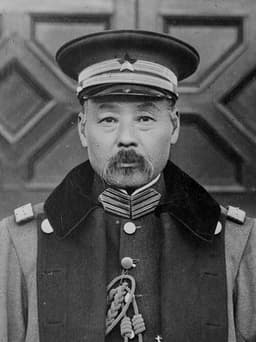
Feng Guozhang
General · Modern
49.1Total
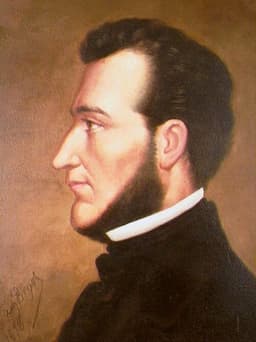
Francisco Morazan
General · Modern
58.0Total
Basic Information
Born
1859
1792
Died
1919
1842
Era
Modern
Modern
Nationality
China
Honduras
Occupation
General
General
Civilization
Eastern
Western
Score Comparison
Military (10%)
30.0
52.5
Political (20%)
61.3
60.0
Influence (20%)
54.9
62.0
Legacy (20%)
45.8
50.0
Leadership (15%)
40.0
68.0
Strategy (15%)
57.5
55.0
TOTAL
49.1
58.0
Feng Guozhang — Complete Timeline
1912 AD
Command of the Beiyang ArmyPolitical Action◆ Major
Feng Guozhang became a key commander of the Beiyang Army under Yuan Shikai. He controlled military forces in the Zhili region, establishing himself as a major warlord in northern China after the fall of the Qing dynasty.
Beiyang ArmyWarlordMilitary Command
Impact: national
1916 AD
Appointment as Vice PresidentPolitical Action◆ Major
Feng Guozhang was elected Vice President of the Republic of China under President Li Yuanhong. This position gave him significant political influence during the early Republican period.
Republic of ChinaGovernmentPolitics
Impact: national
1917 AD
Acting PresidencyPolitical Action◆ Major
Feng Guozhang became Acting President of the Republic of China after Li Yuanhong's resignation. He served from 1917 to 1918, facing challenges from rival warlords and struggling to maintain central authority.
Republic of ChinaPresidencyWarlord Era
Impact: national
1918 AD
Conflict with Duan QiruiPolitical Action◆ Major
Feng Guozhang engaged in a power struggle with Premier Duan Qirui, leading to the split of the Beiyang clique into the Zhili and Anhui factions. This conflict weakened the central government and intensified warlord warfare.
Beiyang CliquePower StruggleWarlord Era
Impact: nationaldestructive
Francisco Morazan — Complete Timeline
1824 AD
Abolition of slavery in Central AmericaReform◆ Major
As a key leader in the liberal movement, Moraz
AbolitionSlaveryLiberal Reform
Impact: regionalprogressive
1827 AD
Battle of La TrinidadWar◆ Major
Morazán led a liberal army to victory against conservative forces at La Trinidad, Honduras. This battle was a key turning point in the Central American civil war, allowing Morazán to consolidate power and eventually become president of the federation.
BattleLiberal VictoryCivil War
Impact: regional
1830 AD
Presidency of the Federal Republic of Central AmericaPolitical Action
Morazán was elected president of the Federal Republic of Central America, a union of Guatemala, El Salvador, Honduras, Nicaragua, and Costa Rica. He pursued liberal reforms including separation of church and state, free trade, and land reform, facing opposition from conservatives.
Federal RepublicLiberal ReformsCentral America
Impact: regionalconstructive
1842 AD
Execution by firing squadPolitical Action
After a failed attempt to restore the Federal Republic, Moraz
ExecutionEnd of FederationLiberal Defeat
Impact: regionaltragic
Expert Analysis
Francisco Morazan vs Feng Guozhang
# The Divided Republic: Two Generals, Two Visions, One Broken Dream
In the summer of 1918, Feng Guozhang sat in the presidential palace in Beijing, staring at a map of a China he could no longer control. His rival Duan Qirui had outmaneuvered him, the Beiyang Army was splintering, and the Republic he had sworn to serve was devolving into warlord chaos. Half a world away and a century earlier, Francisco Morazán stood before a firing squad in San José, Costa Rica, his dream of a united Central America dying with him in a hail of bullets. Both men were generals who became presidents. Both fought for unity against fragmentation. Both failed. But their failures—and the paths that led to them—tell us everything about how history’s stage, not just the actors, determines the final act.
Origins
Feng Guozhang was born in 1859, the twilight of China’s Qing Dynasty, into a world of crumbling imperial order. He was a product of the Beiyang military system, a modernizing force created by Yuan Shikai that blended Confucian hierarchy with Western arms. His education was one of discipline and patronage, not revolution. Feng learned to navigate a world where loyalty to a strongman mattered more than loyalty to an idea. Francisco Morazán, born in 1792 in Tegucigalpa, Honduras, came of age during the aftershocks of the Enlightenment and the Napoleonic Wars. Central America was a cauldron of new liberal ideals—abolition, federalism, republicanism—and Morazán absorbed them like dry earth drinks rain. Where Feng inherited a system in decay, Morazán inherited a revolution in flux. Feng was a creature of the old order trying to manage its collapse; Morazán was a creature of the new order trying to build something from nothing.
Rise to Power
Feng’s ascent was methodical, almost bureaucratic. He rose through the ranks of the Beiyang Army not by battlefield brilliance but by political acumen and proximity to Yuan Shikai. In 1912, when Yuan became president of the new Republic, Feng was rewarded with command of key military forces in Zhili province. His was a path of careful alliances, not heroic charges. Morazán’s rise was the opposite. In 1827, he was a young liberal colonel who won the Battle of La Trinidad, a stunning victory against conservative forces that turned him into a revolutionary hero. It was a triumph of audacity over entrenched power. Where Feng climbed a ladder, Morazán seized a flag. Feng entered history through an office door; Morazán burst through a breach in the wall.
Leadership & Governance
As Acting President from 1917 to 1918, Feng Guozhang governed through negotiation and compromise—but also through indecision. He tried to balance the competing factions of the Beiyang clique, but his leadership score of 87.3 reflects a man who was skilled at managing men, not ideas. He had no grand vision for China beyond stability. His political score of 81.7 is respectable, yet he never passed a single transformative reform. Morazán, by contrast, governed with ideological fire. As president of the Federal Republic of Central America from 1830, he abolished slavery in 1824, separated church and state, promoted public education, and tried to build a modern liberal state. His political score of 72.0 is lower, but his impact was deeper. Feng managed a system; Morazán tried to remake one. Feng’s military score of 62.6 reflects a commander who relied on reputation more than combat; Morazán’s 65.4 shows a man who won battles but lost wars of attrition.
Triumph & Tragedy
Feng’s greatest moment was also his most tragic: becoming Acting President in 1917 was a triumph of political survival, but it came at the cost of presiding over the disintegration of the Beiyang clique. His power struggle with Duan Qirui in 1918 split the army into the Zhili and Anhui cliques, setting the stage for a decade of warlord warfare. He held the presidency, but lost the republic. Morazán’s tragedy was more dramatic and more final. After his presidency fell to conservative revolt, he fled into exile, then attempted a desperate return to restore the Federal Republic. In 1842, he was captured in Costa Rica and executed by firing squad. His last words reportedly were: “I die with the satisfaction of having served my country.” Where Feng’s failure was slow and bureaucratic, Morazán’s was swift and theatrical.
Character & Destiny
Feng Guozhang was a survivor. His personality was cautious, pragmatic, and ultimately self-interested. He made decisions based on what would preserve his position, not what would transform his nation. This is why his legacy score is 64.4—he is remembered as a footnote, a placeholder between stronger men. Morazán was a martyr. His personality was idealistic, stubborn, and romantic. He believed so deeply in a unified Central America that he died for it. His legacy score of 68.9 is higher, but still ambiguous: he is a hero to liberals, a villain to conservatives, and a ghost to a region that never united. Feng’s caution saved his life but cost him his name; Morazán’s conviction cost him his life but preserved his name.
Legacy
Feng Guozhang is remembered, if at all, as a transitional figure in China’s warlord era—a man who failed to prevent the fragmentation he tried to manage. His name appears in textbooks as a symptom, not a cause. Morazán is a different kind of memory. In Honduras, El Salvador, and Costa Rica, his face appears on currency, his name on streets and schools. He is a symbol of what might have been, a secular saint of Central American unity. But that unity never came. Both men, in the end, are monuments to failure—but Morazán’s failure is a tragedy, while Feng’s is merely an epitaph.
Conclusion
Standing at the edge of their respective precipices, Feng Guozhang and Francisco Morazán faced the same question: can one man hold a fractured republic together? Feng answered with compromise and control, and lost a nation to warlords. Morazán answered with fire and faith, and lost a nation to bullets. Their different outcomes were not merely the result of different characters, but of different worlds. Feng’s China was an empire collapsing under its own weight; Morazán’s Central America was a newborn republic struggling to breathe. One man tried to manage decay; the other tried to force birth. Both failed. But their failures remind us that the hardest thing in history is not winning power—it is knowing what to do with it when the world around you is falling apart.
Rankings
🥇
Francisco MorazanLeader
Mil: 52.5Pol: 60.0Inf: 62.0
58.0
🥈
Feng Guozhang
Mil: 30.0Pol: 61.3Inf: 54.9
49.1
+8.9 behind
How This Comparison Works
Algorithm
Each figure is scored on 6 dimensions (0—100 scale) based on structured historical data: Military (10%), Political (20%), Influence (20%), Legacy (20%), Leadership (15%), Strategy (15%). The weighted total produces the final ranking.
Data Sources
Scores are computed from structured sub-indicators in the database. Scale factors adjust for era (Ancient ×0.85, Modern ×1.0) and civilization size (Eastern ×1.05, Other ×0.80) to account for differences in population and military scale.
Maximum 3 Figures
Comparisons are limited to 2—3 figures to ensure readability and statistical meaningfulness.
Error Margins
±5 points per dimension — Sub-scores are derived from historical records with inherent uncertainty. Two figures within 5 points on a dimension should be considered roughly equivalent in that area.
Total Score Accuracy
±3 points overall — The weighted combination of 6 dimensions produces a total score with approximately ±3 points of uncertainty. Differences of less than 3 points are not statistically significant— the figures are effectively tied.
Known Limitations
- Historical records are incomplete and uneven across civilizations
- Figures from oral-tradition societies may be underrepresented
- Occupation labels can misclassify multi-role figures
- Scores measure capability and impact, not moral character
- Quantitative scoring is a comparison tool, not absolute truth
Capability Radar
Military (10%) — Battles & Warfare
Battles
45
55
Win Rate
40
60
Expansion
35
40
Political (20%) — Governance & Reform
Reform
30
70
Diplomacy
45
45
Economy
25
50
Influence (20%) — Cultural & Global Reach
Cultural
30
45
Global
20
35
Legacy (20%) — Historical Impact
Historical
40
50
Longevity
25
40
Leadership (15%) — Power & Stability
Tenure
55
55
Stability
20
30
Strategy (15%) — Tactics & Innovation
Strategy
55
55
Tactics
50
50
Reform
40
45
Similar Comparisons
Comments & Discussion
BeiyangSkeptic6/16/2026
Morazan fought for a radical liberal federation with abolition and secularism baked into his constitution. Feng was a Qing dynasty holdover, a Beiyang general playing power games in a crumbling republic. One died for ideas, the other for a lost political order. To compare them as 'failed unifiers' is to ignore that Morazan’s dream had a blueprint. Feng’s was just a power grab without a program.
飞鸿怀古6/16/2026
冯国璋输在没有“信仰”,他只想在袁死后的真空里平衡各方,结果成了段祺瑞和军阀的傀儡。莫拉桑至少有一部联邦宪法、一套土地改革方案,还真的废除过奴隶制。你们说他失败,可他输的时候手里还有枪、有理想。冯国璋输的时候,只剩下一张空椅子。
TheMapIsNotTheTerritory6/16/2026
Morazan’s ’failure’ is romanticized because his enemies burned down the federal archives in 1841, but Feng Guozhang’s failure is documented in meticulous Beiyang Army records. Show me a single census, tax roll, or conscription list from Morazan’s administration that suggests he was building a functioning state. Feng actually ran the national finances for a year—badly, but still. You can’t call a guy a statesman if he never had a budget.
铁血小诸葛6/16/2026
都是“枪杆子里出政权”的人,但冯国璋的枪杆子是袁世凯给的,莫拉桑的枪杆子是自己从洪都拉斯乡下拉起来的。一个靠派系,一个靠民望。冯能当总统是因为袁死了、北洋军阀需要傀儡;莫拉桑能三任中美洲联邦总统,是因为他真的打过仗、赢过民心。这不是个人高下,这是历史底牌完全不同。
HumanitiesGrudge6/16/2026
Morazan’s execution at 52 turned him into a martyr for Central American unity, canonized by every liberal history book from Guatemala to Costa Rica. Feng Guozhang’s death at 60 in 1919 was a footnote—he was already politically irrelevant, and his legacy was just the ’Huai Army’ faction’s rusty sword. One gets a statue in the capital; the other gets a line in a warlord chronology. That’s not fairness. That’s narrative power.
南洋旧梦人6/16/2026
你们用“统一”来评价这两个人,可统一从来不是他们的共同目标。莫拉桑要的是“中美洲合众国”,一个内政独立、外交联合的联邦,这比冯国璋的“南北合议”激进一百倍。冯国璋在1918年主张的“联邦分治”,本质上是他对付段祺瑞的权宜之计。这两个人连失败的理由都是反的:一个太理想,一个