Loading...
Feng Guozhang vs Prayut Chan-o-cha
Feng Guozhang leads by 1.0 pts · 2 figures compared
…
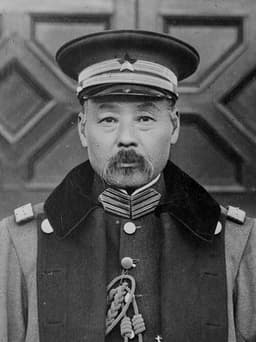
Feng Guozhang
General · Modern
49.1Total
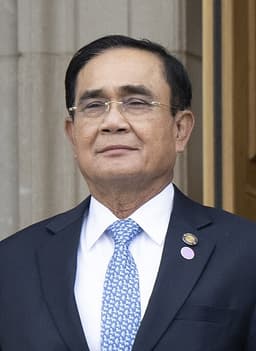
Prayut Chan-o-cha
General · Modern
48.1Total
Basic Information
Born
1859
1954
Died
1919
—
Era
Modern
Modern
Nationality
China
Thailand
Occupation
General
General
Civilization
Eastern
Eastern
Score Comparison
Military (10%)
30.0
10.2
Political (20%)
61.3
68.0
Influence (20%)
54.9
51.8
Legacy (20%)
45.8
40.8
Leadership (15%)
40.0
68.0
Strategy (15%)
57.5
35.7
TOTAL
49.1
48.1
Feng Guozhang — Complete Timeline
1912 AD
Command of the Beiyang ArmyPolitical Action◆ Major
Feng Guozhang became a key commander of the Beiyang Army under Yuan Shikai. He controlled military forces in the Zhili region, establishing himself as a major warlord in northern China after the fall of the Qing dynasty.
Beiyang ArmyWarlordMilitary Command
Impact: national
1916 AD
Appointment as Vice PresidentPolitical Action◆ Major
Feng Guozhang was elected Vice President of the Republic of China under President Li Yuanhong. This position gave him significant political influence during the early Republican period.
Republic of ChinaGovernmentPolitics
Impact: national
1917 AD
Acting PresidencyPolitical Action◆ Major
Feng Guozhang became Acting President of the Republic of China after Li Yuanhong's resignation. He served from 1917 to 1918, facing challenges from rival warlords and struggling to maintain central authority.
Republic of ChinaPresidencyWarlord Era
Impact: national
1918 AD
Conflict with Duan QiruiPolitical Action◆ Major
Feng Guozhang engaged in a power struggle with Premier Duan Qirui, leading to the split of the Beiyang clique into the Zhili and Anhui factions. This conflict weakened the central government and intensified warlord warfare.
Beiyang CliquePower StruggleWarlord Era
Impact: nationaldestructive
Prayut Chan-o-cha — Complete Timeline
2014 AD
Led the 2014 military coupPolitical Action
General Prayut Chan-o-cha, as Army Commander-in-Chief, led a coup d'
CoupMilitaryThailand
Impact: nationaldestructive
Appointed Prime Minister by military legislaturePolitical Action◆ Major
Following the coup, Prayut was appointed Prime Minister by the military-controlled National Legislative Assembly. He assumed executive power, leading a government that promised reforms and national reconciliation.
AppointmentMilitary RuleThailand
Impact: national
2017 AD
Promulgation of the 2017 ConstitutionReform◆ Major
Prayut's government oversaw the drafting and approval of a new constitution that strengthened the military's political role and created a fully appointed Senate. The charter was criticized for entrenching military influence.
ConstitutionMilitaryThailand
Impact: national
2019 AD
Re-elected Prime Minister after 2019 electionPolitical Action◆ Major
Prayut was re-elected Prime Minister following a general election that was criticized for being manipulated to favor pro-military parties. He formed a coalition government, continuing his rule under a civilian facade.
ElectionContinuityThailand
Impact: national
Expert Analysis
Feng Guozhang vs Prayut Chan-o-cha
# The General as President: Two Paths from Barracks to Power
On a sweltering July morning in 1917, Feng Guozhang stepped into the presidential palace in Beijing, a man caught between the weight of a fallen empire and the chaos of a republic that had not yet found its footing. Almost a century later, in May 2014, Prayut Chan-o-cha sat in a Bangkok command center, watching his soldiers roll tanks into the streets, preparing to seize a government he deemed hopelessly corrupt. Both were generals. Both became heads of state. But the roads they traveled—and the worlds they left behind—could not have been more different.
Origins
Feng Guozhang was born in 1859, in the twilight of the Qing Dynasty, a time when China’s ancient order was cracking under the pressure of foreign guns and internal rebellion. He came from a modest landowning family in Hebei province, and like many young men of his era, he saw military service as a ladder to survival, not glory. He joined the Beiyang Army, the modernized force that the reformist general Yuan Shikai was building in northern China. The army was a world of discipline, ambition, and patronage—a place where loyalty to a commander mattered more than loyalty to a distant emperor.
Prayut Chan-o-cha, born in 1954 in northeastern Thailand, grew up in a very different kind of twilight: the long afternoon of Cold War military rule. His father was a soldier, and Prayut followed him into the Royal Thai Army, a institution that had already staged over a dozen coups since the end of absolute monarchy in 1932. For Prayut, the barracks were not an escape from chaos but the very heart of order. The army was Thailand’s real government, and a general’s career was a political apprenticeship from the start.
The difference in their eras is crucial. Feng came of age when China was trying to become a nation; Prayut came of age when Thailand was trying to stay one.
Rise to Power
Feng’s rise was slow, cautious, and built on relationships. He earned Yuan Shikai’s trust by being competent and unthreatening. In 1912, when Yuan became president of the new Republic of China, Feng received command of the Beiyang Army in the Zhili region—a position of immense military power, but always under Yuan’s shadow. He was not a revolutionary; he was a manager of men who happened to be in the right place when the empire collapsed.
Prayut’s rise was more direct and more public. By 2010, he was a four-star general and the army chief, a position that in Thailand carries not just military authority but a presumed political mandate. When political protests paralyzed Bangkok in 2013 and 2014, Prayut did not wait for a call from above. He acted. On May 22, 2014, he announced the coup on national television, his face grim, his voice flat. “To restore peace,” he said, “the army must take power.”
Feng became president because the system fell apart. Prayut became prime minister because he broke the system himself.
Leadership & Governance
As acting president from 1917 to 1918, Feng Guozhang governed in a state of permanent crisis. China was a republic in name only; real power lay with regional warlords, and the central government in Beijing was a revolving door of factions. Feng tried to balance between the rival cliques, especially the Anhui faction led by Premier Duan Qirui. He was a conciliator, not a commander. His political wisdom was real—his score of 81.7 reflects a genuine ability to navigate chaos—but it was a wisdom of survival, not transformation. He could hold the center, but he could not create one.
Prayut, by contrast, governed as a builder. After the 2014 coup, he oversaw the drafting of a new constitution in 2017, a document designed to entrench military influence for decades. He managed the economy with technocratic caution, and he stayed in power through a 2019 election that international observers called deeply flawed. His military score is low—31.7—because he never fought a war. But his political score of 71.6 reflects a different skill: the ability to turn a coup into a system.
Feng tried to govern a nation that did not want to be governed. Prayut governed a nation that, exhausted by protest, accepted his rule as the price of stability.
Triumph & Tragedy
Feng’s greatest moment was also his most tragic: his brief presidency. He was the man who held the Republic together when it could have shattered entirely, but he could not hold it for long. In 1918, his conflict with Duan Qirui deepened until the Beiyang clique split into the Zhili and Anhui factions—a fracture that would fuel civil war for a decade. Feng stepped down, exhausted and outmaneuvered, and died the following year at age 60.
Prayut’s triumph is his longevity. He was re-elected in 2019, and his government has outlasted every civilian administration since 2006. His tragedy is the cost: a constitution that reduces democracy to a ritual, a political system where the army remains the final arbiter. He has brought order, but at the price of openness.
Character & Destiny
Feng was a survivor, not a visionary. He rose through patience, not ambition, and his caution saved him from many traps—but it also prevented him from seizing the moment. He was a man born too late for empire and too early for republic, caught between two worlds and belonging to neither.
Prayut is a builder of walls. He sees chaos as a threat to be contained, not a problem to be solved. His decisions are methodical, his rhetoric blunt, his worldview shaped by decades of watching civilian governments fail. He does not dream of a better Thailand; he dreams of a stable one.
Feng’s fate was shaped by the collapse of an old order. Prayut’s fate has been shaped by his determination to prevent any collapse at all.
Legacy
Feng Guozhang is remembered, if at all, as a footnote in the story of China’s warlord era—a competent general who could not save a republic that was already doomed. His legacy score of 64.4 places him in the quiet corners of history.
Prayut Chan-o-cha remains a living figure, and his legacy is unwritten. He has been called a dictator and a stabilizer, a man who crushed democracy and a man who saved Thailand from itself. His score of 57.2 for legacy is provisional, waiting for the judgment of a future that has not yet arrived.
Conclusion
What drives a general to become a president? For Feng Guozhang, it was the vacuum left by a dying empire. For Prayut Chan-o-cha, it was the fear of a democracy he did not trust. Both men believed they were serving their countries. Both were wrong in ways that only time can fully reveal. But their stories remind us that the path from the barracks to the palace is never straight, and that the general who becomes president is always, in some way, still fighting the war that brought him there.
Rankings
🥇
Feng GuozhangLeader
Mil: 30.0Pol: 61.3Inf: 54.9
49.1
🥈
Prayut Chan-o-cha
Mil: 10.2Pol: 68.0Inf: 51.8
48.1
+1.0 behind
How This Comparison Works
Algorithm
Each figure is scored on 6 dimensions (0—100 scale) based on structured historical data: Military (10%), Political (20%), Influence (20%), Legacy (20%), Leadership (15%), Strategy (15%). The weighted total produces the final ranking.
Data Sources
Scores are computed from structured sub-indicators in the database. Scale factors adjust for era (Ancient ×0.85, Modern ×1.0) and civilization size (Eastern ×1.05, Other ×0.80) to account for differences in population and military scale.
Maximum 3 Figures
Comparisons are limited to 2—3 figures to ensure readability and statistical meaningfulness.
Error Margins
±5 points per dimension — Sub-scores are derived from historical records with inherent uncertainty. Two figures within 5 points on a dimension should be considered roughly equivalent in that area.
Total Score Accuracy
±3 points overall — The weighted combination of 6 dimensions produces a total score with approximately ±3 points of uncertainty. Differences of less than 3 points are not statistically significant— the figures are effectively tied.
Known Limitations
- Historical records are incomplete and uneven across civilizations
- Figures from oral-tradition societies may be underrepresented
- Occupation labels can misclassify multi-role figures
- Scores measure capability and impact, not moral character
- Quantitative scoring is a comparison tool, not absolute truth
Capability Radar
Military (10%) — Battles & Warfare
Battles
45
5
Win Rate
40
5
Expansion
35
5
Political (20%) — Governance & Reform
Reform
30
30
Diplomacy
45
40
Economy
25
35
Influence (20%) — Cultural & Global Reach
Cultural
30
20
Global
20
20
Legacy (20%) — Historical Impact
Historical
40
20
Longevity
25
15
Leadership (15%) — Power & Stability
Tenure
55
60
Stability
20
25
Strategy (15%) — Tactics & Innovation
Strategy
55
15
Tactics
50
10
Reform
40
20
Similar Comparisons
Comments & Discussion
数据拆穿侠6/16/2026
说Prayut比冯国璋高明?数据打脸:冯在1918年主动下野,避免北洋内战全面爆发;Prayut2014年政变后,泰国经济增速从2012年的7.2%暴跌到2019年的2.3%,贫富差距反而扩大。将军治国从来不是搞经济的手,只会把国家当军营管。别拿稳定当遮羞布,看数字说话。
Classics Scholar6/16/2026
Comparing these two reveals a classic Greek tragedy: Feng Guozhang, like an aging Theban general, was trapped between loyalty to Yuan Shikai's dying system and the chaotic democracy he never fully embraced. Prayut, more akin to a Roman dictator figure, openly declares emergency and suspends constitutions like Sulla's march on Rome. Feng at least kept up democratic window-dressing; Prayut dispenses with pretense. Which is more dangerous? The hypocrite or the honest autocrat?
历史老饕6/16/2026
冯国璋可不是个简单军阀。他在1917年代理总统时,居然试图和南方护法军政府谈判统一,比后来那些只会喊打喊杀的丘八强百倍。Prayut呢?2014年政变后直接废了宪法,把反对派关进军事监狱。一个想着在规则内妥协,一个直接掀桌子拆台——这就叫文明的代差。别把俩人都叫“军官治国”,差着档次呢!
Revisionist Critic6/16/2026
Everyone romanticizes Feng's "gentlemanly" rule, but he was a product of the same Beiyiang machine that subjected peasants to endless civil wars. Prayut's uniformed tyranny is at least transparent. Feng's China had famines, bandits, and warlord taxes—comparably brutal. The real difference? Feng operated in a failed state; Prayut in a functioning one he deliberately dismantles. One is a symptom of collapse, the other a cause.
Historian3476/16/2026
Feng Guozhang was a traditional warlord who built power through regional armies and personal loyalty, unlike Prayut's modern military coup playbook. Feng's Beiyiang Army rivalries fractured China into warring factions, proving that military strongmen without ideological unity just create chaos. Prayut at least maintains institutional control within Thailand's bureaucratic structure. Give me a general who understands statecraft over brute force any day.