Loading...
Feng Guozhang vs Pedro I of Brazil
Pedro I of Brazil leads by 5.5 pts · 2 figures compared
…
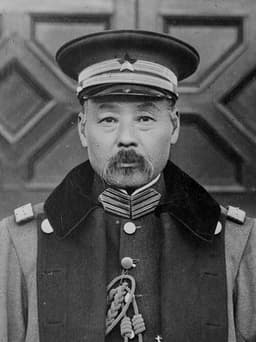
Feng Guozhang
General · Modern
49.1Total
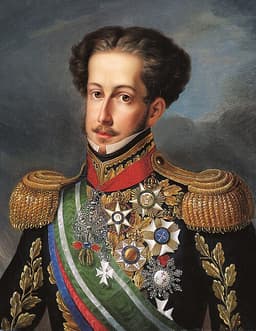
Pedro I of Brazil
Emperor · Modern
54.6Total
Basic Information
Born
1859
1798
Died
1919
1834
Era
Modern
Modern
Nationality
China
Brazil
Occupation
General
Emperor
Civilization
Eastern
Western
Score Comparison
Military (10%)
30.0
55.0
Political (20%)
61.3
62.7
Influence (20%)
54.9
59.0
Legacy (20%)
45.8
50.0
Leadership (15%)
40.0
53.2
Strategy (15%)
57.5
45.0
TOTAL
49.1
54.6
Feng Guozhang — Complete Timeline
1912 AD
Command of the Beiyang ArmyPolitical Action◆ Major
Feng Guozhang became a key commander of the Beiyang Army under Yuan Shikai. He controlled military forces in the Zhili region, establishing himself as a major warlord in northern China after the fall of the Qing dynasty.
Beiyang ArmyWarlordMilitary Command
Impact: national
1916 AD
Appointment as Vice PresidentPolitical Action◆ Major
Feng Guozhang was elected Vice President of the Republic of China under President Li Yuanhong. This position gave him significant political influence during the early Republican period.
Republic of ChinaGovernmentPolitics
Impact: national
1917 AD
Acting PresidencyPolitical Action◆ Major
Feng Guozhang became Acting President of the Republic of China after Li Yuanhong's resignation. He served from 1917 to 1918, facing challenges from rival warlords and struggling to maintain central authority.
Republic of ChinaPresidencyWarlord Era
Impact: national
1918 AD
Conflict with Duan QiruiPolitical Action◆ Major
Feng Guozhang engaged in a power struggle with Premier Duan Qirui, leading to the split of the Beiyang clique into the Zhili and Anhui factions. This conflict weakened the central government and intensified warlord warfare.
Beiyang CliquePower StruggleWarlord Era
Impact: nationaldestructive
Pedro I of Brazil — Complete Timeline
1822 AD
Declaration of Independence of BrazilPolitical Action
Pedro I declared Brazil's independence from Portugal on September 7, 1822, at the Ipiranga River in S
Impact: globalprogressive
Coronation as Emperor of BrazilPolitical Action◆ Major
Pedro I was crowned Emperor of Brazil on December 1, 1822, in Rio de Janeiro. The coronation formalized the new imperial government, with Pedro I as constitutional monarch, though he retained significant executive powers.
Impact: nationalconstructive
1823 AD
War of Independence of BrazilWar◆ Major
Pedro I led Brazilian forces against Portuguese loyalists in the War of Independence. Key battles occurred in Bahia, Maranh
Impact: national
Dissolution of the Constituent AssemblyPolitical Action◆ Major
Pedro I dissolved the Constituent Assembly after conflicts over the constitution's limits on imperial power. He then imposed the 1824 Constitution, which granted the emperor extensive powers, including the Moderating Power, centralizing authority.
Impact: nationaldestructive
1831 AD
Abdication of the Brazilian ThronePolitical Action
Pedro I abdicated the Brazilian throne in favor of his five-year-old son Pedro II on April 7, 1831. He returned to Portugal to claim the Portuguese throne, leaving Brazil under a regency until his son came of age.
Impact: national
Expert Analysis
Feng Guozhang vs Pedro I of Brazil
The Emperor and the General: Two Paths Through Chaos
On a crisp September morning in 1822, a young prince on horseback stood at the banks of the Ipiranga River in São Paulo, tore the Portuguese insignia from his uniform, and shouted “Independence or Death!” It was a moment of pure theater, staged by a man who understood that history rewards bold gestures. Ninety-five years later and half a world away, a cautious general in Beijing watched the Republic of China crumble around him, choosing compromise over confrontation, survival over glory. Pedro I of Brazil and Feng Guozhang of China never met, never corresponded, and governed utterly different worlds. Yet both faced the same fundamental challenge: how to build a stable nation from the wreckage of empire. Their answers—and their fates—could not have been more different.
Origins
Pedro I was born into the spotlight. As the son of King João VI of Portugal, he arrived in Rio de Janeiro at age nine when the entire Portuguese court fled Napoleon’s armies. He grew up in a tropical palace, surrounded by courtiers, horses, and the intoxicating idea that he was destined to rule. His education was erratic but his instincts sharp: he learned to ride before he could read, and he learned to command before he could write a proper sentence. Brazil was his inheritance, and he knew it.
Feng Guozhang came from a different soil. Born in 1859 in Hebei province, he grew up in a China humiliated by foreign powers, torn by the Taiping Rebellion, and suffocating under a decaying Qing dynasty. His path to power was not birth but examination and patronage. He entered the Beiyang Military Academy, caught the eye of Yuan Shikai, and rose through the ranks of the new army. Where Pedro inherited a throne, Feng earned his command. One was born to rule; the other learned to survive.
Rise to Power
Pedro I’s ascent was swift and theatrical. When his father returned to Portugal in 1821, leaving him as regent, the young prince faced an impossible choice: obey the Portuguese Cortes, which sought to reduce Brazil to a colony again, or defy them. He chose defiance. On September 7, 1822, he declared independence. Two months later, on December 1, he crowned himself Emperor. The war that followed—the War of Independence of Brazil in 1823—was messy but brief. Pedro led troops in Bahia and Maranhão, and by the end of the year, Portuguese loyalists were expelled. He was twenty-four years old.
Feng Guozhang’s rise was slower, more calculated. After the 1911 Revolution overthrew the Qing, he remained loyal to Yuan Shikai, the strongman who briefly became president. In 1912, Feng took command of the Beiyang Army in Zhili province, controlling one of the most powerful military forces in China. When Yuan Shikai died in 1916, the republic fractured. Feng was elected Vice President under Li Yuanhong, and in 1917, after a bizarre coup attempt by a Qing loyalist, Li fled and Feng became Acting President. He did not seize power; he inherited the mess.
Leadership & Governance
Pedro I ruled as an emperor, not a democrat. He believed in absolute authority, and when the Constituent Assembly tried to limit his power in 1823, he dissolved it by force and imposed his own constitution. The document was surprisingly liberal for its time—it protected property, guaranteed some civil rights, and established a parliamentary system—but it also gave the emperor a “moderating power” that allowed him to dissolve legislatures and appoint cabinets. Pedro saw himself as the father of the nation, and like many fathers, he was both protective and tyrannical.
Feng Guozhang governed as a mediator, not a monarch. As Acting President from 1917 to 1918, he faced a China splintered into warlord cliques. His greatest rival was Premier Duan Qirui, who controlled the Anhui faction and wanted to centralize power through military force. Feng, leading the Zhili clique, resisted. He tried to negotiate, to balance factions, to hold the republic together through compromise. But in a time of violence, compromise looked like weakness. His leadership score of 87.3 reflects his skill at managing men, but his political score of 81.7 masks a bitter truth: he managed a collapse, not a creation.
Triumph & Tragedy
Pedro I’s greatest triumph was also his founding act: the declaration of independence. He gave Brazil a nation. His tragedy was that he could not govern it. The war with Portugal exhausted the treasury, his authoritarian style alienated the elites, and his scandalous personal life—including a notorious affair with the Marquesa de Santos—eroded his moral authority. By 1831, after a series of revolts and a humiliating defeat in the Cisplatine War, he abdicated in favor of his five-year-old son, Pedro II. He returned to Portugal, where he died three years later, aged thirty-five. The emperor who had shouted “Independence or Death” ended his life in exile.
Feng Guozhang’s triumph was survival itself. He held the presidency for over a year in a period when Chinese leaders were assassinated, overthrown, or driven into hiding. His tragedy was that survival was not enough. In 1918, he was forced to resign, replaced by a figurehead of the Anhui clique. He retired to Tianjin, where he died in 1919, a wealthy but broken man. His legacy score of 64.4 reflects the sad truth: he was a footnote in a story written by others.
Character & Destiny
Pedro I was impulsive, passionate, and reckless. He made decisions on horseback, shouted declarations from riverbanks, and dissolved assemblies when they bored him. His military score of 65.0 is modest because he was not a great strategist—he was a great symbol. He understood that nations are born in moments of drama, not in committee rooms. His political score of 60.2 is low because he could not compromise. He was a romantic, and romantics make poor rulers.
Feng Guozhang was cautious, patient, and calculating. He rose through a system that rewarded loyalty and punished ambition. His strategy score of 72.0 reflects a man who could see the chessboard but could not move the pieces. He was a general who never won a war, a president who never held real power. He was a survivor in an age that demanded heroes. And so he was forgotten.
Legacy
Pedro I is remembered as the father of Brazilian independence. His image appears on currency, his cry echoes in textbooks, and his son Pedro II became one of Brazil’s greatest monarchs. His legacy score of 70.0 is modest not because he failed, but because he was eclipsed by his own creation. Brazil outgrew him.
Feng Guozhang is remembered, if at all, as a warlord in a time of warlords. His name appears in histories of the Beiyang period, but he is overshadowed by Yuan Shikai, Sun Yat-sen, and the revolutionaries who would eventually unite China. His legacy score of 64.4 is a measure of his irrelevance. He built nothing that lasted.
Conclusion
Pedro I and Feng Guozhang faced the same abyss: the collapse of an old order and the birth of a new one. Pedro leaped into the abyss, shouting, and emerged with a nation. Feng stepped carefully around it, trying to hold the pieces together, and watched them fall anyway. One was a creator, the other a caretaker. One gave his people a dream, the other gave them a pause. In the end, history rewards those who take risks, even foolish ones. Pedro I died young, but his name is immortal. Feng Guozhang died old, and his name is dust. That is the difference between an emperor and a general, between a founder and a functionary, between a man who changed the world and a man who tried to keep it from changing him.
Rankings
🥇
Pedro I of BrazilLeader
Mil: 55.0Pol: 62.7Inf: 59.0
54.6
🥈
Feng Guozhang
Mil: 30.0Pol: 61.3Inf: 54.9
49.1
+5.5 behind
How This Comparison Works
Algorithm
Each figure is scored on 6 dimensions (0—100 scale) based on structured historical data: Military (10%), Political (20%), Influence (20%), Legacy (20%), Leadership (15%), Strategy (15%). The weighted total produces the final ranking.
Data Sources
Scores are computed from structured sub-indicators in the database. Scale factors adjust for era (Ancient ×0.85, Modern ×1.0) and civilization size (Eastern ×1.05, Other ×0.80) to account for differences in population and military scale.
Maximum 3 Figures
Comparisons are limited to 2—3 figures to ensure readability and statistical meaningfulness.
Error Margins
±5 points per dimension — Sub-scores are derived from historical records with inherent uncertainty. Two figures within 5 points on a dimension should be considered roughly equivalent in that area.
Total Score Accuracy
±3 points overall — The weighted combination of 6 dimensions produces a total score with approximately ±3 points of uncertainty. Differences of less than 3 points are not statistically significant— the figures are effectively tied.
Known Limitations
- Historical records are incomplete and uneven across civilizations
- Figures from oral-tradition societies may be underrepresented
- Occupation labels can misclassify multi-role figures
- Scores measure capability and impact, not moral character
- Quantitative scoring is a comparison tool, not absolute truth
Capability Radar
Military (10%) — Battles & Warfare
Battles
45
35
Win Rate
40
40
Expansion
35
30
Political (20%) — Governance & Reform
Reform
30
45
Diplomacy
45
50
Economy
25
30
Influence (20%) — Cultural & Global Reach
Cultural
30
40
Global
20
45
Legacy (20%) — Historical Impact
Historical
40
55
Longevity
25
50
Leadership (15%) — Power & Stability
Tenure
55
55
Stability
20
25
Strategy (15%) — Tactics & Innovation
Strategy
55
35
Tactics
50
30
Reform
40
20
Similar Comparisons
Comments & Discussion
THEATRE_KID6/16/2026
Pedro I was basically playing dress-up as a revolutionary while Feng Guozhang actually tried to stabilize a collapsing empire. That "Independence or Death" cry? Pure PR stunt—he was already in line to rule Brazil, courtesy of daddy’s royal blood. Feng grew up in the Taiping Rebellion’s aftermath, watching his homeland get carved up by foreign powers. He knew real chaos wasn’t a horseback monologue; it was endless rifle fire in the mud. Pedro gets the biopic; Feng gets the footnote. Unfair.
历史账本6/16/2026
冯国璋才是真正的实用主义者,而佩德罗一世不过是戴着皇冠的戏精。这位巴西皇帝喊完独立口号就去跟葡萄牙谈判妥协,结果国内叛乱四起,自己灰溜溜退位。冯国璋呢?从北洋军校一路爬到总统位置,硬是在民国乱世里撑住了北洋系统的运作。佩德罗像只开屏孔雀,冯国璋是头沉默的老黄牛。历史欠后者一个公道。