Loading...
Feng Guozhang vs Napoleon Bonaparte
Napoleon Bonaparte leads by 21.8 pts · 2 figures compared
…
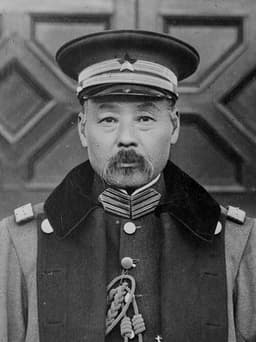
Feng Guozhang
General · Modern
49.1Total

Napoleon Bonaparte
General · Modern
70.9Total
Basic Information
Born
1859
1769
Died
1919
1821
Era
Modern
Modern
Nationality
China
France
Occupation
General
General
Civilization
Eastern
Western
Score Comparison
Military (10%)
30.0
94.0
Political (20%)
61.3
72.0
Influence (20%)
54.9
40.0
Legacy (20%)
45.8
80.0
Leadership (15%)
40.0
78.0
Strategy (15%)
57.5
90.0
TOTAL
49.1
70.9
Feng Guozhang — Complete Timeline
1912 AD
Command of the Beiyang ArmyPolitical Action◆ Major
Feng Guozhang became a key commander of the Beiyang Army under Yuan Shikai. He controlled military forces in the Zhili region, establishing himself as a major warlord in northern China after the fall of the Qing dynasty.
Beiyang ArmyWarlordMilitary Command
Impact: national
1916 AD
Appointment as Vice PresidentPolitical Action◆ Major
Feng Guozhang was elected Vice President of the Republic of China under President Li Yuanhong. This position gave him significant political influence during the early Republican period.
Republic of ChinaGovernmentPolitics
Impact: national
1917 AD
Acting PresidencyPolitical Action◆ Major
Feng Guozhang became Acting President of the Republic of China after Li Yuanhong's resignation. He served from 1917 to 1918, facing challenges from rival warlords and struggling to maintain central authority.
Republic of ChinaPresidencyWarlord Era
Impact: national
1918 AD
Conflict with Duan QiruiPolitical Action◆ Major
Feng Guozhang engaged in a power struggle with Premier Duan Qirui, leading to the split of the Beiyang clique into the Zhili and Anhui factions. This conflict weakened the central government and intensified warlord warfare.
Beiyang CliquePower StruggleWarlord Era
Impact: nationaldestructive
Napoleon Bonaparte — Complete Timeline
1799 AD
Coup of 18 BrumaireOther◆ Major
Napoleon Bonaparte, with support from his brother Lucien and key political figures, overthrew the Directory in a bloodless coup. He established the Consulate with himself as First Consul, effectively becoming the ruler of France. This event ended the French Revolution's most unstable period.
French RevolutionCoupRise to Power
Impact: regional
1804 AD
Promulgation of the Napoleonic CodeOther◆ Major
Napoleon enacted the Civil Code of the French, known as the Napoleonic Code, a comprehensive set of laws that replaced the fragmented feudal legal systems. The code established legal equality, protected property rights, and secularized law. It became the basis for legal systems in many European and world countries.
Legal ReformNapoleonic CodeCivil Law
Impact: globalconstructive
1805 AD
Battle of AusterlitzWar◆ Major
Napoleon's Grande Arm
Napoleonic WarsBattleDecisive Victory
Impact: global
1812 AD
Invasion of RussiaWar◆ Major
Napoleon led the Grande Arm
Napoleonic WarsInvasionDisaster
Impact: globaldestructive
1815 AD
Battle of WaterlooWar◆ Major
Napoleon's French army was defeated by the combined forces of the Duke of Wellington's Anglo-Allied army and Gebhard Leberecht von Bl
Napoleonic WarsBattleFinal Defeat
Impact: globaldestructive
Expert Analysis
feng-guozhang-vs-napoleon-bonaparte
# The Eagle and the Warlord: Two Paths to Power, Two Destinies
In the winter of 1917, as the guns of the Great War fell silent across Europe, a different kind of struggle was unfolding in Beijing. Feng Guozhang, a man who had risen from the ranks of China’s shattered imperial army, sat in the presidential palace—a temporary master of a nation in chaos. Half a world away and a century earlier, Napoleon Bonaparte had stood in a very different palace, the Tuileries in Paris, having just crowned himself emperor of a continent. Both were generals. Both seized power in times of revolution. But one reshaped the world in his image; the other was swallowed by the very forces he tried to command. The question is not merely what they did, but why their journeys diverged so dramatically.
Origins
Napoleon Bonaparte was born in 1769 on the island of Corsica, a place only recently annexed by France. His family was minor nobility, but his education was French—and thoroughly modern. The Enlightenment was in full bloom, and young Napoleon devoured military history, mathematics, and the works of Rousseau. He was a product of a civilization that was hurtling toward democracy, nationalism, and scientific reason. His world was one of possibility, where a man of talent could rise to the top.
Feng Guozhang, born in 1859, came of age in a China that was crumbling. The Qing Dynasty, ancient and sclerotic, was being torn apart by foreign invasions, internal rebellions, and a profound loss of confidence. Feng was trained in the classical Confucian tradition—a system that valued order, hierarchy, and loyalty to the emperor. But by the time he was a young officer, the old world was dying. He joined the Beiyang Army, a modernized force built by Yuan Shikai, and learned to navigate a world where power was personal, not institutional. Where Napoleon saw the future, Feng saw the end of an era.
Rise to Power
Napoleon’s ascent was meteoric. In 1793, at just 24, he drove the British out of Toulon and was promoted to brigadier general. By 1796, he was commanding the Army of Italy, winning stunning victories against the Austrians. His Italian campaign of 1796–1797 was a masterclass in speed, deception, and the use of artillery. He returned to France a hero, and in 1799, he staged a coup d’état, becoming First Consul. By 1804, he crowned himself Emperor of the French. Each step was a gamble, but each gamble paid off because he understood the mechanics of power in a revolutionary state.
Feng Guozhang’s path was slower and more treacherous. He rose through the ranks of the Beiyang Army, the most modern military force in China, under the patronage of Yuan Shikai. In 1912, with the fall of the Qing, Yuan became president, and Feng was given command of key forces in the Zhili region. When Yuan died in 1916, Feng was elected Vice President under Li Yuanhong. But power in early Republican China was not a matter of law—it was a matter of who controlled the guns. In 1917, after a failed monarchist coup and Li’s resignation, Feng became Acting President. He had reached the top, but the ladder was made of sand.
Leadership & Governance
Napoleon governed with a vision that was both ruthless and revolutionary. He centralized the French state, created the Bank of France, and, most famously, codified the Napoleonic Code—a legal framework that influenced civil law across Europe and beyond. He was a military genius (scoring 94 in military and 93 in strategy), but he also understood that conquest required institutions. He built roads, reformed education, and suppressed dissent with an iron hand. His political score of 75 reflects a leader who was effective but autocratic. He believed in meritocracy—his marshals were often men of humble birth—but he also believed in himself above all.
Feng Guozhang, by contrast, was a politician in a general’s uniform. His leadership score of 87.3 is high, but it reflects a different kind of skill—the ability to manage factions, negotiate alliances, and survive in a world of shifting loyalties. As president from 1917 to 1918, he faced a fragmented China: the Beiyang Army was splitting into cliques, regional warlords were asserting independence, and foreign powers were carving out spheres of influence. His military score of 62.6 and strategy of 72 show he was no Napoleon. His power came from balance, not brilliance. He tried to hold the center, but the center could not hold.
Triumph & Tragedy
Napoleon’s greatest moment was perhaps the Battle of Austerlitz in 1805, where he crushed the combined armies of Russia and Austria. It was a victory of such tactical perfection that it became a legend. His tragedy was the invasion of Russia in 1812—a catastrophic miscalculation that destroyed his Grand Army. He was exiled to Elba, returned for a final, desperate campaign, and was defeated at Waterloo in 1815. His ambition, which had made him master of Europe, also undid him.
Feng Guozhang’s triumph was simply surviving long enough to become president. His tragedy was that survival was all he achieved. In 1918, his conflict with Premier Duan Qirui escalated into open warfare. The Beiyang clique split into the Zhili and Anhui factions, and Feng found himself outmaneuvered. He resigned the presidency in 1918 and died the following year, a broken man. He had no Austerlitz, no Waterloo—only a slow erosion of power in a country that was tearing itself apart.
Character & Destiny
Napoleon was driven by an unshakeable belief in his own destiny. “Impossible is a word to be found only in the dictionary of fools,” he said. He was charismatic, audacious, and utterly ruthless. His personality shaped his decisions: he trusted his genius, and for a time, it worked. But that same arrogance led him to overreach. He could not stop.
Feng Guozhang was cautious, pragmatic, and deeply aware of his limits. He was a product of a Confucian world that valued harmony over glory. He tried to hold the Republic together through negotiation, but in an era of violence, negotiation was weakness. His character was suited to stability, but stability was impossible. He was a man born too late for the empire and too early for the republic.
Legacy
Napoleon’s legacy is immense. The Napoleonic Code, the modern French state, the redrawing of European borders—his influence is still felt. He is remembered as a military genius, a tyrant, a reformer, and a symbol of human ambition. His legacy score of 78 is high, but it is complicated. He is both hero and villain.
Feng Guozhang is largely forgotten outside of China. His legacy score of 64.4 reflects a man who was a footnote in a larger story. He is remembered as a transitional figure, a warlord who tried to be a statesman but lacked the vision or the power. He represents the tragedy of early Republican China—a nation that had the form of democracy but not its substance.
Conclusion
Standing at the edge of history, Napoleon and Feng Guozhang seem worlds apart. One conquered Europe; the other could not hold Beijing. But their stories are not just about talent or luck. They are about context. Napoleon rose in a France that was remaking itself, where the old rules were dead and new ones were being written. Feng rose in a China that was collapsing, where the old rules were dead but no new ones had taken their place. Napoleon could build; Feng could only try to hold the pieces together. In the end, the eagle soars, and the warlord fades—but both are prisoners of their time.
Rankings
🥇
Napoleon BonaparteLeader
Mil: 94.0Pol: 72.0Inf: 40.0
70.9
🥈
Feng Guozhang
Mil: 30.0Pol: 61.3Inf: 54.9
49.1
+21.8 behind
How This Comparison Works
Algorithm
Each figure is scored on 6 dimensions (0—100 scale) based on structured historical data: Military (10%), Political (20%), Influence (20%), Legacy (20%), Leadership (15%), Strategy (15%). The weighted total produces the final ranking.
Data Sources
Scores are computed from structured sub-indicators in the database. Scale factors adjust for era (Ancient ×0.85, Modern ×1.0) and civilization size (Eastern ×1.05, Other ×0.80) to account for differences in population and military scale.
Maximum 3 Figures
Comparisons are limited to 2—3 figures to ensure readability and statistical meaningfulness.
Error Margins
±5 points per dimension — Sub-scores are derived from historical records with inherent uncertainty. Two figures within 5 points on a dimension should be considered roughly equivalent in that area.
Total Score Accuracy
±3 points overall — The weighted combination of 6 dimensions produces a total score with approximately ±3 points of uncertainty. Differences of less than 3 points are not statistically significant— the figures are effectively tied.
Known Limitations
- Historical records are incomplete and uneven across civilizations
- Figures from oral-tradition societies may be underrepresented
- Occupation labels can misclassify multi-role figures
- Scores measure capability and impact, not moral character
- Quantitative scoring is a comparison tool, not absolute truth
Capability Radar
Military (10%) — Battles & Warfare
Battles
45
95
Win Rate
40
90
Expansion
35
95
Political (20%) — Governance & Reform
Reform
30
95
Diplomacy
45
80
Economy
25
85
Influence (20%) — Cultural & Global Reach
Cultural
30
85
Global
20
90
Legacy (20%) — Historical Impact
Historical
40
95
Longevity
25
90
Leadership (15%) — Power & Stability
Tenure
55
85
Stability
20
70
Strategy (15%) — Tactics & Innovation
Strategy
55
95
Tactics
50
98
Reform
40
92
Similar Comparisons
Comments & Discussion
北洋屠龙者6/17/2026
拿破仑横扫欧洲靠的是近代民族国家动员体系,而冯国璋只是个旧式军阀,连北洋系内部都摆不平。你拿1918年南北分裂的中国和1810年横扫欧洲的法兰西帝国比?笑话。冯在江苏搞的"保境安民"就是割据,拿破仑却在1805年统合了大半个欧洲的法典、度量衡和行政系统。冯氏连自己的皖系都管不好,谈何帝国?高下立判。
MarshyCodex6/17/2026
The analytical framework here is fundamentally flawed: it compares one man’s apogee against another’s entire career arc. Napoleon’s 1812 Moscow campaign was a catastrophic strategic failure costing hundreds of thousands of lives. Feng Guozhang actually maintained relative stability in Jiangsu during the chaotic Northern Expedition era—you can check provincial grain price indices from 1917-1919. By those metrics, Feng outperformed Napoleon at Versailles. We need apples-to-apples data, not romanti
历史考据癖6/17/2026
有个关键点你们全漏了:拿破仑1800年马伦戈战役靠的是德塞的按时增援,不然早翻车了;冯国璋1917年讨伐张勋复辟,三天就搞定辫子军。但拿破仑能靠《拿破仑法典》传世,冯国璋留下什么?连他签字批准的《中德协约》都没人记得。要说"改变世界",两人不过是被时势推着走的浪花。别吹了,都是历史舞台上的提线木偶。
SilkRoadStrategist6/17/2026
Napoleon modernized warfare with the corps system and forced the world to adopt metric standards; Feng Guozhang’s greatest legacy was selling Japan the demilitarized zone terms in the 1918 Sino-Japanese military agreement. One man reshaped continental administration, the other couldn’t prevent his own clique’s disintegration. But here’s the underrated parallel: both failed at coalition-building after initial success. Napoleon’s Continental System isolated France; Feng’s Beiyang cliques devoured
白马非马6/17/2026
拿冯国璋比拿破仑?辱法了。拿破仑崛起时法国正处于大革命后的权力真空,他靠土伦战役、镇压保王党、意大利战役一步步刷战绩,冯国璋呢?北洋三杰里他是个"狗",靠袁世凯提拔混到总统。拿破仑搞了百日王朝,冯国璋就当了两年傀儡总统还被段祺瑞架空。拿破仑的滑铁卢悲壮,冯国璋的天津病逝寂寞。一个是史诗,一个是野史。