Loading...
Feng Guozhang vs Mohan Singh
Feng Guozhang leads by 2.5 pts · 2 figures compared
…
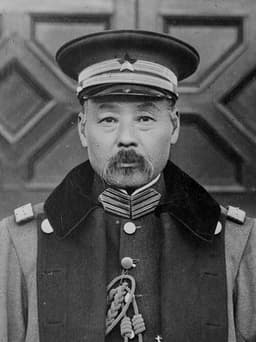
Feng Guozhang
General · Modern
49.1Total
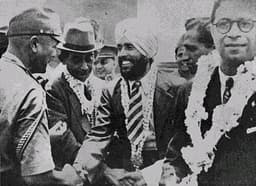
Mohan Singh
General · Modern
46.6Total
Basic Information
Born
1859
1909
Died
1919
1989
Era
Modern
Modern
Nationality
China
India
Occupation
General
General
Civilization
Eastern
Indian
Score Comparison
Military (10%)
30.0
50.0
Political (20%)
61.3
36.5
Influence (20%)
54.9
57.2
Legacy (20%)
45.8
48.3
Leadership (15%)
40.0
36.9
Strategy (15%)
57.5
41.7
TOTAL
49.1
46.6
Feng Guozhang — Complete Timeline
1912 AD
Command of the Beiyang ArmyPolitical Action◆ Major
Feng Guozhang became a key commander of the Beiyang Army under Yuan Shikai. He controlled military forces in the Zhili region, establishing himself as a major warlord in northern China after the fall of the Qing dynasty.
Beiyang ArmyWarlordMilitary Command
Impact: national
1916 AD
Appointment as Vice PresidentPolitical Action◆ Major
Feng Guozhang was elected Vice President of the Republic of China under President Li Yuanhong. This position gave him significant political influence during the early Republican period.
Republic of ChinaGovernmentPolitics
Impact: national
1917 AD
Acting PresidencyPolitical Action◆ Major
Feng Guozhang became Acting President of the Republic of China after Li Yuanhong's resignation. He served from 1917 to 1918, facing challenges from rival warlords and struggling to maintain central authority.
Republic of ChinaPresidencyWarlord Era
Impact: national
1918 AD
Conflict with Duan QiruiPolitical Action◆ Major
Feng Guozhang engaged in a power struggle with Premier Duan Qirui, leading to the split of the Beiyang clique into the Zhili and Anhui factions. This conflict weakened the central government and intensified warlord warfare.
Beiyang CliquePower StruggleWarlord Era
Impact: nationaldestructive
Mohan Singh — Complete Timeline
1942 AD
Founding of the Indian National ArmyPolitical Action◆ Major
Mohan Singh founded the Indian National Army (INA) in Singapore with captured Indian soldiers from the British Indian Army. He aimed to fight alongside Japan for Indian independence, but later fell out with Japanese leadership.
Indian National ArmyWorld War IIIndependence
Impact: nationalconstructive
Dissolution of the First INAPolitical Action◆ Major
Mohan Singh dissolved the first Indian National Army after disagreements with the Japanese over its command and objectives. He was arrested by the Japanese, and the INA was later revived by Subhas Chandra Bose.
Indian National ArmyJapanese ConflictDissolution
Impact: nationaldestructive
1945 AD
Imprisonment by BritishPolitical Action
Mohan Singh was imprisoned by the British after World War II for his role in the INA. He was tried and sentenced, but later released after Indian independence, becoming a symbol of resistance.
ImprisonmentBritish EmpireINA
Impact: nationaltragic
Expert Analysis
Feng Guozhang vs Mohan Singh
### The General Who Could Not Decide
In the winter of 1917, Feng Guozhang sat in the presidential palace in Beijing, a city he did not truly control, and faced a question that would define his legacy. Should he, as Acting President of the Republic of China, risk a civil war to break the power of his rival, Premier Duan Qirui? Or should he compromise, hoping to preserve a fragile peace? Twenty-five years later and thousands of miles away, in the sweltering heat of Japanese-occupied Singapore, another general faced an equally impossible choice. Mohan Singh, a young Sikh officer of the British Indian Army, had just founded the Indian National Army (INA) from captured prisoners of war. Now, his Japanese allies demanded that he subordinate his dream of Indian independence to their imperial war machine. Should he resist, and risk everything he had built? Both men chose. One chose to hold on; the other chose to let go. Their decisions, born of different eras and different personalities, would send them hurtling toward very different destinies.
### Origins
Feng Guozhang was born in 1859, into the twilight of the Qing Dynasty. He was a child of the old order, raised in a world where the Confucian scholar-official was the ideal, but where the reality was a crumbling empire besieged by foreign gunboats and internal rebellions. He joined the Beiyang Army, the most modernized military force in China, and rose through its ranks not by battlefield heroism, but by meticulous political maneuvering and loyalty to his patron, Yuan Shikai. The Beiyang Army was less a national force than a personal army, a network of personal loyalties. Feng learned early that in a land without a strong central state, power was a matter of connections, patronage, and the careful balance of force.
Mohan Singh was born in 1909, in a Punjab that was the proud sword-arm of the British Raj. He was a product of the British Indian Empire, educated in its schools, trained in its military academies. He became a captain in the British Indian Army, a professional soldier in a professional army that had fought for the King-Emperor across the globe. Unlike Feng, who saw the state as something to be manipulated, Mohan Singh saw it as something to be served. His nationalism was not a cynical game of power, but a deep, romantic conviction. When the British surrendered Singapore to the Japanese in 1942, the shock was not just military; it was psychological. The master had been humbled. For Mohan Singh, the moment was a revelation: if the British could be defeated, India could be free.
### Rise to Power
Feng Guozhang entered the historical stage through the back channels of the Beiyang clique. In 1912, with the fall of the Qing, Yuan Shikai became President, and Feng became a key commander of the Beiyang Army in the Zhili region. His rise was not a conquest, but an appointment. He was a trusted lieutenant, a man who could be relied upon to hold the line. When Yuan Shikai died in 1916, the Beiyang Army fractured. Feng was elected Vice President under Li Yuanhong, a figurehead. This was his moment. He was not a revolutionary; he was an insider who had survived the collapse of the system. In 1917, when Li Yuanhong resigned, Feng became Acting President. He had not seized the throne; it had been handed to him, a poisoned chalice.
Mohan Singh’s rise was far more dramatic, a leap into the unknown. After the fall of Singapore, he was a prisoner of war. But he was also a man with a vision. He approached the Japanese with a proposition: let him raise an army from Indian POWs to fight for Indian independence. The Japanese agreed, seeing a useful propaganda tool. In 1942, Mohan Singh founded the Indian National Army in Singapore. It was an act of breathtaking audacity. A British officer, defying his oath, building a rebellion with the help of a brutal enemy. His power was not inherited, nor appointed; it was created from nothing, from the desperation of captured men and the chaos of war.
### Leadership & Governance
Feng Guozhang’s leadership style was that of a negotiator, a balancer. He was not a military genius; his military score of 62.6 reflects a man who commanded, but did not conquer. His true strength was political. His political score of 81.7 and leadership score of 87.3 reveal a master of the Beijing political game. As Acting President from 1917 to 1918, he tried to govern by building coalitions, by playing factions against each other. He attempted to mediate between the warlords, to preserve the shell of the Republic. But his governance was a constant, exhausting struggle. He could not command the armies; he could only persuade their leaders. He was the captain of a ship whose crew had mutinied, and he spent his time trying to talk them back to their posts.
Mohan Singh was a different kind of leader. His military score of 38.7 is low, but his leadership score of 74.8 and political score of 72.0 tell a different story. He was a founder, a visionary. He did not command a vast state; he built a movement from scratch. He inspired loyalty not through patronage, but through the promise of a free India. But his governance was flawed. He was a soldier, not a diplomat. He trusted the Japanese, believing they would treat the INA as a true ally. When they demanded that the INA be subordinate to their military command, he was outraged. He could not navigate the brutal politics of the Japanese Co-Prosperity Sphere. In 1942, after only a few months, he dissolved the first INA, choosing principle over pragmatism.
### Triumph & Tragedy
Feng Guozhang’s greatest moment was also his most tragic. For a brief period, he was the President of the Republic of China, the nominal head of a nation. It was the pinnacle of his career. But the triumph was hollow. He could not unify the country. In 1918, his power struggle with Premier Duan Qirui reached its peak. The Beiyang clique split into the Zhili and Anhui cliques, and China slid deeper into the Warlord Era. Feng’s tragedy was that he was a man who tried to hold the center, but the center could not hold. He was a president without an army, a leader without a nation.
Mohan Singh’s triumph was the INA itself. He gave Indian prisoners of war a cause, a flag, a purpose. For a few months, he was the leader of a rebel army, a symbol of Indian resistance. But his tragedy was immediate. He could not control the Japanese. When he dissolved the INA, he was arrested by his own allies and imprisoned. His dream was shattered. Later, Subhas Chandra Bose would revive the INA and lead it to glory, but Mohan Singh would be remembered as the founder who failed. Yet, his failure was not complete. After the war, he was imprisoned by the British, tried, and sentenced. But the INA trials sparked mass protests across India, fueling the final push for independence. Mohan Singh had lit a fuse, even if he could not control the explosion.
### Character & Destiny
Feng Guozhang was a pragmatist, a survivor. He was cautious, calculating, and deeply aware of his own limitations. He never sought to be a dictator; he wanted to be a manager. But his caution was his undoing. In the brutal world of the warlords, hesitation was death. He tried to balance, but balance required a foundation that did not exist. His character shaped his destiny: he was a man of the old world, trying to navigate a new one, and he was crushed by forces he could not understand.
Mohan Singh was an idealist, a believer. He was impulsive, bold, and willing to risk everything for a cause. He was a man of the new world, a modern nationalist who believed that will could overcome reality. But his idealism was his undoing. He trusted the Japanese, and they betrayed him. He believed in the power of an idea, but he forgot that ideas need armies, and armies need allies. His character shaped his destiny: he was a man who could start a fire, but not control it.
### Legacy
Feng Guozhang is remembered today as a minor figure in China’s chaotic Warlord Era. His legacy score of 64.4 reflects a man who was influential in his time, but largely forgotten. He is a footnote, a cautionary tale of the limits of political maneuvering without military power. He did not build a nation; he tried to preserve a shell.
Mohan Singh’s legacy is more complex. His influence score of 74.0 and legacy score of 65.0 show a man who was overshadowed by Subhas Bose, but who was essential. The INA that Bose led was built on the foundation that Mohan Singh laid. He is remembered in India as a patriot, a pioneer. His sacrifice helped ignite the final struggle for independence. He is not a hero of the battlefield, but a hero of the spirit.
### Conclusion
Feng Guozhang and Mohan Singh were both generals who failed in their own ways. Feng failed because he could not command; Mohan Singh failed because he could not compromise. One was too cautious; the other was too bold. One tried to preserve an old world; the other tried to create a new one. Their stories are a reminder that leadership is not just about power, but about the moment. Feng Guozhang was born into a world that was ending, and he could not stop its fall. Mohan Singh was born into a world that was beginning, and he could not wait for its arrival. Both were swept away, but their echoes remain: one in the silence of a forgotten palace, the other in the roar of a nation that would not be denied.
Rankings
🥇
Feng GuozhangLeader
Mil: 30.0Pol: 61.3Inf: 54.9
49.1
🥈
Mohan Singh
Mil: 50.0Pol: 36.5Inf: 57.2
46.6
+2.5 behind
How This Comparison Works
Algorithm
Each figure is scored on 6 dimensions (0—100 scale) based on structured historical data: Military (10%), Political (20%), Influence (20%), Legacy (20%), Leadership (15%), Strategy (15%). The weighted total produces the final ranking.
Data Sources
Scores are computed from structured sub-indicators in the database. Scale factors adjust for era (Ancient ×0.85, Modern ×1.0) and civilization size (Eastern ×1.05, Other ×0.80) to account for differences in population and military scale.
Maximum 3 Figures
Comparisons are limited to 2—3 figures to ensure readability and statistical meaningfulness.
Error Margins
±5 points per dimension — Sub-scores are derived from historical records with inherent uncertainty. Two figures within 5 points on a dimension should be considered roughly equivalent in that area.
Total Score Accuracy
±3 points overall — The weighted combination of 6 dimensions produces a total score with approximately ±3 points of uncertainty. Differences of less than 3 points are not statistically significant— the figures are effectively tied.
Known Limitations
- Historical records are incomplete and uneven across civilizations
- Figures from oral-tradition societies may be underrepresented
- Occupation labels can misclassify multi-role figures
- Scores measure capability and impact, not moral character
- Quantitative scoring is a comparison tool, not absolute truth
Capability Radar
Military (10%) — Battles & Warfare
Battles
45
15
Win Rate
40
10
Expansion
35
10
Political (20%) — Governance & Reform
Reform
30
25
Diplomacy
45
30
Economy
25
10
Influence (20%) — Cultural & Global Reach
Cultural
30
30
Global
20
25
Legacy (20%) — Historical Impact
Historical
40
40
Longevity
25
30
Leadership (15%) — Power & Stability
Tenure
55
20
Stability
20
10
Strategy (15%) — Tactics & Innovation
Strategy
55
25
Tactics
50
20
Reform
40
30
Similar Comparisons
Comments & Discussion
北洋观察者6/16/2026
冯国璋活脱脱是个穿着军装的账房先生!他在1917年手握北洋精锐却不敢对段祺瑞动武,说白了就是怕打烂自己的家底——这哪是乱世枭雄?分明是个守财奴!看看他处理张勋复辟时的犹豫劲儿,简直把"骑墙"二字刻在脑门上了。历史证明,治理乱世需要的不是精于算计的二掌柜,而是敢押上全部赌注的狠角色。|
SkepticalHistorian6/16/2026
Let's be real—comparing Feng Guozhang to Mohan Singh is like comparing apples to orbital rockets. The context gap is just too wide. Feng was navigating a multi-sided civil war with established power networks; Mohan was building an army from scratch under Japanese occupation with zero historical precedent. Any "both faced impossible choices" narrative feels forced. A more honest comparison would be Feng vs. Yuan Shikai, or Mohan vs. Subhas Chandra Bose. But this? It's a historian fishing for symm
铁血军魂6/16/2026
莫罕·辛格才是真军人!1942年他在新加坡用三万印度战俘组建印度国民军时,明知日本人是拿他们当炮灰,可至少敢亮剑!冯国璋呢?手握北洋嫡系十五万大军,对段祺瑞却连摆个进攻架势都不敢。一个在绝境中敢赌国运,一个在优势下只会和稀泥——高下立判!记住,军事领袖的第一品质是"敢战",不是"精算"。|
ClassicsScholar6/16/2026
Fascinating how both men embody the tragic Confucian archetype of the "loyal minister in difficult times." Feng's paralysis stems from his inability to reconcile the Confucian ideal of harmony with the necessity of forceful action—he literally couldn't choose between loyalty to the state and practical governance. Mohan, ironically, faced a similar bind: his Japanese "allies" demanded he betray his anti-colonial ideals. Both are cautionary tales about leaders caught between incompatible moral sys
旧事新说6/16/2026
冯国璋输在格局太小!他1918年下台时私囊里装了上百万银元,却把整个北洋体系拱手让给段祺瑞。这种"精明"害死了民国——军阀们看他这么干,都觉得割据比统一划算。反观莫罕·辛格,就算印度国民军最终失败,他至少点燃了"独立之火",让英国人坐立不安。当首领的,有时候就是要当个"败家子"才能开新局!