Loading...
Feng Guozhang vs Louis Botha
Louis Botha leads by 12.0 pts · 2 figures compared
…
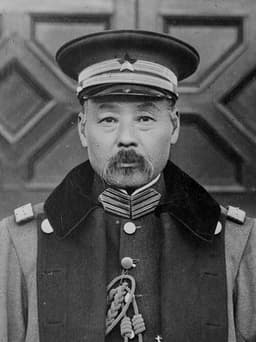
Feng Guozhang
General · Modern
49.1Total
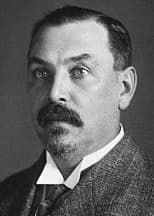
Louis Botha
General · Modern
61.1Total
Basic Information
Born
1859
1862
Died
1919
1919
Era
Modern
Modern
Nationality
China
South Africa
Occupation
General
General
Civilization
Eastern
Other
Score Comparison
Military (10%)
30.0
61.7
Political (20%)
61.3
70.0
Influence (20%)
54.9
56.7
Legacy (20%)
45.8
50.0
Leadership (15%)
40.0
79.8
Strategy (15%)
57.5
58.0
TOTAL
49.1
61.1
Feng Guozhang — Complete Timeline
1912 AD
Command of the Beiyang ArmyPolitical Action◆ Major
Feng Guozhang became a key commander of the Beiyang Army under Yuan Shikai. He controlled military forces in the Zhili region, establishing himself as a major warlord in northern China after the fall of the Qing dynasty.
Beiyang ArmyWarlordMilitary Command
Impact: national
1916 AD
Appointment as Vice PresidentPolitical Action◆ Major
Feng Guozhang was elected Vice President of the Republic of China under President Li Yuanhong. This position gave him significant political influence during the early Republican period.
Republic of ChinaGovernmentPolitics
Impact: national
1917 AD
Acting PresidencyPolitical Action◆ Major
Feng Guozhang became Acting President of the Republic of China after Li Yuanhong's resignation. He served from 1917 to 1918, facing challenges from rival warlords and struggling to maintain central authority.
Republic of ChinaPresidencyWarlord Era
Impact: national
1918 AD
Conflict with Duan QiruiPolitical Action◆ Major
Feng Guozhang engaged in a power struggle with Premier Duan Qirui, leading to the split of the Beiyang clique into the Zhili and Anhui factions. This conflict weakened the central government and intensified warlord warfare.
Beiyang CliquePower StruggleWarlord Era
Impact: nationaldestructive
Louis Botha — Complete Timeline
1899 AD
Battle of ColensoWar◆ Major
Botha commanded Boer forces at the Battle of Colenso during the Second Boer War. His troops repelled a British attack under General Buller, inflicting heavy casualties and boosting Boer morale.
Second Boer WarBattleVictory
Impact: regional
1900 AD
Boer War Guerrilla CommanderWar◆ Major
After the British captured Pretoria, Botha led Boer guerrilla forces in the Transvaal. He conducted hit-and-run attacks against British columns, prolonging the war and becoming a symbol of Afrikaner resistance.
Second Boer WarGuerrillaResistance
Impact: regional
1902 AD
Signed the Treaty of VereenigingPolitical Action
Botha, as a leading Boer general, signed the Treaty of Vereeniging which ended the Second Boer War. The treaty granted the Boer republics self-government under British sovereignty and promised eventual self-rule.
TreatyPeaceSecond Boer War
Impact: regional
1910 AD
First Prime Minister of the Union of South AfricaPolitical Action
Botha became the first Prime Minister of the newly formed Union of South Africa. He led a coalition government that sought to reconcile Afrikaners and English-speaking whites, while implementing segregationist policies.
Prime MinisterUnion of South AfricaFounding
Impact: nationalconstructive
1914 AD
Suppressed the 1914 RebellionWar◆ Major
Botha personally led government forces to suppress the Maritz Rebellion, an Afrikaner uprising against South Africa's entry into World War I. He defeated the rebels, asserting state authority and maintaining support for the British Empire.
RebellionWorld War ISuppression
Impact: national
1915 AD
Conquered German South West AfricaWar◆ Major
Botha commanded South African forces in the invasion and conquest of German South West Africa. The campaign succeeded, and the territory was later administered by South Africa under a League of Nations mandate.
World War IConquestGerman South West Africa
Impact: regional
Expert Analysis
Louis Botha vs Feng Guozhang
# The Warlord and the Boer
In the summer of 1917, two men sat in chairs of power on opposite sides of the world, each grappling with the impossible task of forging a nation from the wreckage of war. In Beijing, Feng Guozhang, a stout, cautious man in his late fifties, stepped into the presidency of a Republic that was barely a republic at all—a house of cards built over the crumbling foundations of an empire. In Pretoria, Louis Botha, lean and weathered from years on horseback, governed the Union of South Africa, a dominion born from the ashes of a bitter conflict between Boer and Briton. Both were generals turned statesmen. Both had fought their way to the top. But one would be remembered as a founder, the other as a footnote. The difference lay not in their courage, but in the worlds they inherited and the choices those worlds demanded.
Origins
Feng Guozhang was born in 1859, in the twilight of the Qing Dynasty, into a world of rigid hierarchies and decaying institutions. The son of a minor official, he was educated in the Confucian classics and entered the military academy at Tianjin, where he learned not just the art of war but the art of survival within a bureaucracy that rewarded loyalty above all. The Beiyang Army, which he would later command, was less a national force than a personal machine, built by Yuan Shikai to serve his own ambitions. Feng rose through its ranks by understanding that in such a system, connections mattered more than principles.
Louis Botha, born three years later in 1862, grew up on the wide, sun-scorched plains of the Orange Free State. His world was one of isolation and self-reliance, where a man’s word and his rifle were his only guarantees. The Boers were farmers, not soldiers, but they had learned to fight for their land against both African kingdoms and British imperialists. Botha’s education was practical—he learned to ride, to shoot, and to lead men who would follow no one they did not trust. Where Feng’s world was crowded with courtiers and edicts, Botha’s was empty but for the horizon.
Rise to Power
Feng’s rise was a slow, careful climb. When the Qing fell in 1912, he was already a key commander in the Beiyang Army, and he knew his place: beneath Yuan Shikai, the strongman who had seized control of the new Republic. Feng did not challenge Yuan; he served him. When Yuan died in 1916, the vacuum tore the Beiyang clique apart, and Feng found himself elected Vice President under Li Yuanhong, a figurehead. A year later, when Li fled Beijing in the chaos of a political crisis, Feng became Acting President. He had not seized power; it had fallen into his lap like a rotting fruit.
Botha’s path was forged in fire. In 1899, at the Battle of Colenso, he commanded Boer forces against the British Army and watched them repel a frontal assault with devastating rifle fire. It was a victory of grit over discipline, but it was not enough to win the war. When the British captured Pretoria in 1900, Botha did not surrender. He turned his men into guerrillas, striking from the veld with hit-and-run attacks that kept the empire’s army off-balance for two more years. In 1902, he signed the Treaty of Vereeniging, ending the war not as a defeated man but as a negotiator who had earned the respect of his enemies. That respect became his capital.
Leadership & Governance
As president, Feng Guozhang was a man caught between forces he could not control. His authority was real only on paper. In Beijing, he faced Premier Duan Qirui, a rival warlord who commanded the Anhui faction of the Beiyang clique. The two men engaged in a bitter power struggle that paralyzed the government. Feng tried to balance the factions, to mediate, to survive. He had no vision for China beyond stability—and stability was impossible when every general commanded his own army. His military score of 62.6 reflects competence, not genius; his political score of 81.7 shows a man who understood the game but could not change the rules.
Botha governed differently. As the first Prime Minister of the Union of South Africa in 1910, he faced a fractured nation: Boers bitter from defeat, Britons arrogant in victory, and a black majority entirely excluded from power. His strategy was reconciliation, not balance. He brought former Boer generals into his cabinet and worked with British officials to build a white-dominated state that could function. When Afrikaner hardliners rose in the 1914 Maritz Rebellion, Botha did not negotiate—he personally led government forces to crush them. He then turned his army against German South West Africa in 1915, conquering it for the empire. His strategy score of 59.0 is deceptively low; his genius was not in grand plans but in decisive action.
Triumph & Tragedy
Feng’s greatest moment was also his saddest. His presidency, from 1917 to 1918, was a holding action. He managed to hold China together for a year, but at the cost of everything—his reputation, his allies, his hope. When he resigned in 1918, the country slid deeper into warlord chaos. He died in 1919, a man who had reached the highest office and found it empty.
Botha’s triumph was the Union itself. He died in 1919, the same year as Feng, but he left behind a functioning state. His tragedy was the price of that state: the exclusion and oppression of South Africa’s black majority, a legacy that would haunt the nation for a century. He had built a house, but he had built it on sand.
Character & Destiny
Feng was cautious, pragmatic, and ultimately passive. He operated within a system that rewarded loyalty, but when the system collapsed, he had nothing to fall back on. He was a product of the old China—a world where power came from connections, not from the people. Botha was a man of action, forged in a war where hesitation meant death. He knew that leadership meant choosing, and that every choice had consequences. He chose to build a white South Africa, and he did so with relentless energy.
Their fates were determined by their eras. Feng’s China was a civilization in collapse, where no single man could hold the pieces together. Botha’s South Africa was a colony becoming a nation, where a strong leader could shape the future. One was a caretaker; the other was a founder.
Legacy
Feng Guozhang is remembered, if at all, as a minor figure in the chaos of the Warlord Era—a man who tried to steer a sinking ship. His legacy score of 64.4 reflects the obscurity of his achievement. Louis Botha is remembered as a founding father, his name on streets and statues across South Africa. His legacy score of 66.8 is higher, but it is also contested. For many, he represents the betrayal of the Boer cause; for others, the betrayal of African rights.
Conclusion
Standing at the edge of their graves in 1919, Feng and Botha might have looked at each other with something like recognition. Both had fought for power, both had held it, and both had seen it slip through their fingers. But one had built a nation, however flawed, while the other had merely watched a dynasty die. The difference was not in their abilities but in their worlds. Feng lived in a house of cards; Botha, on an open plain. One collapsed under the weight of history; the other rode it into the future.
Rankings
🥇
Louis BothaLeader
Mil: 61.7Pol: 70.0Inf: 56.7
61.1
🥈
Feng Guozhang
Mil: 30.0Pol: 61.3Inf: 54.9
49.1
+12.0 behind
How This Comparison Works
Algorithm
Each figure is scored on 6 dimensions (0—100 scale) based on structured historical data: Military (10%), Political (20%), Influence (20%), Legacy (20%), Leadership (15%), Strategy (15%). The weighted total produces the final ranking.
Data Sources
Scores are computed from structured sub-indicators in the database. Scale factors adjust for era (Ancient ×0.85, Modern ×1.0) and civilization size (Eastern ×1.05, Other ×0.80) to account for differences in population and military scale.
Maximum 3 Figures
Comparisons are limited to 2—3 figures to ensure readability and statistical meaningfulness.
Error Margins
±5 points per dimension — Sub-scores are derived from historical records with inherent uncertainty. Two figures within 5 points on a dimension should be considered roughly equivalent in that area.
Total Score Accuracy
±3 points overall — The weighted combination of 6 dimensions produces a total score with approximately ±3 points of uncertainty. Differences of less than 3 points are not statistically significant— the figures are effectively tied.
Known Limitations
- Historical records are incomplete and uneven across civilizations
- Figures from oral-tradition societies may be underrepresented
- Occupation labels can misclassify multi-role figures
- Scores measure capability and impact, not moral character
- Quantitative scoring is a comparison tool, not absolute truth
Capability Radar
Military (10%) — Battles & Warfare
Battles
45
65
Win Rate
40
70
Expansion
35
60
Political (20%) — Governance & Reform
Reform
30
65
Diplomacy
45
70
Economy
25
55
Influence (20%) — Cultural & Global Reach
Cultural
30
45
Global
20
50
Legacy (20%) — Historical Impact
Historical
40
55
Longevity
25
40
Leadership (15%) — Power & Stability
Tenure
55
60
Stability
20
50
Strategy (15%) — Tactics & Innovation
Strategy
55
72
Tactics
50
68
Reform
40
55
Similar Comparisons
Comments & Discussion
No comments yet. Be the first to share your thoughts!