Loading...
Feng Guozhang vs Jung Bahadur Rana
Jung Bahadur Rana leads by 12.3 pts · 2 figures compared
…
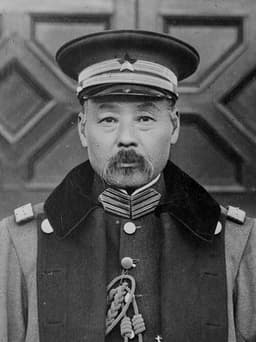
Feng Guozhang
General · Modern
49.1Total
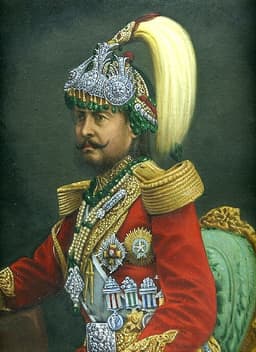
Jung Bahadur Rana
General · Modern
61.4Total
Basic Information
Born
1859
1817
Died
1919
1877
Era
Modern
Modern
Nationality
China
Nepal
Occupation
General
General
Civilization
Eastern
Indian
Score Comparison
Military (10%)
30.0
55.0
Political (20%)
61.3
72.0
Influence (20%)
54.9
56.7
Legacy (20%)
45.8
55.0
Leadership (15%)
40.0
78.0
Strategy (15%)
57.5
55.0
TOTAL
49.1
61.4
Feng Guozhang — Complete Timeline
1912 AD
Command of the Beiyang ArmyPolitical Action◆ Major
Feng Guozhang became a key commander of the Beiyang Army under Yuan Shikai. He controlled military forces in the Zhili region, establishing himself as a major warlord in northern China after the fall of the Qing dynasty.
Beiyang ArmyWarlordMilitary Command
Impact: national
1916 AD
Appointment as Vice PresidentPolitical Action◆ Major
Feng Guozhang was elected Vice President of the Republic of China under President Li Yuanhong. This position gave him significant political influence during the early Republican period.
Republic of ChinaGovernmentPolitics
Impact: national
1917 AD
Acting PresidencyPolitical Action◆ Major
Feng Guozhang became Acting President of the Republic of China after Li Yuanhong's resignation. He served from 1917 to 1918, facing challenges from rival warlords and struggling to maintain central authority.
Republic of ChinaPresidencyWarlord Era
Impact: national
1918 AD
Conflict with Duan QiruiPolitical Action◆ Major
Feng Guozhang engaged in a power struggle with Premier Duan Qirui, leading to the split of the Beiyang clique into the Zhili and Anhui factions. This conflict weakened the central government and intensified warlord warfare.
Beiyang CliquePower StruggleWarlord Era
Impact: nationaldestructive
Jung Bahadur Rana — Complete Timeline
1846 AD
Kot MassacrePolitical Action
Jung Bahadur Runa orchestrated the Kot Massacre in Kathmandu, where dozens of nobles and courtiers were killed. This event eliminated his political rivals and allowed him to seize effective control of the Nepalese government, establishing the hereditary Rana prime ministership.
CoupMassacreRana Dynasty
Impact: nationaldestructive
Establishment of Rana DynastyPolitical Action◆ Major
Following the Kot Massacre, Jung Bahadur Rana appointed himself prime minister and commander-in-chief. He made the position hereditary, founding the Rana dynasty that ruled Nepal for over a century, reducing the Shah monarchs to figureheads.
DynastyGovernmentNepal
Impact: national
1850 AD
Visit to EuropeCultural
Jung Bahadur Rana traveled to Britain and France, becoming the first South Asian ruler to visit Europe. He observed Western military and industrial technology, which influenced his modernization efforts in Nepal, including army reforms.
DiplomacyModernizationTravel
Impact: nationalconstructive
1856 AD
Nepal-Tibet War and Treaty of ThapathaliWar◆ Major
Jung Bahadur Rana led a Nepalese military campaign into Tibet. The conflict ended with the Treaty of Thapathali, which secured Nepalese territorial claims and established a tributary relationship with Tibet, enhancing Nepal's regional influence.
WarTreatyTibet
Impact: regional
Expert Analysis
Feng Guozhang vs Jung Bahadur Rana
# The General and the Strongman
On a winter morning in 1917, Feng Guozhang stepped into the presidency of a fractured China, inheriting a nation that had already begun to splinter under the weight of warlord rivalries. Half a world away and seventy years earlier, Jung Bahadur Rana had seized power in Nepal through a night of calculated bloodshed, laying the foundation for a dynasty that would rule for more than a century. Both men were generals who rose to supreme political power, yet their paths diverged like rivers flowing from the same mountain—one toward a brief, turbulent flood, the other toward a long, controlled channel. What drove these different outcomes?
Origins
Feng Guozhang was born in 1859, the son of a minor scholar-official in Hebei province. The Qing Empire was already in decline, battered by foreign wars and internal rebellions. Feng’s world was one of Confucian exams and military academies, a hybrid education that prepared him for a China caught between tradition and modernity. He entered the newly created Beiyang Army, a modernized force trained by German instructors, where he became a protégé of Yuan Shikai, the man who would later try to make himself emperor.
Jung Bahadur Rana, born in 1817 in Kathmandu, came from a different kind of aristocracy. His family, the Kunwars, were military men who served the Shah kings of Nepal. The kingdom was a patchwork of warring factions, with the queen mother’s court a seething nest of intrigue. Jung Bahadur grew up watching nobles be poisoned, exiled, or executed. His father had been a favorite of the king, then fallen from grace. The lesson was clear: in Nepal, power was taken, not given.
Rise to Power
Feng Guozhang’s ascent was methodical. He commanded the Third Division of the Beiyang Army, a force of 20,000 men, and when the Qing dynasty fell in 1912, he remained a pillar of Yuan Shikai’s new republic. Yuan appointed him military governor of Jiangsu, then made him a field marshal. Feng was a loyalist, not a revolutionary. He believed in order, hierarchy, and the power of the gun. When Yuan died in 1916, Feng was elected Vice President under Li Yuanhong. The following year, when Li fled the capital after a coup, Feng became Acting President. He arrived in Beijing by train, a modern man entering an ancient city in chaos.
Jung Bahadur’s rise was a single, bloody night. On September 15, 1846, the Kot Massacre unfolded in the courtyard of Kathmandu’s palace. The queen mother had summoned the nobles to settle a dispute. Jung Bahadur arrived with armed soldiers. Within hours, dozens of courtiers lay dead, their bodies piled in the courtyard. The king, powerless, appointed Jung Bahadur prime minister and commander-in-chief. He made the position hereditary. There would be no elections, no republic. Nepal would be ruled by one family, by one man’s will, for generations.
Leadership & Governance
As president, Feng Guozhang governed by compromise and balance. He was a conciliator, not a conqueror. His political score of 81.7 reflects a man who understood the game of alliances. He tried to mediate between the rival factions of the Beiyang clique, but the forces he commanded were only one piece of a shattered puzzle. His military score of 62.6 suggests he was no battlefield genius—his strength lay in administration and patronage. He attempted to reform the government, but warlords in the provinces ignored Beijing’s decrees. His presidency was a holding action, a desperate attempt to keep a dying republic alive.
Jung Bahadur Rana governed with an iron fist wrapped in velvet diplomacy. His military score of 63.6 is similar to Feng’s, but his legacy score of 80.0 dwarfs Feng’s 64.4. Why? Because Jung Bahadur understood that power required institutionalization. He built a system: the prime minister would always be a Rana, the army would always be loyal to the family, and the king would be a figurehead. He traveled to Europe in 1850, the first South Asian ruler to do so, and returned with ideas about bureaucracy, engineering, and military organization. He modernized Nepal’s army, built roads, and codified laws. But he also crushed dissent, exiled rivals, and maintained power through a network of spies and executioners.
Triumph & Tragedy
Feng Guozhang’s greatest moment was also his most tragic. In 1918, he faced down Premier Duan Qirui, his former ally, in a power struggle that tore the Beiyang clique apart. Duan wanted to unify China by force; Feng wanted negotiation. The split created the Zhili and Anhui cliques, setting the stage for a decade of civil war. Feng resigned the presidency later that year, a broken man. He died in 1919, a year before China plunged into the full chaos of the Warlord Era. His tragedy was that he tried to build a republic in a country that had no republicans.
Jung Bahadur Rana’s triumph was the Nepal-Tibet War of 1856. He led an army into the high plateaus of Tibet, fought a series of sharp engagements, and forced the Tibetans to sign the Treaty of Thapathali. Nepal gained trade rights and a tribute relationship with Tibet, a rare victory for a small kingdom sandwiched between two empires. But his tragedy was that he created a dynasty that would bleed Nepal dry. The Ranas ruled for 104 years, hoarding wealth, suppressing education, and isolating the country from the world. Jung Bahadur’s success became his nation’s curse.
Character & Destiny
Feng Guozhang was a man of caution and calculation. He once said, “The country is like a boat on a stormy sea; a wise captain does not try to steer straight into the wind.” His leadership score of 87.3 suggests he was respected by his subordinates, but his strategy score of 72.0 reveals a man who played defense, not offense. He was a survivor, not a builder. In a time that demanded boldness, Feng chose patience. In a time that required ruthlessness, Feng chose compromise.
Jung Bahadur Rana was a man of action and ambition. He understood that in Nepal, power flowed from the barrel of a gun and the thickness of a plot. His strategy score of 59.4 is surprisingly low, perhaps because he was more a tactician than a grand strategist. But his leadership score of 78.4 and influence score of 71.8 show a man who could command loyalty and shape events. He was ruthless, pragmatic, and visionary. He saw the world as a chessboard, and he was willing to sacrifice any piece to win.
Legacy
Feng Guozhang is remembered, if at all, as a footnote in China’s chaotic transition from empire to republic. His legacy score of 64.4 places him among the minor figures of modern Chinese history. He was a good general in a bad time, a president who could not save his country from itself. Today, his name appears in textbooks as one of the Beiyang warlords, a symbol of the republic’s failure.
Jung Bahadur Rana’s legacy is far more complex. His score of 80.0 reflects a man who fundamentally shaped his nation. In Nepal, he is both revered and reviled—the founder of a dynasty that brought stability and stagnation, modernization and oppression. The Rana regime fell in 1951, but its shadow still falls on Nepalese politics. Jung Bahadur built a house that stood for a century, but its foundations were laid in blood.
Conclusion
Two generals, two nations, two fates. Feng Guozhang tried to hold together a republic that had no roots, and he failed. Jung Bahadur Rana built a dynasty that had no heart, and he succeeded. The difference was not in their talents—both were capable men—but in their worlds. Feng’s China was a collapsing empire, a land of too many ambitions and too little consensus. Jung Bahadur’s Nepal was a small kingdom, a place where one man’s will could reshape everything. In the end, Feng Guozhang was a man who tried to steer a sinking ship. Jung Bahadur Rana was a man who built a prison and called it a palace. Both left behind nations that would spend generations trying to escape their legacies.
Rankings
🥇
Jung Bahadur RanaLeader
Mil: 55.0Pol: 72.0Inf: 56.7
61.4
🥈
Feng Guozhang
Mil: 30.0Pol: 61.3Inf: 54.9
49.1
+12.3 behind
How This Comparison Works
Algorithm
Each figure is scored on 6 dimensions (0—100 scale) based on structured historical data: Military (10%), Political (20%), Influence (20%), Legacy (20%), Leadership (15%), Strategy (15%). The weighted total produces the final ranking.
Data Sources
Scores are computed from structured sub-indicators in the database. Scale factors adjust for era (Ancient ×0.85, Modern ×1.0) and civilization size (Eastern ×1.05, Other ×0.80) to account for differences in population and military scale.
Maximum 3 Figures
Comparisons are limited to 2—3 figures to ensure readability and statistical meaningfulness.
Error Margins
±5 points per dimension — Sub-scores are derived from historical records with inherent uncertainty. Two figures within 5 points on a dimension should be considered roughly equivalent in that area.
Total Score Accuracy
±3 points overall — The weighted combination of 6 dimensions produces a total score with approximately ±3 points of uncertainty. Differences of less than 3 points are not statistically significant— the figures are effectively tied.
Known Limitations
- Historical records are incomplete and uneven across civilizations
- Figures from oral-tradition societies may be underrepresented
- Occupation labels can misclassify multi-role figures
- Scores measure capability and impact, not moral character
- Quantitative scoring is a comparison tool, not absolute truth
Capability Radar
Military (10%) — Battles & Warfare
Battles
45
45
Win Rate
40
50
Expansion
35
40
Political (20%) — Governance & Reform
Reform
30
75
Diplomacy
45
70
Economy
25
65
Influence (20%) — Cultural & Global Reach
Cultural
30
55
Global
20
40
Legacy (20%) — Historical Impact
Historical
40
65
Longevity
25
60
Leadership (15%) — Power & Stability
Tenure
55
80
Stability
20
60
Strategy (15%) — Tactics & Innovation
Strategy
55
60
Tactics
50
55
Reform
40
70
Similar Comparisons
Comments & Discussion
Feng the Futile6/16/2026
Feng Guozhang’s presidency proves that military strength without political vision is just noise. He had Germany-trained troops and controlled Beijing, yet let China fracture into warlord chaos because he couldn’t decide whether to back Yuan Shikai’s monarchy or Republic. Meanwhile, Jung Bahadur Rana consolidated power by literally massacring his rivals at Kot Massacre in 1846. One man acted decisively; the other wavered into irrelevance. Feng’s a cautionary tale: half-measures get you forgotten.
血宴建筑师6/16/2026
Jung Bahadur Rana才是真正的权力建筑师。他搞的Kot Massacre不是暴政,而是战略杰作——一夜清理政敌,建立拉纳家族统治104年!反观冯国璋,1917年代理总统,连直系军阀都控制不住,98天就被挤下来。一个用血砌出王朝,一个在电报上打嘴仗。要我选?尼泊尔将军的冷血头脑比北洋老帅的“忠诚”值钱百倍。
Data Driller6/16/2026
Let’s not romanticize. Jung Bahadur held power 32 years; Feng held the presidency 15 months. But look beyond headlines: Feng’s downfall wasn’t incompetence—it was timing. He took office in the middle of the Warlord Era, with zero institutional support. Jung Bahadur inherited a stable monarchy, exploited the Kot Massacre’s chaos, and had British guns to back him. Different contexts mean different “success.” A/B testing across centuries? Flawed. Feng was just unluckier.
帝国双面镜6/16/2026
有趣,两人都靠暴力上台却走向殊途。冯国璋像清末“过渡人”——留学德国学军事,但灵魂卡在忠君和共和之间。1918年被段祺瑞逼下台时,他还在念叨“三从四德”,可笑。Jung Bahadur则是殖民时代的精明赌徒,1857年帮英国人镇压印度兵变,换来尼泊尔独立和伦敦支持。冯国璋死于1919年,失意且固执;拉纳的孙子至今还有豪宅。历史对实用者比对君子更慷慨。
Revisionist's Razor6/16/2026
The comparison flatters both too much. Feng Guozhang wasn’t a “general-president”; he was Yuan Shikai’s yes-man who inherited a sinking ship. His “Beiyang Army” legacy? Training the warlords who later tore China apart. Jung Bahadur wasn’t a “nation-builder”; he was a dynastic gangster who locked Nepal into feudal isolation for a century, leaving it illiterate and poor. History calls them “strongmen” to excuse brutality. We should call them what they were: ambitious failures with blood on their h