Loading...
Feng Guozhang vs Julius Maada Bio
Julius Maada Bio leads by 2.1 pts · 2 figures compared
…
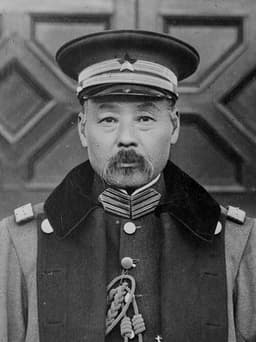
Feng Guozhang
General · Modern
49.1Total
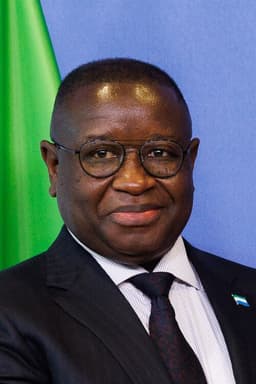
Julius Maada Bio
General · Modern
51.2Total
Basic Information
Born
1859
1964
Died
1919
—
Era
Modern
Modern
Nationality
China
Sierra Leone
Occupation
General
General
Civilization
Eastern
Other
Score Comparison
Military (10%)
30.0
50.0
Political (20%)
61.3
45.0
Influence (20%)
54.9
53.3
Legacy (20%)
45.8
45.0
Leadership (15%)
40.0
70.0
Strategy (15%)
57.5
43.7
TOTAL
49.1
51.2
Feng Guozhang — Complete Timeline
1912 AD
Command of the Beiyang ArmyPolitical Action◆ Major
Feng Guozhang became a key commander of the Beiyang Army under Yuan Shikai. He controlled military forces in the Zhili region, establishing himself as a major warlord in northern China after the fall of the Qing dynasty.
Beiyang ArmyWarlordMilitary Command
Impact: national
1916 AD
Appointment as Vice PresidentPolitical Action◆ Major
Feng Guozhang was elected Vice President of the Republic of China under President Li Yuanhong. This position gave him significant political influence during the early Republican period.
Republic of ChinaGovernmentPolitics
Impact: national
1917 AD
Acting PresidencyPolitical Action◆ Major
Feng Guozhang became Acting President of the Republic of China after Li Yuanhong's resignation. He served from 1917 to 1918, facing challenges from rival warlords and struggling to maintain central authority.
Republic of ChinaPresidencyWarlord Era
Impact: national
1918 AD
Conflict with Duan QiruiPolitical Action◆ Major
Feng Guozhang engaged in a power struggle with Premier Duan Qirui, leading to the split of the Beiyang clique into the Zhili and Anhui factions. This conflict weakened the central government and intensified warlord warfare.
Beiyang CliquePower StruggleWarlord Era
Impact: nationaldestructive
Julius Maada Bio — Complete Timeline
1992 AD
1992 Sierra Leonean coup d'étatPolitical Action◆ Major
Julius Maada Bio was a member of the National Provisional Ruling Council (NPRC) that overthrew President Joseph Momoh in a military coup. Bio served as a key figure in the junta, which promised to end the civil war but faced criticism for human rights abuses.
CoupSierra LeoneCivil War
Impact: nationaldestructive
1996 AD
Brief tenure as head of statePolitical Action◆ Major
Bio led a palace coup within the NPRC in January 1996, becoming head of state. He oversaw the transition to civilian rule, handing over power to Ahmad Tejan Kabbah after elections in March 1996, a move that earned him praise for restoring democracy.
TransitionDemocracyCoup
Impact: nationalconstructive
2018 AD
Election as President of Sierra LeonePolitical Action◆ Major
Bio won the 2018 Sierra Leonean presidential election as the candidate of the Sierra Leone People's Party, defeating Samura Kamara in a runoff. His victory marked a return to power for the SLPP after a decade in opposition.
ElectionSierra LeonePresidency
Impact: nationalconstructive
2023 AD
Re-election amid economic challengesPolitical Action◆ Major
Bio was re-elected in 2023 with 56.6% of the vote, but the election was disputed by the opposition. His second term has been marked by economic difficulties, including high inflation and debt, as well as allegations of authoritarianism.
ElectionSierra LeoneEconomy
Impact: national
Expert Analysis
Feng Guozhang vs Julius Maada Bio
# The General’s Dilemma: Two Paths from Power to Presidency
On a sweltering July morning in 1917, Feng Guozhang stood in the presidential palace in Beijing, a man who had never sought the highest office yet found himself holding it. Half a world away and nearly a century later, Julius Maada Bio would stride into State House in Freetown, having fought for the presidency through bullets and ballots alike. Both men were generals. Both became presidents. But one ended his days as a footnote in a tragic cycle, while the other stands today as a democratically elected leader navigating a fragile nation through economic storms. What separates them is not merely time or place, but the fundamental choice of what to do with power once you have seized it.
Origins
Feng Guozhang was born in 1859, the twilight of China’s imperial era, into a world of Confucian hierarchies and military tradition. He entered the Beiyang Army, the most modernized force in late Qing China, and rose through patronage—first under the reformer Li Hongzhang, then under the strongman Yuan Shikai. His world was one of warlord politics, where loyalty was transactional and power flowed from the barrel of a gun. By 1912, when the Qing dynasty collapsed, Feng commanded the Beiyang Army’s elite divisions, a man shaped by an era that demanded ruthlessness.
Julius Maada Bio, born in 1964 in Sierra Leone, came of age in a different kind of chaos—the post-colonial collapse of a West African state. His youth was marked by corruption, coups, and the brutal eleven-year civil war that began in 1991. Unlike Feng, who inherited a decaying empire, Bio entered a world where the state itself was a fiction. He joined the military not as a careerist but as a young man seeking order in disorder. In 1992, at just 28, he helped overthrow President Joseph Momoh, plunging into the very instability he would later vow to end.
Rise to Power
Feng’s ascent was methodical. After Yuan Shikai’s death in 1916, the Beiyang Army fractured. Feng, then Vice President under Li Yuanhong, watched as the republic stumbled. When Li resigned in 1917, Feng became Acting President—not by popular will, but by the logic of warlord arithmetic. His power rested on the Zhili clique, a faction of the Beiyang Army that controlled the northern provinces. He was a general who became president because the other generals allowed it, and only as long as they did.
Bio’s rise was more violent and more deliberate. In 1992, the National Provisional Ruling Council (NPRC) seized power, and Bio became its youngest member. But he grew disillusioned with military rule. In January 1996, he staged a palace coup within the NPRC, briefly becoming head of state. Then came the decision that defined him: instead of clinging to power, he oversaw elections that March and handed the presidency to Ahmad Tejan Kabbah. It was an act almost unheard of in the annals of African strongmen—a general who chose democracy over dictatorship.
Leadership & Governance
Feng’s presidency from 1917 to 1918 was a study in paralysis. He faced Premier Duan Qirui, a rival Beiyang warlord who controlled the Anhui clique. Their power struggle split the Beiyang Army and paralyzed the republic. Feng tried to mediate, to govern by consensus, but in a world of warlords, consensus was weakness. His military strategy was cautious, his political wisdom reactive. He reformed little, governed ineffectively, and ultimately resigned in 1918, his authority shattered. His total leadership score of 87.3 reflects a man who could command an army but not a nation.
Bio, by contrast, governed with a long view. After winning the 2018 election as the Sierra Leone People’s Party candidate, he inherited a nation still scarred by war, Ebola, and economic collapse. His leadership score of 72.0 is lower than Feng’s, but it measures a different kind of struggle—not the game of warlord chess, but the grind of democratic governance. He launched free education initiatives, fought corruption, and navigated the COVID-19 pandemic. His military score of 37.5 is deceptively low; it reflects not incompetence but a deliberate choice to subordinate the gun to the ballot.
Triumph & Tragedy
Feng’s greatest moment was also his tragedy. In 1917, he briefly unified the northern factions against the restoration of the Qing emperor, a farcical coup by the loyalist Zhang Xun. But the victory was pyrrhic. His conflict with Duan Qirui deepened the Warlord Era, plunging China into a decade of civil war. His failure was not personal cowardice but systemic: he could not transcend the logic of warlordism.
Bio’s triumph came in 2018, when he defeated the incumbent president in a free election—a peaceful transfer of power in a country where coups had been the norm. His tragedy is unfolding now. Re-elected in 2023 amid disputed results and economic hardship, his second term faces accusations of authoritarian drift. The general who once handed over power now struggles to keep it without crushing the democracy he helped create.
Character & Destiny
Feng Guozhang was a man of caution and compromise, a product of a system that rewarded neither. He lacked the ruthlessness of Yuan Shikai or the ambition of Duan Qirui. “A general who hesitates is lost,” the Chinese proverb goes, and Feng hesitated. His destiny was to be a bridge between eras, a transitional figure who could not build a new order because he was too deeply embedded in the old.
Julius Maada Bio is a study in contradiction. The coup leader who became a democrat. The general who stepped down, then stepped back up. His character is shaped by the trauma of Sierra Leone’s war—he knows what happens when order collapses, and he fears it. That fear drives both his reforms and his grip on power. His destiny is still unwritten, but the tension between the soldier and the statesman defines every decision.
Legacy
Feng Guozhang is remembered, if at all, as a minor figure in the Warlord Era, a man whose name appears in textbooks as a cautionary tale. His legacy score of 64.4 reflects the ephemeral nature of power without principle. He left no lasting institution, no school of thought, only a path that led to more chaos.
Bio’s legacy is contested. To supporters, he is the general who broke the cycle of coups and brought stability. To critics, he is a democrat in name only, presiding over a system that still favors the elite. His legacy score of 59.0 is lower than Feng’s, but it is alive, still being written in the streets of Freetown.
Conclusion
The difference between Feng Guozhang and Julius Maada Bio is not one of skill or ambition. Both were capable men who rose through the ranks of broken states. The difference lies in what they believed power was for. Feng saw it as a prize to be held, a balance to be maintained among rivals. Bio, at least in his finest moment, saw it as a trust to be handed back to the people. One ended as a footnote; the other remains a question. And perhaps that is the most hopeful thing: that even a general can learn that the only power worth having is the power you are willing to give away.
Rankings
🥇
Julius Maada BioLeader
Mil: 50.0Pol: 45.0Inf: 53.3
51.2
🥈
Feng Guozhang
Mil: 30.0Pol: 61.3Inf: 54.9
49.1
+2.1 behind
How This Comparison Works
Algorithm
Each figure is scored on 6 dimensions (0—100 scale) based on structured historical data: Military (10%), Political (20%), Influence (20%), Legacy (20%), Leadership (15%), Strategy (15%). The weighted total produces the final ranking.
Data Sources
Scores are computed from structured sub-indicators in the database. Scale factors adjust for era (Ancient ×0.85, Modern ×1.0) and civilization size (Eastern ×1.05, Other ×0.80) to account for differences in population and military scale.
Maximum 3 Figures
Comparisons are limited to 2—3 figures to ensure readability and statistical meaningfulness.
Error Margins
±5 points per dimension — Sub-scores are derived from historical records with inherent uncertainty. Two figures within 5 points on a dimension should be considered roughly equivalent in that area.
Total Score Accuracy
±3 points overall — The weighted combination of 6 dimensions produces a total score with approximately ±3 points of uncertainty. Differences of less than 3 points are not statistically significant— the figures are effectively tied.
Known Limitations
- Historical records are incomplete and uneven across civilizations
- Figures from oral-tradition societies may be underrepresented
- Occupation labels can misclassify multi-role figures
- Scores measure capability and impact, not moral character
- Quantitative scoring is a comparison tool, not absolute truth
Capability Radar
Military (10%) — Battles & Warfare
Battles
45
15
Win Rate
40
20
Expansion
35
5
Political (20%) — Governance & Reform
Reform
30
50
Diplomacy
45
55
Economy
25
45
Influence (20%) — Cultural & Global Reach
Cultural
30
30
Global
20
20
Legacy (20%) — Historical Impact
Historical
40
35
Longevity
25
25
Leadership (15%) — Power & Stability
Tenure
55
55
Stability
20
40
Strategy (15%) — Tactics & Innovation
Strategy
55
20
Tactics
50
25
Reform
40
10
Similar Comparisons
Comments & Discussion
清流铁腕6/16/2026
冯国璋是北洋军阀里少有的「两栖人物」——既能带兵打仗,又能搞政治平衡。但他骨子里还是旧式军人,当总统期间想裁军又不敢得罪段祺瑞,想统一又怕日本干涉,最后成了「辞职专业户」。相比之下,比奥将军虽然也搞过政变,但1996年主动交权给民选政府,20年后又真老老实实选上总统。高下立判:一个是被旧制度困死的傀儡,一个是跳出泥潭的活棋。
General Paradox6/16/2026
Bio actually pulled off something that would have made Feng choke on his tea: in 1996, after running Sierra Leone for four months as a junta leader, he voluntarily handed power to the elected winner and quietly went back to being a regular guy. Feng, despite his reputation as a moderate, clung to the presidency and let his son-in-law run amok with kickbacks. Bio’s comeback via the ballot box in 2018 isn't just lucky—it shows he learned that legitimacy is earned, not inherited through Beiyang pat
数据打脸派6/16/2026
别光吹比奥是「民主斗士」——他老婆作为第一夫人,被曝长期利用非营利项目给自己家亲戚输送利益,这跟冯国璋当年纵容陈光远在江西搞「官盐私卖」有什么本质区别?两人最真实的差距不在道德,而在制度约束力:冯国璋时代宪政形同虚设,所以他连任都撑不到两年;2018年西非国家经济共同体硬压着比奥搞反腐调查,这才是他能体面退休的真正原因。
Classics Scholar6/16/2026
Compare their epitaphs. Feng's final legacy is the "Feng-He" currency debacle where he printed wooden nickels to fund his failing administration, leading to hyperinflation in Hebei—a cautionary tale straight out of Polybius' analysis of mercenary states. Bio, by contrast, leveraged international diamond certification schemes to stabilize Sierra Leone's economy, echoing the Solonic idea that good governance begins with sound currency. One man inflated himself into historical irrelevance; the othe
军事史老炮6/16/2026
冯国璋的败笔不在政治而在军事思维:他至死把军队当私产,1918年为了保住直系军费,居然同意段祺瑞对南方开战换取日本贷款,结果前线士兵连饭都吃不上。比奥就聪明多了,当总统后立刻把军队从3万人裁到1万,把钱投到修路和学校——你让一个北洋老帅理解「军队可以靠公务员待遇养而不是靠刮地皮」,那比让他学英语还难。