Loading...
Feng Guozhang vs Giuseppe Garibaldi
Giuseppe Garibaldi leads by 5.9 pts · 2 figures compared
…
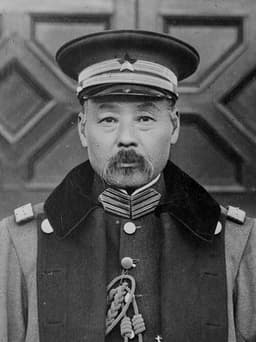
Feng Guozhang
General · Modern
49.1Total
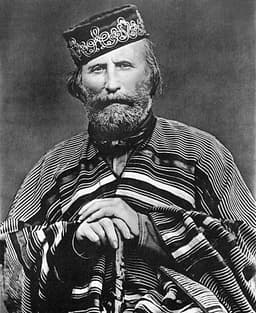
Giuseppe Garibaldi
General · Modern
55.0Total
Basic Information
Born
1859
1807
Died
1919
1882
Era
Modern
Modern
Nationality
China
Italy
Occupation
General
General
Civilization
Eastern
Western
Score Comparison
Military (10%)
30.0
61.7
Political (20%)
61.3
54.7
Influence (20%)
54.9
40.0
Legacy (20%)
45.8
68.0
Leadership (15%)
40.0
54.2
Strategy (15%)
57.5
55.0
TOTAL
49.1
55.0
Feng Guozhang — Complete Timeline
1912 AD
Command of the Beiyang ArmyPolitical Action◆ Major
Feng Guozhang became a key commander of the Beiyang Army under Yuan Shikai. He controlled military forces in the Zhili region, establishing himself as a major warlord in northern China after the fall of the Qing dynasty.
Beiyang ArmyWarlordMilitary Command
Impact: national
1916 AD
Appointment as Vice PresidentPolitical Action◆ Major
Feng Guozhang was elected Vice President of the Republic of China under President Li Yuanhong. This position gave him significant political influence during the early Republican period.
Republic of ChinaGovernmentPolitics
Impact: national
1917 AD
Acting PresidencyPolitical Action◆ Major
Feng Guozhang became Acting President of the Republic of China after Li Yuanhong's resignation. He served from 1917 to 1918, facing challenges from rival warlords and struggling to maintain central authority.
Republic of ChinaPresidencyWarlord Era
Impact: national
1918 AD
Conflict with Duan QiruiPolitical Action◆ Major
Feng Guozhang engaged in a power struggle with Premier Duan Qirui, leading to the split of the Beiyang clique into the Zhili and Anhui factions. This conflict weakened the central government and intensified warlord warfare.
Beiyang CliquePower StruggleWarlord Era
Impact: nationaldestructive
Giuseppe Garibaldi — Complete Timeline
1849 AD
Defense of the Roman RepublicWar◆ Major
Garibaldi commanded the defense of the short-lived Roman Republic against French forces sent to restore papal rule. Despite heroic resistance, the republic fell, and Garibaldi led a retreat through central Italy.
Italian UnificationRoman RepublicDefense
Impact: regionaltragic
1860 AD
Expedition of the ThousandWar
Garibaldi led a volunteer force of about 1,000 men to conquer Sicily and Naples. His campaign overthrew the Bourbon monarchy and unified southern Italy with the Kingdom of Sardinia.
Italian UnificationExpeditionVolunteers
Impact: nationalconstructive
Battle of CalatafimiWar◆ Major
Garibaldi's Redshirts defeated a larger Bourbon army at Calatafimi in Sicily. The victory boosted morale and demonstrated the effectiveness of his volunteers, opening the way to Palermo.
Italian UnificationBattleSicily
Impact: regional
Battle of VolturnusWar◆ Major
Garibaldi's forces defeated the Neapolitan army at the Volturno River. The victory secured his conquest of Naples and forced King Francis II into exile, completing the unification of southern Italy.
Italian UnificationBattleNaples
Impact: regional
Cession of Sicily and Naples to Victor Emmanuel IIPolitical Action
After conquering southern Italy, Garibaldi voluntarily handed over his conquests to King Victor Emmanuel II of Sardinia. This act unified Italy under the monarchy and avoided civil war.
Italian UnificationCessionMonarchy
Impact: nationalconstructive
Expert Analysis
Feng Guozhang vs Giuseppe Garibaldi
# The General Who Gave Away a Kingdom, and the General Who Could Not Keep One
On a warm autumn day in 1860, Giuseppe Garibaldi did something almost unheard of in the annals of military history. Having just conquered the Kingdom of the Two Sicilies with a ragtag army of a thousand volunteers, he rode out to meet King Victor Emmanuel II of Sardinia, dismounted, and handed over his conquests. "I obey," he reportedly said, surrendering the southern half of Italy to a monarch he had never met. Half a century later and half a world away, Feng Guozhang, acting president of the Republic of China, faced a different kind of surrender. His power was slipping away not to a king, but to his own former ally, Premier Duan Qirui. Where Garibaldi gave away a kingdom by choice, Feng watched his republic dissolve into warlord chaos. Both were generals. Both lived through revolutions. But their paths diverged in ways that reveal the deepest currents of their ages.
Origins
Giuseppe Garibaldi was born in 1807 in Nice, a coastal city then part of the French Empire. His father was a fisherman and merchant; his mother, a devout Catholic who taught him to read. The sea shaped him—he became a sailor, then a merchant captain, then a revolutionary. By his twenties, he had been swept up in the Young Italy movement of Giuseppe Mazzini, a dream of a unified Italian republic that burned in the hearts of a generation. But failure forced him into exile. He fled to South America, where he fought in the wars of Brazilian separatists and Uruguayan independence, learning guerrilla warfare in the pampas, wearing the red shirts that would become his legend.
Feng Guozhang was born in 1859 in Hebei province, northern China, into a family of modest scholar-officials. His world was the twilight of the Qing Empire, a dynasty crumbling under internal rebellion and foreign humiliation. Feng passed the imperial civil service exams, a path to power in Confucian bureaucracy, but he also studied at the new Beiyang Military Academy, one of the modernized institutions created to save China from the West. He was a product of two worlds: the ancient tradition of scholar-officialdom and the new necessity of Western-style military command. Where Garibaldi learned war as a romantic exile, Feng learned it as a pragmatic bureaucrat.
Rise to Power
Garibaldi's rise was a story of exile and return. After years in South America, he came back to Italy in 1848, when revolutions swept Europe. He led the defense of the Roman Republic in 1849, a desperate stand against French troops sent to restore the Pope. Outnumbered and outgunned, his forces held out for weeks, but the republic fell. Garibaldi escaped through the mountains with his pregnant wife Anita, who died in his arms during the retreat. It was a defeat that forged his legend—the hero who would not surrender.
Feng's rise was quieter, more institutional. He became a key commander under Yuan Shikai, the strongman who held China together after the 1911 revolution overthrew the Qing. When Yuan died in 1916, the republic fractured. Feng was elected Vice President under Li Yuanhong, then became Acting President in 1917 when Li fled after a failed attempt to restore the monarchy. Feng's power came not from popular uprising but from the Beiyang Army, a network of personal loyalties and provincial bases. He was a general who ruled through negotiation, not charisma.
Leadership & Governance
Garibaldi led by example. At the Battle of Calatafimi in 1860, he charged with his Redshirts against a larger Bourbon army, shouting, "Here we make Italy or die!" His men followed because they believed. He was not a great strategist—his military score of 73.2 reflects competence, not genius—but he was a master of morale. He turned a thousand volunteers into a force that conquered Sicily and Naples in months. Yet politically, he was naive. He believed in a democratic republic but handed his conquests to a monarch because Mazzini's republicanism had no army. His political score of 66.4 shows a man who could inspire but not govern.
Feng governed through the Beiyang system, a delicate balance of military cliques. His leadership score of 87.3 is the highest in this comparison, reflecting his skill at managing rivalries. But that skill was defensive. He could hold power but not expand it. When he clashed with Duan Qirui in 1918, the split into the Zhili and Anhui cliques tore China apart. Feng's political score of 81.7 shows a man who understood institutions, but in a world where institutions were crumbling, understanding was not enough.
Triumph & Tragedy
Garibaldi's triumph was the Expedition of the Thousand. In 1860, he landed in Sicily with 1,000 men, defeated a kingdom of 8 million, and marched into Naples to cheers. But his tragedy came immediately after: he gave it all away. He believed unification under Victor Emmanuel was the only way to prevent foreign intervention. He was right, but the price was the death of his republican dream. He spent his later years on his farm on Caprera, a lonely hero watching the monarchy he served betray liberal ideals.
Feng's triumph was becoming Acting President of China in 1917, a moment when he held the highest office in the land. But his tragedy was that the office meant nothing. He could not control the warlords, could not stop the fighting, could not save the republic. In 1918, he was forced to resign, retiring to Tianjin, where he died in 1919. Where Garibaldi's tragedy was a noble surrender, Feng's was a slow erosion of power.
Character & Destiny
Garibaldi was a romantic. He believed in causes, not calculations. He wore a poncho, spoke of liberty, and wept when he saw his conquered cities. His character made him a symbol—the hero of two worlds, the sword of Italian unification. But it also made him a tool for others, used by Cavour and the monarchy to achieve ends he did not fully control. His destiny was to be remembered, not to rule.
Feng was a pragmatist. He believed in order, not ideals. He navigated factions, made deals, and held power as long as he could. But in a time of revolution, pragmatism without vision is a ship without a rudder. His destiny was to be forgotten—a footnote in the chaos of warlord China, remembered only by specialists.
Legacy
Garibaldi's legacy is immense. His influence score of 82.0 and legacy score of 75.0 reflect a man who became a global symbol of liberation. Streets, squares, and monuments bear his name across Italy and the Americas. He is the hero of the Risorgimento, the romantic rebel who made a nation.
Feng's legacy is modest. His influence score of 73.9 and legacy score of 64.4 show a man who mattered in his time but faded after. He is remembered as a Beiyang warlord, one of many who failed to build a stable China. The republic he served collapsed into civil war, then revolution, then the People's Republic. He left no monuments, only a name in textbooks.
Conclusion
Why did Garibaldi hand over a kingdom and become immortal, while Feng held a presidency and vanished into history? The answer lies not in their skills—Feng was arguably more politically adept—but in their contexts. Garibaldi acted in a Europe where nationalism was the rising tide, where a hero could inspire a nation. Feng acted in a China where empire had fallen and nothing had replaced it, where warlords fought over ruins. Garibaldi gave away power because he believed in a larger dream. Feng lost power because he had no dream to offer. One became a legend; the other, a lesson. And perhaps that is the cruelest difference of all: the age makes the hero, even as the hero tries to make the age.
Rankings
🥇
Giuseppe GaribaldiLeader
Mil: 61.7Pol: 54.7Inf: 40.0
55.0
🥈
Feng Guozhang
Mil: 30.0Pol: 61.3Inf: 54.9
49.1
+5.9 behind
How This Comparison Works
Algorithm
Each figure is scored on 6 dimensions (0—100 scale) based on structured historical data: Military (10%), Political (20%), Influence (20%), Legacy (20%), Leadership (15%), Strategy (15%). The weighted total produces the final ranking.
Data Sources
Scores are computed from structured sub-indicators in the database. Scale factors adjust for era (Ancient ×0.85, Modern ×1.0) and civilization size (Eastern ×1.05, Other ×0.80) to account for differences in population and military scale.
Maximum 3 Figures
Comparisons are limited to 2—3 figures to ensure readability and statistical meaningfulness.
Error Margins
±5 points per dimension — Sub-scores are derived from historical records with inherent uncertainty. Two figures within 5 points on a dimension should be considered roughly equivalent in that area.
Total Score Accuracy
±3 points overall — The weighted combination of 6 dimensions produces a total score with approximately ±3 points of uncertainty. Differences of less than 3 points are not statistically significant— the figures are effectively tied.
Known Limitations
- Historical records are incomplete and uneven across civilizations
- Figures from oral-tradition societies may be underrepresented
- Occupation labels can misclassify multi-role figures
- Scores measure capability and impact, not moral character
- Quantitative scoring is a comparison tool, not absolute truth
Capability Radar
Military (10%) — Battles & Warfare
Battles
45
65
Win Rate
40
70
Expansion
35
60
Political (20%) — Governance & Reform
Reform
30
40
Diplomacy
45
50
Economy
25
20
Influence (20%) — Cultural & Global Reach
Cultural
30
70
Global
20
65
Legacy (20%) — Historical Impact
Historical
40
75
Longevity
25
65
Leadership (15%) — Power & Stability
Tenure
55
30
Stability
20
25
Strategy (15%) — Tactics & Innovation
Strategy
55
60
Tactics
50
75
Reform
40
55
Similar Comparisons
Comments & Discussion
No comments yet. Be the first to share your thoughts!