Loading...
Eurico Gaspar Dutra vs Sitiveni Rabuka
Eurico Gaspar Dutra leads by 1.0 pts · 2 figures compared
…

Eurico Gaspar Dutra
General · Modern
52.7Total
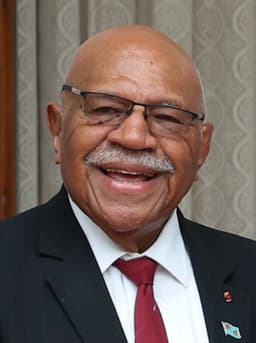
Sitiveni Rabuka
General · Modern
51.7Total
Basic Information
Born
1883
1948
Died
1974
—
Era
Modern
Modern
Nationality
Brazil
Fiji
Occupation
General
General
Civilization
Western
Other
Score Comparison
Military (10%)
50.0
10.2
Political (20%)
68.0
60.0
Influence (20%)
51.8
53.3
Legacy (20%)
44.2
46.7
Leadership (15%)
62.0
85.0
Strategy (15%)
41.7
39.6
TOTAL
52.7
51.7
Eurico Gaspar Dutra — Complete Timeline
1945 AD
Elected President of BrazilPolitical Action◆ Major
Eurico Gaspar Dutra was elected President of Brazil, succeeding Get
Presidency1946 RepublicElection
Impact: national
1946 AD
Promulgated the 1946 ConstitutionReform◆ Major
Dutra oversaw the promulgation of a new democratic constitution, which restored civil liberties and established a presidential system. The 1946 Constitution replaced the authoritarian 1937 Charter and marked Brazil's return to democracy.
ConstitutionDemocracyPost-Estado Novo
Impact: nationalprogressive
Implemented the 'Dutra Plan' (Plano Dutra) for Economic DevelopmentReform
Dutra launched an economic development plan focused on infrastructure, energy, and transportation. The plan aimed to modernize the Brazilian economy and reduce dependence on imports, but its implementation was limited by fiscal constraints.
Economic PlanDevelopmentInfrastructure
Impact: nationalconstructive
1947 AD
Banned the Communist PartyPolitical Action◆ Major
Dutra banned the Brazilian Communist Party (PCB) and broke diplomatic relations with the Soviet Union. This action was part of his alignment with the United States during the early Cold War and aimed to suppress leftist opposition.
Cold WarCommunist BanAnti-Communism
Impact: nationaldestructive
1950 AD
Ended Presidency and RetiredPolitical Action
Dutra completed his term and was succeeded by Get
End of TermRetirementLegacy
Impact: national
Sitiveni Rabuka — Complete Timeline
1987 AD
1987 Fijian Coup d'étatPolitical Action
Rabuka, as a colonel in the Fijian military, led a coup overthrowing the elected government of Timoci Bavadra. The coup was motivated by ethnic Fijian opposition to Indo-Fijian political influence. Rabuka declared Fiji a republic.
CoupMilitary InterventionEthnic Tension
Impact: nationaldestructive
1992 AD
1992 Election as Prime MinisterPolitical Action◆ Major
Rabuka transitioned from military leader to civilian politician, winning the 1992 general election as leader of the Fijian Political Party. He became Prime Minister, serving until 1999.
ElectionCivilian GovernmentPolitical Transition
Impact: national
1997 AD
1997 Constitution ReformReform◆ Major
Rabuka's government oversaw the adoption of a new constitution that removed ethnic-based voting and provided for a multi-ethnic government. The constitution aimed to reduce ethnic tensions and promote national unity.
ConstitutionReformEthnic Reconciliation
Impact: nationalconstructive
1999 AD
1999 General Election DefeatPolitical Action◆ Major
Rabuka's government was defeated in the general election by the Labour Party led by Mahendra Chaudhry. Rabuka stepped down as Prime Minister, marking the end of his first period in power.
Election DefeatGovernment ChangeChaudhry
Impact: national
2022 AD
2022 Return as Prime MinisterPolitical Action◆ Major
Rabuka led the People's Alliance to victory in the 2022 general election, forming a coalition government. He became Prime Minister again, 23 years after his previous tenure, promising democratic reforms.
ElectionReturn to PowerCoalition Government
Impact: national
Expert Analysis
Sitiveni Rabuka vs Eurico Gaspar Dutra
### The General Who Came In From the Cold
In the humid Fijian winter of 1987, a colonel named Sitiveni Rabuka walked into parliament and ended a democracy. Forty-one years earlier and half a world away, a Brazilian general named Eurico Gaspar Dutra had walked a different path: he helped end a dictatorship and inaugurated a republic. Both men wore uniforms, carried rifles, and shaped their nations. But one became a democrat by accident, the other by design. Why did their journeys diverge so sharply?
### Origins
Sitiveni Rabuka was born in 1948 on the island of Vanua Levu, a son of a Methodist minister in a deeply traditional Fijian society. He grew up in a world where ethnic Fijians held the land and political power was a fragile bargain between indigenous chiefs and the Indo-Fijian descendants of indentured laborers. The British had left in 1970, but the tensions remained. Rabuka joined the military young, rising through a small, British-trained army that saw itself as the guardian of indigenous rights.
Eurico Gaspar Dutra was born in 1883 in Mato Grosso, Brazil, into a military family. He came of age during the twilight of the Brazilian Empire and the birth of the First Republic. The army was not just a career; it was a political institution. Dutra served in the 1930 Revolution that brought Getúlio Vargas to power and later became Vargas’s Minister of War. He was a creature of the Estado Novo, the corporatist dictatorship Vargas built. But he was also a man who watched the world burn in 1945—fascism defeated, democracy ascendant—and understood that Brazil had to change.
### Rise to Power
Rabuka’s rise was a sudden, violent rupture. In May 1987, the first Indo-Fijian-led government took office under Timoci Bavadra. For many ethnic Fijians, this was an existential threat. On May 14, Colonel Rabuka, then just thirty-nine, led a bloodless coup. He walked into parliament in full combat gear, told the lawmakers they were overthrown, and announced he was taking control. “I have done this to save the indigenous Fijian people,” he declared. It was a soldier’s solution to a political problem.
Dutra’s rise was a slow, institutional transition. In 1945, with Vargas’s dictatorship crumbling, the military forced the dictator to call elections. Dutra, running as the Social Democratic Party candidate, won the presidency with 55% of the vote. He took office in January 1946, not as a conqueror but as a politician. The army had handed him power, but he understood that to keep it, he had to give it back to the people.
### Leadership & Governance
As president, Dutra governed with a steady, conservative hand. In September 1946, he promulgated a new constitution that restored civil liberties, established a presidential system, and guaranteed free elections. He launched the “Plano Dutra,” an economic development plan focused on infrastructure—roads, energy, transportation. But he was no reformer. In 1947, he banned the Brazilian Communist Party and broke relations with the Soviet Union, aligning Brazil firmly with the United States in the emerging Cold War. He was a general who believed in order, but he was also a democrat who believed in institutions.
Rabuka’s governance was more erratic. After the 1987 coup, he initially ruled through a military government, then orchestrated a new constitution in 1990 that entrenched ethnic Fijian supremacy. But the pressure was immense—economic sanctions, international isolation, internal dissent. In 1992, he resigned from the military, formed a political party, and won the elections as a civilian prime minister. It was a remarkable transformation. In 1997, his government oversaw a new constitution that removed ethnic-based voting and created a multiracial democracy. “I have learned,” Rabuka later said, “that you cannot govern by force alone.”
### Triumph & Tragedy
Dutra’s triumph was the 1946 Constitution—a document that would govern Brazil for over two decades. His tragedy was his timidity. He did not tackle Brazil’s deep inequalities, its land concentration, its poverty. He left office in 1951, handing power back to Vargas, the very man he had helped push out. He died in 1974, a respected but forgotten figure.
Rabuka’s triumph was his second act. Defeated in the 1999 elections, he stepped down peacefully—a former coup leader accepting electoral defeat. For two decades, he remained in politics, a flawed but persistent democrat. Then, in December 2022, at the age of seventy-four, he led the People’s Alliance to victory and became prime minister again. It was a stunning redemption. His tragedy was the long shadow of 1987. He could never fully escape the stain of the coup, even as he worked to undo its legacy.
### Character & Destiny
Dutra was a soldier who believed in order and hierarchy. He was not charismatic or visionary. He was a manager, a man who followed the currents of history rather than creating them. His destiny was to be a transition figure—the general who closed the door on dictatorship and opened the window to democracy.
Rabuka was a man of contradictions. He was a nationalist who became a pluralist, a coup leader who became a democrat, a traditionalist who helped write a modern constitution. His character was forged in crisis—the fear of ethnic domination, the guilt of overthrowing a government, the ambition to lead, the humility to learn. His destiny was to be a bridge between Fiji’s past and its future.
### Legacy
Dutra is remembered as a footnote in Brazilian history—a competent, unremarkable president who did what was necessary. His constitution is his monument. Rabuka is remembered as a paradox—a man who destroyed democracy and then spent thirty years trying to rebuild it. Fiji today is a multiracial democracy, fragile but functioning. That is his legacy.
### Conclusion
The difference between these two generals is not one of morality but of circumstance. Dutra inherited a military that was already a political institution, a nation that had a tradition of civilian rule. Rabuka inherited a military that was a tribal shield, a nation that had no tradition of multiracial democracy. One had to preserve a system; the other had to invent one. Both failed, both learned, and both, in their own flawed ways, helped their countries move forward. History does not forgive the coup maker, but it sometimes allows him to become a democrat. That is the strange mercy of time.
Rankings
🥇
Eurico Gaspar DutraLeader
Mil: 50.0Pol: 68.0Inf: 51.8
52.7
🥈
Sitiveni Rabuka
Mil: 10.2Pol: 60.0Inf: 53.3
51.7
+1.0 behind
How This Comparison Works
Algorithm
Each figure is scored on 6 dimensions (0—100 scale) based on structured historical data: Military (10%), Political (20%), Influence (20%), Legacy (20%), Leadership (15%), Strategy (15%). The weighted total produces the final ranking.
Data Sources
Scores are computed from structured sub-indicators in the database. Scale factors adjust for era (Ancient ×0.85, Modern ×1.0) and civilization size (Eastern ×1.05, Other ×0.80) to account for differences in population and military scale.
Maximum 3 Figures
Comparisons are limited to 2—3 figures to ensure readability and statistical meaningfulness.
Error Margins
±5 points per dimension — Sub-scores are derived from historical records with inherent uncertainty. Two figures within 5 points on a dimension should be considered roughly equivalent in that area.
Total Score Accuracy
±3 points overall — The weighted combination of 6 dimensions produces a total score with approximately ±3 points of uncertainty. Differences of less than 3 points are not statistically significant— the figures are effectively tied.
Known Limitations
- Historical records are incomplete and uneven across civilizations
- Figures from oral-tradition societies may be underrepresented
- Occupation labels can misclassify multi-role figures
- Scores measure capability and impact, not moral character
- Quantitative scoring is a comparison tool, not absolute truth
Capability Radar
Military (10%) — Battles & Warfare
Battles
10
5
Win Rate
15
5
Expansion
10
5
Political (20%) — Governance & Reform
Reform
50
50
Diplomacy
45
45
Economy
40
40
Influence (20%) — Cultural & Global Reach
Cultural
20
30
Global
20
20
Legacy (20%) — Historical Impact
Historical
30
40
Longevity
25
30
Leadership (15%) — Power & Stability
Tenure
55
55
Stability
50
35
Strategy (15%) — Tactics & Innovation
Strategy
25
10
Tactics
20
10
Reform
30
5
Similar Comparisons
Comments & Discussion
COUP CONNOISSEUR6/16/2026
Rabuka’s 1987 coup screams “colonial hangover” — he was just another British-trained officer who thought indigenous rights meant ditching the ballot box. Dutra, by contrast, helped Vargas’s Estado Novo collapse in 1945, then held a free election. One fact: Rabuka banned elections for a decade; Dutra’s 1946 constitution still stands. Rabuka pandered to tribal chiefs; Dutra built a national party. Rabuka’s a thug; Dutra’s a transition man. Pick your side.
数据暴君6/16/2026
别给我看什么“民主转折点”的分析,数据才说实话。Dutra任内通胀飙到20%,GDP增速才3.7%;Rabuka政变后斐济经济直接萎缩4.5%,然后靠糖和旅游苟活,全是幸存者偏差。你拿两个军事独裁者比“设计”与“意外”?笑话。Rabuka的政变是胁迫官僚系统,Dutra的“民主”是军队内部清洗后的诡计。数字不会骗人:两人都是利润保护者,讲什么道德高下。
GLADIATOR OF HISTORY6/16/2026
Rabuka’s 1987 power grab was a tribal bloodletting disguised as military duty — he literally stormed parliament in the middle of a session, chasing out a democratically elected government over land rights. Dutra, meanwhile, walked into power through Vargas’s 1945 resignation, a pro-democracy facade. Yet Rabuka later repented, walking Fiji back to democracy in 1999, while Dutra stayed a cold war hawk. One was a savage who learned; the other was a stooge who stayed put.
历史迷6/16/2026
比较这两位将军就像拿椰子比咖啡。Rabuka是1987年“五月政变”的旗手,那天下着雨,他穿卡其布军装闯入议会,嘴里喊着“斐济人优先”,直接废了宪法——这是太平洋岛国的军事浪漫,原始又粗暴。Dutra呢?1945年他优雅地让Vargas下台,然后当总统却用压制劳工和审查媒体来维护稳定,冷得像巴西高原的夜风。一个用刀,一个用纸,但结局一样:权力从枪口流出。