Loading...
Eurico Gaspar Dutra vs Yitzhak Rabin
Yitzhak Rabin leads by 13.7 pts · 2 figures compared
…

Eurico Gaspar Dutra
General · Modern
52.7Total
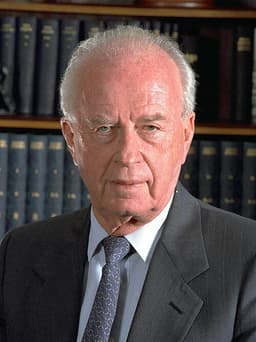
Yitzhak Rabin
General · Modern
66.4Total
Basic Information
Born
1883
1922
Died
1974
—
Era
Modern
Modern
Nationality
Brazil
Israel
Occupation
General
General
Civilization
Western
Middle Eastern
Score Comparison
Military (10%)
50.0
61.7
Political (20%)
68.0
82.0
Influence (20%)
51.8
68.0
Legacy (20%)
44.2
55.0
Leadership (15%)
62.0
78.0
Strategy (15%)
41.7
55.0
TOTAL
52.7
66.4
Eurico Gaspar Dutra — Complete Timeline
1945 AD
Elected President of BrazilPolitical Action◆ Major
Eurico Gaspar Dutra was elected President of Brazil, succeeding Get
Presidency1946 RepublicElection
Impact: national
1946 AD
Promulgated the 1946 ConstitutionReform◆ Major
Dutra oversaw the promulgation of a new democratic constitution, which restored civil liberties and established a presidential system. The 1946 Constitution replaced the authoritarian 1937 Charter and marked Brazil's return to democracy.
ConstitutionDemocracyPost-Estado Novo
Impact: nationalprogressive
Implemented the 'Dutra Plan' (Plano Dutra) for Economic DevelopmentReform
Dutra launched an economic development plan focused on infrastructure, energy, and transportation. The plan aimed to modernize the Brazilian economy and reduce dependence on imports, but its implementation was limited by fiscal constraints.
Economic PlanDevelopmentInfrastructure
Impact: nationalconstructive
1947 AD
Banned the Communist PartyPolitical Action◆ Major
Dutra banned the Brazilian Communist Party (PCB) and broke diplomatic relations with the Soviet Union. This action was part of his alignment with the United States during the early Cold War and aimed to suppress leftist opposition.
Cold WarCommunist BanAnti-Communism
Impact: nationaldestructive
1950 AD
Ended Presidency and RetiredPolitical Action
Dutra completed his term and was succeeded by Get
End of TermRetirementLegacy
Impact: national
Yitzhak Rabin — Complete Timeline
1967 AD
Chief of Staff during the Six-Day WarWar
As Chief of Staff of the Israel Defense Forces, Rabin commanded the Israeli military during the Six-Day War against Egypt, Jordan, and Syria. Israel captured the Sinai Peninsula, Gaza Strip, West Bank, East Jerusalem, and Golan Heights, reshaping the region.
Six-Day WarTerritorial ExpansionMilitary Victory
Impact: global
1993 AD
Signing of the Oslo AccordsPolitical Action
As prime minister, Rabin signed the Oslo Accords with PLO Chairman Yasser Arafat on the White House lawn. The agreement established the Palestinian Authority and set a framework for Palestinian self-governance in the West Bank and Gaza Strip.
Peace ProcessPalestiniansOslo
Impact: globalconstructive
1995 AD
Assassination at Peace RallyPolitical Action
Rabin was assassinated by Israeli extremist Yigal Amir after a peace rally in Tel Aviv. The assassination shocked Israel and the world, derailing the Oslo peace process and leading to a period of political instability.
AssassinationPeace ProcessPolitical Violence
Impact: globaltragic
Expert Analysis
Yitzhak Rabin vs Eurico Gaspar Dutra
# The General and the Peacemaker
On a warm November evening in 1995, Yitzhak Rabin stood before a crowd of 100,000 Israelis in Tel Aviv's Kings of Israel Square, singing a song of peace. Minutes later, three bullets from a pistol ended his life—and with it, the most promising hope for Middle East peace in a generation. Half a century earlier and half a world away, another general named Eurico Gaspar Dutra had also stood at a crossroads, but his path led him to a different fate: a quiet retirement after a full term as Brazil's first democratic president in nearly two decades. Both men were generals who became political leaders. Both emerged from military careers to shape their nations' destinies. Yet one died at the hands of an extremist, while the other died in bed at ninety-one. What drove such different outcomes?
Origins
Yitzhak Rabin was born in 1922 in Jerusalem, then part of British Mandate Palestine, to parents who had emigrated from Russia and were early Zionist pioneers. He grew up in a socialist agricultural community, a world where collective farming and military defense were intertwined. The Holocaust and the 1948 Arab-Israeli War shaped his generation: survival was not abstract but immediate. Rabin joined the Palmach, the elite strike force of the pre-state Jewish underground, at age eighteen. His world was one of constant siege, where military service was not a choice but a necessity.
Eurico Gaspar Dutra, born in 1883 in Cuiabá, Brazil, came from a different universe. His father was a shopkeeper; his mother, a homemaker. Brazil had not fought a major war since the Paraguayan War ended in 1870. Dutra entered the military academy at sixteen, not because of existential threat, but because the army offered a stable career for a young man from the provinces. For Dutra, the military was an institution of order and modernization, not survival. His Brazil was vast, peaceful, and largely indifferent to the world beyond its borders.
Rise to Power
Rabin's ascent was forged in fire. By 1964, at age forty-two, he became Chief of Staff of the Israel Defense Forces. Then came June 1967. In six days, Rabin's command delivered a stunning victory against Egypt, Jordan, and Syria—capturing the Sinai, Gaza, the West Bank, East Jerusalem, and the Golan Heights. The Six-Day War transformed Israel from a vulnerable state into a regional superpower. Rabin emerged as a national hero, but also as a man who understood the cost of war. He later said, "War is a cruel and stupid thing, and I have seen its face."
Dutra's path was quieter but no less significant. In 1945, as World War II ended, Brazil's dictator Getúlio Vargas faced a crisis. Dutra, then Minister of War and a close Vargas ally, was elected president in a transitional moment. He was the candidate of continuity—a military man who promised order and democracy. Where Rabin's rise came through battlefield success, Dutra's came through institutional maneuvering and the exhaustion of dictatorship.
Leadership & Governance
As prime minister, Rabin governed with the same directness he had shown as a general. He was not a charismatic speaker; he was a pragmatic, often gruff leader who believed in action over rhetoric. His greatest achievement was the 1993 Oslo Accords, signed on the White House lawn with Yasser Arafat. Rabin shook hands with his former enemy, declaring, "Enough of blood and tears." He pursued peace not out of idealism but from a cold calculation: Israel could not rule over millions of Palestinians forever without losing its Jewish and democratic character.
Dutra's governance was equally pragmatic but aimed at different goals. He oversaw the 1946 Constitution, which restored civil liberties and established a democratic framework after Vargas's Estado Novo dictatorship. His "Plano Dutra" focused on infrastructure—roads, energy, transportation—modernizing Brazil's economy. But he also banned the Communist Party in 1947, aligning Brazil with the United States in the emerging Cold War. Where Rabin took risks for peace, Dutra took risks for stability.
Triumph & Tragedy
Rabin's triumph was the Oslo Accords—a breakthrough that seemed to herald a new era. His tragedy was that peace came at a price he could not pay. The assassination on November 4, 1995, by Yigal Amir, a Jewish extremist opposed to the peace process, ended both his life and the momentum for a two-state solution. The square where he died was renamed Rabin Square. The song he sang that night became a national elegy.
Dutra's triumph was completing his term—a rare feat in Brazilian history. He left office in 1951, handing power back to Vargas, who had been democratically elected. His tragedy was more subtle: his economic policies failed to address Brazil's deep inequality, and his anti-communist crackdown alienated the left. But he died peacefully in 1974, a respected elder statesman.
Character & Destiny
Rabin was a man of contradictions: a warrior who became a peacemaker, a secular socialist who made peace with religious nationalists. His personality—blunt, impatient, deeply moral—drove him to take risks that others would not. He understood that history judges leaders not by their intentions but by their actions. His destiny was to be a martyr for a cause he had only recently embraced.
Dutra was a man of order: a general who believed in institutions, not charisma. He was cautious, conservative, and deeply loyal to the military establishment. His personality suited his era: Brazil needed stability after dictatorship, not bold transformation. His destiny was to be a transitional figure, remembered not for greatness but for competence.
Legacy
Rabin's legacy is both sacred and unfinished. He is remembered as the Israeli leader who dared to make peace, and whose murder proved how fragile that peace remains. His name adorns streets, schools, and a square in Tel Aviv. But the peace he sought has not come. The Oslo Accords collapsed into violence and occupation. Rabin's legacy is a question mark: What if he had lived?
Dutra's legacy is quieter but no less real. He is remembered as the general who gave Brazil democracy—however imperfect—and who kept the military in the barracks. His 1946 Constitution lasted until the 1964 coup, and his economic plans laid groundwork for later development. But he is not a household name, even in Brazil. His legacy is a foundation, not a monument.
Conclusion
The difference between Rabin and Dutra is not just personal but historical. Rabin lived in a nation forged by war, surrounded by enemies, where every decision carried existential weight. Dutra lived in a nation shaped by geography and inertia, where the greatest threat was not invasion but instability. One man died for peace; the other lived for order. Both were generals who tried to lead their nations through turbulent times. The tragedy of Rabin is that his vision was cut short. The quiet success of Dutra is that his vision was realized, and then forgotten. History remembers the dramatic and the violent; it often overlooks the steady and the stable. Yet both are necessary. The world needs generals who dare to make peace, and generals who know when to step aside.
Rankings
🥇
Yitzhak RabinLeader
Mil: 61.7Pol: 82.0Inf: 68.0
66.4
🥈
Eurico Gaspar Dutra
Mil: 50.0Pol: 68.0Inf: 51.8
52.7
+13.7 behind
How This Comparison Works
Algorithm
Each figure is scored on 6 dimensions (0—100 scale) based on structured historical data: Military (10%), Political (20%), Influence (20%), Legacy (20%), Leadership (15%), Strategy (15%). The weighted total produces the final ranking.
Data Sources
Scores are computed from structured sub-indicators in the database. Scale factors adjust for era (Ancient ×0.85, Modern ×1.0) and civilization size (Eastern ×1.05, Other ×0.80) to account for differences in population and military scale.
Maximum 3 Figures
Comparisons are limited to 2—3 figures to ensure readability and statistical meaningfulness.
Error Margins
±5 points per dimension — Sub-scores are derived from historical records with inherent uncertainty. Two figures within 5 points on a dimension should be considered roughly equivalent in that area.
Total Score Accuracy
±3 points overall — The weighted combination of 6 dimensions produces a total score with approximately ±3 points of uncertainty. Differences of less than 3 points are not statistically significant— the figures are effectively tied.
Known Limitations
- Historical records are incomplete and uneven across civilizations
- Figures from oral-tradition societies may be underrepresented
- Occupation labels can misclassify multi-role figures
- Scores measure capability and impact, not moral character
- Quantitative scoring is a comparison tool, not absolute truth
Capability Radar
Military (10%) — Battles & Warfare
Battles
10
65
Win Rate
15
70
Expansion
10
50
Political (20%) — Governance & Reform
Reform
50
65
Diplomacy
45
85
Economy
40
60
Influence (20%) — Cultural & Global Reach
Cultural
20
55
Global
20
70
Legacy (20%) — Historical Impact
Historical
30
75
Longevity
25
60
Leadership (15%) — Power & Stability
Tenure
55
70
Stability
50
40
Strategy (15%) — Tactics & Innovation
Strategy
25
75
Tactics
20
60
Reform
30
55
Similar Comparisons
Comments & Discussion
ReformistReaper6/16/2026
Rabin was a progressive general who understood peace requires painful compromise. Yet the comparison to Dutra—a man who banned gambling and outlawed communism while cozying up to Vargas—feels almost disrespectful. Rabin shook Arafat's hand on the White House lawn. Dutra shook hands with Perón's fascist thugs. One died advancing peace; the other died preserving reactionary order. That's the real difference: Rabin challenged his nation's soul; Dutra merely administered its stagnation.
历史长河观察员6/16/2026
把拉宾和杜特拉放在一起对比,本质上是在比较“革命将军”与“秩序将军”。拉宾从帕尔马赫突击队员到奥斯陆协议签署者,代表一种自我革新的勇气;而杜特拉从瓦加斯时期的战争部长到禁止共产党、镇压罢工的总统,代表的是官僚保守主义的胜利。一个在特拉维夫广场被自己人射杀,一个在里约热内卢的沙发上安然离世——这种结局差异不是偶然的,而是两种政治哲学的必然结果。
GrandStrategyGus6/16/2026
The framing is misleading. Rabin's assassination wasn't about generalship versus democracy—it was about a nation's unwillingness to accept territorial compromise. Dutra ruled Brazil during a period when its military was still civilian-controlled, unlike the IDF's deep entrenchment in Israeli society. More importantly, Dutra never faced the existential threat of neighboring armies or intifadas. Comparing outcomes without these structural realities is like comparing a suicide bomber's vest to a ra
铁幕下的独角兽6/16/2026
冷知识:杜特拉在1945年竞选时承诺“民主与秩序”,当选后立刻取缔了巴西共产党,关闭了工人组织。而拉宾从军时镇压过巴勒斯坦人,但晚年却愿意和PLO谈判。这才是对比的核心——一个是将军用枪口维持旧秩序,另一个是将军用谈判打破旧秩序。拉宾的悲剧在于他选择超越自己的军装;杜特拉的平庸在于他从未尝试脱下它。