Loading...
Eurico Gaspar Dutra vs Plutarco Elias Calles
Plutarco Elias Calles leads by 5.8 pts · 2 figures compared
…

Eurico Gaspar Dutra
General · Modern
52.7Total
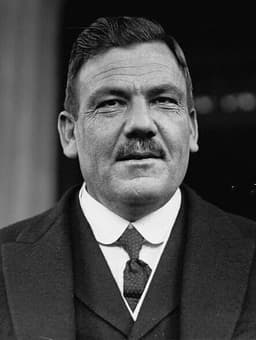
Plutarco Elias Calles
General · Modern
58.5Total
Basic Information
Born
1883
1877
Died
1974
1945
Era
Modern
Modern
Nationality
Brazil
Mexico
Occupation
General
General
Civilization
Western
Western
Score Comparison
Military (10%)
50.0
40.0
Political (20%)
68.0
70.3
Influence (20%)
51.8
68.0
Legacy (20%)
44.2
40.0
Leadership (15%)
62.0
78.0
Strategy (15%)
41.7
52.5
TOTAL
52.7
58.5
Eurico Gaspar Dutra — Complete Timeline
1945 AD
Elected President of BrazilPolitical Action◆ Major
Eurico Gaspar Dutra was elected President of Brazil, succeeding Get
Presidency1946 RepublicElection
Impact: national
1946 AD
Promulgated the 1946 ConstitutionReform◆ Major
Dutra oversaw the promulgation of a new democratic constitution, which restored civil liberties and established a presidential system. The 1946 Constitution replaced the authoritarian 1937 Charter and marked Brazil's return to democracy.
ConstitutionDemocracyPost-Estado Novo
Impact: nationalprogressive
Implemented the 'Dutra Plan' (Plano Dutra) for Economic DevelopmentReform
Dutra launched an economic development plan focused on infrastructure, energy, and transportation. The plan aimed to modernize the Brazilian economy and reduce dependence on imports, but its implementation was limited by fiscal constraints.
Economic PlanDevelopmentInfrastructure
Impact: nationalconstructive
1947 AD
Banned the Communist PartyPolitical Action◆ Major
Dutra banned the Brazilian Communist Party (PCB) and broke diplomatic relations with the Soviet Union. This action was part of his alignment with the United States during the early Cold War and aimed to suppress leftist opposition.
Cold WarCommunist BanAnti-Communism
Impact: nationaldestructive
1950 AD
Ended Presidency and RetiredPolitical Action
Dutra completed his term and was succeeded by Get
End of TermRetirementLegacy
Impact: national
Plutarco Elias Calles — Complete Timeline
1915 AD
Governorship of SonoraPolitical Action
Calles served as Governor of Sonora from 1915 to 1919, implementing radical reforms including land redistribution, anti-clerical laws, and labor rights. His governorship established him as a key figure in the Sonoran dynasty and a proponent of revolutionary change.
GovernorshipSonoraReforms
Impact: regionalconstructive
1924 AD
Presidency of MexicoPolitical Action◆ Major
Calles was elected President of Mexico in 1924, serving until 1928. His administration continued revolutionary reforms, including land reform, labor rights, and secularization, but also faced opposition from the Catholic Church and conservative groups.
PresidencyMexican RevolutionReforms
Impact: nationalconstructive
1926 AD
Cristero WarWar◆ Major
Calles enforced anti-clerical laws, including the Calles Law, which restricted the Catholic Church's role in society. This sparked the Cristero War (1926-1929), a violent rebellion by Catholic peasants against the state, resulting in tens of thousands of deaths.
Cristero WarAnti-clericalismReligious Conflict
Impact: nationaldestructive
1928 AD
MaximatoPolitical Action◆ Major
After his presidency, Calles remained the de facto ruler of Mexico during the Maximato (1928-1934), controlling puppet presidents. He continued to influence policy, but his power waned as President L
MaximatoPolitical ControlCárdenas
Impact: national
1929 AD
Founding of the National Revolutionary Party (PNR)Political Action
Calles founded the National Revolutionary Party (PNR) in 1929, which later became the Institutional Revolutionary Party (PRI). This party dominated Mexican politics for over 70 years, institutionalizing the revolution's legacy and centralizing power.
Political PartyPRIInstitutionalization
Impact: nationalconstructive
Expert Analysis
Plutarco Elias Calles vs Eurico Gaspar Dutra
# The General and the Strongman: Two Paths from Revolution to Power
On a sweltering afternoon in Mexico City, 1926, President Plutarco Elías Calles stood before Congress and signed into law a document that would ignite a civil war. The Calles Law, as it became known, stripped the Catholic Church of property rights, banned foreign priests, and closed religious schools. Across the Atlantic in Brazil, twenty years later, another general named Eurico Gaspar Dutra was doing something altogether different: he was signing a new democratic constitution that guaranteed freedom of worship. Two generals. Two post-revolutionary nations. Two radically different answers to the same question: how do you build a modern state?
Origins
Plutarco Elías Calles was born in 1877 in Guaymas, Sonora, into a world of provincial poverty. His father died before he turned three, and young Plutarco grew up working odd jobs—bartender, schoolteacher, innkeeper. The Mexican Revolution of 1910 swept him up not as an intellectual or a landowner, but as a practical man who saw that power came from organization and ruthlessness. He had no formal military training, yet he learned war by fighting it, rising through the ranks of the revolutionary forces under Venustiano Carranza and later Álvaro Obregón.
Eurico Gaspar Dutra, born six years later in 1883 in Cuiabá, Mato Grosso, came from a different tradition entirely. He was a career military man, graduating from Brazil’s military academy and rising steadily through the officer corps. While Calles learned politics in the chaos of revolution, Dutra learned it in the orderly halls of Brazil’s army, where loyalty to the state and hierarchy were paramount. When Getúlio Vargas’s Estado Novo dictatorship collapsed in 1945, Dutra was the military’s choice—a reliable general who could guide Brazil from authoritarianism to democracy without breaking the country apart.
Rise to Power
Calles’s ascent was violent and swift. By 1915, at age 38, he had secured the governorship of Sonora, where he implemented radical land redistribution and anti-clerical policies that foreshadowed his national agenda. His presidency, which began in 1924, came after the assassination of his mentor Obregón, thrusting Calles into the highest office with a mandate to continue the revolution’s unfinished work. But his real genius lay not in winning elections but in controlling what came after. When his presidential term ended in 1928, Calles simply refused to leave power. Instead, he invented the Maximato—a shadow presidency where he pulled the strings of puppet leaders for six more years.
Dutra’s path was smoother but no less significant. He was elected president in 1945 as the candidate of the Social Democratic Party, winning 55% of the vote. His rise was not about personal ambition so much as institutional necessity. Brazil needed a transition from Vargas’s fifteen-year dictatorship, and Dutra—a general who had served Vargas loyally but without fanaticism—was the bridge. Where Calles seized power through revolution and kept it through manipulation, Dutra received power as a trust and intended to pass it on.
Leadership & Governance
Their governing styles could not have been more different. Calles was a builder of institutions and a destroyer of enemies. The Cristero War of 1926-1929, triggered by his anti-clerical laws, cost tens of thousands of lives and left deep scars on Mexican society. Yet the same man who persecuted priests also founded the National Revolutionary Party (PNR) in 1929—a political machine so durable that it would rule Mexico for seven decades under various names, eventually becoming the Institutional Revolutionary Party (PRI). Calles understood that power required structure, and he built one that outlasted him.
Dutra, by contrast, governed with a lighter hand. His signature achievement was the 1946 Constitution, which restored civil liberties, established a democratic framework, and created checks on executive power. His economic "Dutra Plan" focused on infrastructure and modernization, though it lacked the transformative ambition of Calles’s land reforms. Where Calles used state power to crush opposition, Dutra banned the Communist Party in 1947 and broke relations with the Soviet Union—a Cold War move that pleased Washington but also reflected his military instincts for order. He was not a reformer in the Mexican mold; he was a stabilizer.
Triumph & Tragedy
Calles’s greatest triumph was the PRI itself—a party system that brought political stability to a country torn by decades of revolution. His tragedy was the Cristero War, a conflict born of his inability to compromise. When he enforced the Calles Law, he miscalculated the depth of Catholic faith among ordinary Mexicans. The war that followed was brutal, with priests hanged in public squares and rebels crucified by federal troops. Calles won militarily, but the cost in national unity was staggering.
Dutra’s triumph was the peaceful transition of power. In 1950, he completed his term and handed the presidency back to Getúlio Vargas—the very man he had replaced. This was no small feat in a country where military coups had been the norm. His tragedy was more subtle: the Dutra Plan, while well-intentioned, failed to address Brazil’s deep inequalities. The economy grew, but the poor remained poor. He was a competent administrator who lacked the vision to transform his nation.
Character & Destiny
Calles was a man of iron will and narrow vision. He believed that Mexico’s future required breaking the Church’s power, and he pursued this goal with a fanaticism that blinded him to human cost. His personality—cold, calculating, and utterly convinced of his own righteousness—shaped every decision. He could build a party but not a consensus; he could win a war but not a peace. When his own creation, the PRI, eventually turned against him and exiled him in 1936, it was a fitting end: the strongman devoured by his own machine.
Dutra was the opposite: a pragmatist who saw governance as management rather than crusade. His military background taught him to follow orders and respect hierarchy, which made him a reliable transition figure but not a transformative one. He was not cruel, but he was not visionary either. Brazil got stability from Dutra, but it also got mediocrity.
Legacy
Calles is remembered as the *Jefe Máximo*—the maximum chief—who shaped modern Mexico. The PRI dominated Mexican politics until 2000, and its DNA still influences the country. His secularization drive, though violent, permanently reduced the Church’s political power. Yet his legacy is contested: some see him as a nation-builder, others as a dictator who planted the seeds of authoritarian one-party rule.
Dutra is largely forgotten outside Brazil. Historians give him credit for the 1946 Constitution and the peaceful transition, but his name rarely appears in textbooks alongside Vargas or the military presidents who followed. He was a steward, not a shaper—a man who kept the ship steady but did not chart new waters.
Conclusion
Standing at the edge of their respective eras, both Calles and Dutra faced the same challenge: how to build a stable state after revolution. Calles answered with fire and iron, creating institutions through conflict. Dutra answered with patience and procedure, preserving democracy through restraint. One built a machine that lasted seventy years but crushed dissent. The other built a constitution that endured but left inequality untouched. In the end, their different paths remind us that leadership is always a choice between force and persuasion, between the immediate victory and the lasting peace. Both generals changed their nations. The question—for historians and for us—is which change was worth the cost.
Rankings
🥇
Plutarco Elias CallesLeader
Mil: 40.0Pol: 70.3Inf: 68.0
58.5
🥈
Eurico Gaspar Dutra
Mil: 50.0Pol: 68.0Inf: 51.8
52.7
+5.8 behind
How This Comparison Works
Algorithm
Each figure is scored on 6 dimensions (0—100 scale) based on structured historical data: Military (10%), Political (20%), Influence (20%), Legacy (20%), Leadership (15%), Strategy (15%). The weighted total produces the final ranking.
Data Sources
Scores are computed from structured sub-indicators in the database. Scale factors adjust for era (Ancient ×0.85, Modern ×1.0) and civilization size (Eastern ×1.05, Other ×0.80) to account for differences in population and military scale.
Maximum 3 Figures
Comparisons are limited to 2—3 figures to ensure readability and statistical meaningfulness.
Error Margins
±5 points per dimension — Sub-scores are derived from historical records with inherent uncertainty. Two figures within 5 points on a dimension should be considered roughly equivalent in that area.
Total Score Accuracy
±3 points overall — The weighted combination of 6 dimensions produces a total score with approximately ±3 points of uncertainty. Differences of less than 3 points are not statistically significant— the figures are effectively tied.
Known Limitations
- Historical records are incomplete and uneven across civilizations
- Figures from oral-tradition societies may be underrepresented
- Occupation labels can misclassify multi-role figures
- Scores measure capability and impact, not moral character
- Quantitative scoring is a comparison tool, not absolute truth
Capability Radar
Military (10%) — Battles & Warfare
Battles
10
45
Win Rate
15
50
Expansion
10
30
Political (20%) — Governance & Reform
Reform
50
85
Diplomacy
45
65
Economy
40
60
Influence (20%) — Cultural & Global Reach
Cultural
20
70
Global
20
60
Legacy (20%) — Historical Impact
Historical
30
75
Longevity
25
70
Leadership (15%) — Power & Stability
Tenure
55
70
Stability
50
55
Strategy (15%) — Tactics & Innovation
Strategy
25
55
Tactics
20
40
Reform
30
60
Similar Comparisons
Comments & Discussion
数据骗不了人6/16/2026
卡列斯治下墨西哥经济?1925到1929年平均增长率3.1%,全靠石油外资撑着。杜特拉时期巴西年均增长7.2%,建了第一条贯穿全国的公路网,还搞了石油公司开始找油。卡列斯拼命抽宗教血,杜特拉投资基础设施。数字不撒谎:杜特拉让巴西真正工业化起步,卡列斯只是在拆庙。
Cristero's Revenge6/16/2026
Calles didn't just pick a fight with the Church—he went thermonuclear on it. The Cristero War killed 90,000 Mexicans. What was it for? To ban processions? Meanwhile, Dutra handed Brazil a constitution that kept the peace AND modernized the state. Calles built a dictatorship dressed as a republic. Dutra built a democracy dressed as a military government. I know who I'd rather live under.
Estatista da Guanabara6/16/2026
杜特拉签了1946年宪法,保障宗教自由。卡列斯呢?他搞了个卡列斯法,直接没收教产、驱逐外国神父,结果引发基督军战争,死了九万人。卡列斯是法西斯式的“现代主义者”——用铁腕强推世俗化。杜特拉虽然当过独裁者瓦加斯的战争部长,但他至少知道什么时候该放手。军事强人不是一回事。
The Colossus of Clay6/16/2026
Let's talk legitimacy. Dutra was elected in 1945 after the Estado Novo fell—he actually won a popular vote. Calles? He rigged the 1928 election, then installed puppets for a decade. His "Maximato" was a shadow dictatorship. Dutra handed power to Vargas' successor in 1951 peacefully. Calles died in exile. One general built institutions. The other built a personality cult that crumbled the moment he left.
老军营新宪法6/16/2026
杜特拉最被低估的成就:1946年宪法至今是巴西民主的基石。他让工会合法化,允许共产党参选(虽然后来又禁了),还建立了最低工资制度。卡列斯?他搞了官方党PNR,后来变成PRI,统治墨西哥七十年——但那是用枪杆子搞出来的单一党制。杜特拉给了巴西一个制度框架,卡列斯给了墨西哥一个凯撒主义遗产。两条路,天壤之别。