Loading...
Eurico Gaspar Dutra vs John Lambert
John Lambert leads by 4.0 pts · 2 figures compared
…

Eurico Gaspar Dutra
General · Modern
52.7Total
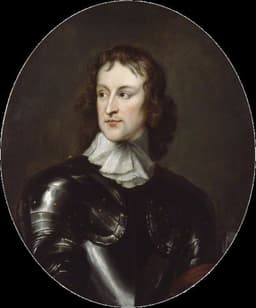
John Lambert
General · Modern
56.7Total
Basic Information
Born
1883
1619
Died
1974
1684
Era
Modern
Modern
Nationality
Brazil
England
Occupation
General
General
Civilization
Western
Western
Score Comparison
Military (10%)
50.0
70.0
Political (20%)
68.0
45.0
Influence (20%)
51.8
59.0
Legacy (20%)
44.2
50.0
Leadership (15%)
62.0
68.0
Strategy (15%)
41.7
55.0
TOTAL
52.7
56.7
Eurico Gaspar Dutra — Complete Timeline
1945 AD
Elected President of BrazilPolitical Action◆ Major
Eurico Gaspar Dutra was elected President of Brazil, succeeding Get
Presidency1946 RepublicElection
Impact: national
1946 AD
Promulgated the 1946 ConstitutionReform◆ Major
Dutra oversaw the promulgation of a new democratic constitution, which restored civil liberties and established a presidential system. The 1946 Constitution replaced the authoritarian 1937 Charter and marked Brazil's return to democracy.
ConstitutionDemocracyPost-Estado Novo
Impact: nationalprogressive
Implemented the 'Dutra Plan' (Plano Dutra) for Economic DevelopmentReform
Dutra launched an economic development plan focused on infrastructure, energy, and transportation. The plan aimed to modernize the Brazilian economy and reduce dependence on imports, but its implementation was limited by fiscal constraints.
Economic PlanDevelopmentInfrastructure
Impact: nationalconstructive
1947 AD
Banned the Communist PartyPolitical Action◆ Major
Dutra banned the Brazilian Communist Party (PCB) and broke diplomatic relations with the Soviet Union. This action was part of his alignment with the United States during the early Cold War and aimed to suppress leftist opposition.
Cold WarCommunist BanAnti-Communism
Impact: nationaldestructive
1950 AD
Ended Presidency and RetiredPolitical Action
Dutra completed his term and was succeeded by Get
End of TermRetirementLegacy
Impact: national
John Lambert — Complete Timeline
1648 AD
Battle of PrestonWar◆ Major
John Lambert commanded parliamentary forces at the Battle of Preston, defeating a Scottish royalist army. The victory helped secure the parliamentary cause in the Second English Civil War.
BattleEnglish Civil WarParliament
Impact: national
1653 AD
Drafted the Instrument of GovernmentPolitical Action◆ Major
John Lambert was the principal author of the Instrument of Government, the written constitution that established the Protectorate under Oliver Cromwell. The document created a Lord Protector and a Council of State, but was never fully implemented.
ConstitutionProtectorateCromwell
Impact: nationalconstructive
1662 AD
Exiled to GuernseyPolitical Action◆ Major
After the Restoration, John Lambert was tried for treason and exiled to the island of Guernsey. He spent the remainder of his life in captivity, never regaining political influence.
ExileRestorationPunishment
Impact: nationaltragic
Expert Analysis
John Lambert vs Eurico Gaspar Dutra
# The General Who Wrote a Constitution
On a grey winter morning in January 1662, John Lambert stood on a windswept quay in London, watching the coast of England recede as a ship carried him toward exile on the island of Guernsey. Twenty years earlier, he had been the architect of victory at the Battle of Preston, the man who helped bring a king to the scaffold. Now that king’s son was on the throne, and Lambert’s only remaining power was the ability to gaze at the horizon. Across the Atlantic and nearly three centuries later, another general—Eurico Gaspar Dutra—would leave office voluntarily in 1951, handing power back to his predecessor, Getúlio Vargas, and retiring to a quiet life of respect. Both men were soldiers who became rulers. One ended in chains; the other in honor. The difference was not in their ambition, but in the worlds they tried to build.
Origins
John Lambert was born in 1619 into the turbulent world of Yorkshire gentry, a class caught between the old feudal order and the rising tide of Puritan commerce. His father had fought for Parliament in earlier disputes, and young John absorbed a world where God, law, and the rights of property were being violently renegotiated. The English Civil War was not merely a political conflict—it was a theological earthquake. Lambert grew up believing that men could reshape government according to divine and rational principles.
Eurico Gaspar Dutra, born in 1883 in Cuiabá, Brazil, came of age in a very different kind of storm. Brazil had abolished slavery only five years before his birth, and the empire itself would fall in 1889. The young Dutra entered a military academy where the positivist motto “Order and Progress” was stamped on the flag. His Brazil was a nation trying to invent itself after centuries of Portuguese monarchy and plantation slavery. For Dutra, the army was not a revolutionary force but a stabilizing one—the institution that could guide Brazil from chaos to modernity without breaking everything first.
Rise to Power
Lambert’s ascent was meteoric and violent. At the Battle of Preston in 1648, he commanded parliamentary forces with a tactical brilliance that crushed a Scottish royalist army. He was not yet thirty, and already Oliver Cromwell trusted him above nearly all other men. Lambert understood the new model of warfare—disciplined, mobile, ideological. He rode with the saints, and the saints were winning.
Dutra’s path was slower and more institutional. He served as Minister of War under Vargas during the Estado Novo dictatorship, a period of state-led modernization and authoritarian control. When Vargas was overthrown in 1945, Dutra was the natural choice to lead the transition. He was elected president that same year, not as a revolutionary but as a bridge. Where Lambert had broken a kingdom, Dutra inherited a state and was asked to give it democratic form.
Leadership & Governance
Here the contrast sharpens into a chasm. Lambert was a constitutional visionary. In 1653, he drafted the Instrument of Government, the first written constitution in English history. It established a Protectorate under Cromwell, with a separation of powers between a Lord Protector, a council, and a parliament. Lambert believed that a nation could be governed by a document—by rational rules rather than royal blood. But he was also a soldier who had fought for a cause that refused to compromise. When Cromwell grew more authoritarian, Lambert opposed him, only to find himself outmaneuvered. The constitution he wrote could not contain the men who wrote it.
Dutra, by contrast, governed through consensus. In 1946, he promulgated a new democratic constitution that restored civil liberties and established a presidential system. He launched the Plano Dutra, an economic plan focused on infrastructure, energy, and transportation—boring, practical, and durable. But he also banned the Communist Party in 1947 and broke relations with the Soviet Union, aligning Brazil firmly with the United States in the emerging Cold War. Dutra was no liberal idealist. He was a pragmatist who understood that democracy required boundaries. His constitution worked because he did not ask it to do too much.
Triumph & Tragedy
Lambert’s greatest moment was also his most ambiguous. At Preston, he saved the parliamentary cause. But his tragedy was that he could not save the republic he helped create. After Cromwell’s death, Lambert tried to resist the Restoration of the monarchy with military force, but his army melted away. In 1662, Charles II had him tried for treason and exiled to Guernsey, where he spent the remaining twenty-two years of his life in a stone fortress, writing about flowers and theology. He died forgotten by the nation he had tried to remake.
Dutra’s triumph was quieter. He completed his term and retired in 1950, handing power back to Vargas in a peaceful transition that proved Brazil’s new democracy could survive its first test. His tragedy was that his economic plan, though ambitious, failed to transform Brazil’s deep inequalities. The Plano Dutra built roads and dams, but the poor remained poor. Yet Dutra died in 1974 at the age of ninety-one, a respected elder of the republic, his uniform hanging in a closet, his reputation intact.
Character & Destiny
Lambert was a man of principle and inflexibility. He believed that government could be written, that reason could tame power, and that the saints could rule without sin. These beliefs made him a great general and a failed politician. He could not bend, and so he broke.
Dutra was a man of institutions and patience. He believed that order must precede progress, that democracy required limits, and that a general’s duty was to step aside. These beliefs made him a mediocre reformer but a successful founder. He bent without breaking, and so he survived.
Legacy
Lambert is remembered, if at all, as a footnote—the man who wrote the constitution that failed, the general who lost the republic. The Instrument of Government was swept away in 1660, but its ideas would echo in later documents, from the American Constitution to the post-colonial charters of the twentieth century. Lambert’s ghost haunts every attempt to write freedom into law.
Dutra is remembered as the first president of Brazil’s Fourth Republic, a transitional figure who did not transform his country but did not destroy it either. His constitution lasted until 1967, when a military coup tore it up. Yet the democratic tradition he helped restore would eventually return, stronger for having been tested.
Conclusion
The difference between Lambert and Dutra is the difference between a revolutionary and a manager. Lambert tried to build heaven on earth and ended in exile. Dutra tried to build a stable house and ended in peace. Both were generals who became rulers; both believed that the sword could serve the law. But Lambert lived in a time when the old world was dying and the new one had not yet been born. Dutra lived in a time when the new world was already being built, and the only question was how to keep it standing.
In the end, the most dangerous thing a soldier can do is write a constitution. The safest is to hand it to someone else and walk away.
Rankings
🥇
John LambertLeader
Mil: 70.0Pol: 45.0Inf: 59.0
56.7
🥈
Eurico Gaspar Dutra
Mil: 50.0Pol: 68.0Inf: 51.8
52.7
+4.0 behind
How This Comparison Works
Algorithm
Each figure is scored on 6 dimensions (0—100 scale) based on structured historical data: Military (10%), Political (20%), Influence (20%), Legacy (20%), Leadership (15%), Strategy (15%). The weighted total produces the final ranking.
Data Sources
Scores are computed from structured sub-indicators in the database. Scale factors adjust for era (Ancient ×0.85, Modern ×1.0) and civilization size (Eastern ×1.05, Other ×0.80) to account for differences in population and military scale.
Maximum 3 Figures
Comparisons are limited to 2—3 figures to ensure readability and statistical meaningfulness.
Error Margins
±5 points per dimension — Sub-scores are derived from historical records with inherent uncertainty. Two figures within 5 points on a dimension should be considered roughly equivalent in that area.
Total Score Accuracy
±3 points overall — The weighted combination of 6 dimensions produces a total score with approximately ±3 points of uncertainty. Differences of less than 3 points are not statistically significant— the figures are effectively tied.
Known Limitations
- Historical records are incomplete and uneven across civilizations
- Figures from oral-tradition societies may be underrepresented
- Occupation labels can misclassify multi-role figures
- Scores measure capability and impact, not moral character
- Quantitative scoring is a comparison tool, not absolute truth
Capability Radar
Military (10%) — Battles & Warfare
Battles
10
65
Win Rate
15
60
Expansion
10
40
Political (20%) — Governance & Reform
Reform
50
55
Diplomacy
45
50
Economy
40
45
Influence (20%) — Cultural & Global Reach
Cultural
20
35
Global
20
30
Legacy (20%) — Historical Impact
Historical
30
50
Longevity
25
40
Leadership (15%) — Power & Stability
Tenure
55
60
Stability
50
40
Strategy (15%) — Tactics & Innovation
Strategy
25
65
Tactics
20
70
Reform
30
55
Similar Comparisons
Comments & Discussion
CROMWELL'S GHOST6/16/2026
Let’s be honest: Lambert was the brains behind the New Model Army, drafting the Instrument of Government that gave England its first written constitution. Dutra merely enforced his predecessor’s policies, banning gambling and jailing communists without a single original idea. Lambert’s exile shows a man who fought for a republic; Dutra’s peaceful retirement just proves he was Vargas’s dutiful janitor. One created history; the other cleaned up after it. Who truly wrote a constitution?