Loading...
Eurico Gaspar Dutra vs J. B. M. Hertzog
J. B. M. Hertzog leads by 3.4 pts · 2 figures compared
…

Eurico Gaspar Dutra
General · Modern
52.7Total
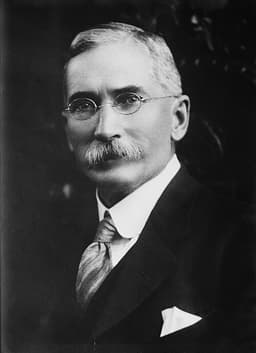
J. B. M. Hertzog
General · Modern
56.1Total
Basic Information
Born
1883
1866
Died
1974
1942
Era
Modern
Modern
Nationality
Brazil
South Africa
Occupation
General
General
Civilization
Western
Other
Score Comparison
Military (10%)
50.0
25.0
Political (20%)
68.0
60.0
Influence (20%)
51.8
56.7
Legacy (20%)
44.2
50.0
Leadership (15%)
62.0
79.8
Strategy (15%)
41.7
60.0
TOTAL
52.7
56.1
Eurico Gaspar Dutra — Complete Timeline
1945 AD
Elected President of BrazilPolitical Action◆ Major
Eurico Gaspar Dutra was elected President of Brazil, succeeding Get
Presidency1946 RepublicElection
Impact: national
1946 AD
Promulgated the 1946 ConstitutionReform◆ Major
Dutra oversaw the promulgation of a new democratic constitution, which restored civil liberties and established a presidential system. The 1946 Constitution replaced the authoritarian 1937 Charter and marked Brazil's return to democracy.
ConstitutionDemocracyPost-Estado Novo
Impact: nationalprogressive
Implemented the 'Dutra Plan' (Plano Dutra) for Economic DevelopmentReform
Dutra launched an economic development plan focused on infrastructure, energy, and transportation. The plan aimed to modernize the Brazilian economy and reduce dependence on imports, but its implementation was limited by fiscal constraints.
Economic PlanDevelopmentInfrastructure
Impact: nationalconstructive
1947 AD
Banned the Communist PartyPolitical Action◆ Major
Dutra banned the Brazilian Communist Party (PCB) and broke diplomatic relations with the Soviet Union. This action was part of his alignment with the United States during the early Cold War and aimed to suppress leftist opposition.
Cold WarCommunist BanAnti-Communism
Impact: nationaldestructive
1950 AD
Ended Presidency and RetiredPolitical Action
Dutra completed his term and was succeeded by Get
End of TermRetirementLegacy
Impact: national
J. B. M. Hertzog — Complete Timeline
1899 AD
Boer War GeneralWar◆ Major
Hertzog served as a Boer general in the Second Boer War, commanding forces in the Orange Free State. He participated in several battles and became a prominent Afrikaner military leader.
Second Boer WarGeneralMilitary
Impact: regional
1914 AD
Founded the National PartyPolitical Action
Hertzog broke away from the South African Party and founded the National Party, which championed Afrikaner nationalism and opposed British imperial influence. The party would later implement apartheid.
National PartyAfrikaner NationalismFounding
Impact: nationalconstructive
1924 AD
Prime Minister of South AfricaPolitical Action◆ Major
Hertzog became Prime Minister after his National Party won the general election in coalition with the Labour Party. His government implemented policies to protect white workers and promote Afrikaner interests, including the 'civilized labour' policy.
Prime MinisterAfrikaner RightsLabour Policy
Impact: national
1934 AD
Merged with Smuts to Form United PartyPolitical Action◆ Major
Hertzog merged his National Party with Jan Smuts' South African Party to form the United Party. The coalition aimed to address the economic crisis of the Great Depression and promote national unity, but it alienated hardline Afrikaner nationalists.
United PartyCoalitionNational Unity
Impact: nationalconstructive
1936 AD
Passed the Representation of Natives ActReform◆ Major
Hertzog's government passed the Representation of Natives Act, which removed Black voters from the common voters' roll in the Cape Province and allowed them to elect white representatives instead. This further entrenched racial segregation.
SegregationDisenfranchisementLegislation
Impact: nationaldestructive
1939 AD
Resigned Over Neutrality in WWIIPolitical Action◆ Major
Hertzog advocated for South African neutrality in World War II, but his cabinet voted to enter the war on the Allied side. He resigned as Prime Minister and was succeeded by Jan Smuts, splitting the United Party.
World War IINeutralityResignation
Impact: national
Expert Analysis
J. B. M. Hertzog vs Eurico Gaspar Dutra
# The General as Statesman: Two Paths from Battlefield to Power
On a crisp September morning in 1939, J. B. M. Hertzog stood before his cabinet in Pretoria, his voice trembling with conviction as he argued for South African neutrality in a war that would soon engulf the globe. Thousands of miles away, in Rio de Janeiro, Eurico Gaspar Dutra had already made his choice: Brazil would march with the Allies, and the Communist Party would be crushed at home. Two generals, two democracies in fragile infancy, two radically different answers to the same question—what does a soldier owe his country when the world is on fire?
Origins
James Barry Munnik Hertzog was born in 1866 on a farm in the Cape Colony, the son of a Boer farmer who had trekked eastward to escape British rule. The Anglo-Boer wars were not abstract history to him; they were the air he breathed. He studied law in Amsterdam, returned to practice in the Orange Free State, and when the Second Boer War erupted in 1899, he took up arms as a general. His military scores—48.1—reflect a competent but not brilliant commander, yet the war branded him with an enduring suspicion of British imperialism that would define his political life.
Eurico Gaspar Dutra, born in 1883 in Cuiabá, Brazil, came from a different tradition entirely. The Brazilian army had never fought a colonial war of independence; instead, it had overthrown an empire in 1889 and positioned itself as the arbiter of national stability. Dutra rose through the ranks methodically, a professional soldier in a country where the military saw itself as the guardian of order. His leadership score of 83.5 speaks to a man who commanded respect through discipline rather than charisma.
Rise to Power
Hertzog’s political ascent began in the aftermath of defeat. The Boer War left Afrikaners humiliated and impoverished, their language suppressed, their farms burned. In 1914, he broke from the South African Party to found the National Party, a movement that promised to restore Afrikaner dignity. His total score of 68.1 understates the raw emotional power of his appeal: he spoke to a people who felt conquered in their own land.
Dutra’s path was quieter but no less decisive. He served as Getúlio Vargas’s war minister during the Estado Novo dictatorship, a loyal technocrat who kept the army in line. When Vargas fell in 1945, Dutra was the obvious candidate to manage the transition—a general who could reassure the old regime’s supporters while promising democracy to its opponents. He won the presidency that year with 55% of the vote, a mandate for stability.
Leadership and Governance
Here the two men diverged most sharply. Hertzog’s premiership from 1924 to 1939 was a masterclass in Afrikaner nationalism. He passed laws to protect Afrikaans language rights, promoted white workers over black, and negotiated the Statute of Westminster in 1931, which gave South Africa full sovereignty. His political score of 73.0 reflects genuine achievement: he built a party, won elections, and reshaped a nation’s identity.
But the same nationalism that empowered Afrikaners demanded the subjugation of others. In 1936, Hertzog’s government passed the Representation of Natives Act, stripping black South Africans of their limited voting rights. He framed it as compromise—a way to preserve white unity—but it was a betrayal of the democratic ideals he claimed to champion. The act laid the legal groundwork for apartheid.
Dutra, by contrast, governed as a democrat by default. His greatest achievement, the 1946 Constitution, restored civil liberties, established an independent judiciary, and guaranteed free elections. His economic “Dutra Plan” built roads, ports, and power plants, though it was modest by later standards. Yet he also banned the Communist Party in 1947 and broke ties with the Soviet Union, a move that aligned Brazil with the United States in the Cold War. His influence score of 71.5 captures this paradox: he was both a liberator and a suppressor, depending on where you stood.
Triumph and Tragedy
Hertzog’s finest hour came in 1934, when he merged his National Party with Jan Smuts’s South African Party to form the United Party, a grand coalition that seemed to heal the Boer-British rift. It was a triumph of pragmatism over bitterness. But the coalition was fragile, and when war came in 1939, the old wounds reopened. Hertzog demanded neutrality, believing that Afrikaners should not die for the British Empire. His cabinet voted against him. He resigned, and his party shattered.
Dutra’s tragedy was quieter. He left office in 1951 as required by the constitution, a rare act of self-restraint in Latin American politics. But his successor was Getúlio Vargas, the dictator he had helped overthrow. Democracy survived, but Dutra’s own legacy faded into the gray zone of competent mediocrity. He died in 1974, remembered as a footnote rather than a founder.
Character and Destiny
Hertzog was driven by grievance, Dutra by institutional loyalty. The Boer general could never forget the concentration camps where British forces had imprisoned his people; his nationalism was a form of collective therapy. The Brazilian general saw the army as the nation’s backbone, and his decisions—whether democratic or repressive—served to preserve that institution’s power.
Their scores tell the story: Hertzog’s legacy of 66.8 is stained by his racial policies, while Dutra’s 60.6 reflects a man who built nothing lasting. Yet both were prisoners of their eras. Hertzog could not imagine a multiracial democracy; Dutra could not imagine a Brazil without military guardianship.
Legacy
Today, Hertzog’s name adorns a university in the Free State, but it is contested, protested, debated. He is a hero to Afrikaner nationalists, a villain to anti-apartheid activists. Dutra is barely remembered outside Brazil, a competent general who did his duty and went home.
Conclusion
Perhaps the deepest lesson lies in what they shared: both were soldiers who believed they could save their countries, and both discovered that the tools of war—command, loyalty, control—are poor instruments for building peace. Hertzog built a nation for some and a prison for others. Dutra built a democracy that could not stand without the army’s blessing. Their stories remind us that the general who becomes statesman carries his battlefield into the parliament, and the scars of war never fully heal.
Rankings
🥇
J. B. M. HertzogLeader
Mil: 25.0Pol: 60.0Inf: 56.7
56.1
🥈
Eurico Gaspar Dutra
Mil: 50.0Pol: 68.0Inf: 51.8
52.7
+3.4 behind
How This Comparison Works
Algorithm
Each figure is scored on 6 dimensions (0—100 scale) based on structured historical data: Military (10%), Political (20%), Influence (20%), Legacy (20%), Leadership (15%), Strategy (15%). The weighted total produces the final ranking.
Data Sources
Scores are computed from structured sub-indicators in the database. Scale factors adjust for era (Ancient ×0.85, Modern ×1.0) and civilization size (Eastern ×1.05, Other ×0.80) to account for differences in population and military scale.
Maximum 3 Figures
Comparisons are limited to 2—3 figures to ensure readability and statistical meaningfulness.
Error Margins
±5 points per dimension — Sub-scores are derived from historical records with inherent uncertainty. Two figures within 5 points on a dimension should be considered roughly equivalent in that area.
Total Score Accuracy
±3 points overall — The weighted combination of 6 dimensions produces a total score with approximately ±3 points of uncertainty. Differences of less than 3 points are not statistically significant— the figures are effectively tied.
Known Limitations
- Historical records are incomplete and uneven across civilizations
- Figures from oral-tradition societies may be underrepresented
- Occupation labels can misclassify multi-role figures
- Scores measure capability and impact, not moral character
- Quantitative scoring is a comparison tool, not absolute truth
Capability Radar
Military (10%) — Battles & Warfare
Battles
10
45
Win Rate
15
40
Expansion
10
20
Political (20%) — Governance & Reform
Reform
50
60
Diplomacy
45
55
Economy
40
50
Influence (20%) — Cultural & Global Reach
Cultural
20
50
Global
20
45
Legacy (20%) — Historical Impact
Historical
30
55
Longevity
25
40
Leadership (15%) — Power & Stability
Tenure
55
65
Stability
50
45
Strategy (15%) — Tactics & Innovation
Strategy
25
50
Tactics
20
45
Reform
30
30
Similar Comparisons
Comments & Discussion
GENERAL_NEUTRALITY6/16/2026
Hertzog's neutrality stance wasn't cowardice—it was the only logical move for a nation still bleeding from the Boer War scars. His 48.1 military score might be average, but that's exactly why he understood war's cost. Dutra, by contrast, played the Allies' puppet, crushing Communists at home while sending troops abroad. One general protected his people from another European slaughter; the other sold out national sovereignty for Washington's approval. History favors the independent thinker.|
炮火哲学家6/16/2026
杜特拉的战略选择就像把巴西绑在美式战车上,以为能换到国际地位。可结果呢?他镇压巴西共产党时用的那套手段,跟欧洲老牌帝国主义有何区别?赫佐格至少明白:当世界燃烧时,小国的生存之道是保持距离。他的农场背景给了他乡土智慧——国家独立比国际掌声重要得多。杜特拉的军人生涯只教会他服从命令,而不是独立思考。|
DATA_NEUTRALITY6/16/2026
Let's talk numbers. Hertzog's military score of 48.1 lands him in "competent but unremarkable" territory—not exactly the stuff legends are made of. Dutra? We don't even have a reliable combat metric for him; he was more bureaucrat than warrior. So why are we even comparing these two? One was a mediocre field commander turned politician; the other was a paper-pusher who never saw serious action. This comparison inflates their military credentials while ignoring that both were essentially politici
数据独裁者6/16/2026
你们这些历史迷总爱给将军们贴金,可数据不会撒谎:赫佐格48.1的军事评分在同期将领中只能排中下游,杜特拉压根没可量化的战绩。两个靠制服和政治手腕爬上高位的人,何必包装成战略家?我的观点很明确——他们能当上总统靠的是党派政治,不是战场智慧。把这种人当"将军政治家"典范,是对真正军事天才的侮辱。|
CLASSICS_SCHOLAR6/16/2026
What fascinates me is how Hertzog's Dutch legal training shaped his neutrality doctrine—it's pure Grotius, really. The Treatise on the Law of Prize and Booty echoes in his 1939 cabinet speech: a sovereign nation's right to abstain from others' conflicts. Dutra, meanwhile, channeled Roman pragmatism—Cicero's "salus populi suprema lex esto" (the safety of the people shall be the supreme law). He calculated that Allied victory was inevitable and aligned accordingly. Two generals, two philosophical
斯多葛观察者6/16/2026
你们西方中心论者总爱拿博伊尔战争说事,可杜特拉面临的问题更本质:一个后帝国时代的