Loading...
Eurico Gaspar Dutra vs Huang Xing
Huang Xing leads by 4.8 pts · 2 figures compared
…

Eurico Gaspar Dutra
General · Modern
52.7Total
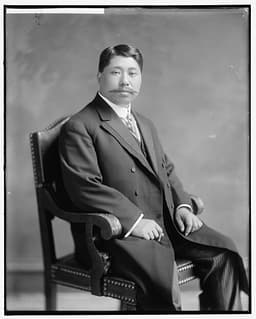
Huang Xing
General · Modern
57.5Total
Basic Information
Born
1883
1874
Died
1974
1916
Era
Modern
Modern
Nationality
Brazil
China
Occupation
General
General
Civilization
Western
Eastern
Score Comparison
Military (10%)
50.0
46.7
Political (20%)
68.0
53.8
Influence (20%)
51.8
62.0
Legacy (20%)
44.2
56.0
Leadership (15%)
62.0
62.0
Strategy (15%)
41.7
60.0
TOTAL
52.7
57.5
Eurico Gaspar Dutra — Complete Timeline
1945 AD
Elected President of BrazilPolitical Action◆ Major
Eurico Gaspar Dutra was elected President of Brazil, succeeding Get
Presidency1946 RepublicElection
Impact: national
1946 AD
Promulgated the 1946 ConstitutionReform◆ Major
Dutra oversaw the promulgation of a new democratic constitution, which restored civil liberties and established a presidential system. The 1946 Constitution replaced the authoritarian 1937 Charter and marked Brazil's return to democracy.
ConstitutionDemocracyPost-Estado Novo
Impact: nationalprogressive
Implemented the 'Dutra Plan' (Plano Dutra) for Economic DevelopmentReform
Dutra launched an economic development plan focused on infrastructure, energy, and transportation. The plan aimed to modernize the Brazilian economy and reduce dependence on imports, but its implementation was limited by fiscal constraints.
Economic PlanDevelopmentInfrastructure
Impact: nationalconstructive
1947 AD
Banned the Communist PartyPolitical Action◆ Major
Dutra banned the Brazilian Communist Party (PCB) and broke diplomatic relations with the Soviet Union. This action was part of his alignment with the United States during the early Cold War and aimed to suppress leftist opposition.
Cold WarCommunist BanAnti-Communism
Impact: nationaldestructive
1950 AD
Ended Presidency and RetiredPolitical Action
Dutra completed his term and was succeeded by Get
End of TermRetirementLegacy
Impact: national
Huang Xing — Complete Timeline
1905 AD
Co-founded the TongmenghuiPolitical Action◆ Major
Huang Xing co-founded the Tongmenghui (Revolutionary Alliance) in Tokyo with Sun Yat-sen. He became its military leader, organizing armed uprisings against the Qing dynasty.
TongmenghuiRevolutionMilitary
Impact: nationalconstructive
1911 AD
Led the Wuchang UprisingWar
Huang Xing led the Wuchang Uprising, which sparked the Xinhai Revolution. He commanded revolutionary forces against Qing troops, securing initial victories that led to the dynasty's collapse.
Xinhai RevolutionUprisingMilitary
Impact: nationalconstructive
1912 AD
Served as Minister of War in the RepublicPolitical Action◆ Major
Huang Xing served as Minister of War in the provisional government of the Republic of China. He worked to organize a national army and defend the republic against counter-revolutionary forces.
GovernmentMilitaryRepublic
Impact: nationalconstructive
1913 AD
Led the Second Revolution Against Yuan ShikaiWar◆ Major
Huang Xing led the Second Revolution, an armed uprising against President Yuan Shikai's authoritarian rule. The rebellion failed due to lack of coordination and military inferiority, forcing Huang into exile.
Second RevolutionYuan ShikaiExile
Impact: nationaltragic
1916 AD
Died in Exile in ShanghaiPolitical Action
Huang Xing died in Shanghai after returning from exile in Japan and the United States. His death marked the loss of a key military leader of the Chinese revolution, though his legacy endured.
DeathExileRevolution
Impact: nationaltragic
Expert Analysis
Huang Xing vs Eurico Gaspar Dutra
# The General and the Republic
On a sweltering October morning in 1945, Eurico Gaspar Dutra stood before the Brazilian Congress, his uniform crisp, his expression unreadable. He had just been elected the first president of a new democratic era, yet the man who now embodied Brazil's hope had spent the previous eight years as the right hand of a dictator. Half a world away and three decades earlier, Huang Xing lay dying in a Shanghai hospital bed, his lungs ravaged by tuberculosis, his spirit broken by exile. The co-founder of the Chinese republic had outlived his revolution by only a few years. Two generals, two republics, two vastly different fates—what made one man's path lead to a peaceful retirement and the other's to an early grave?
Origins
Eurico Gaspar Dutra was born in 1883 in Cuiabá, a dusty frontier town in Brazil's Mato Grosso region. The son of a modest shopkeeper, he entered the military academy at fourteen, absorbing the positivist creed that order was the prerequisite for progress. Brazil in the late nineteenth century was a sprawling empire transitioning to a republic, a nation where the military saw itself as the guardian of national unity. Dutra rose through the ranks slowly, methodically, learning that patience and loyalty were the currencies of power.
Huang Xing, born in 1874 in Hunan province, came of age in a China convulsed by foreign humiliation and internal decay. The Qing Dynasty was crumbling, its armies no match for Western gunboats. A brilliant student, Huang passed the imperial examinations but found the old system hollow. He traveled to Japan, where Chinese exiles plotted revolution, and discovered that the path to salvation lay not in reform but in violent overthrow. Where Dutra learned to work within institutions, Huang learned to smash them.
Rise to Power
Dutra's ascent was the product of careful alignment. He served as Minister of War under Getúlio Vargas's Estado Novo dictatorship, overseeing the Brazilian Expeditionary Force that fought alongside the Allies in Italy. When Vargas's authoritarian regime crumbled in 1945, Dutra did not cling to power—he ran for it. His election was a compromise: the military trusted him, the political establishment found him manageable, and the people were exhausted by dictatorship. He became president not through charisma but through the quiet accumulation of institutional support.
Huang Xing's rise was the opposite—a series of explosions. In 1905, he co-founded the Tongmenghui with Sun Yat-sen in Tokyo, becoming the revolutionary alliance's military commander. Unlike Dutra, who inherited an army, Huang had to build one from scratch. The Wuchang Uprising of 1911, which he led, was a desperate gamble. Revolutionary forces seized the city, and within months, the Qing Dynasty collapsed. Huang became Minister of War in the provisional government, but his authority was fragile, his army a patchwork of regional warlords and student volunteers.
Leadership & Governance
Dutra governed as he had soldiered: with discipline and caution. His presidency from 1946 to 1951 was defined by the promulgation of a new democratic constitution—a document that restored civil liberties and established a presidential system. He launched the Plano Dutra, an economic development plan focused on infrastructure, energy, and transportation. But his most controversial act was banning the Brazilian Communist Party in 1947, breaking diplomatic relations with the Soviet Union. This was not ideological fervor; it was cold calculation. Dutra understood that Brazil's fragile democracy needed to exclude those who would use it to destroy it.
Huang Xing's governance was the governance of crisis. As Minister of War, he struggled to create a national army from fractious provincial forces. His leadership during the Second Revolution of 1913—an armed uprising against President Yuan Shikai's authoritarian turn—was brave but doomed. The rebellion failed, and Huang fled into exile. His military strategy was sound but his political timing was disastrous; he fought when he should have negotiated, and negotiated when he should have fought.
Triumph & Tragedy
Dutra's greatest triumph was simple: he completed his term and handed power peacefully to his predecessor, Getúlio Vargas. In a region where military strongmen clung to power until death or coup, Dutra's retirement in 1950 was a quiet revolution. He returned to his farm, a respected elder statesman, and lived another twenty-four years.
Huang Xing's tragedy was the opposite. He died in 1916 at forty-two, having seen his revolution co-opted by warlords and autocrats. His greatest moment—the Wuchang Uprising—had sparked a republic, but he could not protect it. "To establish a republic," he once said, "one must first destroy the old order." He succeeded at destruction, but failed at construction. His death in Shanghai, surrounded by a handful of loyalists, marked the end of the revolutionary generation.
Character & Destiny
Dutra was a man of limits. He knew what he could achieve and what he could not. His military score of 43.8 reflects a general who was more administrator than warrior; his political score of 75.8 and leadership of 83.5 reveal a politician who understood that democracy required restraint. He was not brilliant, but he was reliable—and in Brazil's turbulent history, reliability was a form of genius.
Huang Xing was a man of passion. His military score of 42.1 and strategy of 57.6 show a commander who was brave but not brilliant; his political score of 62.7 reveals a revolutionary who could not master the peacetime arts. His leadership score of 75.5 reflects the loyalty he inspired, but his influence of 70.6 and legacy of 66.6 suggest a man whose impact was real but incomplete. He was a fire, not a foundation.
Legacy
Dutra is remembered in Brazil as a transitional figure—the general who gave democracy a chance. His constitution lasted until 1967, and his economic plans laid groundwork for later development. But he is also criticized for banning the Communist Party and for his close ties to the United States during the Cold War. His legacy is that of a conservative who, at a critical moment, chose order over freedom but also chose democracy over dictatorship.
Huang Xing is revered in China as a founding father, second only to Sun Yat-sen. His statue stands in revolutionary memorials, and his name is taught to schoolchildren. But his legacy is also one of failure: the republic he helped create collapsed into warlordism, and it would take another generation—and a very different kind of revolution—to unite China. He is remembered as a hero, but a tragic one.
Conclusion
Standing at the end of their lives, Dutra and Huang Xing present a profound contrast. One died in his bed at ninety-one, having seen his nation grow and change; the other died in exile at forty-two, having seen his dream slip away. Yet both were products of their times—Dutra of a Brazil where institutions, however flawed, could contain ambition; Huang of a China where institutions had collapsed and only the strong survived. The difference between them was not talent or courage, but the soil in which they planted their revolutions. Dutra cultivated a garden; Huang tried to raise a forest from ashes. Both were necessary. Both were brave. But only one lived to see the harvest.
Rankings
🥇
Huang XingLeader
Mil: 46.7Pol: 53.8Inf: 62.0
57.5
🥈
Eurico Gaspar Dutra
Mil: 50.0Pol: 68.0Inf: 51.8
52.7
+4.8 behind
How This Comparison Works
Algorithm
Each figure is scored on 6 dimensions (0—100 scale) based on structured historical data: Military (10%), Political (20%), Influence (20%), Legacy (20%), Leadership (15%), Strategy (15%). The weighted total produces the final ranking.
Data Sources
Scores are computed from structured sub-indicators in the database. Scale factors adjust for era (Ancient ×0.85, Modern ×1.0) and civilization size (Eastern ×1.05, Other ×0.80) to account for differences in population and military scale.
Maximum 3 Figures
Comparisons are limited to 2—3 figures to ensure readability and statistical meaningfulness.
Error Margins
±5 points per dimension — Sub-scores are derived from historical records with inherent uncertainty. Two figures within 5 points on a dimension should be considered roughly equivalent in that area.
Total Score Accuracy
±3 points overall — The weighted combination of 6 dimensions produces a total score with approximately ±3 points of uncertainty. Differences of less than 3 points are not statistically significant— the figures are effectively tied.
Known Limitations
- Historical records are incomplete and uneven across civilizations
- Figures from oral-tradition societies may be underrepresented
- Occupation labels can misclassify multi-role figures
- Scores measure capability and impact, not moral character
- Quantitative scoring is a comparison tool, not absolute truth
Capability Radar
Military (10%) — Battles & Warfare
Battles
10
35
Win Rate
15
30
Expansion
10
20
Political (20%) — Governance & Reform
Reform
50
60
Diplomacy
45
55
Economy
40
30
Influence (20%) — Cultural & Global Reach
Cultural
20
40
Global
20
40
Legacy (20%) — Historical Impact
Historical
30
55
Longevity
25
45
Leadership (15%) — Power & Stability
Tenure
55
40
Stability
50
25
Strategy (15%) — Tactics & Innovation
Strategy
25
45
Tactics
20
40
Reform
30
50
Similar Comparisons
Comments & Discussion
DUELIST6/16/2026
Dutra outlived his political usefulness the way a good sofa does—sturdy, quiet, and eventually reupholstered by an authoritarian regime. Huang Xing literally burned himself out leading doomed uprisings. Dutra died at 91 with a state funeral; Huang died at 42, exiled and broke. So who gave more? Dutra’s coup-backed presidency simply smoothed the path for Vargas’s return. Huang actually co-created a republic. One died for his revolution; the other died in his sleep. Pick your measure.
老革命判官6/16/2026
说Dutra活得像家具?没错,他安稳老去、体面下葬,但那根本不是什么胜利,只是跟独裁者握手成交的苟活。黄兴42岁咯血死在病床上,流亡、破产、众叛亲离,可他是真刀真枪打出民国的元勋。一个为了共和国把肺都吐出来了,一个靠当共和国总统把陈年旧账洗白。寿命长不算赢家,做了啥才算。
PEAK_POWER6/16/2026
The real difference: Huang Xing reached maximum influence in his 30s, organizing the Wuchang Uprising while on the run under a fake beard. Dutra peaked in his 60s, holding hands with Getúlio Vargas between coups. Huang’s whole political life spanned a decade of sizzling chaos; Dutra’s lasted thirty years of lukewarm stability. Which is harder—igniting a revolution from scratch, or being the guy who keeps the trains running after the dictator steps aside? One is fire, the other is furniture.
历史科判师6/16/2026
比较军事履历:黄兴在1911年革命中亲率敢死队冲击两广总督府,左手断两指仍不退。Dutra的最高军事成就?没打过一场独立战争,没带兵突破过真正的前线,他的仗都在会议室里签字打完。一个是被热血和子弹喂出来的战将,一个是被政党和官僚养出来的参谋。别把帝国边镇土官和革命统帅放在同一张桌上比——那是对Huang的侮辱。
CLASSICS_GUY6/16/2026
Dutra embodies the Roman ideal—steady, institutional, a general who became a consular figure and then faded quietly into the Senate. Huang Xing? Pure Greek tragedy: the brilliant strategist whose city falls, the exile whose lungs rot, the co-founder whom history forgets. Dutra served the machinery of state; Huang served the idea of a nation. And ideas, as we know, kill you. I'll take the general who builds aqueducts over the one who burns down the temple, but I won't pretend they're the same kin