Loading...
Eurico Gaspar Dutra vs Hideki Tojo
Hideki Tojo leads by 1.2 pts · 2 figures compared
…

Eurico Gaspar Dutra
General · Modern
52.7Total
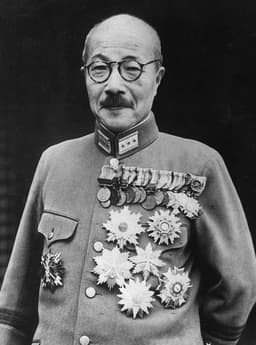
Hideki Tojo
General · Modern
53.9Total
Basic Information
Born
1883
1884
Died
1974
1948
Era
Modern
Modern
Nationality
Brazil
Japan
Occupation
General
General
Civilization
Western
Eastern
Score Comparison
Military (10%)
50.0
70.0
Political (20%)
68.0
48.0
Influence (20%)
51.8
55.0
Legacy (20%)
44.2
50.0
Leadership (15%)
62.0
53.2
Strategy (15%)
41.7
55.0
TOTAL
52.7
53.9
Eurico Gaspar Dutra — Complete Timeline
1945 AD
Elected President of BrazilPolitical Action◆ Major
Eurico Gaspar Dutra was elected President of Brazil, succeeding Get
Presidency1946 RepublicElection
Impact: national
1946 AD
Promulgated the 1946 ConstitutionReform◆ Major
Dutra oversaw the promulgation of a new democratic constitution, which restored civil liberties and established a presidential system. The 1946 Constitution replaced the authoritarian 1937 Charter and marked Brazil's return to democracy.
ConstitutionDemocracyPost-Estado Novo
Impact: nationalprogressive
Implemented the 'Dutra Plan' (Plano Dutra) for Economic DevelopmentReform
Dutra launched an economic development plan focused on infrastructure, energy, and transportation. The plan aimed to modernize the Brazilian economy and reduce dependence on imports, but its implementation was limited by fiscal constraints.
Economic PlanDevelopmentInfrastructure
Impact: nationalconstructive
1947 AD
Banned the Communist PartyPolitical Action◆ Major
Dutra banned the Brazilian Communist Party (PCB) and broke diplomatic relations with the Soviet Union. This action was part of his alignment with the United States during the early Cold War and aimed to suppress leftist opposition.
Cold WarCommunist BanAnti-Communism
Impact: nationaldestructive
1950 AD
Ended Presidency and RetiredPolitical Action
Dutra completed his term and was succeeded by Get
End of TermRetirementLegacy
Impact: national
Hideki Tojo — Complete Timeline
1941 AD
Attack on Pearl HarborWar
As Prime Minister, Hideki Tojo authorized the attack on the US naval base at Pearl Harbor, Hawaii. The surprise attack brought the United States into World War II. Tojo's decision was based on the belief that war with the US was inevitable due to resource embargoes and diplomatic failures.
World War IIPearl HarborUS-Japan War
Impact: globaldestructive
Appointment as Prime MinisterPolitical Action◆ Major
Hideki Tojo was appointed Prime Minister of Japan, replacing Fumimaro Konoe. He retained his position as Army Minister and later took on other portfolios, consolidating power. His appointment marked the ascendancy of the military faction in the Japanese government and the shift towards total war.
Prime MinisterMilitary GovernmentWorld War II
Impact: national
1942 AD
Fall of SingaporeWar◆ Major
Under Tojo's leadership, Japanese forces captured Singapore from the British in a swift campaign. The fall of Singapore was one of the worst British military defeats in history. It demonstrated Japanese military prowess and led to the occupation of a key strategic location in Southeast Asia.
World War IISingaporeJapanese Victory
Impact: global
1948 AD
Execution by the International Military Tribunal for the Far EastPolitical Action◆ Major
Hideki Tojo was found guilty of war crimes by the International Military Tribunal for the Far East and sentenced to death. He was executed by hanging on December 23, 1948. His trial and execution symbolized the Allied effort to hold Japanese leaders accountable for wartime atrocities.
War CrimesExecutionTokyo Trials
Impact: globaltragic
Expert Analysis
Hideki Tojo vs Eurico Gaspar Dutra
# The General as Statesman: Two Paths from the Barracks to Power
In the summer of 1945, as American bombers reduced Tokyo to ash, Hideki Tojo sat in his bunker and contemplated suicide. Half a world away, in Rio de Janeiro, Eurico Gaspar Dutra was preparing to take the oath of office as Brazil’s democratically elected president, a general who had helped end one dictatorship only to build a republic. Both men wore military uniforms. Both commanded armies. But the distance between them was not measured in miles alone—it was measured in the very meaning of power, duty, and the fate of nations.
Origins
Hideki Tojo was born in 1884 into a samurai lineage, the son of a lieutenant general who taught him that the sword was mightier than the pen. He grew up in a Japan hurtling toward modernization yet still haunted by feudal honor. The military academy drilled into him that obedience was the highest virtue, and he absorbed the ultranationalist creed that Japan’s destiny lay in expansion. By contrast, Eurico Gaspar Dutra, born one year earlier in 1883 in the cattle country of Mato Grosso, Brazil, came from a land of vast distances and fragile institutions. His Brazil was a sleepy agrarian empire that had only abolished slavery in 1888, and the army he joined was less a tool of conquest than a force for national consolidation. Where Tojo’s Japan was a crowded island straining against its borders, Dutra’s Brazil was a continent waiting to be governed.
Rise to Power
Tojo’s ascent was brutal and direct. He served as a military attaché in Germany, studied the Prussian war machine, and returned to Japan convinced that only total mobilization could save the empire. By 1940, as Army Minister, he pushed for the Tripartite Pact with Nazi Germany and Fascist Italy. When Prime Minister Fumimaro Konoe hesitated at the prospect of war with the United States, Tojo forced him out. On October 18, 1941, he became prime minister while retaining his army portfolio—a concentration of power that alarmed even his colleagues.
Dutra’s path was more circuitous. He had served as War Minister under Getúlio Vargas during the Estado Novo dictatorship, a regime that banned political parties and crushed dissent. Yet when Vargas’s own generals turned against him in 1945, Dutra did not cling to power. Instead, he resigned from the army, ran for president as the candidate of the Social Democratic Party, and won a free election. The general who had once enforced authoritarian rule now became its gravedigger.
Leadership & Governance
Their contrasting styles revealed everything. Tojo governed by decree, micromanaging both military campaigns and domestic policy. He authorized the attack on Pearl Harbor in December 1941, a gamble he believed would cripple American resolve. For a year, his strategy worked brilliantly: Singapore fell in February 1942, and Japanese forces swept through Southeast Asia. But Tojo’s leadership was brittle. He tolerated no dissent, silenced critics, and refused to acknowledge Japan’s dwindling industrial capacity. By 1944, when American forces breached Japan’s defensive perimeter, he could offer only slogans of “spiritual victory” while his people starved.
Dutra governed through institutions. In 1946, he promulgated a new democratic constitution that restored civil liberties, established a presidential system, and guaranteed free elections. He launched the “Dutra Plan” for economic development, investing in highways, hydroelectric dams, and ports—the physical infrastructure of a modern nation. Yet his record was not without shadows. In 1947, he banned the Brazilian Communist Party and broke relations with the Soviet Union, a move that pleased Washington but tarnished his democratic credentials. Where Tojo demanded total loyalty, Dutra sought stability through compromise. He completed his term in 1951 and handed power back to Vargas, the very man he had helped overthrow.
Triumph & Tragedy
Tojo’s greatest triumph—the fall of Singapore in February 1942, where 80,000 British troops surrendered to a smaller Japanese force—was also the seed of his tragedy. Victory bred overconfidence. He refused to negotiate peace even after the Battle of Midway in June 1942 turned the tide. By 1945, his country lay in ruins, its cities firebombed, its people reduced to eating acorns. Captured by American forces, he attempted suicide by shooting himself in the chest but survived. On December 23, 1948, he was hanged as a war criminal.
Dutra’s triumph was quieter but more lasting. He presided over Brazil’s transition from dictatorship to democracy without civil war. His economic plan, though modest, laid the groundwork for the industrialization that would transform Brazil in the 1950s. His tragedy was that he is largely forgotten—a transitional figure who lacked Vargas’s charisma or the ambition to build a personal cult. He retired to his ranch in Mato Grosso and died in 1974 at the age of 91, a general who had outlived his era.
Character & Destiny
Tojo was a man of iron will and narrow vision. He once said, “Sometimes it is necessary to close one’s eyes to the truth.” That willful blindness—to Japan’s material inferiority, to the suffering of conquered peoples, to the inevitable defeat—was his undoing. He could not imagine surrender because his entire identity was built on victory.
Dutra was pragmatic to a fault. He understood that power in a democracy is temporary, that a general’s job is not to rule but to return to the barracks. His legacy is the 1946 Constitution, which endured for nearly two decades until the 1964 military coup overthrew it. Yet even that coup’s generals claimed they were restoring Dutra’s vision of order.
Legacy
Tojo’s legacy is a warning: he is remembered as the architect of Japan’s catastrophe, a symbol of militarism run amok. His name appears in history books alongside Hitler and Mussolini, a shorthand for imperial aggression. In Japan, he is rarely honored; his ashes were scattered at sea by American soldiers.
Dutra’s legacy is more ambiguous. Brazilians remember him, if at all, as a competent caretaker who steered the country through a fragile transition. His economic plan is studied by historians but not celebrated. Yet in an age of strongmen, his willingness to surrender power stands out. He proved that a general could be a democrat—not because he loved liberty, but because he loved order, and democracy was the most orderly path.
Conclusion
The difference between Tojo and Dutra is not a matter of good versus evil. Both were products of their time, their nations, their institutions. Tojo’s Japan was a pressure cooker of ambition and honor; Dutra’s Brazil was a sprawling experiment in building a nation. One chose war and was consumed by it. The other chose politics and was forgotten by it. In the end, the question they pose is not which was better, but which was more human: the general who could not stop fighting, or the general who knew when to stop?
Rankings
🥇
Hideki TojoLeader
Mil: 70.0Pol: 48.0Inf: 55.0
53.9
🥈
Eurico Gaspar Dutra
Mil: 50.0Pol: 68.0Inf: 51.8
52.7
+1.2 behind
How This Comparison Works
Algorithm
Each figure is scored on 6 dimensions (0—100 scale) based on structured historical data: Military (10%), Political (20%), Influence (20%), Legacy (20%), Leadership (15%), Strategy (15%). The weighted total produces the final ranking.
Data Sources
Scores are computed from structured sub-indicators in the database. Scale factors adjust for era (Ancient ×0.85, Modern ×1.0) and civilization size (Eastern ×1.05, Other ×0.80) to account for differences in population and military scale.
Maximum 3 Figures
Comparisons are limited to 2—3 figures to ensure readability and statistical meaningfulness.
Error Margins
±5 points per dimension — Sub-scores are derived from historical records with inherent uncertainty. Two figures within 5 points on a dimension should be considered roughly equivalent in that area.
Total Score Accuracy
±3 points overall — The weighted combination of 6 dimensions produces a total score with approximately ±3 points of uncertainty. Differences of less than 3 points are not statistically significant— the figures are effectively tied.
Known Limitations
- Historical records are incomplete and uneven across civilizations
- Figures from oral-tradition societies may be underrepresented
- Occupation labels can misclassify multi-role figures
- Scores measure capability and impact, not moral character
- Quantitative scoring is a comparison tool, not absolute truth
Capability Radar
Military (10%) — Battles & Warfare
Battles
10
65
Win Rate
15
40
Expansion
10
70
Political (20%) — Governance & Reform
Reform
50
30
Diplomacy
45
35
Economy
40
25
Influence (20%) — Cultural & Global Reach
Cultural
20
30
Global
20
55
Legacy (20%) — Historical Impact
Historical
30
55
Longevity
25
40
Leadership (15%) — Power & Stability
Tenure
55
60
Stability
50
20
Strategy (15%) — Tactics & Innovation
Strategy
25
50
Tactics
20
55
Reform
30
45
Similar Comparisons
Comments & Discussion
IronFanatic6/16/2026
Calling Tojo a 'statesman' is like calling a wildfire a gardener. He was a militarist who turned Japan into a death cult, signing off on the rape of Nanking and starving POWs. Dutra, flawed as he was, actually shepherded Brazil back to democracy after Vargas. Comparing them is a false equivalence that whitewashes Tojo's war crimes. The man literally ordered his own people to fight with bamboo spears. That's not statesmanship; it's mass delusion.
经典学究6/16/2026
把东条和杜特拉并列在‘将领治国’标题下,本身就是对亚里士多德政体分类的侮辱。东条是暴君,杜特拉至多是僭主。东条推动《国家总动员法》彻底扼杀公民社会,而杜特拉在1946年颁布了巴西至今沿用的宪法。一个用军靴踩碎宪政,一个用军靴勉强撑起宪政——这哪是两种道路,分明是文明与野蛮的距离。
历史炮手6/16/2026
扯什么‘出身相似’?东条他妈的是武士道狂热分子,南京大屠杀时他是关东军宪兵司令,手上沾满鲜血。杜特拉再差,至少没搞过细菌战或人体实验。你拿‘封建荣誉’洗白东条侵略逻辑,却忽略他作为东条英机下令‘三光政策’的直接责任。杜特拉是旧式军人,东条是现代战争罪犯——别用伪对称恶心人。
修正铁锤6/16/2026
分析说杜特拉‘帮助结束独裁’,笑死——他就是在瓦加斯政变里当陆军部长打内战起家的。1945年他逼瓦加斯下台,转头就搞《国家安全法》镇压工人,和美国签《里约条约》把巴西绑上冷战战车。东条至少是失败帝国的亲手赌徒,杜特拉却是成功转行做美国小弟的投机将军。两种路线:一个烧死自己国家,一个把国家卖给出价最高者。哪个更脏?我选后者。
ColdScroll516/16/2026
The 'analysis' cherry-picks to make Dutra look saintly. Sure, he legalized the Communist Party in 1945, but by 1947 he'd banned it again and aligned Brazil with the CIA. He kept Vargas' labor laws to buy popularity while purging leftists. Tojo at least had a consistent ideology—Dutra was just a weathervane. Show me the casualty numbers from Brazil's cracked democracy versus Japan's war machine—context matters, but so does hypocrisy.