Loading...
Eurico Gaspar Dutra vs Feng Guozhang
Eurico Gaspar Dutra leads by 3.6 pts · 2 figures compared
…

Eurico Gaspar Dutra
General · Modern
52.7Total
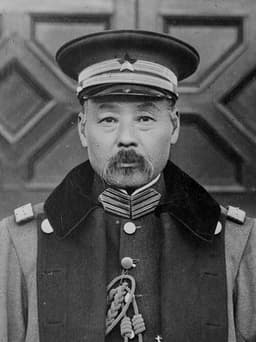
Feng Guozhang
General · Modern
49.1Total
Basic Information
Born
1883
1859
Died
1974
1919
Era
Modern
Modern
Nationality
Brazil
China
Occupation
General
General
Civilization
Western
Eastern
Score Comparison
Military (10%)
50.0
30.0
Political (20%)
68.0
61.3
Influence (20%)
51.8
54.9
Legacy (20%)
44.2
45.8
Leadership (15%)
62.0
40.0
Strategy (15%)
41.7
57.5
TOTAL
52.7
49.1
Eurico Gaspar Dutra — Complete Timeline
1945 AD
Elected President of BrazilPolitical Action◆ Major
Eurico Gaspar Dutra was elected President of Brazil, succeeding Get
Presidency1946 RepublicElection
Impact: national
1946 AD
Promulgated the 1946 ConstitutionReform◆ Major
Dutra oversaw the promulgation of a new democratic constitution, which restored civil liberties and established a presidential system. The 1946 Constitution replaced the authoritarian 1937 Charter and marked Brazil's return to democracy.
ConstitutionDemocracyPost-Estado Novo
Impact: nationalprogressive
Implemented the 'Dutra Plan' (Plano Dutra) for Economic DevelopmentReform
Dutra launched an economic development plan focused on infrastructure, energy, and transportation. The plan aimed to modernize the Brazilian economy and reduce dependence on imports, but its implementation was limited by fiscal constraints.
Economic PlanDevelopmentInfrastructure
Impact: nationalconstructive
1947 AD
Banned the Communist PartyPolitical Action◆ Major
Dutra banned the Brazilian Communist Party (PCB) and broke diplomatic relations with the Soviet Union. This action was part of his alignment with the United States during the early Cold War and aimed to suppress leftist opposition.
Cold WarCommunist BanAnti-Communism
Impact: nationaldestructive
1950 AD
Ended Presidency and RetiredPolitical Action
Dutra completed his term and was succeeded by Get
End of TermRetirementLegacy
Impact: national
Feng Guozhang — Complete Timeline
1912 AD
Command of the Beiyang ArmyPolitical Action◆ Major
Feng Guozhang became a key commander of the Beiyang Army under Yuan Shikai. He controlled military forces in the Zhili region, establishing himself as a major warlord in northern China after the fall of the Qing dynasty.
Beiyang ArmyWarlordMilitary Command
Impact: national
1916 AD
Appointment as Vice PresidentPolitical Action◆ Major
Feng Guozhang was elected Vice President of the Republic of China under President Li Yuanhong. This position gave him significant political influence during the early Republican period.
Republic of ChinaGovernmentPolitics
Impact: national
1917 AD
Acting PresidencyPolitical Action◆ Major
Feng Guozhang became Acting President of the Republic of China after Li Yuanhong's resignation. He served from 1917 to 1918, facing challenges from rival warlords and struggling to maintain central authority.
Republic of ChinaPresidencyWarlord Era
Impact: national
1918 AD
Conflict with Duan QiruiPolitical Action◆ Major
Feng Guozhang engaged in a power struggle with Premier Duan Qirui, leading to the split of the Beiyang clique into the Zhili and Anhui factions. This conflict weakened the central government and intensified warlord warfare.
Beiyang CliquePower StruggleWarlord Era
Impact: nationaldestructive
Expert Analysis
Feng Guozhang vs Eurico Gaspar Dutra
# The General as President: Feng Guozhang and Eurico Gaspar Dutra
In the winter of 1917, a Chinese general in a crisp uniform stood in the presidential palace in Beijing, having just accepted the seal of the Republic of China. Thousands of miles away, in Rio de Janeiro, another general would wait nearly three decades before taking a similar oath, ushering in a new democratic era for Brazil. Both men were soldiers who became civilians, commanders who traded their swords for constitutions. But the paths they walked, and the worlds they left behind, could not have been more different. What drove one to preside over a nation crumbling into warlord chaos, and the other to guide his country toward democratic stability?
Origins
Feng Guozhang was born in 1859, the year that marked the twilight of the Qing Dynasty. He grew up in a China convulsed by the Taiping Rebellion and the humiliations of the Opium Wars, a world where the old order was visibly rotting from within. His generation of young men sought salvation in military modernization, and Feng found his calling at the Beiyang Military Academy, where he studied under Yuan Shikai. He emerged as a product of the late Qing reforms—competent, ambitious, but fundamentally a creature of the old system, trained to serve a dynasty that could no longer command loyalty.
Eurico Gaspar Dutra, born in 1883 in Mato Grosso, Brazil, came of age in a different world. Brazil had been a stable empire until 1889, when it became a republic, and the army had long been a force for national integration. Dutra entered military life during the First Brazilian Republic, a period of oligarchic politics but relative peace. He rose through the ranks not in the shadow of a collapsing empire, but within an established state. Where Feng learned to wield power in a vacuum, Dutra learned to operate within institutions.
Rise to Power
Feng’s ascent was inseparable from the chaos that followed the 1911 Revolution. When Yuan Shikai became president, Feng was his loyal general, commanding the Beiyang Army in the Zhili region. In 1912, he took command of key military forces, positioning himself as a pillar of the new republic—but a pillar built on soldiers, not laws. The real turning point came in 1916, when Yuan died and the fragile republic fractured. Feng was elected Vice President under Li Yuanhong, a civilian figurehead. It was a classic warlord move: take a constitutional position while holding real military power.
Dutra’s rise was slower and more institutional. He served as Minister of War under Getúlio Vargas’s Estado Novo dictatorship, a regime that suspended democracy but maintained order. When World War II ended and Vargas’s authoritarian system became untenable, Dutra was the natural candidate to lead the transition. In 1945, he was elected president, the first under the 1946 Republic. His path to power was not through a coup but through a ballot box—a testament to Brazil’s comparatively stable political evolution.
Leadership & Governance
Feng Guozhang’s presidency, from 1917 to 1918, was a study in fragility. He inherited a nation already splintered into warlord fiefdoms. His greatest challenge came from Premier Duan Qirui, a fellow Beiyang general who controlled the cabinet and the northern armies. The power struggle between them split the Beiyang clique into the Zhili and Anhui factions, a fracture that would fuel decades of civil war. Feng tried to govern through negotiation and compromise, but he had no independent base of support. His political score of 81.7 reflects his skill at maneuvering within the warlord system, but his military score of 62.6 suggests he was never a dominant commander. He was a politician in uniform, but the uniform mattered more than the politician.
Dutra governed in a completely different context. His presidency, from 1946 to 1951, began with a democratic constitution that restored civil liberties and established a presidential system. He launched the "Dutra Plan" for economic development, focusing on infrastructure, energy, and transportation—a modernizing agenda that aimed to industrialize Brazil. But he also banned the Communist Party in 1947 and broke relations with the Soviet Union, aligning Brazil with the United States in the early Cold War. His leadership score of 83.5 suggests he commanded respect, but his strategic score of 56.4 indicates his economic plans were more ambitious than effective. Still, he completed his term and handed power back to Vargas through elections—a peaceful transition that was itself a victory.
Triumph & Tragedy
Feng’s greatest moment was also his most tragic: becoming Acting President in 1917. He had reached the highest office, but the office itself was hollow. His real tragedy was that he could not prevent the fragmentation he helped create. By 1918, he was forced to step down, his presidency a brief interlude in a longer story of collapse. He died in 1919, just as the Warlord Era was reaching its peak.
Dutra’s triumph was the 1946 Constitution, which gave Brazil a democratic framework that lasted until 1964. His tragedy, perhaps, was that his economic plan failed to transform Brazil’s deep inequalities, and his anti-communist crackdown set a precedent for future military interventions. But he avoided the fate of so many generals-turned-presidents: he left office alive, respected, and with the system intact.
Character & Destiny
Feng was a survivor in a world of predators. He was cautious, calculating, and always aware of his limited power. His political maneuvering kept him alive but never made him master of his fate. Dutra was a builder in a world of possibilities. He was disciplined, methodical, and willing to work within democratic constraints. Their personalities reflected their environments: Feng’s cunning was necessary for survival in a collapsing state; Dutra’s steadiness was possible because the state itself was stable.
Legacy
Feng Guozhang is remembered today as a footnote—a warlord who briefly held the presidency but could not stop the chaos. His total score of 74.2 places him as a competent but tragic figure, a man who played the game but could not change the rules. Dutra’s legacy score of 60.6 is modest, but his role as the first president of Brazil’s democratic republic is historically significant. He is not a hero, but he is a symbol of transition.
Conclusion
Two generals, two presidencies, two fates. Feng Guozhang governed a nation that was falling apart; Eurico Gaspar Dutra governed a nation that was coming together. The difference was not in their abilities—both were capable men—but in the worlds they inherited. One inherited a vacuum, the other a structure. In the end, the general who wanted to save the republic could only watch it break, while the general who served a dictatorship helped build a democracy. Their stories remind us that leadership is never just about the person; it is about the moment, the system, and the fragile institutions that can make even a soldier into a statesman—or leave him as just another casualty of history.
Rankings
🥇
Eurico Gaspar DutraLeader
Mil: 50.0Pol: 68.0Inf: 51.8
52.7
🥈
Feng Guozhang
Mil: 30.0Pol: 61.3Inf: 54.9
49.1
+3.6 behind
How This Comparison Works
Algorithm
Each figure is scored on 6 dimensions (0—100 scale) based on structured historical data: Military (10%), Political (20%), Influence (20%), Legacy (20%), Leadership (15%), Strategy (15%). The weighted total produces the final ranking.
Data Sources
Scores are computed from structured sub-indicators in the database. Scale factors adjust for era (Ancient ×0.85, Modern ×1.0) and civilization size (Eastern ×1.05, Other ×0.80) to account for differences in population and military scale.
Maximum 3 Figures
Comparisons are limited to 2—3 figures to ensure readability and statistical meaningfulness.
Error Margins
±5 points per dimension — Sub-scores are derived from historical records with inherent uncertainty. Two figures within 5 points on a dimension should be considered roughly equivalent in that area.
Total Score Accuracy
±3 points overall — The weighted combination of 6 dimensions produces a total score with approximately ±3 points of uncertainty. Differences of less than 3 points are not statistically significant— the figures are effectively tied.
Known Limitations
- Historical records are incomplete and uneven across civilizations
- Figures from oral-tradition societies may be underrepresented
- Occupation labels can misclassify multi-role figures
- Scores measure capability and impact, not moral character
- Quantitative scoring is a comparison tool, not absolute truth
Capability Radar
Military (10%) — Battles & Warfare
Battles
10
45
Win Rate
15
40
Expansion
10
35
Political (20%) — Governance & Reform
Reform
50
30
Diplomacy
45
45
Economy
40
25
Influence (20%) — Cultural & Global Reach
Cultural
20
30
Global
20
20
Legacy (20%) — Historical Impact
Historical
30
40
Longevity
25
25
Leadership (15%) — Power & Stability
Tenure
55
55
Stability
50
20
Strategy (15%) — Tactics & Innovation
Strategy
25
55
Tactics
20
50
Reform
30
40
Similar Comparisons
Comments & Discussion
数据怀疑家6/16/2026
别往这些将军脸上贴金了——冯国璋当总统时,北洋军实际控制的省份不到六成,各省税收根本不听中央指挥。杜特拉统治巴西时,GDP年均增长才3.2%,通胀却飙到12%,这叫“民主稳定”?他们把剑换成宪法,可剑上的血都没擦干净。两人都是穿军装的政客,到底谁更差,比烂有意思吗?|zh
历史爱好者6/16/2026
冯国璋这人挺拧巴的——他一边想学袁世凯搞强人政治,一边又怕被骂独裁,结果两头不讨好。杜特拉呢?他在巴西搞的那套“社会秩序”说白了就是军队管一切,工人罢工就镇压,农民闹事就开枪。我看这两人半斤八两,都是把军队的臭毛病带到总统府里。真要选一个,我选冯国璋——至少他碰到的烂摊子更大,失败的悲壮感更强。|zh
口述史料收藏家6/16/2026
我听我爷爷讲过冯国璋的事——他在北京当总统那阵子,连
Historian2566/16/2026
Neither man was a philosopher-king, but Feng at least understood the tragic arc of Chinese history: he was born into a crumbling dynasty and tried to patch a republic with imperial habits. Dutra had the advantage of a stable state and still did nothing memorable—his presidency was just constitutional wallpaper after Vargas. Feng’s failure is more honorable because he fought chaos with inadequate tools; Dutra just coasted. I’ll take the doomed reformer over the passive placeholder.|
Historian7816/16/2026
Feng lost China through sheer incompetence—the guy literally commanded the Beiyang Army’s best divisions but let Yuan Shikai’s imperial farce drain his political capital. Meanwhile, Dutra at least knew how to play the long game: he ditched Vargas when democracy became viable. Feng couldn't even hold Beijing against minor warlords in 1918. That’s not a statesman; that’s a uniformed footnote. I’d trust Dutra to run a parade, not a republic—but Feng couldn’t even manage that.|
Historian3786/16/2026
Stop romanticizing “constitutional generals”—Dutra wasn’t a democrat; he was Vargas’s former war minister who banned the Communist Party under a fake emergency in 1947. Feng’s “republic” was just warlord theater where he couldn’t even control his own clique. Both betrayed the liberal ideals they pretended to serve. But Dutra’s Brazil had no civil war raging—he had less excuse. Feng was a tragic product of collapse; Dutra was a comfortable enforcer of oligarchy. I skewer them both, but Dutra’s hy