Loading...
Enomoto Takeaki vs Shi Dakai
Shi Dakai leads by 8.0 pts · 2 figures compared
…
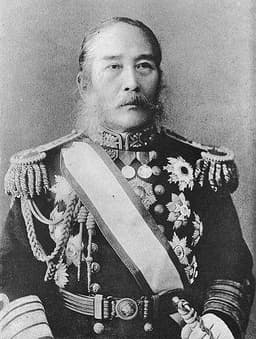
Enomoto Takeaki
General · Modern
51.6Total
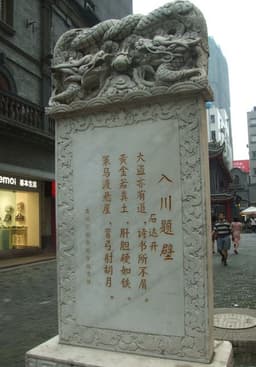
Shi Dakai
General · Modern
59.6Total
Basic Information
Born
1836
1831
Died
1908
1863
Era
Modern
Modern
Nationality
Japan
China
Occupation
General
General
Civilization
Eastern
Eastern
Score Comparison
Military (10%)
25.0
76.0
Political (20%)
54.7
45.0
Influence (20%)
54.1
56.7
Legacy (20%)
46.7
54.0
Leadership (15%)
68.0
72.0
Strategy (15%)
55.0
68.1
TOTAL
51.6
59.6
Enomoto Takeaki — Complete Timeline
1868 AD
Led the Shogunate Fleet to HokkaidoWar
Enomoto commanded the shogunate's remaining naval forces, including eight warships, and sailed to Hokkaido. This fleet formed the core of the Republic of Ezo's military and allowed the loyalists to establish a base.
Naval CommandBoshin WarShogunate Loyalist
Impact: regional
Founded the Republic of EzoPolitical Action
After the shogunate's defeat, Enomoto led loyalist forces to Hokkaido and established the Republic of Ezo, an independent state with a Western-style government. He was elected president and organized a defense against imperial forces.
Boshin WarSeparatist StateShogunate Loyalist
Impact: national
1869 AD
Surrendered at the Battle of HakodateWar◆ Major
Enomoto's forces were defeated by the imperial army at the Battle of Hakodate. He surrendered the Republic of Ezo and was taken prisoner, ending the last organized resistance to the Meiji Restoration.
Boshin WarDefeatEnd of Resistance
Impact: nationaltragic
1885 AD
Served as Minister of Foreign Affairs in the Meiji GovernmentPolitical Action◆ Major
After being pardoned, Enomoto served as Japan's Minister of Foreign Affairs. He negotiated treaties with Western powers and worked to revise the unequal treaties imposed on Japan, contributing to Japan's diplomatic modernization.
DiplomacyTreaty RevisionMeiji Government
Impact: nationalconstructive
Shi Dakai — Complete Timeline
1851 AD
Jintian UprisingWar◆ Major
Shi Dakai joined the Taiping Rebellion at its inception in Jintian, Guangxi. As a core leader, he helped organize the rebel forces and was appointed Wing King, becoming one of the key military commanders of the Taiping Heavenly Kingdom.
Taiping RebellionUprisingMilitary Command
Impact: national
1854 AD
Battle of XiangtanWar◆ Major
Shi Dakai led Taiping forces to a major victory at Xiangtan, Hunan, defeating Qing imperial troops. This battle secured Taiping control over key territories in the Yangtze River valley and demonstrated his military skill.
Taiping RebellionBattleVictory
Impact: regional
1856 AD
Tianjing IncidentPolitical Action
Shi Dakai returned to Tianjing (Nanjing) after the internal purge of the Eastern King Yang Xiuqing and the murder of the Northern King Wei Changhui. He condemned the violence and was forced to flee, leading to a split in Taiping leadership.
Taiping RebellionInternal ConflictPurge
Impact: nationaltragic
1858 AD
Campaign in Zhejiang and FujianWar
Shi Dakai led a separate Taiping army into Zhejiang and Fujian provinces, capturing several cities. This campaign expanded Taiping influence into southeastern China but also isolated his forces from the main Taiping base.
Taiping RebellionCampaignExpansion
Impact: regional
1863 AD
Battle of Baishui RiverWar◆ Major
Shi Dakai's army was trapped and defeated by Qing forces at the Baishui River in Sichuan. He was captured and executed shortly after, marking the end of his military career and a significant loss for the Taiping cause.
Taiping RebellionBattleDefeatDeath
Impact: nationaltragic
Expert Analysis
Shi Dakai vs Enomoto Takeaki
# The Rebel and the Loyalist: Shi Dakai and Enomoto Takeaki
The two men could not have died more differently. On a spring morning in 1863, Shi Dakai was led through the streets of Chengdu, his body broken by torture, his spirit unyielding. The Qing executioner’s blade fell, and the Wing King of the Taiping Heavenly Kingdom vanished into history’s dust. Half a world away, but only six years later, Enomoto Takeaki knelt before Emperor Meiji’s officials at Hakodate, offered his sword, and was taken alive. He would live another four decades, serving the very government he had fought against. One died a martyr; the other became a minister. Why?
Origins
Shi Dakai was born in 1831 into a prosperous Hakka family in Guangxi, southern China. The Qing Dynasty was rotting from within—corrupt, humiliated by Western powers after the Opium Wars, and plagued by famine. Shi was educated in the Confucian classics, but he was also a restless young man who saw a world in collapse. When Hong Xiuquan, a failed scholar who claimed to be the brother of Jesus Christ, launched the Taiping Rebellion in 1851, Shi joined immediately. He was twenty years old, driven by a vision of a new heaven and a new earth.
Enomoto Takeaki was born in 1836 into a samurai family in Edo, Japan. The Tokugawa Shogunate was also under pressure—Commodore Perry’s black ships had forced open Japan’s ports in 1853, and the nation was convulsing between tradition and modernity. But Enomoto’s world was not one of peasant revolt; it was one of disciplined hierarchy. He studied Dutch naval science and became a commander in the shogunate’s fleet. His loyalty was not to a vision of revolution, but to an existing order he believed was legitimate.
The difference in their upbringings was subtle but profound. Shi Dakai grew up in a society where rebellion was the only language of change. Enomoto grew up in a society where the question was not whether to overthrow the old order, but how to adapt it.
Rise to Power
Shi Dakai’s rise was meteoric. At the Jintian Uprising in 1851, he was already among the core leaders of the Taiping army. By 1854, at the Battle of Xiangtan, he crushed Qing forces and secured Hunan for the Heavenly Kingdom. His military score of 84.6 reflects a genuine tactical genius—he was perhaps the finest field commander the Taiping ever produced. But military brilliance alone does not win thrones. Shi was also a man of principle, which would prove both his strength and his undoing.
Enomoto’s path was different. He did not rise through rebellion but through service. In 1868, after the shogunate’s defeat in the Boshin War, he refused to surrender. Instead, he led the shogunate’s fleet—eight warships—to Hokkaido, the northern island. There, he founded the Republic of Ezo, an independent state modeled on Western republics. It was a stunning act of defiance: a samurai creating a democracy. But Enomoto was not a revolutionary; he was a loyalist who used revolutionary means as a last resort.
Leadership & Governance
Shi Dakai governed as a Wing King, but he was never comfortable with the Taiping’s theocratic excesses. Hong Xiuquan claimed to be God’s second son; Shi was a practical soldier. When the Eastern King Yang Xiuqing staged a coup attempt in 1856, Shi tried to mediate. The result was the Tianjing Incident—a bloodbath in which Yang and tens of thousands of Taiping followers were slaughtered. Shi barely escaped with his life. He had tried to be a peacemaker in a movement that thrived on violence.
Enomoto’s leadership was more measured. As president of the Republic of Ezo, he established a functioning government with elected officials and a constitution. His political score of 72.4 reflects a man who understood that legitimacy required more than guns. But his republic was also a desperate gamble—a samurai’s last stand dressed in Enlightenment clothing.
Triumph & Tragedy
Shi Dakai’s greatest moment was the Battle of Xiangtan in 1854, where he demonstrated that the Taiping could defeat Qing regulars in open battle. His greatest tragedy came later: after the Tianjing Incident, he left the capital and led a separate campaign into Zhejiang and Fujian. He was no longer fighting for the Heavenly Kingdom; he was fighting for survival. In 1863, at the Battle of Baishui River in Sichuan, his army was trapped. He surrendered to spare his men, but the Qing executed him anyway. His total score of 71.4 is respectable, but it cannot capture the waste of his talent.
Enomoto’s triumph was the Republic of Ezo itself—a brief, improbable state that lasted less than a year. His tragedy was the Battle of Hakodate in 1869, when imperial forces crushed his republic. But here is the twist: Enomoto was pardoned. The Meiji government, hungry for skilled administrators, recruited him. By 1885, he was Japan’s Minister of Foreign Affairs, negotiating treaties with Western powers. He had gone from traitor to statesman.
Character & Destiny
Shi Dakai was a man of honor in a movement that consumed its own. He refused to participate in the Tianjing massacre; he tried to protect civilians; he surrendered to save his soldiers. These virtues made him beloved by his men, but they also made him vulnerable. The Taiping Rebellion was not a gentleman’s war—it was a brutal, apocalyptic struggle. Shi Dakai’s decency was his fatal flaw.
Enomoto was a pragmatist. He fought for the shogunate, then for the republic, then for the emperor. Some call this opportunism; others call it realism. His leadership score of 84.7 suggests a man who could command loyalty even in defeat. But his military score of only 28.1 is telling—he was not a great warrior. He was a survivor.
Legacy
Shi Dakai is remembered as a tragic hero in Chinese history. The Taiping Rebellion failed, but his personal story—the brilliant general who tried to stay clean in a dirty war—still resonates. His legacy score of 65.9 is modest, but it is enduring. In popular memory, he is the Wing King who flew too close to the sun.
Enomoto’s legacy is more complex. In Japan, he is seen as a symbol of the Meiji Restoration’s ability to absorb its enemies. His influence score of 74.4 reflects his role in modernizing Japan’s navy and diplomacy. But there is a lingering question: did he betray the shogunate, or did he serve Japan? In the end, he served the nation that outlived all its rulers.
Conclusion
Standing at the Baishui River, Shi Dakai must have known he was about to die. Standing at Hakodate, Enomoto must have known he was about to live. The difference was not skill or courage—both men had those in abundance. It was the age they inhabited. Shi Dakai’s China was a dying empire that devoured its rebels. Enomoto’s Japan was a rising empire that recycled its enemies. One man was destroyed by history; the other was remade by it. And in that contrast lies the story of two nations, two fates, and two very different ways of ending a war.
Rankings
🥇
Shi DakaiLeader
Mil: 76.0Pol: 45.0Inf: 56.7
59.6
🥈
Enomoto Takeaki
Mil: 25.0Pol: 54.7Inf: 54.1
51.6
+8.0 behind
How This Comparison Works
Algorithm
Each figure is scored on 6 dimensions (0—100 scale) based on structured historical data: Military (10%), Political (20%), Influence (20%), Legacy (20%), Leadership (15%), Strategy (15%). The weighted total produces the final ranking.
Data Sources
Scores are computed from structured sub-indicators in the database. Scale factors adjust for era (Ancient ×0.85, Modern ×1.0) and civilization size (Eastern ×1.05, Other ×0.80) to account for differences in population and military scale.
Maximum 3 Figures
Comparisons are limited to 2—3 figures to ensure readability and statistical meaningfulness.
Error Margins
±5 points per dimension — Sub-scores are derived from historical records with inherent uncertainty. Two figures within 5 points on a dimension should be considered roughly equivalent in that area.
Total Score Accuracy
±3 points overall — The weighted combination of 6 dimensions produces a total score with approximately ±3 points of uncertainty. Differences of less than 3 points are not statistically significant— the figures are effectively tied.
Known Limitations
- Historical records are incomplete and uneven across civilizations
- Figures from oral-tradition societies may be underrepresented
- Occupation labels can misclassify multi-role figures
- Scores measure capability and impact, not moral character
- Quantitative scoring is a comparison tool, not absolute truth
Capability Radar
Military (10%) — Battles & Warfare
Battles
40
75
Win Rate
35
70
Expansion
30
75
Political (20%) — Governance & Reform
Reform
30
50
Diplomacy
40
45
Economy
25
40
Influence (20%) — Cultural & Global Reach
Cultural
25
55
Global
20
40
Legacy (20%) — Historical Impact
Historical
40
60
Longevity
30
45
Leadership (15%) — Power & Stability
Tenure
35
55
Stability
20
35
Strategy (15%) — Tactics & Innovation
Strategy
50
80
Tactics
55
85
Reform
45
60
Similar Comparisons
Comments & Discussion
Chronos Compass6/16/2026
Here's what the comparison misses: Enomoto was 22 when Perry's ships arrived—young enough to absorb shock; Shi was 9 when the Opium War ended—old enough to remember imperial humiliation. Their temporal flesh tells the story. Enom
Gilded Blade6/16/2026
Shi Dakai chose the pyre; Enomoto chose the desk. That's not just courage versus pragmatism—it's a clash of cosmologies. Shi's Taiping vision was total: tear down the Confucian order, build a new Heavenly Kingdom. Death was the only logical end. Enomoto, a samurai trained in Dutch naval science, saw the state as a ship—you can mutiny, but you still need a captain. His surrender at Hakodate wasn't cowardice; it was the tactical pivot of a man who understood that loyalty to Japan outranked loyalty
刑天剑客6/16/2026
拿数据说话:太平天国毁灭了至少两千万人口,石达开是这架杀人机器的核心齿轮。他那套"共享土地"的口号,在安徽、浙江推行时导致了更严重的饥荒——农民没了地契,谁还种地?而榎本武扬在箱馆战争后,用荷兰水利知识治蝗、修港口,明治政府统计他的工程让北海道粮食产量十年间翻了四倍。别跟我谈殉道英雄主义,看看谁的作为真正减少了人间苦难。
Dissent Decoder6/16/2026
Every history buff romanticizes the "Wing King's" last stand, but the revisionist lens catches the blood on his halo. Shi Dakai executed a pregnant woman in 1857 during internal purges at Anqing—that's Taiping brotherly love for you. Enomoto, meanwhile, took a bullet for his principles at Hakodate and then quietly rewired the system from inside. Japan's Meiji Restoration succeeded because men like Enomoto knew when to hand over the sword. China's fragmentation deepened because men like Shi chose
铁幕史官6/16/2026
别被"忠臣"叙事骗了。榎本武扬箱馆投降后立刻为明治政府绘制北海道地图,这等于把前战友的藏身地点全部出卖。石达开在成都临刑前还在供词里劝清廷"以仁治国"——这才是真正的士人气节,即便面对屠夫也坚持理想主义。更关键的是,石达开是天京事变中唯一拒绝残杀同胞的翼王,手上没有杨秀清部将的血;榎本却用法国人帮忙设计的"回天"号铁甲舰,亲手炮轰过箱馆的旧幕府士兵。