Loading...
Enomoto Takeaki vs Louis Botha
Louis Botha leads by 9.5 pts · 2 figures compared
…
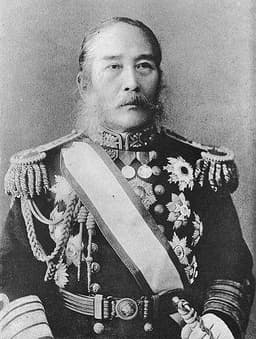
Enomoto Takeaki
General · Modern
51.6Total
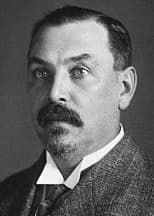
Louis Botha
General · Modern
61.1Total
Basic Information
Born
1836
1862
Died
1908
1919
Era
Modern
Modern
Nationality
Japan
South Africa
Occupation
General
General
Civilization
Eastern
Other
Score Comparison
Military (10%)
25.0
61.7
Political (20%)
54.7
70.0
Influence (20%)
54.1
56.7
Legacy (20%)
46.7
50.0
Leadership (15%)
68.0
79.8
Strategy (15%)
55.0
58.0
TOTAL
51.6
61.1
Enomoto Takeaki — Complete Timeline
1868 AD
Led the Shogunate Fleet to HokkaidoWar
Enomoto commanded the shogunate's remaining naval forces, including eight warships, and sailed to Hokkaido. This fleet formed the core of the Republic of Ezo's military and allowed the loyalists to establish a base.
Naval CommandBoshin WarShogunate Loyalist
Impact: regional
Founded the Republic of EzoPolitical Action
After the shogunate's defeat, Enomoto led loyalist forces to Hokkaido and established the Republic of Ezo, an independent state with a Western-style government. He was elected president and organized a defense against imperial forces.
Boshin WarSeparatist StateShogunate Loyalist
Impact: national
1869 AD
Surrendered at the Battle of HakodateWar◆ Major
Enomoto's forces were defeated by the imperial army at the Battle of Hakodate. He surrendered the Republic of Ezo and was taken prisoner, ending the last organized resistance to the Meiji Restoration.
Boshin WarDefeatEnd of Resistance
Impact: nationaltragic
1885 AD
Served as Minister of Foreign Affairs in the Meiji GovernmentPolitical Action◆ Major
After being pardoned, Enomoto served as Japan's Minister of Foreign Affairs. He negotiated treaties with Western powers and worked to revise the unequal treaties imposed on Japan, contributing to Japan's diplomatic modernization.
DiplomacyTreaty RevisionMeiji Government
Impact: nationalconstructive
Louis Botha — Complete Timeline
1899 AD
Battle of ColensoWar◆ Major
Botha commanded Boer forces at the Battle of Colenso during the Second Boer War. His troops repelled a British attack under General Buller, inflicting heavy casualties and boosting Boer morale.
Second Boer WarBattleVictory
Impact: regional
1900 AD
Boer War Guerrilla CommanderWar◆ Major
After the British captured Pretoria, Botha led Boer guerrilla forces in the Transvaal. He conducted hit-and-run attacks against British columns, prolonging the war and becoming a symbol of Afrikaner resistance.
Second Boer WarGuerrillaResistance
Impact: regional
1902 AD
Signed the Treaty of VereenigingPolitical Action
Botha, as a leading Boer general, signed the Treaty of Vereeniging which ended the Second Boer War. The treaty granted the Boer republics self-government under British sovereignty and promised eventual self-rule.
TreatyPeaceSecond Boer War
Impact: regional
1910 AD
First Prime Minister of the Union of South AfricaPolitical Action
Botha became the first Prime Minister of the newly formed Union of South Africa. He led a coalition government that sought to reconcile Afrikaners and English-speaking whites, while implementing segregationist policies.
Prime MinisterUnion of South AfricaFounding
Impact: nationalconstructive
1914 AD
Suppressed the 1914 RebellionWar◆ Major
Botha personally led government forces to suppress the Maritz Rebellion, an Afrikaner uprising against South Africa's entry into World War I. He defeated the rebels, asserting state authority and maintaining support for the British Empire.
RebellionWorld War ISuppression
Impact: national
1915 AD
Conquered German South West AfricaWar◆ Major
Botha commanded South African forces in the invasion and conquest of German South West Africa. The campaign succeeded, and the territory was later administered by South Africa under a League of Nations mandate.
World War IConquestGerman South West Africa
Impact: regional
Expert Analysis
Louis Botha vs Enomoto Takeaki
# The Warrior Who Surrendered, and the Warrior Who Governed
On a windswept battlefield in northern Japan, in the spring of 1869, a samurai in Western naval uniform knelt before an imperial general and offered his sword. On a dusty plain in South Africa, three decades later, a bearded Boer commander watched British troops retreat in disarray, their dead scattered across the veld. Enomoto Takeaki and Louis Botha never met, never knew each other's names. Yet their lives trace a single, haunting question: What does it mean to lose a war, and then to win a peace?
Origins
Enomoto Takeaki was born in 1836 into the waning years of Edo Japan, a world of rigid hierarchy and ancient codes. He was a samurai of the shogunate, trained in both swordsmanship and the new science of naval warfare. The West had arrived, and Japan was fracturing. Enomoto belonged to the losing side—the Tokugawa shogunate—before the struggle had even fully begun.
Louis Botha was born in 1862 on a farm in the South African Republic, a child of the Boer frontier. His people were Dutch-descended pastoralists, fiercely independent, suspicious of British imperial power. Botha grew up on horseback, learned to shoot before he could read, and absorbed a worldview that equated freedom with land and self-rule. Where Enomoto came from a civilization collapsing under its own weight, Botha came from a nation still being born.
Rise to Power
Enomoto's path was that of a loyal servant in a crumbling order. He studied naval tactics in the Netherlands, returned to command the shogun's fleet, and when the shogunate fell in 1868, he did not surrender. Instead, he gathered eight warships and two thousand loyalists and sailed north to Hokkaido, the last island of Japan. There, in December 1868, he founded the Republic of Ezo—an independent state modeled on American and European republics, complete with a president, a parliament, and a flag. It was a desperate, brilliant gambit: a samurai trying to build a democracy because his old world had died.
Botha's rise was different. He was a farmer and a soldier, not a bureaucrat. When the Second Boer War erupted in 1899, he emerged as a natural commander. At the Battle of Colenso in December 1899, his Boer marksmen pinned down a British army, inflicting over a thousand casualties while suffering fewer than forty. The victory made him a national hero. When the British captured Pretoria in 1900, Botha did not flee or surrender. He turned his army into guerrilla bands, striking supply lines and vanishing into the veld. For two more years, he kept the war alive.
Leadership & Governance
Here the two men diverge most sharply. Enomoto's military score is modest—28.1—because he was not a great battlefield commander. He was an organizer, a diplomat, a man who built a government in exile. The Republic of Ezo lasted only six months. In the Battle of Hakodate in 1869, imperial forces crushed his army, and Enomoto surrendered. But his political score of 72.4 tells a deeper story: after imprisonment, he was pardoned, and by 1885 he served as Japan's Minister of Foreign Affairs, negotiating treaties with the Western powers that had once threatened his nation.
Botha's military score of 62.0 reflects genuine combat skill, but his political score of 83.0 reveals his true genius. After signing the Treaty of Vereeniging in 1902—ending the war on British terms—Botha turned from guerrilla leader to statesman. In 1910, he became the first Prime Minister of the Union of South Africa, a nation forged from the ashes of war. He sought reconciliation between Boer and Briton, even as bitter Afrikaners called him a traitor. He personally suppressed the 1914 Maritz Rebellion, an Afrikaner uprising against his own government. And in 1915, he conquered German South West Africa for the British Empire—the warrior now serving the power he had once fought.
Triumph & Tragedy
Enomoto's greatest moment was the founding of the Republic of Ezo—a fleeting, improbable act of defiance that proved a samurai could imagine a republic. His tragedy was that it failed, and he had to live with that failure, serving the empire that destroyed his dream.
Botha's greatest moment was Colenso, where he proved that farmers could defeat an empire. His tragedy was more complex: he won the peace but lost his people's trust. He died in 1919, a prime minister beloved by Britons, distrusted by many Boers, and blind to the apartheid system that would soon consume his nation.
Character & Destiny
Enomoto was a pragmatist. He accepted that the old order was dead and adapted. His leadership score of 84.7 reflects a man who could command loyalty in defeat and govern with skill in victory's aftermath. Botha was a warrior who learned to compromise. His leadership score of 89.6 is the highest of the two, but it came at a cost: he had to suppress his own comrades to build a nation.
Both men were defined by loss. Enomoto lost his war, then rebuilt himself within the victor's system. Botha won battles, lost the war, then built a nation that his own people would eventually reject. One surrendered his sword; the other surrendered his pride.
Legacy
Enomoto is remembered in Japan as a symbol of loyalty and reinvention—a man who served the shogunate, then served the Meiji state, and helped build the modern Japan that had defeated him. His legacy score of 65.6 is modest, but his influence score of 74.4 reflects a quiet, enduring impact: he showed that defeat need not be the end.
Botha's legacy is more contested. His legacy score of 66.8 is similar to Enomoto's, but his influence score of 74.8 reflects the paradox of his life. He is honored as a founder of South Africa, yet his vision of racial reconciliation failed. He fought for Boer independence, then helped build a union that excluded the majority of its people.
Conclusion
Botha and Enomoto lived parallel lives in opposite directions. Enomoto rose as a samurai and ended as a diplomat; Botha rose as a farmer-soldier and ended as a prime minister. One built a republic that lasted months; the other built a union that lasted a century. Both surrendered to their enemies and then ruled alongside them.
Their stories remind us that the line between victory and defeat is often drawn not on the battlefield, but in the years that follow. The greatest generals are not always those who win wars, but those who learn to govern in peace. And the greatest defeats are not always the ones that end with a sword offered on a field of mud.
Rankings
🥇
Louis BothaLeader
Mil: 61.7Pol: 70.0Inf: 56.7
61.1
🥈
Enomoto Takeaki
Mil: 25.0Pol: 54.7Inf: 54.1
51.6
+9.5 behind
How This Comparison Works
Algorithm
Each figure is scored on 6 dimensions (0—100 scale) based on structured historical data: Military (10%), Political (20%), Influence (20%), Legacy (20%), Leadership (15%), Strategy (15%). The weighted total produces the final ranking.
Data Sources
Scores are computed from structured sub-indicators in the database. Scale factors adjust for era (Ancient ×0.85, Modern ×1.0) and civilization size (Eastern ×1.05, Other ×0.80) to account for differences in population and military scale.
Maximum 3 Figures
Comparisons are limited to 2—3 figures to ensure readability and statistical meaningfulness.
Error Margins
±5 points per dimension — Sub-scores are derived from historical records with inherent uncertainty. Two figures within 5 points on a dimension should be considered roughly equivalent in that area.
Total Score Accuracy
±3 points overall — The weighted combination of 6 dimensions produces a total score with approximately ±3 points of uncertainty. Differences of less than 3 points are not statistically significant— the figures are effectively tied.
Known Limitations
- Historical records are incomplete and uneven across civilizations
- Figures from oral-tradition societies may be underrepresented
- Occupation labels can misclassify multi-role figures
- Scores measure capability and impact, not moral character
- Quantitative scoring is a comparison tool, not absolute truth
Capability Radar
Military (10%) — Battles & Warfare
Battles
40
65
Win Rate
35
70
Expansion
30
60
Political (20%) — Governance & Reform
Reform
30
65
Diplomacy
40
70
Economy
25
55
Influence (20%) — Cultural & Global Reach
Cultural
25
45
Global
20
50
Legacy (20%) — Historical Impact
Historical
40
55
Longevity
30
40
Leadership (15%) — Power & Stability
Tenure
35
60
Stability
20
50
Strategy (15%) — Tactics & Innovation
Strategy
50
72
Tactics
55
68
Reform
45
55
Similar Comparisons
Comments & Discussion
荷枪实弹6/16/2026
别老吹什么武士道精神了,榎本武扬就是个技术官僚,会造船会外交,骨子里早把幕府那套扔了。路易·博塔才是真要打到底的人,输了战争就咬牙搞自治,硬生生从英国人嘴里抠出南非联邦。一个给新政府当海军大臣,一个当总理,级别差着档呢。
ShogunSailor6/16/2026
Enomoto gets romanticized as a tragic samurai, but let's call it what it was: he was a stubborn naval officer who fought a doomed rearguard action for a feudal regime. Botha actually won battles, outmaneuvering the British Empire at its height. Enomoto surrendered his fleet, then spent his postwar life administering someone else's victory. Botha built a new nation. The comparison isn't even close—Enomoto is the footnote, Botha is the chapter.
BattlefieldAccountant6/16/2026
The numbers tell the truth: Botha commanded at Colenso where he inflicted 1,100 British casualties for under 40 Boer dead. That's a 27:1 kill ratio—Napoleonic in efficiency. Enomoto's naval victory at Hakodate was a pyrrhic holding action against an enemy he couldn't outlast. When you tally real combat impact, Botha was the superior tactician. Enomoto was a good organizer fighting a bad war.
纸上谈兵6/16/2026
历史爱好者最爱比惨,好像谁投降得优雅谁就更伟大。拜托,博塔在费尔尼格宁条约后干了什么?他转头就当了总理,硬压着布尔人跟英国人合作。榎本呢?战后当北海道开拓使长官也没闲着,开发土地修铁路,比那些光会切腹的武士实在多了。一个军阀搞建设,一个政客搞团结——这俩都不错,但赢家明显是那个会投降的。