Loading...
Enomoto Takeaki vs Francisco Morazan
Francisco Morazan leads by 6.4 pts · 2 figures compared
…
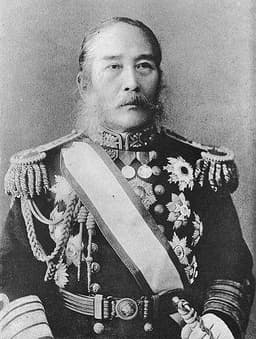
Enomoto Takeaki
General · Modern
51.6Total
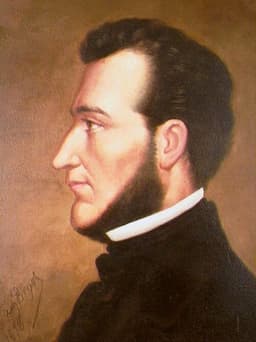
Francisco Morazan
General · Modern
58.0Total
Basic Information
Born
1836
1792
Died
1908
1842
Era
Modern
Modern
Nationality
Japan
Honduras
Occupation
General
General
Civilization
Eastern
Western
Score Comparison
Military (10%)
25.0
52.5
Political (20%)
54.7
60.0
Influence (20%)
54.1
62.0
Legacy (20%)
46.7
50.0
Leadership (15%)
68.0
68.0
Strategy (15%)
55.0
55.0
TOTAL
51.6
58.0
Enomoto Takeaki — Complete Timeline
1868 AD
Led the Shogunate Fleet to HokkaidoWar
Enomoto commanded the shogunate's remaining naval forces, including eight warships, and sailed to Hokkaido. This fleet formed the core of the Republic of Ezo's military and allowed the loyalists to establish a base.
Naval CommandBoshin WarShogunate Loyalist
Impact: regional
Founded the Republic of EzoPolitical Action
After the shogunate's defeat, Enomoto led loyalist forces to Hokkaido and established the Republic of Ezo, an independent state with a Western-style government. He was elected president and organized a defense against imperial forces.
Boshin WarSeparatist StateShogunate Loyalist
Impact: national
1869 AD
Surrendered at the Battle of HakodateWar◆ Major
Enomoto's forces were defeated by the imperial army at the Battle of Hakodate. He surrendered the Republic of Ezo and was taken prisoner, ending the last organized resistance to the Meiji Restoration.
Boshin WarDefeatEnd of Resistance
Impact: nationaltragic
1885 AD
Served as Minister of Foreign Affairs in the Meiji GovernmentPolitical Action◆ Major
After being pardoned, Enomoto served as Japan's Minister of Foreign Affairs. He negotiated treaties with Western powers and worked to revise the unequal treaties imposed on Japan, contributing to Japan's diplomatic modernization.
DiplomacyTreaty RevisionMeiji Government
Impact: nationalconstructive
Francisco Morazan — Complete Timeline
1824 AD
Abolition of slavery in Central AmericaReform◆ Major
As a key leader in the liberal movement, Moraz
AbolitionSlaveryLiberal Reform
Impact: regionalprogressive
1827 AD
Battle of La TrinidadWar◆ Major
Morazán led a liberal army to victory against conservative forces at La Trinidad, Honduras. This battle was a key turning point in the Central American civil war, allowing Morazán to consolidate power and eventually become president of the federation.
BattleLiberal VictoryCivil War
Impact: regional
1830 AD
Presidency of the Federal Republic of Central AmericaPolitical Action
Morazán was elected president of the Federal Republic of Central America, a union of Guatemala, El Salvador, Honduras, Nicaragua, and Costa Rica. He pursued liberal reforms including separation of church and state, free trade, and land reform, facing opposition from conservatives.
Federal RepublicLiberal ReformsCentral America
Impact: regionalconstructive
1842 AD
Execution by firing squadPolitical Action
After a failed attempt to restore the Federal Republic, Moraz
ExecutionEnd of FederationLiberal Defeat
Impact: regionaltragic
Expert Analysis
Francisco Morazan vs Enomoto Takeaki
# The Loyalist and the Reformer: Enomoto Takeaki and Francisco Morazán
On a windswept northern island, a samurai admiral lowered his sword in surrender, ending the last flicker of a fallen regime. Half a world away, a liberal general faced a firing squad in a Central American plaza, his dream of a unified nation dying with him. Enomoto Takeaki and Francisco Morazán lived on opposite sides of the globe, yet their stories share a haunting symmetry: both men fought for lost causes, both tried to build new republics from the ashes of defeat, and both left legacies that would be debated for generations. But why did one die a traitor and the other die a minister of state?
Origins
Enomoto Takeaki was born in 1836 into a samurai household in Edo, the capital of a Japan still sealed from the outside world. His world was one of rigid hierarchy, sword-bearing elites, and a shogun who ruled in the emperor’s name. The arrival of Commodore Perry’s black ships in 1853 shattered that isolation, and young Enomoto, a gifted student of Dutch naval science, was sent to study in the Netherlands. He returned a modern naval officer, fluent in Western technology and strategy, but loyal to the Tokugawa shogunate that had sponsored his education.
Francisco Morazán, born in 1792 in Tegucigalpa, Honduras, came from a very different world—a creole family of modest means in the fading Spanish Empire. Central America in the early 1800s was a patchwork of provinces, each jealous of its autonomy, yet all stirred by the revolutionary winds blowing from Europe and North America. Morazán grew up reading Rousseau and the Enlightenment philosophers, dreaming not of restoring an old order but of building a new one: a unified, liberal republic free from colonial rule and clerical privilege.
Their eras shaped them like a blacksmith’s hammer. Enomoto was forged in the dying embers of feudalism; Morazán in the white-hot forge of revolution.
Rise to Power
Enomoto’s path to prominence was through the shogunate’s navy. By 1868, when imperial forces overthrew the Tokugawa regime in the Meiji Restoration, he commanded the shogun’s fleet—eight modern warships, a formidable force. Rather than surrender, he chose defiance. In October 1868, he led his ships and thousands of loyalist soldiers north to Hokkaido, Japan’s wild frontier island, and there proclaimed the Republic of Ezo. It was a stunning act: a samurai founding a Western-style republic, complete with a president and a parliament, on the edge of the known Japanese world.
Morazán rose through the chaos of Central America’s post-independence civil wars. A liberal and a gifted cavalry commander, he won his first major victory at the Battle of La Trinidad in 1827, routing conservative forces in Honduras. That triumph propelled him onto the national stage. By 1830, at age thirty-eight, he was elected president of the Federal Republic of Central America—a union of Guatemala, El Salvador, Honduras, Nicaragua, and Costa Rica. He was a liberal reformer in a conservative age, and he meant to transform the region.
Leadership & Governance
Here the two men diverge sharply. Enomoto’s Republic of Ezo lasted only eight months. He governed with surprising pragmatism: he allowed foreign trade, sought diplomatic recognition from Western powers, and even organized elections. But his leadership was that of a military caretaker, not a visionary reformer. His goal was preservation—of samurai honor, of a way of life—not transformation. When imperial forces overwhelmed his fort at Hakodate in June 1869, he surrendered, hoping to spare his men further bloodshed.
Morazán, by contrast, governed for a decade with the zeal of a revolutionary. He abolished slavery in 1824, separated church and state, introduced trial by jury, and promoted public education. He fought to break the power of the landed aristocracy and the Catholic clergy. His military genius was real—he won battle after battle against conservative insurgencies—but his political wisdom was flawed. He centralized power in a region that prized local autonomy, and his reforms alienated the very elites he needed to sustain the federation.
Triumph & Tragedy
Enomoto’s greatest moment was also his greatest defeat. The Battle of Hakodate in 1869 was Japan’s first modern naval engagement, with ironclads and steam-powered warships exchanging fire in the frigid Tsugaru Strait. Enomoto fought brilliantly, but he was outnumbered and outgunned. His surrender was dignified, and his life was spared—a mercy that would shape his second act.
Morazán’s triumph was the Federal Republic itself. For a decade, he held together a union that had never truly been united. His tragedy came in 1840, when conservative forces finally crushed his army. He fled into exile, but could not stay away. In 1842, he returned to Costa Rica in a desperate attempt to restore the federation. He was captured, and on September 15, 1842—the anniversary of Central American independence—he was executed by firing squad. His last words were reportedly: “I die with the satisfaction of having served my country.”
Character & Destiny
Enomoto was a pragmatist. He surrendered, adapted, and survived. After a brief imprisonment, he was pardoned by the Meiji government, which recognized his talents. He served as Japan’s Minister of Foreign Affairs from 1885, negotiating treaties with Western powers, and later held other high posts. He died in 1908, a respected elder statesman. His flexibility—some might call it opportunism—allowed him to serve the very regime he had once fought.
Morazán was an idealist. He could not compromise, could not accept a Central America of squabbling states, and could not live in exile while his dream died. His rigidity—some might call it principle—led him to a martyr’s death. He chose the firing squad over the quiet life.
Legacy
Enomoto is remembered in Japan as a complex figure: a traitor who became a patriot, a samurai who embraced modernity. His Republic of Ezo is seen as a curious footnote, a brief experiment in Western-style democracy on Japanese soil. His legacy score of 65.6 reflects this ambiguity—respected but not revered.
Morazán is a hero in Honduras and throughout Central America, a symbol of liberal unity and anti-clerical reform. His legacy score of 68.9 is higher, but his memory is contested: conservatives still condemn him as a radical who tore apart the social fabric; liberals celebrate him as a visionary who saw what the region could become.
Conclusion
What drove these different outcomes? Enomoto lived in a Japan that was consolidating, modernizing, and forgiving—a nation that could absorb its former enemies into a new order. Morazán lived in a Central America that was fragmenting, a region whose centrifugal forces were stronger than any one man’s vision. Enomoto’s pragmatism suited his age; Morazán’s idealism clashed with his. One man bent with the wind and survived; the other stood firm and was broken. Both, in their own ways, were heroes of lost causes—but only one lived to see his cause lost, and to build a new life from its ruins.
Rankings
🥇
Francisco MorazanLeader
Mil: 52.5Pol: 60.0Inf: 62.0
58.0
🥈
Enomoto Takeaki
Mil: 25.0Pol: 54.7Inf: 54.1
51.6
+6.4 behind
How This Comparison Works
Algorithm
Each figure is scored on 6 dimensions (0—100 scale) based on structured historical data: Military (10%), Political (20%), Influence (20%), Legacy (20%), Leadership (15%), Strategy (15%). The weighted total produces the final ranking.
Data Sources
Scores are computed from structured sub-indicators in the database. Scale factors adjust for era (Ancient ×0.85, Modern ×1.0) and civilization size (Eastern ×1.05, Other ×0.80) to account for differences in population and military scale.
Maximum 3 Figures
Comparisons are limited to 2—3 figures to ensure readability and statistical meaningfulness.
Error Margins
±5 points per dimension — Sub-scores are derived from historical records with inherent uncertainty. Two figures within 5 points on a dimension should be considered roughly equivalent in that area.
Total Score Accuracy
±3 points overall — The weighted combination of 6 dimensions produces a total score with approximately ±3 points of uncertainty. Differences of less than 3 points are not statistically significant— the figures are effectively tied.
Known Limitations
- Historical records are incomplete and uneven across civilizations
- Figures from oral-tradition societies may be underrepresented
- Occupation labels can misclassify multi-role figures
- Scores measure capability and impact, not moral character
- Quantitative scoring is a comparison tool, not absolute truth
Capability Radar
Military (10%) — Battles & Warfare
Battles
40
55
Win Rate
35
60
Expansion
30
40
Political (20%) — Governance & Reform
Reform
30
70
Diplomacy
40
45
Economy
25
50
Influence (20%) — Cultural & Global Reach
Cultural
25
45
Global
20
35
Legacy (20%) — Historical Impact
Historical
40
50
Longevity
30
40
Leadership (15%) — Power & Stability
Tenure
35
55
Stability
20
30
Strategy (15%) — Tactics & Innovation
Strategy
50
55
Tactics
55
50
Reform
45
45
Similar Comparisons
Comments & Discussion
No comments yet. Be the first to share your thoughts!