Loading...
Emperor Shirakawa vs Zhao Kuangyin
Zhao Kuangyin leads by 12.1 pts · 2 figures compared
…
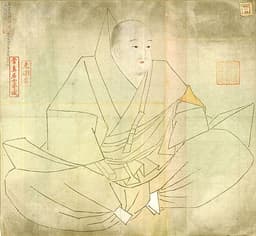
Emperor Shirakawa
Emperor · Medieval
59.4Total
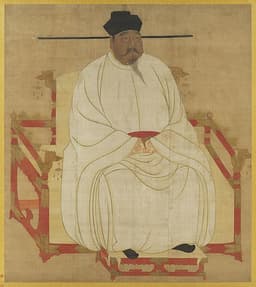
Zhao Kuangyin
Emperor · Medieval
71.5Total
Basic Information
Born
1053
927
Died
1129
976
Era
Medieval
Medieval
Nationality
Japan
China
Occupation
Emperor
Emperor
Civilization
Eastern
Eastern
Score Comparison
Military (10%)
51.4
78.0
Political (20%)
65.0
84.0
Influence (20%)
61.0
68.0
Legacy (20%)
52.0
65.0
Leadership (15%)
62.0
74.0
Strategy (15%)
70.0
68.0
TOTAL
59.4
71.5
Emperor Shirakawa — Complete Timeline
1086 AD
Establishment of the cloistered government (Insei) systemPolitical Action
Shirakawa abdicated the throne but continued to rule from a monastery as a cloistered emperor, creating the Insei system. This allowed retired emperors to wield real political power, bypassing the Fujiwara regents and dominating court politics for decades.
Insei SystemImperial PoliticsHeian Period
Impact: nationalconstructive
Conflict with the Fujiwara over successionPolitical Action◆ Major
Shirakawa forced his son Horikawa to succeed him, overriding Fujiwara preferences. This conflict solidified the cloistered emperor's control over succession and reduced Fujiwara influence, leading to decades of political tension.
Fujiwara RegencySuccessionImperial Politics
Impact: national
1091 AD
Appointment of Taira no Masamori as military governorPolitical Action◆ Major
Shirakawa appointed Taira no Masamori as military governor of Ise Province, elevating the Taira clan's status. This move strengthened the imperial court's military capacity and laid the foundation for the Taira's later rise to power.
Taira ClanMilitary PoliticsHeian Period
Impact: national
1100 AD
Patronage of Buddhist templesCultural
Shirakawa sponsored the construction and renovation of numerous Buddhist temples, including the Hossho-ji and Ensho-ji. This patronage strengthened the imperial family's religious authority and influenced Heian-period Buddhist art and architecture.
BuddhismTemple ConstructionHeian Period
Impact: nationalconstructive
Zhao Kuangyin — Complete Timeline
960 AD
Founded Song dynastyPolitical Action
Zhao Kuangyin, a general of Later Zhou, was proclaimed emperor by his troops at Chenqiao. He established the Song dynasty, ending the Five Dynasties period and beginning a new era of Chinese history.
Song dynastyFoundingChenqiao
Impact: globalconstructive
961 AD
Removed military power from generalsPolitical Action◆ Major
Zhao Kuangyin invited senior generals to a banquet and persuaded them to retire peacefully. This 'removal of military power over wine' prevented military coups and centralized control.
Song dynastyMilitary reformCentralization
Impact: nationalconstructive
963 AD
Unified southern ChinaWar◆ Major
Zhao Kuangyin launched campaigns to conquer the southern kingdoms, including Jingnan, Later Shu, and Southern Tang. By his death, most of China was reunified under Song rule.
Song unificationConquestSouthern kingdoms
Impact: national
Expert Analysis
Zhao Kuangyin vs Emperor Shirakawa
# The Emperor Who Gave Up the Throne to Keep It
On a spring evening in 961, the most powerful general in China invited his old comrades to a banquet. Wine flowed freely, laughter echoed through the halls, and the mood was warm. But then the host, Zhao Kuangyin, now Emperor Taizu of the newly founded Song dynasty, grew melancholy. He told his friends he could never sleep soundly, fearing that one day their own soldiers might drape a yellow robe over them as they had done for him. The generals understood. By dawn, they had resigned their commands. No blood was shed. No coup was launched. The military power that had made Zhao Kuangyin emperor was, with a toast, dissolved.
Half a world away and a century later, another sovereign faced a similar dilemma. Emperor Shirakawa of Japan sat on the Chrysanthemum Throne, but real power belonged to the Fujiwara regents who had manipulated emperors for generations. His solution was stranger and more ingenious: he would abdicate. In 1086, he stepped down from the throne—and then continued to rule from a monastery, creating a shadow government that would outlast him by decades. Two emperors, two paths, one eternal question: how does a ruler actually rule?
Origins
Zhao Kuangyin was born in 927 into a military family serving the chaotic Five Dynasties period, when warlords rose and fell like tides. He grew up in a world where the sword decided everything, where loyalty was measured in victories, and where a general could become emperor overnight. His father was a commander; his brothers would become generals. Zhao himself was a soldier first, a thinker second. The violence of his youth taught him one lesson above all: power seized by force could be lost by force.
Emperor Shirakawa, born in 1053, knew nothing of battlefields. He was raised in the gilded cage of the Heian court, where poetry mattered more than archery and political power was wielded through marriage alliances and courtly intrigue. The Fujiwara clan had spent centuries perfecting the art of ruling through puppet emperors, marrying their daughters to princes and serving as regents. Shirakawa inherited a throne that was a prison, a crown that was a cage. His enemies were not warlords with armies but courtiers with calligraphy brushes.
Rise to Power
Zhao Kuangyin’s path was forged in blood. As a general of Later Zhou, he proved himself in campaigns against the northern Liao dynasty and rebellious provinces. When his emperor died young in 959, leaving a child on the throne, the stage was set. In 960, while marching against a rumored invasion, his troops halted at Chenqiao and declared him emperor—a classic military coup wrapped in a veneer of reluctant duty. Zhao accepted, but he never forgot how fragile that mandate was.
Shirakawa’s rise was quieter but no less determined. He became emperor in 1073, but the Fujiwara regent controlled the government. For thirteen years, Shirakawa endured, watched, and planned. When his son came of age, he saw his chance. In 1086, he abdicated in favor of that son, Horikawa, but refused to retire. Instead, he entered a monastery and established the *insei* system—cloistered government. From his temple, he issued edicts, appointed officials, and controlled the court. He had discovered that the emperor’s greatest power was the power to stop being emperor.
Leadership & Governance
Zhao Kuangyin governed as a soldier who wanted peace. His military scores, while not the highest, reflect a strategic mind focused on consolidation rather than conquest. He unified southern China through campaigns against Jingnan, Later Shu, and Southern Tang between 963 and 976, but always with an eye toward minimizing destruction. His political genius was the “removal of military power over wine”—a bloodless demobilization that centralized authority. He reformed the civil service, encouraged scholarship, and built a bureaucracy that would outlast his dynasty. His leadership score of 82.3 speaks to a man who understood that the greatest victory is the one that prevents the next war.
Shirakawa ruled as a courtier who had mastered the game. His political score of 76.1 reflects his subtle genius: he did not destroy the Fujiwara but bypassed them. By appointing Taira no Masamori as military governor of Ise Province in 1091, he elevated a warrior clan that would owe allegiance directly to him. He patronized Buddhist temples like Hossho-ji and Ensho-ji, building networks of religious and military allies. His rule was a masterpiece of indirect power—a spiderweb of influence that trapped his enemies without ever confronting them directly.
Triumph & Tragedy
Zhao Kuangyin’s triumph was the Song dynasty itself—a unified China that would thrive for three centuries. His tragedy was that his solution to military coups—civilian control over the army—would eventually leave China vulnerable to northern invaders. The very system he created to ensure peace sowed the seeds of future weakness.
Shirakawa’s triumph was the *insei* system, which allowed retired emperors to rule for nearly a century after his death. His tragedy was personal: he outlived his sons and saw his carefully constructed system begin to fray. He died in 1129, having ruled from the shadows longer than he ever ruled from the throne.
Character & Destiny
Zhao Kuangyin was a pragmatist who trusted in institutions. He believed that systems, not men, ensured stability. His decision to retire his generals was not weakness but wisdom—a recognition that the very loyalty that brought him power could destroy his dynasty. He was a man who learned from history and tried to bend it to his will.
Shirakawa was a strategist who trusted in indirection. He understood that in the Heian court, direct confrontation was suicide. His abdication was not surrender but transformation. He became more powerful by appearing less powerful, more influential by seeming to withdraw. He was a man who understood that sometimes the best way to hold power is to let it go.
Legacy
Zhao Kuangyin is remembered as the founder of one of China’s greatest dynasties, a unifier who valued peace over glory. His legacy score of 75.1 reflects a ruler who is respected but not romanticized—a steady hand in turbulent times.
Shirakawa is remembered as the architect of the *insei* system, a political innovation that allowed emperors to rule without ruling. His legacy score of 70.1 is lower, perhaps because his methods were too subtle for history’s grand narratives. He did not conquer; he outmaneuvered.
Conclusion
Two emperors, separated by a continent and a century, faced the same fundamental problem: how to rule when the traditional tools of power—military might or divine right—were insufficient. Zhao Kuangyin chose to disarm his generals with wine and wisdom. Shirakawa chose to abdicate his throne and rule from a monastery. One built a dynasty; the other built a system. Both understood that the greatest power is not in the crown or the sword, but in the ability to see beyond them. In the end, they remind us that leadership is not about holding power—it is about knowing when to let it go, and how to keep it even then.
Rankings
🥇
Zhao KuangyinLeader
Mil: 78.0Pol: 84.0Inf: 68.0
71.5
🥈
Emperor Shirakawa
Mil: 51.4Pol: 65.0Inf: 61.0
59.4
+12.1 behind
How This Comparison Works
Algorithm
Each figure is scored on 6 dimensions (0—100 scale) based on structured historical data: Military (10%), Political (20%), Influence (20%), Legacy (20%), Leadership (15%), Strategy (15%). The weighted total produces the final ranking.
Data Sources
Scores are computed from structured sub-indicators in the database. Scale factors adjust for era (Ancient ×0.85, Modern ×1.0) and civilization size (Eastern ×1.05, Other ×0.80) to account for differences in population and military scale.
Maximum 3 Figures
Comparisons are limited to 2—3 figures to ensure readability and statistical meaningfulness.
Error Margins
±5 points per dimension — Sub-scores are derived from historical records with inherent uncertainty. Two figures within 5 points on a dimension should be considered roughly equivalent in that area.
Total Score Accuracy
±3 points overall — The weighted combination of 6 dimensions produces a total score with approximately ±3 points of uncertainty. Differences of less than 3 points are not statistically significant— the figures are effectively tied.
Known Limitations
- Historical records are incomplete and uneven across civilizations
- Figures from oral-tradition societies may be underrepresented
- Occupation labels can misclassify multi-role figures
- Scores measure capability and impact, not moral character
- Quantitative scoring is a comparison tool, not absolute truth
Capability Radar
Military (10%) — Battles & Warfare
Battles
43
75
Win Rate
51
85
Expansion
54
75
Political (20%) — Governance & Reform
Reform
85
90
Diplomacy
70
85
Economy
50
80
Influence (20%) — Cultural & Global Reach
Cultural
55
70
Global
40
60
Legacy (20%) — Historical Impact
Historical
70
80
Longevity
65
75
Leadership (15%) — Power & Stability
Tenure
60
65
Stability
65
85
Strategy (15%) — Tactics & Innovation
Strategy
54
80
Tactics
58
70
Reform
59
90
Similar Comparisons
Comments & Discussion
SHIELDWALL-SAGE6/16/2026
Zhao's "cup of poisoned wine" story is military history propaganda, pure myth-making. Realpolitik tells us those generals didn't just resign—they were bought off with lavish estates and marriage alliances. Any general worth his salt knows you don't dissolve a power base with a toast; you dismantle it with contracts and purges. Taizu was a master of soft coup, not some enlightened philosopher-king.
解甲归田侠6/16/2026
Shirakawa退位真是神来之笔,堪称“政治套娃”。他表面当和尚,实则在院政厅里遥控朝政五十年,把摄关家玩弄于股掌之间。Zhao的杯酒释兵权固然漂亮,但本质上是个一次性操作;Shirakawa的院政制度可是给天皇找了个永久实权的bug。高下立判:放弃象征权,换取实际权。
DATA-SCEPTIC6/16/2026
Let's talk numbers. Song military spending hit 60% of state revenue within decades, directly traceable to Zhao's "gentleman's agreement" that left a top-heavy, incompetent officer corps. Shirakawa's shadow government? His In-no-cho bureaucracy had maybe 300 officials versus thousands in the Fujiwara regency, yet it paralyzed the court for forty years. Efficiency per head? Insane. Zhao won the story, Shirakawa won the ledger.
白河夜御6/16/2026
别扯什么“影子天皇”的浪漫滤镜。Shirakawa退位后靠“禅让”折腾儿子、孙子,本质上是用血缘绑架朝廷——跟赵匡胤杯酒释兵权的和平收权异曲同工。两人都是“以退为进”的大师,但赵的政治遗产更干净:宋朝没闹过院政那种外戚与退位皇的连环宫斗。Shirakawa的玩法太容易翻车了。