Loading...
Emiliano Zapata vs Li Zicheng
Emiliano Zapata leads by 12.8 pts · 2 figures compared
…
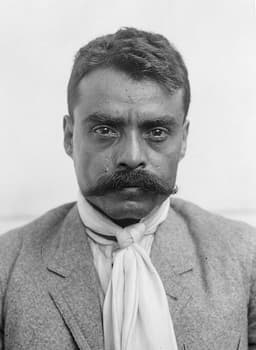
Emiliano Zapata
Revolutionary · Modern
56.3Total
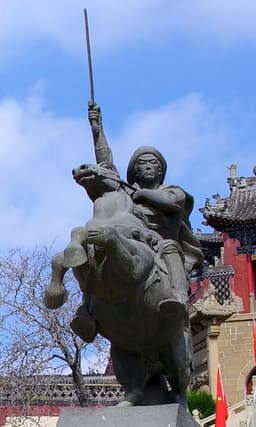
Li Zicheng
Revolutionary · Modern
43.5Total
Basic Information
Born
1879
1606
Died
1919
1645
Era
Modern
Modern
Nationality
Mexico
China
Occupation
Revolutionary
Revolutionary
Civilization
Western
Eastern
Score Comparison
Military (10%)
40.0
50.0
Political (20%)
68.0
27.9
Influence (20%)
58.0
52.5
Legacy (20%)
54.0
44.2
Leadership (15%)
54.2
39.0
Strategy (15%)
60.0
43.3
TOTAL
56.3
43.5
Emiliano Zapata — Complete Timeline
1911 AD
Plan of AyalaPolitical Action
Zapata issued the Plan of Ayala, denouncing Francisco I. Madero for failing to implement land reform. The plan called for the return of land to peasants and became the ideological foundation of the Zapatista movement.
Land ReformAgrarian MovementRevolution
Impact: nationalprogressive
1914 AD
Occupation of Mexico CityWar◆ Major
Zapata's forces, allied with Villa's Division of the North, occupied Mexico City. They held the capital for several weeks but failed to establish lasting control, highlighting the limits of their coalition.
Military OccupationRevolutionary AllianceCapital
Impact: national
Convention of AguascalientesPolitical Action◆ Major
Zapata attended the Convention of Aguascalientes, where revolutionary factions attempted to unify. He allied with Pancho Villa against Venustiano Carranza, but the convention failed to produce a stable government.
Revolutionary AlliancePolitical DivisionCivil War
Impact: national
1919 AD
Assassination at ChinamecaPolitical Action
Zapata was lured to the Hacienda de Chinameca by Colonel Jesus Guajardo, who pretended to defect. Guajardo's troops ambushed and killed Zapata, ending his leadership of the agrarian rebellion.
AssassinationBetrayalEnd of Leadership
Impact: nationaltragic
Li Zicheng — Complete Timeline
1644 AD
Captured Beijing and Ended the Ming DynastyWar
Li Zicheng led his rebel army to capture Beijing. The Chongzhen Emperor committed suicide, ending the Ming dynasty. Li Zicheng proclaimed the Shun dynasty and briefly ruled from the Forbidden City before being defeated by Qing forces.
Ming-Qing TransitionRebellionBeijing
Impact: globaldestructive
Defeated at the Battle of Shanhai PassWar◆ Major
Li Zicheng's army was defeated by the combined forces of Wu Sangui and the Manchus at the Battle of Shanhai Pass. The defeat forced him to abandon Beijing and retreat westward, effectively ending his control over northern China.
Ming-Qing TransitionBattleDefeat
Impact: globaltragic
Proclaimed the Shun DynastyPolitical Action◆ Major
After capturing Beijing, Li Zicheng formally proclaimed the establishment of the Shun dynasty in Xi'an. He adopted the title of emperor and began implementing his own administrative policies, though his rule was short-lived.
Shun DynastyProclamationRebellion
Impact: nationalconstructive
1645 AD
Killed in Jiugong MountainWar◆ Major
Li Zicheng was killed by a local militia while fleeing through Jiugong Mountain in Hubei province. His death marked the end of the Shun dynasty and the collapse of his rebellion, though some accounts claim he survived and became a monk.
Shun DynastyDeathRebellion
Impact: nationaltragic
Expert Analysis
Li Zicheng vs Emiliano Zapata
# The Peasant Who Would Be Emperor, the Rebel Who Would Not
On a spring morning in 1919, Emiliano Zapata rode into the Hacienda de Chinameca, expecting to meet a defecting colonel who had promised him weapons and ammunition. Instead, he found a firing squad. The man who had fought for a decade to return land to Mexico's peasants fell dead in a dusty courtyard, betrayed by a trap disguised as an alliance. Twenty-five years earlier and half a world away, another peasant rebel had known a different fate—for a few dizzying weeks in 1644, Li Zicheng sat on the Dragon Throne in Beijing, styling himself emperor of a new dynasty. Yet within a year, he too lay dead, killed by a local militia while fleeing through the mountains of Hubei. Both men rose from the soil to shake empires. Both fell violently. Why did one refuse the crown while the other grasped it—and why did neither succeed?
Origins
Emiliano Zapata was born in 1879 in Anenecuilco, a small village in Morelos, Mexico. His family were mestizo peasants who had lost their communal lands to the expanding sugar haciendas under Porfirio Díaz's modernization. Zapata grew up watching his neighbors dispossessed, their ancient ejido lands fenced off for export crops. He learned to read and write, but more importantly, he learned the language of grievance. His father died when he was young, and young Emiliano became the informal defender of his village's land claims—a role that would define his life.
Li Zicheng was born in 1606 in Mizhi County, Shaanxi Province, during the final decay of the Ming dynasty. His family were impoverished farmers who worked land they did not own. A drought in 1628 pushed them over the edge; Li's father died, and Li himself found work as a horse groomer for a local garrison. He was illiterate, rough-hewn, and deeply resentful of the corrupt officials who squeezed peasants dry while the imperial court feasted. When the Ming government eliminated the postal relay system—throwing thousands of couriers and laborers out of work—Li joined a band of rebels. He had nothing to lose.
The difference in their eras was profound. Zapata lived in a world of railroads, telegraphs, and mass-circulation newspapers; his revolution was modern, national, and ideological. Li Zicheng lived in a world of famine, plague, and dynastic collapse; his rebellion was pre-modern, local, and driven by survival.
Rise to Power
Zapata's path to power was slow and organic. In 1909, when he was thirty, he was elected president of his village's land defense committee. He began organizing armed resistance against the haciendas. When Francisco I. Madero called for revolution against Díaz in 1910, Zapata joined—but with a condition: land reform must come first. Madero's vague promises proved hollow. In November 1911, Zapata issued the Plan of Ayala, a document that denounced Madero as a traitor to the revolution and demanded immediate redistribution of land to the peasants. The plan became his manifesto, his Magna Carta, and his sword.
Li Zicheng's rise was faster and more brutal. By 1636, he had emerged as a leader among the roving rebel bands that plagued northern China. He called himself the "Dashing King" and adopted a strategy of mobility—raiding, fleeing, and recruiting from the starving millions. In 1643, he captured Xi'an and proclaimed the Shun dynasty. In April 1644, his army marched on Beijing. The Ming defenders collapsed; the Chongzhen Emperor hanged himself on a hill behind the Forbidden City. Li Zicheng entered the capital as its master.
The key turning point for Zapata was ideological: the Plan of Ayala gave his movement a clear, uncompromising goal. For Li Zicheng, the turning point was military: the capture of Beijing was a stunning victory—but it came without a plan for what came next.
Leadership & Governance
Zapata was a reluctant ruler. When his forces, allied with Pancho Villa's Division of the North, occupied Mexico City in 1914, he did not declare himself president or seize the National Palace. Instead, he met with Villa at the Convention of Aguascalientes, trying to forge a unified revolutionary government. He had no interest in personal power; he wanted land reform written into law. His governance in Morelos during the revolution was remarkably effective: he redistributed hacienda lands to villages, established local councils, and maintained discipline among his troops. He was a military leader with a political score of 57.6—moderate, but driven by principle, not ambition.
Li Zicheng was a conqueror without an administrator's mind. After capturing Beijing, he proclaimed the Shun dynasty and adopted the title of emperor. But he had no civil service, no tax system, no bureaucracy to govern a vast empire. His followers looted the capital, tortured Ming officials for their hidden wealth, and alienated the educated elite. His political score of 40.3 reflects this catastrophic failure of statecraft. He tried to win over Ming generals like Wu Sangui, but his emissaries bungled the negotiations. Within weeks, the Manchus were invited through the Great Wall.
The contrast is stark: Zapata refused the throne because he believed power corrupted; Li Zicheng seized the throne because he believed power was the goal. Both were wrong in different ways.
Triumph & Tragedy
Zapata's greatest moment was the occupation of Mexico City in 1914—a peasant army, barefoot and armed with machetes, holding the capital of a nation. His greatest tragedy was his assassination at Chinameca in 1919, lured by a false defector. He died at forty, still fighting for the same principle he had started with: "Tierra y Libertad."
Li Zicheng's greatest moment was entering Beijing in April 1644—a peasant who had become emperor. His greatest tragedy was the Battle of Shanhai Pass a month later, where his army was crushed by Wu Sangui's Ming loyalists and the Manchu cavalry. He fled Beijing, his dynasty collapsing after only forty-two days. He died in 1645, killed by a militia while hiding in the mountains. He was thirty-nine.
Character & Destiny
Zapata's character was defined by stubborn integrity. He could have compromised, taken a governorship, accepted a bribe. He did not. His leadership score of 41.2 reflects not weakness but a refusal to command through fear; he led through trust and shared hardship. His men called him "El Caudillo del Sur," but he was a caudillo who never forgot he was one of them.
Li Zicheng's character was defined by impulsive ambition and strategic blindness. He was a brilliant guerrilla commander—his strategy score of 59.6 shows genuine military talent—but he lacked the patience to build alliances or the wisdom to govern. He trusted his luck, and luck abandoned him at Shanhai Pass.
Both were shaped by their contexts. Zapata's Mexico was fractured but modern, with newspapers, intellectuals, and competing ideologies. Li Zicheng's China was a dying empire, exhausted by famine and corruption, where the only question was which conqueror would pick up the pieces.
Legacy
Zapata's legacy is immense. He became a symbol of agrarian justice, land reform, and indigenous rights across Latin America. The Zapatista Army of National Liberation, which rose in Chiapas in 1994, invoked his name. His face appears on murals, banners, and T-shirts. His legacy score of 67.6 reflects a man who lost his war but won history's argument.
Li Zicheng's legacy is more ambiguous. In China, he is remembered as a peasant hero who overthrew a corrupt dynasty—but also as a tragic figure whose failure opened the door to two centuries of Manchu rule. His legacy score of 62.0 is high, but it is a cautionary tale: the rebel who becomes emperor without learning to govern.
Conclusion
Two peasant rebels, two continents, two centuries. Zapata died refusing to become what he fought against. Li Zicheng died trying to become what he had destroyed. One's tragedy was that he would not take power; the other's tragedy was that he took it too quickly. Both fell because they could not solve the central problem of revolution: how to turn armed rebellion into stable governance. Their stories remain with us because they ask a question that has no easy answer: What does a rebel owe to the world he tears down?
Rankings
🥇
Emiliano ZapataLeader
Mil: 40.0Pol: 68.0Inf: 58.0
56.3
🥈
Li Zicheng
Mil: 50.0Pol: 27.9Inf: 52.5
43.5
+12.8 behind
How This Comparison Works
Algorithm
Each figure is scored on 6 dimensions (0—100 scale) based on structured historical data: Military (10%), Political (20%), Influence (20%), Legacy (20%), Leadership (15%), Strategy (15%). The weighted total produces the final ranking.
Data Sources
Scores are computed from structured sub-indicators in the database. Scale factors adjust for era (Ancient ×0.85, Modern ×1.0) and civilization size (Eastern ×1.05, Other ×0.80) to account for differences in population and military scale.
Maximum 3 Figures
Comparisons are limited to 2—3 figures to ensure readability and statistical meaningfulness.
Error Margins
±5 points per dimension — Sub-scores are derived from historical records with inherent uncertainty. Two figures within 5 points on a dimension should be considered roughly equivalent in that area.
Total Score Accuracy
±3 points overall — The weighted combination of 6 dimensions produces a total score with approximately ±3 points of uncertainty. Differences of less than 3 points are not statistically significant— the figures are effectively tied.
Known Limitations
- Historical records are incomplete and uneven across civilizations
- Figures from oral-tradition societies may be underrepresented
- Occupation labels can misclassify multi-role figures
- Scores measure capability and impact, not moral character
- Quantitative scoring is a comparison tool, not absolute truth
Capability Radar
Military (10%) — Battles & Warfare
Battles
45
55
Win Rate
50
60
Expansion
35
65
Political (20%) — Governance & Reform
Reform
70
15
Diplomacy
40
20
Economy
35
10
Influence (20%) — Cultural & Global Reach
Cultural
65
40
Global
55
35
Legacy (20%) — Historical Impact
Historical
70
55
Longevity
65
30
Leadership (15%) — Power & Stability
Tenure
30
20
Stability
25
5
Strategy (15%) — Tactics & Innovation
Strategy
50
55
Tactics
55
50
Reform
60
30
Similar Comparisons
Comments & Discussion
流民策士6/16/2026
从数据角度看,两人都因土地矛盾起家,但李自成面对的是北方旱区连年饥荒与白银流出导致的货币紧缩,起义高峰期控制区相当于墨西哥领土的70%,却因税收崩溃无法维持官僚体系。萨帕塔势力范围仅莫雷洛斯州及周边,年均战斗约200次,规模小但持续性强。李自成坚持了不足两年就被清军火器部队击溃,而萨帕塔的游击战持续十年,尽管他死后十年制度才成型——数字不会撒谎:分散的农业公社比王朝更耐揍。
乡间烙铁6/16/2026
作为一个农民运动的亲历者后代,我必须说:萨帕塔知道权力会腐蚀地气,所以坚持"土地属于耕种者"的零和分配原则,拒绝任何个人独裁。李自成进北京后立刻搜刮拷饷,七天内就有三百士绅被杀,激起官僚集体倒戈。萨帕塔如果活到1920年代,绝对会跟卡列斯这类军事独裁者翻脸——他的死反而保住了"土地革命"这个符号。李自成恰恰死于自己的胜利:他太想当皇帝,把农民当垫脚石。革命者最怕的就是把自己当成革命本身。
Historian7116/16/2026
As a military historian, the key difference is strategy: Zapata never centralized command but operated through local juntas, which preserved his movement's grassroots legitimacy but made it vulnerable to coordinated state counterinsurgency. Li, by contrast, imposed a rigid top-down structure after capturing Beijing, alienating his regional allies. Zapata’s decentralized network allowed him to survive six years of federal campaigns; Li’s imperial consolidation collapsed in three months when the M
Chronicler12636/16/2026
Revisionist critique: both are over-romanticized. Zapata's Plan de Ayala didn't abolish private property but demanded return of stolen communal lands—essentially a restoration of colonial-era rights, not socialism. Li's "equal land for all" was propaganda; historical records show he left many Ming estates intact to win over elites. Their heroism is retroactive projection. What matters: Zapata died
Chronicler47556/16/2026
Let the classics scholar weigh in: Li embodies the dynastic cycle's tragic logic—he read Romance of the Three Kingdoms as military manual, modeled himself on Han Gaozu, but lacked the literati advisors to consolidate power. Zapata, raised on village council minutes and local land titles, created the Ayala Plan that echoed medieval Spanish fueros. Both were archaic in different ways: Li chasing Mandate of Heaven, Zapata resurrecting Aztec-style collective tenure. Neither fit modernity's mold, but